The Most Surprising Longevity Discoveries | Lifespan with Dr. David Sinclair
In a Nutshell
Aging is a controllable biological process driven by epigenetic information loss (ex-differentiation), measurable via DNA methylation clocks, and reversible through targeted interventions. Longevity genes like sirtuins, mTOR, and AMPK can be activated by fasting, exercise, cold/heat exposure, and molecules (resveratrol, metformin, NAD precursors) to extend lifespan and treat age-related diseases. Evidence from long-lived species, human studies, and reprogramming shows that slowing or resetting biological age is now achievable and has broad medical and societal implications.
These notes were generated by AI and may contain inaccuracies.
Welcome to Lifespan, a show discussing the cutting-edge science of aging and how to live healthier at any stage of life. David Sinclair is a scientist and professor working on understanding why we age and discovering new ways to slow and even reverse the aging process. On this show, he shares an insider look at the latest from his lab, the field, and what's just around the corner.
One of the most surprising things learned in season 1 is that aging is not as fixed as once believed. For most of human history, aging was assumed to be just the passage of time, the number of times the earth has gone around the sun. You're born, you grow up, you get older, and eventually the body wears out. The science is now telling us that aging is a biological process, a universal one in every tissue that can be measured, slowed, and in some cases, parts of it can even be reversed.
The first rewind episode focused on the practical side of longevity, the things you can do in daily life to help live longer and healthier. Knowing what to do is only half the story. The deeper question is how and why any of it works. This second rewind episode goes back to the most surprising longevity results covered in season 1. These are the moments that changed how we think about the biology of getting older and what may be possible as we learn to measure and modify that process.
You'll hear about animals that live far longer than expected, genes that can dramatically extend lifespan in simple organisms, and biological clocks that can measure how old your body really is. There will also be revisits of some of the more unexpected findings from season 1, including why hyperbaric oxygen, heat, cold, red light, and even small molecules teach us about the body's ability to repair itself. Even small changes in the rate of aging could have major consequences not only for individuals, but for medicine, healthcare, and society itself. These discoveries show that aging is far less predetermined and far more controllable than ever thought.
There's no law that says we have to age. We now are learning not just what causes aging, but how to reset the body so that it's young again. We don't know how many times you can reset the body, but the bet is that it's more than once. What happens in a world where you can reset your age multiple times, maybe hundreds of times, that's when things get really interesting. When people look at this podcast and listen to it 100 years from now, they're going to say, "Yeah, that was the moment when humanity really changed." Aging is now controllable. We have the technology to control how fast we age. We can measure that. Slow it down. This has never happened in human history before.
If you look across the animal kingdom, there are all kinds of animals that age at different speeds, at different rates. Even though the root source of aging is the same for everything, we age at different rates. People say, "What gives you confidence that we can even live 5 years longer?" Well, there are plenty of species that live that long. There is no reason why we can't do what they do. And if we learn how they do it, we can apply that to ourselves.
One of these animals is the naked mole rat. Alex, the oldest child, works on these with Vera Gorbunova, the professor that Alex works with. These naked mole rats are fascinating. They're weird looking. They've got sharp teeth and the rest of their body is long. It looks like a condom filled with walnuts. What's exciting to work on them is that they found that these animals have particular traits biologically and molecularly that allow them to live decades longer than a typical rodent. Mice live a bit over two years, rats over four years. These are similar animals and one lives over 30 years. Normal rodents or other rodents, most rodents live a few years.
What's important to realize is that there's a reason why that is. Animals that don't have a lot of predation, whales, mollusks, sharks, mole rats, underground, they don't get eaten. So, they can put their energy into building a long-lasting body. And actually, as a consequence, they reproduce slowly as well. But what's important is that you can build a longer-lived body. We can do that too. We can engineer ourselves. We can learn from these animals by studying what makes them live so long.
We're essentially upright whales. That sounds crazy, but at the molecular level, if you look at the biochemistry, we're only separated by 40 million years, which is a blink of an eye in geological time. We actually could live as long as whales. There's not that much difference between us. A whale lives, we know bowhead whales can live for hundreds of years, more than 200 years.
We now have the genome of these animals and we can see that they have multiple copies of what we call longevity genes, some of which we discovered when in the 20s. These are genes that protect the body. Longevity genes actually get turned on by adversity and there are ways we can tweak them. But whales naturally have multiple copies and higher levels of these longevity protective mechanisms. And the bristlecone pine has just whopping amounts.
We're not that different from a banana. Actually, genomes are 40% similar. The important thing is that when you study other organisms, whether it's a banana or a yeast cell or a worm or a fly, we can learn lessons about biology and especially about aging. We can learn more about aging from a yeast cell than we can about Alzheimer's or cancer.
This is why there's dismissal about people's dismissiveness about only in mice when people say, "Oh, we discovered this." And people go, "Oh, only in mice." There's a lot we can learn from mice. And aging is one of these universal things. And what really is remarkable that we've learned in the lab over the last 20 years is that the same genes that control aging in yeast work in worms and flies, mice, and even humans. That's a big deal. We didn't know that 30 years ago.
There are hundreds of longevity genes that are known, but they fall into three main buckets. The first one is called mTOR. It's a little m for mammal and target of rapamycin. So mTOR is a longevity gene that makes a protein that senses amino acids. So when you eat a big steak, mTOR activity actually is activated and mTOR now says, "Okay, I got lots of protein. I'm going to make muscle. I'm going to burn energy." And that's why when you eat a steak, you actually build up muscle more than if you don't eat a lot of protein.
Mice that are given a drug called rapamycin which is used to suppress the immune system in patients but you can take low doses as a human or give it in low doses to a mouse, those mice live dramatically longer even if you give them rapamycin when they're 20 months of age which is a really old mouse they still live longer. So low activity of mTOR is a signal that times are tough, you don't have enough food, hunker down, build a stronger body, survive and the outcome of that is longer life for these mice. But it turns out it's not just for mice. You give rapamycin to a yeast cell or a fly or a worm, they also live longer. So you can tap in with these drugs into this universal longevity program, one of which is mTOR.
Bucket two is AMPK. It's called AMP activated kinase. And in this case, we don't want less of it. We want more of it. We want to activate. So how do you do that? You actually eat less. You fast. And that'll turn on AMPK. It'll do a few things. It'll make your body more sensitive to your insulin, suck the sugar out of your bloodstream, which can be toxic if it stays high, but it also ramps up the energy producing centers of the body, these membrane filled bags, which are actually ancient bacteria living in our bodies called mitochondria.
The gene that has been worked on for a really long time is a family of genes. We have seven of these what we call sirtuins and we just linked them to aging when as a postdoc at MIT back in the 1990s and what we were looking at as a group was what can make yeast cells live longer and there was one mutation that led us to a gene called sir2 which stands for silent information regulator number two and information is the key but this set of sirtuin genes. This family has been shown in yeast and worms and flies, mice and now humans to be a really important central regulator of longevity. It was shown going back to 2005 that fasting activates the sirtuins and later exercise activates these genes. So a lot of the things that we're told by doctors to do to live longer and be healthier we think acts through the sirtuins in concert with these other two sets of genes we just talked about.
How do they work? Remember sirtuins are, sir stands for silent information regulator. So what does that mean? Silence is the bundling of the DNA silencing them. So you don't want the liver genome in the brain. Information is the DNA and they regulate it. Sirtuins, it's in the name. And in fact, in the 1990s, that's why work has been going on ever since on trying to understand and test the information theory of aging. Part of the problem with aging, we think, is that that beautiful packaging of the DNA that allows a cell to remain a skin cell forever or brain cell essentially forever is lost. You start to get this unspooling of the DNA and genes that shouldn't be on start to come on over time. Genes that shouldn't be readable are now readable. And so you have like all this extra information floating out there that the cells can read. And because the cells are now reading large parts of the code instead of the very specific parts of the code, they get confused. And we call it ex-differentiation. Differentiation is the common term for cells becoming a certain cell type. We've coined the term ex-differentiation, which is essentially cellular confusion. They become a more of a generalized cell type rather than a specific one because genes that shouldn't be on start to come on over time and that we think is a root cause if not the root cause of aging itself.
Ex-differentiation is the root cause of many if not most diseases. When you look at Alzheimer's disease and unfortunately up until the last few years we were treating it at the end stage of the process of aging which results in plaques and tangles and dementia but the process that led to that disease was happening from birth and that's aging. So Alzheimer's, just to take one example, is an age-related disease that's not just age-related. It's actually 90% of it is caused by the aging process, this unspooling, this ex-differentiation. If we were able to slow that down, you'd have Alzheimer's much later. And now we're showing in the lab, we can reverse the age of a brain in an animal. And when we do that, we're showing, and we will continue to test this, that those diseases go away, proving that those diseases are actually caused by aging.
It was in 2013 a paper came out from Steve Horvath's lab. And there was another paper by Greg Hannum that showed that if you measure the chemicals that are controlling this bundling and spooling of the genome to specify cell type, there are certain sites on the genes that you can measure. The chemical is specifically called DNA methylation. It's very simple. It's just a carbon with three hydrogens. This chemical cells add to the DNA, stick to the DNA as you're developing in the womb to make a brain cell different than a liver cell, different pattern. But over time, there are changes that are predictable and they change in a linear fashion. So that if I took your skin cell or your blood and I measured the DNA methylation pattern across the genome across that 6 ft in one cell or in thousands of cells, which is how we do it, I can then plug that into a program and it'll spit out your actual biological age, not your birthday candles, which is based on how many times the Earth has gone around the sun. It's how old you really are. So theoretically, if I wanted to check my biological age every week, I could do that for 50 bucks a year essentially. And eventually it'll be a little home device, you can do it every morning if you feel like. And your argument is, and I totally am on board with this too, this is far far more important to our understanding of our general sense of health and our general state of propensity for disease than our chronological age ever was. Right? And we find that people who haven't done the right things, who haven't exercised and haven't maintained a good diet, have an older biological age and will die sooner because of it. We can now measure the aging process with accuracy which is it blows our mind that we now have our biological credit score which we can by the way we can alter aging is malleable that number doesn't stay the same and it doesn't have to continue to tick up every year.
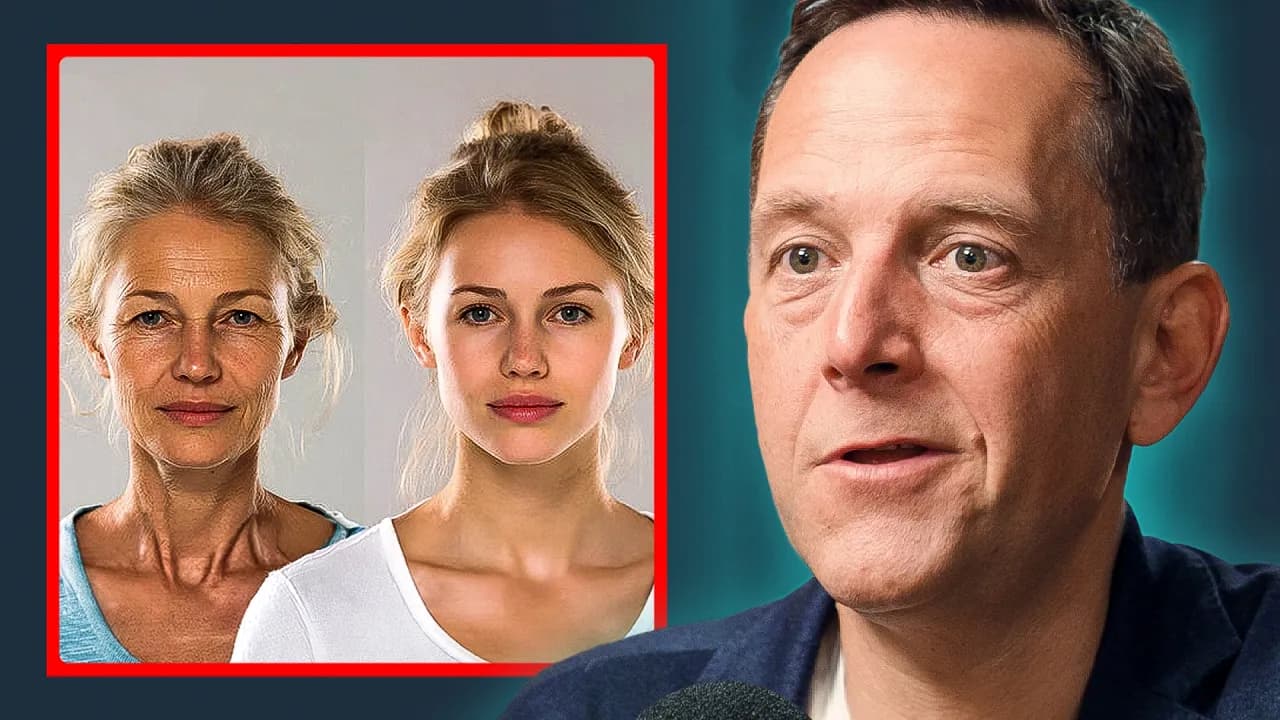
We've just discussed how blood-based biological age testing can reveal what's happening at the cellular level we're also learning that different parts of the body age at different rates, what we call tissue-specific aging. This means that physical signs of aging, especially in tissues like the skin, may also provide important clues about a person's biological age and overall health. I think most people can picture their elder self, and when they do, they see their skin. It's a little more wrinkly. It's a little more saggy. It's a little thinner. And this actually means something more than just appearances. And we know this from this 2012 study where researchers took the photos of about 300 elderly people and they gave them to another cohort of people to rate. They rated for the age.
It was the Lothian birth cohort. They looked at people from 1921 onwards and it was fascinating. So they rated them for a bunch of things. Their age, their health, attractiveness, facial symmetry. This is just based on the appearance on the photograph, by the way. Like no, you're not meeting these people. You were not taking any tests. We're just looking at their photos and saying, "Are they healthy or not? Are they old or not?" So what did they find? They found that if you followed those people out seven years from the time that that photo was taken, there was a really high degree of predictability that the people who were rated as older looking, whether or not they were actually older chronologically or not, if they were older looking, they were more likely to die. There wasn't correlation between these people's appearances even though that was predictive and their biological clock but there's a distinction that that needs to be made.
Well, they were measuring the blood clock in that case. And so what we've learned since is that the various tissues have different clocks and it helps to have a specific clock for that particular tissue. So that others have since gone on to make skin clocks and they seem to work better for measuring the age of the skin. And Mariana Baron, who's a friend and colleague from Brazil, she led a study that was published in 2020 showing that when you do this, when you build this epigenetic clock based on methylation of skin cells, it does predict biological age quite well.
It does. And there's a good reason why skin is going to age probably faster than the rest of the body, though it's still a good indicator. And that is that it's exposed to the elements. We know that if you grow up in Australia like I did, that the UV light is going to create DNA damage that accelerates the epigenetic changes that lead to aging. So, someone like me is going to have probably older skin than someone, my identical twin, if they had moved to Norway.
Aging isn't just a set of outward changes we see in the mirror. Those, of course, are just the visible symptoms of a deeper biological shift happening within our cells and in our tissues. And one of the biggest questions in longevity science has been what controls that process and can we slow it down or even restore it to its youthful state. There's a genetic pathway that gets triggered by low energy. And these genes called sirtuins. They respond to low energy. They respond to other stresses as well such as high heat, low amino acids, high salt. The sirtuins will get activated by these what we call hormetic effects. What doesn't kill them makes them stronger and in this case low energy led to the activation of these enzymes called sirtuins.
What's actually happening with the sirtuins when yeast or any other model organism is calorie restricted is fasted. Their role is to extend the lifespan. And so what they're doing down at the at the very minute part of the cell is they're protecting DNA and making sure genes stay on when they should be on. But what's happening to boost their activity during caloric restriction, this low glucose level. We have a better understanding now of how sirtuins are turned on by fasting. We talked about two other classes of longevity genes, mTOR and AMPK. The first one is mTOR which stands for mammalian target of rapamycin. What we know from many animal studies even in yeast if you downregulate the activity of this mTOR protein complex you get longer life. Why? Because it's activating a process called autophagy which recycles proteins. So when you're hungry, this autophagy will get all the old proteins, put them in the recycling bin, and then bring them out as fresh proteins. And that seems to be really important for longevity. In fact, even if you just inhibit mTOR and stimulate autophagy, that's sufficient to extend the lifespan of flies and even mice by dramatic amounts, even 30%.
So in mTOR, we start with fasting, we get longevity. In sirtuins, we start with fasting, we get longevity. In AMPK, same thing, but in a different process. Exactly. It's doing something else. And in this case, you when you're hungry, AMPK will go up. AMPK, if you're wondering, it stands for AMP activated kinase. And that's just an enzyme that responds to low energy. So when you're hungry, you'll make more of it. And one of the main things that it does is it makes more mitochondria. We lose mitochondria as we get older. And when we exercise, we get more. And this is a way of artificially stimulating that production. Why do we need more mitochondria? Well, they're important for metabolizing things that you eat, but one of the main things that they are used for is to make energy, chemical energy. So, when you activate AMPK, you'll feel better. You'll have more energy, and you'll also fight aging.
There's these large populations and subgroups of populations all across the world who have fasted as a part of tradition and culture for hundreds, thousands of years. Well, let's name some of them. The Jains in India. Christians fast. There's Ramadan for Muslims. These are not just coincidences. These aren't just religious practices. It's clear that humanity has figured out that you get, you feel better, you look better, you ultimately are disease resistant, you might even help cure diseases by going through these periods of being hungry or at least not having food in your tummy.
Now let's get into these really interesting like sort of gold standard studies. There is one out of the Baylor College of Medicine. It was run by Isa Mindoglu and it showed that fasting from dawn to sunset for 4 weeks improved blood pressure, reduced BMI, decreased weight circumference and it upregulated DNA repair proteins. This is what we saw in all these model organisms as well. Yeah, there are dozens of studies showing that short periods of fasting is beneficial to people who are obese not just because they lose weight but they turn on their body's defenses. They become more insulin sensitive and their
Fasting activates the body's defenses and improves insulin sensitivity while lowering glucose levels. People of normal weight can also benefit from fasting according to multiple studies. Certain diseases including type 1 diabetes, multiple sclerosis, and cancer appear to benefit from fasting. Combining chemotherapy with fasting provides a double benefit for many types of cancers.
Walter Longo at UCLA has developed a fasting mimicking diet that can be sent directly to patients' homes. Studies show this diet helps cancer patients survive and recover from chemotherapy more quickly. This provides additional evidence that fasting benefits not only longevity but also disease treatment.
Extended fasting beyond a day involves periods of three days or up to a week. Fasting longer than a week risks muscle breakdown. These extended periods trigger deep autophagy, the process of recycling proteins. After the three-day mark, metabolism switches to chaperone mediated autophagy for a deeper cleanse.
Time-restricted feeding involves at least 16 hours without eating or eating very little. This approach is practical for those who struggle with extended fasting beyond 24 hours.
Jim Nelson conducted an important study using mice with genetic diversity created by crossing black six and white mouse strains, resulting in approximately 100 different genetic types. Mice were placed on a caloric restriction protocol of about 35% of normal ad libitum intake. About half the mouse strains lived longer while about a third lived shorter. This demonstrated that caloric restriction does not universally extend lifespan and depends on genetics. Some individuals may be more sensitive to these diets and should practice them less intensively. Measuring personal responses is the only way to determine individual tolerance.
Total body weight provides only a partial picture of health. Measuring visceral fat is critical because this fat surrounding organs increases risk of cardiovascular disease, diabetes, and death. Minimizing visceral fat has significant long-term health and longevity benefits.
Withings produces smart devices including watches, blood pressure monitors, and advanced bathroom scales. The Withings body scan scale estimates muscle mass, fat mass, and visceral fat. The Withings app displays changes in lean mass, visceral fat, and bone mass, along with a digital twin visualization. Measurements show 11.3% arm fat, 14% torso fat, and 2.7 visceral fat, all in favorable ranges for the user's age group. The scale has been used for over 13 years, tracking data for the user and children during growth periods.
Recent diet and exercise changes resulted in over 12 pounds lost while preserving muscle mass. Smart scales help ensure weight loss targets fat rather than muscle, which is particularly useful for those taking GLP-1 drugs. The Withings scale includes an FDA-cleared ECG that analyzes heart rhythm and can detect atrial fibrillation, a condition that can cause stroke and heart failure. Withings partners with Lifespan to support preventative health and medical research. Listeners can access products at withings.com/lifespan with code lifespan for 10% off.
A 2013 Adventist Health Study involving thousands of participants calculated mortality risk using hazard ratios across different diets. Non-vegetarians were assigned a hazard ratio of 1.0. Semi-vegetarians had a ratio of 0.92. Lacto-ovo vegetarians scored 0.91, representing nearly a 10% reduction in mortality risk. Vegans achieved a ratio of 0.85, a 15% reduction. Pesco-vegetarians who consume some fish scored 0.81, representing a 19% reduction in daily mortality risk late in life. These plant-based diets also reduce biological aging according to epigenetic clock measurements.
Xenohormesis, a term coined by Konrad Howitz and David Sinclair in the mid-2000s, explains why plant molecules benefit humans. A 2003 Nature paper identified at least 20 polyphenols that activate SIRT1. Plants produce these polyphenols when stressed by water or nutrient shortages as a survival mechanism. Rapidly grown, unstressed plants are less beneficial for human health. Organically grown plants without pesticides experience more stress and produce more beneficial compounds. Mild biological stress activates ancient survival pathways that help cells repair damage and maintain function.
In the 1980s, the aging field focused on free radicals and DNA damage. Cynthia Kenyon as a graduate student searched for long-lived worms and identified a mutant strain living twice as long, extending lifespan from 15 to 30 days. This longevity resulted from a single gene mutation in the insulin receptor gene called DAF-2. This discovery revealed that aging could be controlled by genes and signaling molecules rather than solely by free radicals or DNA damage.
Sirtuins work on circuits that respond to adversity. The DAF-2 mutant worms were stress resistant, surviving heat, cold, and starvation better than normal worms. These worms activated survival programs without actual starvation. Modern society removes natural stressors like cold, hunger, and physical demands, leaving longevity defenses inactive. The body does not expend energy defending itself without need.
Low-level exercise provides benefits, but vigorous exercise creates hypoxia, which is beneficial despite discomfort. Exercise prevents senescence by reducing senescent cell formation. A study of 34 individuals in a 12-week exercise program showed dramatically lower circulating senescent cells in the blood of exercisers. Senescent cells are alive but non-dividing and secrete inflammatory proteins known as SASP, which promote inflammation and cancer.
Hyperbaric oxygen therapy increases pressure in a chamber, allowing greater oxygen absorption. Originally used by the Navy to prevent decompression sickness, it now treats neurological disorders and shows promise for aging. Treatment can reverse telomere shortening, which contributes to cellular senescence. This represents one of the first treatments capable of lengthening telomeres.
Cold exposure stimulates production of brown fat, also called beige fat. Brown fat exists in babies to maintain warmth before shivering develops around one year of age. Adults retain brown fat primarily in the shoulder blade region, detectable through PET scanning. Brown fat revs up metabolism and burns white fat. Secreted factors from brown fat improve overall body health. The PRDM16 gene controls the transition from white to brown fat. Mice lacking this gene develop type 2 diabetes and cardiovascular disease.
Dwarf mice with growth hormone receptor mutations lived up to three times longer than normal mice. These mice shivered constantly. When each dwarf mouse received a companion mouse for warmth, most of the lifespan extension disappeared. This revealed that cold exposure contributed significantly to their longevity benefits.
Sauna bathing several times weekly reduces cardiovascular disease and heart attack mortality by up to 20%. Sauna therapy is one of the most ancient longevity practices and provides skin benefits through sweating.
NAD transfers hydrogen atoms between proteins and DNA, essential for ATP production. NAD is one of the most abundant molecules in the body after ATP. Beyond energy production, NAD activates sirtuins, which are defensive enzymes. NAD levels decline with age as production decreases and breakdown increases. Exercise and fasting raise NAD levels. NAD acts as a sensor for adversity.
NR given to mice late in life at approximately 700 days, equivalent to a 70-year-old human, extended lifespan by about 9%. Treated mice showed more mitochondria, improved athleticism, and reduced inflammation. Human studies with NR at doses from 250 milligrams to 1 gram daily raise NAD levels within 9 to 10 days. Benefits include reduced inflammation and minor improvements in body composition. Animal studies show enhanced oxidative metabolism, increased fat burning, and reduced type 2 diabetes risk.
A 2021 study by Yoshino using 250 milligrams of NMN over 10 weeks in a randomized placebo-controlled trial showed increased insulin-stimulated glucose disposal, indicating improved insulin sensitivity. This represents early proof that NMN produces effects in humans similar to those observed in mice. Ongoing studies report reduced frailty, improved activity, better mitochondrial function, and increased running distance in mice.
Resveratrol extends replicative lifespan in yeast and activates AMPK in rodents. In mice, resveratrol protected against a high-fat Western diet. Obese mice on resveratrol lived as long as lean control mice. This was the first demonstration that a molecule could mimic caloric restriction benefits while allowing obesity. Human studies show resveratrol reduces fasting glucose and increases insulin sensitivity according to 2019 and 2020 research.
Metformin, an AMPK activator that has been used safely for decades to treat diabetes, is taken by hundreds of millions of people worldwide. Retrospective studies of tens of thousands of elderly people on metformin show that while it reduces and slows type 2 diabetes, it also lowers the risk of cancer, heart disease, Alzheimer's, and frailty. When controlling for all other factors, people on metformin live longer than people who do not have type 2 diabetes.
Exosomes are membrane-bound packages of information about the size of a virus that travel easily between cells and into cells. They contain peptides, DNA, RNA, and microRNAs that allow the body to coordinate responses such as signaling an injury from the hand to the brain or vice versa. These exosomes can be intercepted and read to diagnose diseases including cancer, potentially years in advance through a simple blood test or finger prick without requiring a biopsy.
Researchers are exploring whether exosomes can be manufactured and infused into people to simulate adversity and promote longer life. Supplementing exosomes into mice by injecting them into the bloodstream has been shown to help with injury. Multiple biotech and pharmaceutical companies are building factories to produce exosomes for disease treatment, though long-term safety and efficacy for health and longevity remain unknown.
A 2011 study published in The Lancet followed over 400,000 people and found that just 15 minutes of moderate exercise per day was associated with a roughly three-year increase in life expectancy. Large-scale analyses published in the Journal of the American Heart Association show that both too little and too much sleep are associated with increased cardiovascular and mortality risk.
The Whoop band, developed by a company located near Harvard, functions as a health and fitness coach providing insights into sleep, recovery, and physical strain. A 2022 study comparing six wearable devices against clinical-grade ECGs and sleep recording devices found that Whoop showed strong accuracy for heart rate and heart rate variability measurements during sleep. Users can track how lifestyle changes affect biomarkers; for example, one user reported their resting heart rate dropping to 45 and heart rate variability rising to 90 after implementing a healthier diet and more exercise.
Whoop is positioned as a tool to build a long-term record of personal biomarkers that can serve as a target to maintain into older age.
Stem cells are cells that can divide asymmetrically to produce cells that form tissues while retaining the ability to keep dividing without becoming a specific cell type. There are two main classes: multipotent stem cells, which can make a few different types of tissues and are typically obtained from embryos, and pluripotent stem cells, which can make any type of cell or tissue. To build tissues such as a mini brain or rebuild a kidney from a skin cell, cells must be reprogrammed back to an age-zero pluripotent state.
A 2017 phase one to phase two study from researchers at the University of Miami harvested stem cells from younger donors and administered them to older, frail patients. The small-scale study showed improvements in walking distance, lowered cytokine levels, improved mental state, and reported quality-of-life gains.
Cellular reprogramming uses a partial set of Yamanaka factors to reverse cellular age without resetting to zero, avoiding cancer risk. Instead of using all five Yamanaka factors, researchers used only three (OSK), omitting the cancer-causing genes c-MYC and LIN28. This approach reversed the age of cells and tissues in animals and human cells by approximately 80 percent without negative side effects.
In one study, the OSK factors were applied to the eye, regenerating a crushed optic nerve, restoring vision in mice with glaucoma, and restoring eyesight to blind old mice.
Hair loss occurs when important stem cells in the hair follicle bulge are expelled rather than dying. The hair follicle shrinks, partly due to dihydrotestosterone, causing hair to become thinner until it stops entering the anagen growth phase. Melanocytes produce hair color, and a newly identified hair follicle-associated pluripotent stem cell (HAP) can be isolated and differentiated into bone and muscle.
Topical treatments include minoxidil (Rogaine), which stimulates nitric oxide production and promotes the anagen phase, and retinol cream (0.5 percent), which can be applied to thinning areas. A study showed that combining tretinoin (retinol) with minoxidil resulted in hair regrowth in 66 percent of participants after one year.
Propecia (finasteride) is a once-daily pill that inhibits the enzyme 5-alpha reductase, reducing conversion of testosterone to dihydrotestosterone. A study of 3,690 men found that DHT levels in the middle range of 9.8 to 15.8 nanomoles per liter were associated with the longest lifespan. Potential side effects include lowered sex drive, mood swings, depression, and breast tenderness.
Low-level laser therapy (LLLT), approved by the FDA, uses red laser light delivered through combs or caps for 10-15 minutes daily or every other day. Clinical trials show it slows hair loss and promotes regrowth in the majority of users.
Platelet-rich plasma (PRP) treatment involves drawing blood, spinning out the cells, and injecting the platelet-rich plasma into the scalp. This approach is based on the observation that fusing the circulatory systems of old and young mice rejuvenates the old mouse, though the specific components responsible for hair growth effects are not yet fully identified.
Gray hair can be accelerated by psychological stress. A 2021 study found that periods of gray hair growth coincided with remarkably stressful life periods involving lack of sleep and rest. This finding demonstrates that gray hair is reversible and represents an epigenetic effect rather than a purely genetic program.
A Mediterranean-type diet protects the brain from aging and can reverse aspects of aging in elderly individuals with mild cognitive impairment, as shown in over a dozen studies. Omega-3 fatty acids, which the body cannot produce, serve as structural components of the brain and form part of the myelin sheath that insulates nerves. Good dietary sources include salmon, mackerel, krill, and sardines, providing EPA and DHA. Plant-based sources of alpha-linolenic acid (ALA), which converts to EPA and DHA, include flax seeds, walnuts, chia seeds, and linseed oil.
A 2019 study by Blumenthal and colleagues involving 160 sedentary adults over age 55 found that six months of aerobic exercise greatly improved executive function, concentration, and focus. A 2013 study by Pereira and colleagues with 451 elderly participants showed that 10 weeks of strength training increased levels of brain-derived neurotrophic factor (BDNF), a marker of brain youthfulness and new nerve cell growth.
One night of sleep deprivation increases amyloid beta production by 5 percent. A 2010 study analyzing one million people found that very little sleep was associated with higher mortality risk compared to normal sleep duration.
When Matthew and I recorded those conversations, longevity science was already moving quickly. But since then, the field has accelerated even more. We're now measuring aging with more precision, testing interventions much more rigorously, and using AI to enhance scientific research.
We're also beginning to ask questions that would have sounded impossible not long ago. Can we slow aging? Can we restore youthful function to old tissues? Can we move from treating age-related diseases one at a time to targeting their underlying biology? And finally, can we reset the age of the body?
In the coming season, we'll go deeper into the science of aging, but also into what it means for your life. What has changed since season 1? What has held up? What new discoveries are emerging? And what could the next era of longevity science mean for health, medicine, and the future of human potential.
It takes everything we've been building towards and opens the door to a new way of thinking about aging.
If you want to learn more and join our growing community, visit lifespan.com to get early access to future episodes, lifespan magazine, show notes, and much more. As a member, you'll also be helping us support vital medical research to extend healthy life.
If you enjoyed this episode, please hit the subscribe button and be notified about new episodes that we're putting out. This will help us continue to make a better show for you. Feel free to share this with family and friends. And for the latest discoveries in longevity science, follow us on Instagram at lifespan and on X at join lifespan. From all of us here at Lifespan, thank you for being part of this growing community. I'll see you very soon for season two. And remember, life's short, so let's change that together.
Keep David Sinclair in your library
Save the videos and channels worth coming back to, and find them again in one place.