The Best Anti-Aging Medicine- Live to 90 years old and Beyond
In a Nutshell
Exercise is the single most effective anti-aging intervention, but only when it combines aerobic training, resistance training, and intensity—each addressing distinct aging pathways. Aerobic exercise (150-300 min/week) lengthens telomeres and slows cellular aging, while resistance training (2-3x/week) prevents sarcopenia and releases anti-inflammatory myokines, and HIIT/REHIT (3x/week) improves insulin sensitivity and repairs microvasculature. Diet optimization and removing behavioral roadblocks must precede any supplements, with intensity being the component most people skip.
These notes were generated by AI and may contain inaccuracies.
For decades people have tried to find the secret for living forever. David Sinclair is attempting this with a pill, but centuries ago Gilgamesh, the Sumerian king, crossed seas chasing a secret plant of immortality. Ponce de León searched for springs of eternal life in Florida. Brian Johnson is selling the promise of living forever through pills. Living forever is still not possible, but there are low-hanging fruits that can help people live clearly to 90 years old and longer, living that life in a healthy way without disability, maintaining function to have impact on family, culture, business, and community.
The secret strategy is not resveratrol, not a pill, not a supplement stack. It is exercise, which sounds underwhelming and anticlimactic, but most people hear exercise and nod their head without actually doing it. Even when doing exercise, most people are not doing the right kind. Research spanning randomized controlled trials, population studies, and cellular biology shows consistent signals that exercise is the closest thing to an anti-aging prescription that actually exists. Exercise is really important, especially as people get into their 60s and beyond.
The word exercise is too broad to be useful as a clinical recommendation. To some people it means taking a gentle walk around the house, to others it means taking a gentle walk around the room, and to others it means high-intensity interval training or bodybuilding exercises. Each type of exercise targets a different aging mechanism. It is not simple enough to just do one thing. Exercise slows cellular aging, but aerobic training will not decrease muscle loss, especially as people get into their 60s and beyond. Resistance training is required for muscle preservation. With both aerobic and resistance training, there is a critical place for intensity. The biggest cardio-respiratory benefit comes from high-intensity training, not moderate-pace walking.
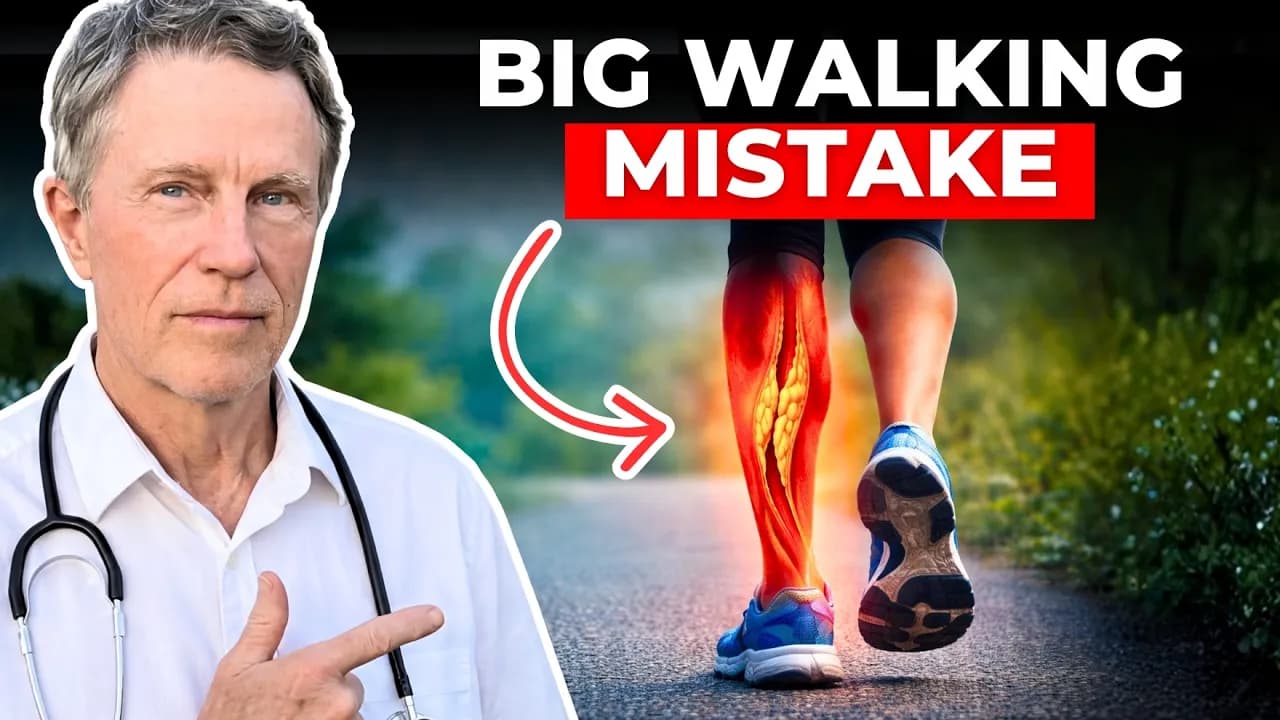
Even if only able to walk, people should set up walking to include intensity bubbles or episodes of intensity. One approach uses a 40-pound weight belt or weight vest combined with hills. Carrying 40 pounds up a long hill creates intensity. Getting one thing right like exercise but skipping intensity means leaving most of the biological benefit behind. Most people are doing one type only and skipping the other two, over-simplifying the approach.
Telomeres are structures at the end of every chromosome, functioning like the plastic tip on a shoelace. Every time a cell divides, the telomere gets a little bit shorter. When it gets short enough, the cell can no longer divide properly. The enzyme that repairs and extends telomeres is called telomerase. Randomized clinical trials show that aerobic training increases telomerase activity and increases telomere length in blood cells. A meta-analysis of these trials confirms statistically significant effects on both telomerase activity and telomere length. Resistance training alone does not produce this effect. Aerobic exercise measurably slows the rate at which cells are aging.
The speaker used to be a distance runner who completed several marathons and an ultra-marathon of 40 miles through mountains in Kentucky. After focusing on metabolic disease and pre-diabetes, long slow distance was largely replaced with walking, intensity work, and resistance training. Now married to an ex-marathoner, both do at least one 4 or 5 mile run weekly. Population data shows that 150 to 300 minutes per week of moderate aerobic exercise activity reduces frailty, disability, and all-cause mortality in older adults. Below that threshold most benefit does not materialize. The modality matters less than the dose. Walking, cycling, or swimming are options, but the target is 150 minutes per week, which is 2.5 hours weekly.
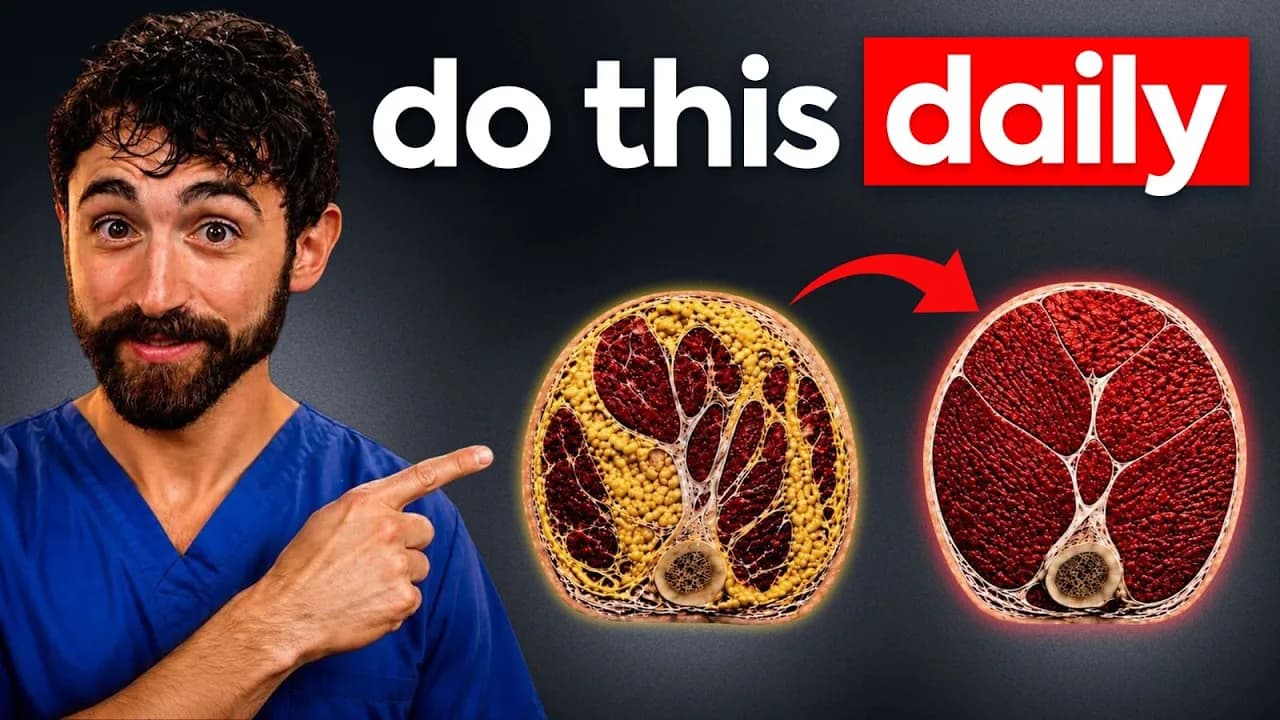
After age 60, muscle loss becomes one of the strongest predictors of disability and early death. The technical term is sarcopenia. This process actually starts in the 30s, with muscle mass beginning to decline if left alone. By the 60s and 70s, people can lose up to 15% of muscle per decade without intervention. Muscle loss affects more than strength. Falls and fractures become major concerns in the 60s and 70s, often resulting in hospitalization and death within the following year. Aerobic exercise alone will not prevent this loss. People can walk 300 minutes weekly and still lose needed muscle.
Muscle serves as the most important internal safety valve against metabolic disease that starts creeping in even at age 18. Resistance training is the only intervention that reverses sarcopenia, requiring two to three sessions per week.
Deep squats provide benefits beyond muscle building. A randomized clinical trial published in Scientific Reports compared shallow squats versus deep squats in adults averaging around age 70. After 12 weeks, the deep squat group showed greater gains in muscle thickness, knee extension strength, and overall physical function. When going below parallel into a full deep squat, muscles release myokines, which are anti-inflammatory molecules produced when muscle tissue contracts under load. These myokines directly reduce chronic low-grade inflammation that drives plaque buildup in arteries. A deep squat is an anti-inflammatory intervention, not just a leg exercise. Most people over 60 have stopped going below 45 degrees, let alone below parallel, which is exactly when and where it matters most.
For people whose knees do not allow going below parallel due to previous injuries or hard living, isometric exercises provide a good alternative. Wall squats where the back stays against the wall at 90 degrees for 15 to 30 seconds, or up to one minute if possible, push leg muscles effectively. For those with stability issues, chairs or objects near the wall can provide support.
When asked to rank exercise types, diet, sleep, social interactions, mental activities, genetics, stress, vaccines, and other factors by impact, the answer depends on individual circumstances. Cardiovascular disease, more accurately called vascular disease, is the biggest threat to longevity once people hit their 40s. Vascular disease affects the brain, eyeballs, and kidneys. It is multifactorial with multiple causes. The first step population-wide is diet: eating the amount of carbohydrates the body can tolerate or less, since most people eat more, causing inflammation that leads to plaque, heart attack, stroke, dementia, blindness, and kidney disease. The second step is exercise, focusing on intensity, which people miss most often. The third step is removing roadblocks, such as discomfort from intensity or inability to quit eating bread. Sleep has been a major challenge for years.
Diet, exercise, and addressing roadblocks must be handled before considering supplements and medications. The first step is understanding your metabolism. Some people at age 65 or 70 have perfect glucose metabolism, but the last US census showed that by age 18, over half of US citizens have carb metabolism problems including pre-diabetes and metabolic disease. You cannot fix what you do not measure, so test rather than guess. After understanding your metabolism, move to diet to determine how many carbs are healthy for you, then exercise, then roadblocks, and only then consider supplements and medications.
Social interactions and mental activities are closely related. Motivation is essential because building habits takes time and can be difficult, especially with carb addiction. You need both extrinsic motivation from family, friends, or other external factors, and intrinsic motivation for personal reasons such as looks, feeling better, or getting off medications. There are no shortcuts and consistency is required every day.
Intensity is the component most people miss because it is uncomfortable. Whether resistance intensity causing muscle burn or aerobic intensity causing breathlessness, the postprandial glucose spike is one of the primary drivers of arterial damage. Every time blood sugar goes past 140 after a meal, inflammation begins to hit the artery wall, and this happens twice a day in many people.
HIIT directly attacks the problem of post-meal glucose spikes. Diet alone is insufficient without HIIT. Two of the biggest issues associated with loss of the interface between capillaries, arteries, and cells are metabolic disease, prediabetes, and aging. These conditions destroy the microvasculature, the capillary penetration to muscles, which is where insulin receptors live. A 2025 meta-analysis of randomized clinical controlled trials showed that low volume HIIT reduced fasting glucose by about 17 mg per deciliter and dropped hemoglobin A1C by about 0.7 percentage points. Compared to moderate continuous exercise, HIIT was significantly more effective at improving insulin sensitivity.
When doing HIIT, muscles sense they are not getting enough oxygen because of the critical failure step at the microvasculature. This stress causes the body to heal by rebuilding capillaries, improving insulin sensitivity. Cells respond better to insulin as the interface between capillaries and muscles increases, giving aging or resistant insulin receptors more space. Post-meal spikes decrease and arteries take less damage.
A gym is not required. Sprint up a hill for one minute or less of full intensity effort, followed by the same amount of time of rest. Repeat four to six times per session, three sessions per week. For re-HIIT, only two intervals are needed with 20-second intensity phases at 90-95% of maximum effort, where at 15 seconds you feel you may not complete the full 20 seconds. The intense phase can be sprinting up a hill, rebounder sprinting, cycling, jogging, jumping jacks, high knees, or burpees if joints allow. You should be breathing hard and unable to hold a conversation. A randomized crossover trial showed meaningful improvements in beta cell glucose sensitivity after a single session.
For full HIIT, do seven to ten intervals aiming for a total of 20 per week, which could be ten intervals twice a week or seven intervals three times a week. When doing a full minute, use about 80% of maximum effort. For the 20-second shorter intervals, aim for 90-95% of maximum.
For people with hip replacements or inability to run or jump, recumbent bikes are recommended because knees stay at a 45-degree angle and allow strong pushing with less discomfort. Swimming is another good option. Walking at a stronger pace provides a better alternative for those unable to do more aggressive exercise. Start with lighter weights like 10 pounds and work up to 20 pounds when doing hill work. Increase walking speed during walking intervals. Japanese intensity interval walking is one approach. Hand cycles or upper body ergometers (UBE) are alternatives, though they target smaller muscles. When doing lower body exercises, adding upper body work adds approximately 30% more activity.
NordicTrack and Schwinn Airdyne (now replaced by Assault Bike) combine leg and upper body work. These allow watching TV or doing email during training. Assault bikes are effective for HIIT and easy on the knees. Recumbent bikes provide a seated position with forward pushing motion. Seated thigh masters provide burn with low impact. Farmers walks carrying half body weight with a quarter in each hand along with a single overhead weight provide burn and discomfort for most people.
After cardiac arrest, go to cardiac rehab first rather than overdoing intensity. For atrial fibrillation and heart failure, HIIT can be beneficial but must be done smartly without overdoing it to unsafe levels. Cardiac rehab provides guidance on appropriate intensity.
Reduced Exertion High Intensity Interval Training allows a session in five minutes. REHIT involves two intervals of 20 seconds at 95% intensity with 40 seconds recovery between them, plus 30 seconds to one minute of warm-up at the beginning and cool-down at the end. If you can do a full minute at intense phase, you are not doing enough intensity for REHIT. An 8-week trial showed REHIT outperformed full 30-minute sessions on the fitness fatness index. One hundred percent of REHIT participants achieved clinically significant improvements compared to 53% in the moderate exercise group. REHIT produces the same result in less time than full HIIT.
One session of full HIIT per week using Norwegian 4 by 4s on a 4-mile run, plus two to four REHIT sessions per week. Full HIIT leaves you wiped out, while REHIT allows feeling good the rest of the day.
Efficacy can be measured through perceived exertion by how hard the exercise feels and whether you are out of breath. Heart rate can be measured by calculating maximum heart rate and working at 80-90% of maximum. After reaching target heart rate, back off and wait for heart rate to return closer to 120 before the next interval. If heart rate returns to 140 after one minute, there may be uncertainty about pushing over 160 for the next interval. VO2 max requires laboratory stress testing with a mask. Heart rate variability (HRV) can be tracked as it increases with good exercise protocols and correlates with healthier cardiovascular and nervous system function long-term.
Rocking is emphasized more than farmer's walks, though both provide effective workouts when performed with sufficient intensity. Farmer's walks are noted as popular and beneficial when intensity is maintained.
A viewer named Hey Zeus asked about obtaining a reliable CIMT (carotid intima media thickness) test in Louisville, Kentucky. CardioRisk is identified as the group offering the most accessible, highest quality CIMT testing nationwide. They have no financial relationship with CardioRisk. Their approach involves trained CIMT technicians making scheduled stops across the country, similar to a milk run. The office can provide contact information for CardioRisk to check availability in Louisville over the coming months.
Todd's CIMT reports are described as sometimes sounding alarming, though they contain important information. The highest quality and best accessibility are emphasized for this testing service.
The correct pronunciation of Louisville, Kentucky is clarified as "Lou-uh-vul" rather than "Louis-ville."
Blue zones research is considered unreliable due to data handling issues. The concept serves more as a marketing tool than scientific evidence. While some generic advice from blue zones may be sound, the claim that people in these regions actually lived longer is disputed. A previous show with Gil Carvalho explored the challenges behind blue zones research in detail.
Gil Carvalho is described as a plant-based advocate who examines evidence thoroughly. Despite differences in views on LDL cholesterol and plant-based versus low-carb approaches, the relationship is characterized by mutual respect and scientific discussion rather than personal attacks. The value of examining science together despite differing opinions is emphasized.
The low-carb perspective on LDL is explained: doctors have long recognized that metabolic disease, diabetes, and prediabetes damage arteries more rapidly than other factors. The problem lies in viewing diabetes as merely a risk factor rather than addressing it as a root cause. Most cases of diabetes are diagnosed 5-7 years late, after plaque has already begun accumulating.
A marathon anecdote describes running backwards during a second marathon due to muscle balance issues from insufficient resistance training and HIIT. A spectator misinterpreted the backwards running as checking who was being beaten. While backwards walking or running may help with muscle balance problems, the risks (particularly tripping hazards) may outweigh benefits for those focused on prevention.
Aerobic base: 150-200 minutes per week of moderate intensity walking or cycling. This forms the foundation without requiring major time investment.
Resistance training: Two to three times per week, focusing on major muscle groups (legs, back, core, hips, thighs). Resistance snacks can supplement gym sessions - examples include 1-minute wall sits followed immediately by 1-minute deep lunges on each leg. Full range of motion is emphasized, going below parallel on squats when possible to maximize myokine benefits.
HIT and REHIT: One session of HIT per week (1-minute on, 1-minute off) and two to three sessions of REHIT (20 seconds high intensity, 40 seconds recovery). Both protocols provide metabolic and cellular benefits.
The exercise combination addresses:
- Telomere length
- Inflammation from prolonged glucose and insulin circulation
- Sarcopenia
- Cardiovascular disease leading to heart attack and stroke
All recommendations are based on solid evidence rather than anecdotal experience.
5-10 minute exercise time slots scheduled three to five times daily can accumulate 30-40 minutes of additional exercise. This approach compounds throughout the day alongside regular gym sessions and walking, making substantial weekly exercise volume more manageable.
Soft plaque does not increase heart attack risk during HIT training. Heart attacks occurring during exertion are not associated with this type of training - in fact, this work is negatively associated with such events. The misconception that plaque is waxy material that breaks off under intensity is incorrect. Performing this type of exercise makes heart attacks less likely, not more.
The next episode will cover hidden causes of high blood pressure, including how to identify and address them.
Keep Thomas Fordham Brewer MD MPH in your library
Save the videos and channels worth coming back to, and find them again in one place.