Fat Loss Scientist: It’s Easy To Lose Weight, But Here’s Why You WON’T Do It! | Dr Andy Galpin
In a Nutshell
Dr. Galpin's core message: fat loss and health optimization are physiologically straightforward but fail due to undiagnosed sleep apnea (50% of athletes, 70-95% undiagnosed in women), novelty-seeking behaviors that destroy sleep, and lack of implementation rather than lack of knowledge. The biggest actionable barriers are sleep quality—sound matters more than any other factor, melatonin should only be used for jet lag at 0.3-0.5mg doses, and 64-68°F bedroom temperature—followed by the 54321 method for fat loss (5 days activity, 4 days structured exercise, 3 hard sessions) combined with progressive overload training. Success requires addressing one constraint at a time rather than attempting multiple simultaneous changes, getting objective health data as motivation, and recognizing that energy management beats working harder.
These notes were generated by AI and may contain inaccuracies.
Everything in the table has strong scientific evidence supporting better sleep. Kiwis show good results in studies, with two to three kiwis before bed improving sleep quality. Sleep divorce is another factor, as people generally do not sleep as well when sharing a bed with others.
Sound is more evidence-based than the rest of these interventions combined and is highly effective. Sound matters as much if not more than any other factor when sleeping. Screen usage, light, pillows, and wearables are also relevant considerations.
Annual spending on sleep is approximately 600 billion dollars, yet total sleep time has dropped 60 minutes over the last 60 years. This represents an inverse relationship where spending more on sleep coincides with sleep getting worse.
Dr. Andy Galpin has spent the last 20 years doing science coaching and education that enhances human performance. He has worked with the world's most elite athletes, entrepreneurs, and leaders.
Fifty percent of athletes have a clinical sleep disorder. Seventy to 80 percent of people with clinical sleep apnea go undiagnosed. For women, this undiagnosed rate is 90 to 95 percent.
Sleep apnea is highly associated with long-term death risk, cognitive function, mood regulation, performance, recovery, and metabolic health.
The 54321 method is a framework developed to help people with fat loss. The speaker explains this is interesting because the team provided a report showing how many viewers subscribe to the channel, noting some regular viewers are randomly unsubscribed.
The most concise way to describe the mission is wanting to give every person listening the opportunity to reach their goals and dreams, whether looking a certain way or performing a certain way. The goal is removing barriers so that success or failure comes from individual effort rather than external limitations.
Dr. Galpin gets equally excited working with the best linebacker in the NFL and someone who just wants to wake up without back pain. He has worked with number one draft picks in every major sport, Hall of Famers, Cy Young winners, MVPs, Olympic gold medalists, world champion fighters, hemiplegics, paraplegics, executives, small business owners, and individuals dealing with perimenopause.
Clients typically fall into two broad categories: rebuild and upgrade. Rebuild involves something wrong, hurt, broken, damaged, or overweight with clear limitations that need resolution. Upgrade involves feeling pretty good and wanting to get the best possible out of life, whether through energy, metabolic health, cognitive function, or performance.
The ability to accomplish these goals comes from focusing on physiology, which refers to the biomolecular signature including muscle imbalances, inflammation, and how the body is running and expressing itself.
Dr. Galpin's PhD is in human bioenergetics. He started his lab in 2011 and is an active scientist and professor. His real job involves conducting and disseminating research that enhances human performance. He has also started companies and privately coached people for over 20 years.
Professional athletes typically come with frequent injuries, tanked energy, bad sleep, or as optimizers who feel great and want to get ahead of issues. The general public shows similar patterns, with many wanting baseline data collection to predict problems before they arise while having limited daily time for interventions.
Most common issues include sleep and energy, performance goals, inability to get stronger, difficulty losing small amounts of weight, and mild brain fog with reduced sharpness.
Health anxiety represents overfixation and over-concern about little things with blood work, sleep, and other metrics. The speaker emphasizes being careful not to create health anxiety, noting that if someone feels good with good energy and wakes up feeling good, they should take a breath rather than over-worrying.
Natural tiredness at the end of the day is normal and needed. People who are hard chargers and high performers are often afraid of being tired, but this is a natural and necessary part of the process.
Sleep apnea is the biggest place of clinical disease that exists that no one knows about. Classic giveaways include waking up multiple times due to loud snoring, though snoring does not necessarily mean sleep apnea exists.
Apnea happens for multiple reasons beyond the traditional association with neck size and body composition. Recent evidence suggests neck size may not be as predictive as originally thought, though increased obesity rates correlate with increased apnea.
Women are less likely than men to complain about apnea symptoms and less likely to think about it as an anatomical issue. They often attribute symptoms to hormones, menstrual cycle, cognitive load, or demands of being a mother. Apnea can occur regardless of body composition.
Sleep apnea involves stopping breathing at night, which may or may not wake the person up. The problem is that it does not necessarily cause awakening, yet it remains deleterious to health with consequences from long-term death risk to short-term cognitive function, emotion, mood regulation, performance, recovery, and metabolic health.
Apnea occurs through anatomical or physical causes where something physically lands on the neck, tongue, throat, larynx, and esophagus, stopping breathing. Fluid shifts also contribute, as larger individuals have more fluid that shifts into the neck when lying down.
Additional types include neural causes, environmental causes, and positional causes. Traditional treatments include medication, CPAP devices, or oral appliances, but these have low success rates when given generically rather than based on specific apnea types.
Men who are middle-aged have 24 to 34 percent prevalence of apnea. Women have 9 to 17 percent prevalence. Seniors have 30 to 60 percent prevalence. Post-menopausal women have 25 percent prevalence. Approximately one billion people across the globe have sleep apnea.
Three primary reasons explain why sleep apnea and sleep problems are increasing. First, the physical environment is changing in ways our ancestors never encountered. Second, current testing solutions are either outdated or difficult to access. Third, public communication about solutions is wildly generic and thus not helpful.
Diagnosis should start with subjective assessment of how someone feels. If someone feels good with good energy, they should recognize this rather than immediately worrying. Natural tiredness at the end of the day is expected and necessary.
Free scientifically validated questionnaires exist for restless leg syndrome, insomnia, apnea, circadian disruptions, and chronotype assessment. These should be the starting point before moving to wearables or medical testing.
Wearables in the $100 to $600 range provide good awareness and accountability and are decent for total sleep time, but they are really bad at predicting deep sleep and REM sleep. Sleep quality scores and aggregate effectiveness scores are particularly unreliable.
Medical sleep studies at hospitals involve going into a room with wires and being observed, which most people find unappealing but may be necessary for true disease diagnosis.
Wearables can reveal important patterns through long-term data analysis. One client with 1,200 days of Oura Ring data showed that for every one beat per minute drop in resting heart rate, he gained six more minutes of sleep. This led to focusing on cardiovascular fitness to improve sleep duration.
The key insight was that investing in downregulation before bed lowers resting heart rate and enables longer sleep. The wearable provided the data point that made this connection clear and actionable.
The world is physically brighter now, as shown by NASA satellite data. Expected communication across time zones means staying up later with lights on. Skyglow occurs when light from Earth hits clouds and reflects back down, keeping the world brighter at night.
This explains why interventions like blackout curtains and sleep masks have become more necessary than in previous generations.
More people are moving into urban environments. Studies have found anxiety and depression up 20 plus percent when moving into the city, largely attributed to light and sound. Cities are extremely bright and loud, which requires taking extra steps for sleep quality.
Light exposure both in the morning and throughout the day can dramatically counteract negative effects from evening light exposure. If exposed to high amounts of light later in the day, seeing light appropriately during the morning and day will help reduce that damage.
Andrew Huberman has discussed light exposure in the morning impacting sleep at night. Morning light sets the circadian rhythm, and this earlier exposure helps reduce damage from later light exposure.
A cascade of things influence when it is time to be awake and time to sleep. This is both hormonally and neurally based. The brain will shut down or activate in response to light, exercise, arousal, food, stimulants, and other factors. Morning light sets that rhythm and starts the sleep pressure clock.
In rural environments, noise levels cruise at about 35 dB at night. Urban environments have a baseline of 60 to 70 dB. Sound matters significantly for sleep, with inconsistency being the big issue.
Many people use sound machines that are too loud, with common defaults at 40 to 50 dB. Data suggests keeping them sub 40 dB, especially for children. Sound machines should not be placed too close or too loud. They work by canceling out low-level inconsistent sounds like dogs getting up, windows creaking, or cars driving by.
Using podcasts to fall asleep is common but will never lead to best sleep. People use podcasts to cognitively switch off and distract themselves. If this habit were removed, sleep might temporarily worsen while the person struggles through that moment of cognitive arousal.
The recommended approach is to figure out what actually downregulates cognitively to achieve the same effect without disrupting sleep throughout the night.
Several supplements have moderate to strong scientific evidence for helping with sleep: tart cherry juice, chamomile tea, apigenin (distilled chamomile), kiwis (2-3 before bed), magnesium (particularly magnesium bisglycinate), omega-3/fish oil, and melatonin.
Supplements like apigenin or chamomile play the role of cognitive turnoff, similar to podcasts. They provide a reasonable switch that says frontal cortex turn off. These can be used as alternatives to podcasts for achieving cognitive downregulation.
Level one (highest quality evidence with lots of randomized control trials): magnesium, chamomile, melatonin. Kiwis would be level two or three, with enough studies to put them on the evidence table but less robust data than level one options.
Melatonin has more evidence than the other sleep aids combined because it is a medicine with extensive research from children to aging to bone health. Typical dosages in studies are 5-10 milligrams, but recommended dosing is 0.3-0.5 milligrams, about a tenth of common doses.
Melatonin should only be used to reset circadian rhythm for travel and jet lag, not as a nightly sleep aid. It is effective and safe in small doses for this purpose.
Melatonin is supposed to realign circadian rhythm. If taken in the middle of the night, the person is already in that rhythm, so it won't do anything. Chamomile would be better for cognitive difficulty getting back to sleep.
Studies show the dosage in melatonin pills versus on the label can be up to 100x higher. Morning urine testing has revealed people consistently tired despite doing everything right (cold room, dark, meditation) because they're hyperdosed with melatonin and spending the next day in a hyperdosed state.
Hyperdosed melatonin causes sluggishness and grogginess the next day, described as "sleep inertia" where people feel they can't get out of bed or feel they need coffee before interacting with others. This is not normal waking physiology.
Supplements should be purchased from third-party tested transparent companies that place testing on their websites. Vitamin D has similar accuracy profile issues. Melatonin should be taken earlier than thought before bed so the body has time to break it down before morning.
Melatonin doesn't actually make people feel tired. The mechanism is a circadian shift telling the endogenous system that it is nighttime. It creates shifts in cortisol, epinephrine, norepinephrine, and serotonin that move the body into a sleep pattern milieu.
There are no free passes in physiology. Caffeine can offset performance decrements from sleep deprivation but doesn't put performance back into the augmented state achieved when well-rested and caffeinated.
If someone sleeps great, their baseline performance is good, and caffeine augments that performance further. Sleep debt reduces performance, and caffeine can bring performance back to normal but not to the augmented state. People need both good sleep and caffeine to perform at their best if they use caffeine.
Pillow, bed, and mattress choices are mostly based on feel. The only concern is if a sleeping partner situation results in hitting each other or unwanted touching due to a bed being too small.
Products like Eight Sleep regulate temperature during sleep. If someone gets hot while sleeping, temperature regulation products help them sleep better. This can include cooling sheets or mattresses with better ventilation.
Screen usage is destructive to sleep, but the danger isn't primarily blue light exposure. The more dangerous aspect is the arousal associated with the search for novelty - engaging in podcasts, social media, games that are puzzle-driven, solution-oriented, interesting, and engaging.
Studies comparing TV time, tablets, phones, and reading show they can be equally dangerous to sleep. The content matters - reading engaging topics can cause sleep disturbances just like watching stimulating content.
Humans are hardwired through biology to search for novelty. People care about high achievement and performance because someone breaking a barrier benefits everyone. Historical stories from Joseph Campbell's hero's journey to Hercules to the marathon all involve someone doing something no one has ever done before.
People care more about records than regular wins and losses because they are novel. There is more than a dopamine hit from novelty - it provides a sense of purpose where life matters because of involvement in something never seen before.
The pigeon studies showed that variable rewards, where the timing of the reward cannot be predicted, created stronger addictive behavior than consistent rewards. The pigeon was more likely to keep pressing the lever when it didn't know when the dopamine hit was coming. Scrolling on social media operates like a slot machine with variable rewards, where users don't know what they'll get with each scroll. The more unpredictable the reward timing, the more likely people are to continue scrolling through boring content for the occasional engaging post.
Walking away from belief, hope, and "what if" scenarios is extremely difficult. People often prefer the possibility of equity in a startup over guaranteed money because the uncertainty and potential for greater reward is compelling, even when the most likely outcome is that the investment goes to zero.
Deleting social media apps from phones produces remarkably positive net impacts on life. Initial fears of FOMO or missing important information prove unfounded. UFC fighter Shaun Ali deleted his social media after realizing he was scrolling while his young daughter was present, choosing to have his team handle his accounts instead.
Sharing a sleeping environment with a partner, known as sleep divorce, can impact sleep quality. Data shows people generally don't sleep as well when sharing a bed. Practical solutions include using separate sheets so one partner's movement doesn't disturb the other, or adjusting sheet types to accommodate different preferences for how constricted they feel while sleeping.
For partners who make noise or toss and turn frequently, practical interventions include placing a pillow between partners to prevent contact during movement, or using earplugs. Partial sleep divorce arrangements can be considered when full separation isn't feasible but sleep quality remains significantly impacted.
Sleeping in new environments triggers the first night effect, where circadian rhythms are disrupted due to unfamiliar sounds, light, feel, temperature, and smell. Athletes who travel frequently combat this by mimicking their home sleep environment on the road, including bringing their own pillows. Lavender scents show moderate association with improved sleep onset.
The recommended bedroom temperature for sleep is 64 to 68 degrees, though individual preferences vary. Some people prefer slightly colder temperatures to accommodate heavier blankets. Setting air conditioning too low can cause problems when the unit cycles on and off, creating disruptive sound changes that wake people. Additionally, unclean air conditioning systems can circulate dander and particulates that cause nasal congestion and breathing difficulties during sleep.
Fans can cause dry mouth if positioned to blow directly on the face, leading to nighttime awakenings for water. Repositioning fans to avoid direct facial airflow can prevent this issue.
A 2009 Mind Lab study at the University of Sussex measured brain waves during sleep while playing various ambient sounds. Men's top wake trigger was a car alarm, followed by wind howling and mosquito buzzing. Women's top trigger was a baby crying, followed by dripping taps and shouting outside. Both genders ranked snoring as their fourth most disruptive sound.
Having children represents one of the largest causes of sleep disorders in women. Sleep challenges during the last trimester and newborn period can establish patterns of insomnia, irregular sleep schedules, and circadian disorders that persist even after children are grown. Postpartum care often focuses primarily on the baby while neglecting maternal sleep recovery.
While evolutionary theory suggests men and women may be biologically attuned to different sounds, differences in who wakes up and responds to children are often heavily influenced by social roles, parenting expectations, and individual sleep depth rather than purely biological factors.
Everyone can run self-experiments to improve sleep using free guides available on relevant websites. These tutorials provide frameworks for testing sleep interventions systematically. The goal isn't to make sleep the center of life with elaborate routines, but rather to develop sleep resilience - the ability to perform well despite occasional poor sleep nights.
World-class performers across athletics, entrepreneurship, and leadership excel at energy management rather than working harder than others. This encompasses cellular energy, interpersonal communication patterns, relationship dynamics, activity selection, and efficiency optimization. High performers identify energy drains that provide low return on investment and systematically eliminate or replace them.
Rather than adding multiple new habits simultaneously, focus on identifying the single biggest constraint on energy. This could be sleep issues, relationship mismanagement, overworking, underfueling, stimulant overuse, lack of sunlight exposure, or physical pain. Addressing one constraint at a time proves more effective than attempting multiple simultaneous changes.
Blood markers like cholesterol represent secondary measures attempting to predict outcomes such as heart health. Excessively high cholesterol shows association with earlier cardiovascular disease, heart attacks, and strokes. Familial genetic factors can contribute to high cholesterol independent of lifestyle factors.
Saturated fat isn't inherently problematic, but context matters significantly. When blood markers change following increased saturated fat intake through ketogenic diets, and family history includes heart disease and cardiac procedures like pacemakers, medical consultation becomes essential. The value of blood work lies in interpretation rather than raw data alone.
Exercise-induced cardiac remodeling, particularly left ventricular changes, can indicate beneficial adaptations rather than pathology. The heart's four chambers include two atria on top and two ventricles on bottom, with structural changes potentially reflecting positive cardiovascular conditioning rather than disease processes.
The left ventricle is significantly larger than the right ventricle because the right ventricle only pumps blood to the lungs a few inches away, while the left ventricle must pump blood throughout the entire body, including down to the toes and back up against gravity. Strength training and resistance exercise cause the left ventricle to adapt by becoming larger and stronger, similar to how biceps grow when lifting weights. This is a common and healthy adaptation to the increased workload.
Two types of plaque buildup exist in arteries. The concerning type is sticky and can dislodge, creating immediate risk. The other type is temporary but can potentially convert to the dangerous form. A friend named Joel Jameson, who was young, super fit, had no stress, didn't smoke or drink, and had normal blood work, still underwent a CT angiogram against his cardiologist's advice and discovered a 50% blockage in his widowmaker artery. This case demonstrates how imaging can reveal critical issues that blood work alone cannot detect.
A client's total cholesterol was reduced from 347 to 223 through fiber supplementation and stress reduction. Fiber binds to certain types of cholesterol and physically clears it from the system. The client was a hard-charging CEO whose stress levels contributed to elevated cholesterol. Stress reduction alone dropped his CRP inflammation marker from 2 to 0.2, representing a 10x reduction. Cholesterol functions as an acute phase reactant that responds to acute stress and inflammation, causing some markers to increase while others like vitamin D decrease.
The same client eventually required a statin after lifestyle interventions brought his cholesterol from 223 to 163. This represents an effective integration of lifestyle changes with medical treatment. Neither extreme position is recommended—claiming everything can be solved through lifestyle alone or suggesting medication is the only solution. The approach depends on individual circumstances and should involve working with medical providers.
Vitamin D levels were borderline low at 37, with the lower end of normal being 40. People of African heritage tend to have lower vitamin D levels. Vitamin D serves as a marker of overall health and is involved in reactions from brain function to gut health, hormones, immune system, metabolism, bone health, and skeletal muscle growth. It is clinically low in a high percentage of the population and subclinically low in a vast majority.
Whole foods, sunlight, and positive social environments should be prioritized over supplementation. However, modern living often creates situations where supplementation becomes necessary, such as working 12-hour office days or living in locations with limited sunlight like the UK. The key is giving yourself grace rather than attempting to force natural solutions in an otherwise unnatural lifestyle.
When implementing health changes, focus on one actionable item per week to avoid failure. This single focus might be going outside daily or another specific behavior. Attempting more than one or two active changes per week typically leads to failure, particularly for challenging situations like single parents or night shift workers.
Omega-3 levels were low at 5 when the target is 8, while mercury levels were high. Most omega-3 sources contain mercury, so increasing omega-3 intake typically raises mercury levels. The solution requires changing the source of omega-3s to higher quality supplements or better quality foods rather than simply increasing quantity.
Exercise enhances energy through multiple mechanisms beyond mitochondria. Physical activity increases both the number and size of mitochondria, making energy production more efficient. Exercise also increases total blood volume and red blood cell count, improving oxygen delivery to fuel mitochondrial function. Any activity demanding blood flow increases blood supply through the SAID principle (Specific Adaptation to Imposed Demand).
Exercise is a relatively recent concept from the last 75 years. Historically, humans naturally engaged in carrying, sprinting, jumping, climbing, and grappling. Any challenging activity—whether skateboarding, playing pickleball, walking, gardening, or vocationally-based movement—can produce equal clinical outcomes for mortality, joint pain, and body composition if it meets the necessary constraints.
Energy for specific activities develops through repeated exposure to those activities. If walking up stairs feels like a V2 max test, the tendency is to avoid it, creating a downward spiral of declining capability. The "use it or lose it" principle applies universally—avoiding difficult movements due to pain leads to increased difficulty and further avoidance.
Energy issues fall into hidden stressors (undiagnosed pathogens, mold exposure, underfueling) and visible stressors (lack of exercise, insufficient challenge). A major league baseball player experiencing extreme fatigue was found to have severe mold exposure, and clearing this hidden stressor restored his energy. Low energy availability from insufficient caloric intake can also create energy deficits despite adequate sleep.
The goal should extend beyond avoiding pain or simply staying alive to maintaining high performance capability. A 70-year-old pentathlete's DEXA scan showed superior bone and muscle compared to a typical 30-year-old, demonstrating that decline isn't inevitable with aging. The focus should be on "performance span"—maintaining the ability to perform desired activities at high levels for as long as possible.
Moderate to light intensity exercise generally provides energy, while maximum intensity sessions may leave you exhausted immediately afterward but contribute to greater daily energy over time. When traveling, sick, or busy, lighter movement sessions are recommended. Healthy individuals seeking long-term adaptation can push training intensity.
Grip strength serves as a useful scientific test but isn't the single biggest predictor of longevity. Cardiovascular fitness markers like VO2 max and VO2 peak have been shown in large databases since the late 1980s to predict lifespan better than traditional clinical markers like blood pressure and cholesterol levels. Performance-based markers often predict health outcomes more accurately than indirect markers.
Getting a grip strength device for under $40 provides a useful crude metric for health assessment. People who are really weak show worse health outcomes on average. However, grip strength should not become the sole focus of training optimization. For someone young and fit with good blood work and body composition, high grip strength indicates nothing additional about their health status.
Grip strength serves as both a proxy for overall body strength and a direct measure of arm strength. The test primarily evaluates nervous system function and brain performance rather than pure muscular strength. This explains why grip strength indicates general poor health in some populations while also providing direct information about nerve denervation and neurological health.
Over the last 3 years, 20-25 studies have examined grip strength asymmetry, particularly in neurological disease contexts. This research focuses on early predictions of Alzheimer's and Parkinson's disease. The asymmetry often correlates with handedness patterns, where the force-dependent limb differs from the neural control limb.
Testing revealed results of 130 pounds on one side, 160 pounds on the stronger side, and 110 pounds on the weaker side. Jeff demonstrated greater overall strength than the test subject, indicating grip strength measures a very specific type of strength rather than general strength capacity.
Muscle power is defined as force multiplied by velocity. Force equals mass times acceleration (F=ma), while power represents force multiplied by velocity. Power training requires appropriate mass combined with velocity emphasis. Training mistakes occur when mass is too light, resulting in neither strength nor speed gains.
Powerpenia represents the accelerated loss of power with aging, distinct from sarcopenia which involves accelerated muscle and strength loss. Power maintenance prevents falls, enables quick acceleration, and reduces fracture and dislocation risk, particularly after age 60-65.
Training more frequently provides more opportunity for stress and adaptation, though results depend on the specific marker. For muscle growth, hitting the same weekly volume matters more than training frequency. Time periods for lifting don't affect results unless rest intervals create excessive fatigue that compromises volume.
Shorter rest intervals between sets are not consistent with evidence for muscle building. Optimal rest periods of 60-90 seconds or up to 2 minutes generally allow higher quality subsequent sets. Quality remains the primary concern, encompassing technique, range of motion, intent, and mind-muscle connection.
Supplements divide into two categories: correcting physiological deficiencies and performance enhancement. Correcting deficiencies includes high-quality multivitamins and fish oil when blood work indicates need. Performance accelerators include creatine, beta alanine, and sodium bicarbonate, adjusted based on specific fitness goals.
Current personal protocol includes zero supplements. Summer provides adequate vitamin D through sunlight exposure. Omega-3 needs are met through diet control and wild-caught fish consumption, supported by blood work monitoring.
The biggest misconception about fat loss is specificity - believing one specific food must be avoided or one training method required. Fat loss is categorically simple but practically difficult. The key distinction lies between "baking" (precise measurement) and "cooking" (conceptual flexibility) personality types.
The baking approach involves weighing and measuring every item with daily weight checks following exact prescriptions. The cooking approach uses 1-3 simple rules with flexible weight monitoring. Most people prefer detailed prescriptions because they eliminate decision-making and anxiety about guessing.
The recommended approach starts with the baking method for two weeks to develop awareness of portions and nutritional content, then transitions to concepts. Seven-day diet recall experiments with graduate students revealed consistent patterns: people ate more fat and carbohydrates than realized, and less protein than expected.
Keto dieting provided educational value by forcing detailed food examination and creating awareness of carbohydrate content. The fundamental point is developing consciousness about food composition to enable informed decisions.
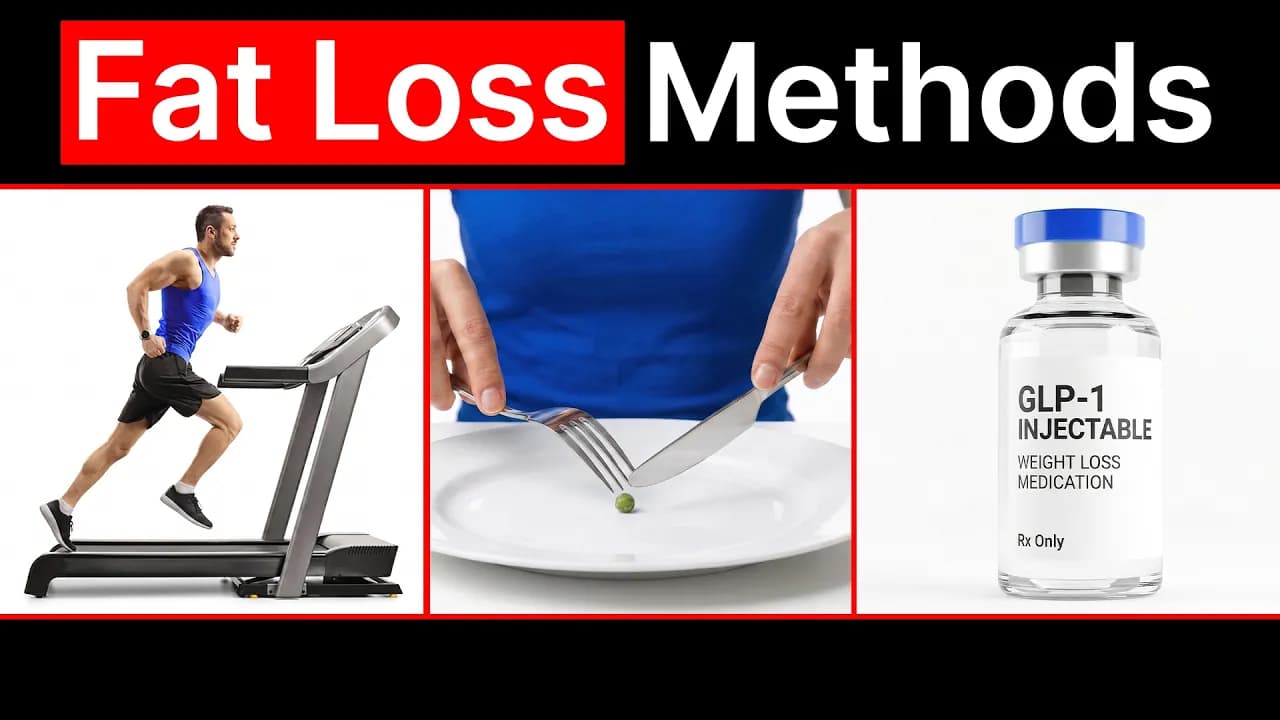
Exercise burns fewer calories than equipment displays indicate. Adaptive thermogenesis can occur where the body reduces daily energy expenditure to compensate for exercise calories burned, potentially neutralizing the caloric deficit. Exercise serves as one tool for fat loss but is not the only method.
People who exercise during weight loss journeys maintain fat loss better over weeks to years. The 54321 method recommends: 5 days weekly of activity (exercise, walking, or vocation), 4 days weekly of structured exercise, and 3 of those sessions performed hard enough to sweat.
If you're active five days a week and doing structured exercise four days a week, with three of those sessions hard enough to produce a really good solid sweat, you're probably doing enough to burn enough calories to give yourself a chance from the exercise perspective to losing weight. These can be simplified as the 543 approach.
More granular recommendations include a couple of days a week of strength training and at least one day where heart rate gets really, really, really high.
When people go to the gym three or four days a week but nothing changes and they feel stagnated, the typical solution is lack of focus in programming rather than lack of focus during training sessions.
If someone is "winging it" at the gym, that explains the lack of progress. Having a plan itself is more important than the specific plan, because it enables progressive overload - the ability to increase repetitions, sets, load, or range of motion compared to previous weeks.
Most people do the same thing at the gym week after week, such as keeping the stair master machine on level eight for 10 minutes for seven months, rather than increasing intensity or volume progressively.
Absolute beginners who aren't going to the gym at all can use AI tools to generate basic starting programs. These provide enough structure to get started and follow for six, eight, or 10 weeks.
A user asked: "I want to go to the gym 4 days a week and I want Andy Galpin's formula for me to gain muscle, but what are the principles that I need to apply based on Andy Galpin's work over the next 4 months in order to gain this muscle?"
The AI response emphasized:
- Prioritizing progressive overload by gradually increasing weight, reps, or sets
- Using variety of repetition ranges including heavy low-rep work for strength and moderate to high-rep work for muscle growth
- Taking adequate rest between sets, usually two to five minutes for heavy compound movements
Online coaching declined as AI tools became available, but the market has swung back with in-person training now in higher demand. Personal trainers don't just tell people what to do - they ensure people actually do it through accountability, emotion, and connection.
The information about exercise prescription has existed for a long time - none of the fundamentals like dumbbells, barbells, or rep ranges were invented by current experts. The barrier isn't lack of information but lack of implementation.
People retain real case studies of real people more than abstract information. When someone shares what a specific person did in a particular situation, it stays with listeners and builds trust because it demonstrates lived experience.
Everyone has a "before and after" moment when they decided to take something seriously. These moments are always different for different people and don't necessarily require rock bottom experiences.
The threat of death doesn't motivate behavior change - if it did, obesity rates wouldn't be at 40%. People know the risks associated with obesity, alcohol, smoking, and social media, but this information doesn't change behavior. However, when something becomes "too close to home" - like a neighbor dying in a car accident - it creates immediate behavior change.
A host described a vivid memory from age 10 when a mother who lost her child in a car accident and a police officer describing the scene came to his school. The officer mentioned looking at a deceased person's phone that was ringing with "Mom" displayed. This created a lifelong habit of ensuring everyone wears seatbelts.
Professional athletes who were convinced they were fast enough changed completely when shown objective data from force plates demonstrating they weren't as fast as they believed. Seeing personal biometric data creates immediate buy-in that abstract information cannot achieve.
Research identifies these primary catalysts:
- Acute health shock or diagnosis
- Various health events that become wakeup calls
- Quantitative biometric feedback and data
- Major life transitions such as becoming a parent, turning ages 30, 40, or 50, or reaching retirement
Selling a company creates major life changes similar to post-gold depression, where people lose purpose and suddenly have both money and time. This often leads to investing in health after sacrificing it during the company-building years.
Rather than vague goals like "I want to lose a bit of weight," getting objective health data provides clearer motivation. This works whether results show problems that need addressing or confirm that current approaches are working.
Not everyone needs to pursue being the absolute best possible, but this doesn't mean checking out on health entirely. The goal can be living as long as possible without major health issues requiring extensive later intervention.
People who seek coaching have typically already figured out their "why" or at least have the motivation to seek outside counsel, allowing focus on the "what" and "how."
A goal to "go to the gym every day" set someone up for failure because missing even one day due to circumstances like flights destroyed motivation entirely. The goal was unrealistic because it didn't account for normal life variations.
When someone wants to lose fat, they typically think they need to exercise more and diet, but these are tactics rather than addressing what's actually preventing progress. The real barriers might include hidden stressors or other factors.
Rather than pursuing fat loss to get healthy, the approach should be getting healthy first, which makes fat loss significantly easier. This represents a fundamental shift from typical goal-setting.
When clients define success only as losing 25 pounds, asking what happens if they lose 12 pounds but also eliminate shoulder pain, normalize bowel movements for the first time in 10 years, and dramatically increase energy reveals that these outcomes would actually constitute success, not failure.
"If you were sure to fail, what would still be worth doing?"
Being ultra-competitive but not minding losing, the answer encompasses everything because the process itself is valuable regardless of outcomes. The focus remains on doing and competing rather than podium finishes.
Dr. Andy Galpin's motivation stems from being deeply obsessed with the subject matter and having pure intentions focused on research, education, and coaching rather than business concerns. His work synthesizes complex information effectively.
- Podcast: "Perform with Dr. Andy Galpin" available everywhere
- Website: andygalpin.com
- Social media: Instagram and other platforms
Additional resources mentioned throughout the conversation, including tests and questionnaires, are linked in the video description.
Keep The Diary Of A CEO in your library
Save the videos and channels worth coming back to, and find them again in one place.