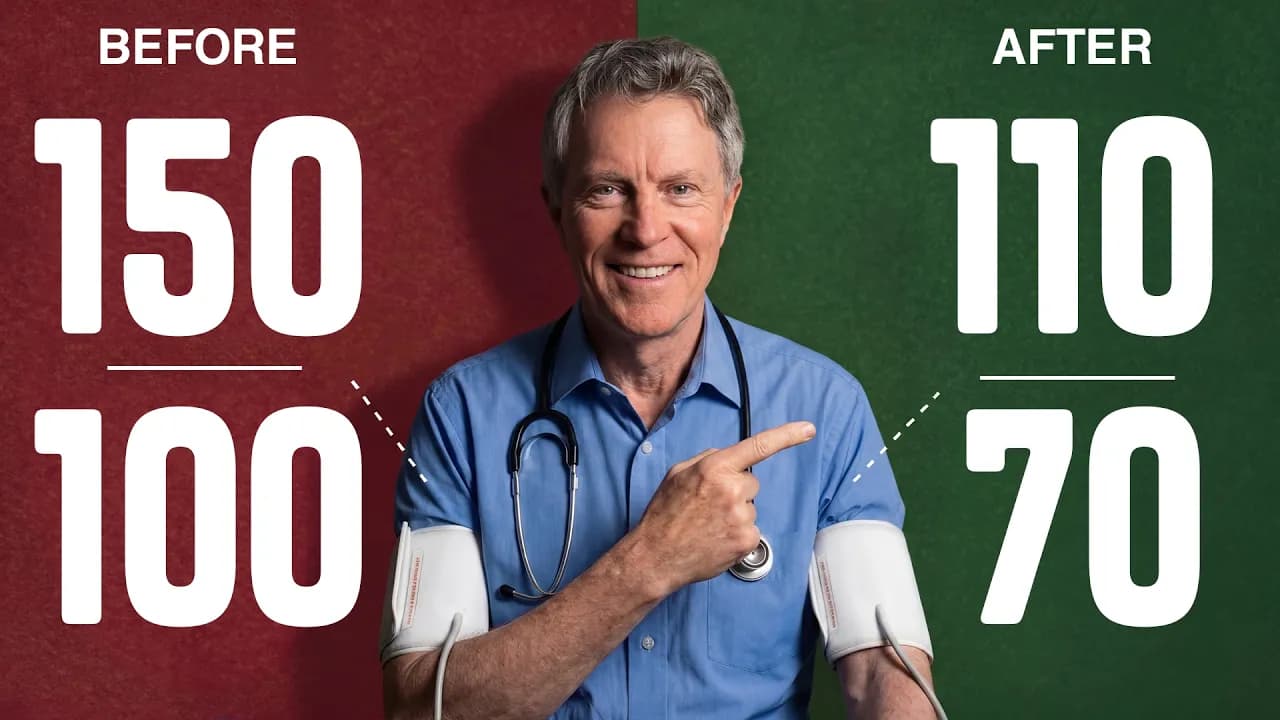
Foods That Lower Blood Pressure by Fixing the Cause Not the Symptom
In a Nutshell
The root cause of high blood pressure for many people with belly fat is excess insulin, which activates the fight-or-flight system and forces the kidneys to retain sodium. The most effective foods to counter this are ground flaxseed (lowers systolic BP by 10-15 points) and blueberries (lowers it by 7 points), while beetroot, garlic, and avocado provide modest additional benefits by relaxing blood vessels or improving potassium balance.
These notes were generated by AI and may contain inaccuracies.
Many people are told that cutting salt is the single biggest thing they can do for their blood pressure. The problem is that even when people eliminate chips, fast food, and added salt, their blood pressure can still rise. For many people, salt is not the complete story.
Blood pressure is commonly explained through the mechanism of relaxing blood vessels, similar to widening a garden hose. However, for people carrying extra weight around the midsection, a second engine drives blood pressure up that has nothing to do with stiff blood vessels: insulin.
When the body becomes insulin resistant, which often happens with extra belly fat, it must pump out more insulin than normal. This extra insulin activates the body's fight or flight system, also known as the sympathetic nervous system. This causes the heart to beat harder and blood vessels to tighten. Additionally, excess insulin signals the kidneys to hold onto sodium, even when dietary salt intake is minimal.
Beetroot contains natural compounds called nitrates that the body converts into nitric oxide. Nitric oxide signals blood vessels to relax and widen. Multiple controlled trials on beetroot juice found it lowers systolic blood pressure by approximately 4 to 5 points. However, most trials lasted only a few days to a couple of weeks, so long-term data is limited.
Practically, consuming a glass of beet juice or a cup of roasted beets two to three times per week is a reasonable approach. Store-bought beet juice works effectively without requiring home juicing.
Garlic contains a compound called allicin that works through the nitric oxide pathway to relax blood vessels. Allicin does not fully form until garlic is crushed or chopped and allowed to sit for about 10 minutes before cooking or eating. A review of 17 separate trials found that garlic supplements lowered systolic blood pressure by an average of 3.5 to 4 points.
The practical recommendation is to eat two to three crushed garlic cloves daily, or use an aged garlic extract supplement for those who cannot tolerate the taste or smell.
Blueberries are one of the most polyphenol-dense foods available. Polyphenols directly affect how well the endothelium, the lining of blood vessels, functions and releases nitric oxide. In a trial involving postmenopausal women with early-stage high blood pressure, consuming the equivalent of 1 cup of blueberries daily for 8 weeks lowered systolic blood pressure by 7 points while increasing nitric oxide levels by nearly 70%.
Both fresh and frozen blueberries provide comparable benefits, as frozen blueberries are often picked at peak ripeness and flash-frozen.
Avocados perform two separate functions for blood pressure. They are one of the richest sources of potassium, which helps kidneys release extra sodium. This is particularly relevant when insulin is already signaling kidneys to retain sodium.
Avocados also contain fiber and monounsaturated fat, the same type found in olive oil. This combination slows digestion and maintains steadier blood sugar after meals, reducing the need for excess insulin production.
A large observational study found that people who regularly consumed avocado had lower rates of new high blood pressure diagnoses. The practical recommendation is to eat half an avocado three to four times per week.
Ground flaxseed demonstrated the strongest evidence among all foods discussed. In a year-long placebo-controlled trial involving adults with blood vessel disease, consuming 30 grams (approximately 3 tablespoons) of ground flaxseed daily lowered systolic blood pressure by 10 points and diastolic blood pressure by 7 points after 6 months. Among participants who started with the highest blood pressure, the systolic drop reached 15 points.
The primary mechanism appears to involve omega-3 fats in flaxseed reducing inflammation in blood vessel walls, making vessels healthier from the inside. Flaxseed also contains fiber and plant compounds called lignans, though evidence for blood sugar control effects remains mixed.
The evidence comes from a well-designed trial, and flaxseed must be ground rather than whole, as whole flaxseed passes through the body mostly undigested.
Three foods work primarily on blood vessels: beetroot, garlic, and blueberries relax and widen blood vessels. Two foods address the insulin pathway: avocados help kidneys release sodium and steady blood sugar, while flaxseeds reduce inflammation in vessel walls.
None of these foods replace prescribed medications or nutrition regimens. People with existing high blood pressure or those on medication should consult their physician before making significant dietary changes, particularly with potassium-rich foods if kidney disease is present.
Keep Kabir Harricharan Singh, MD in your library
Save the videos and channels worth coming back to, and find them again in one place.