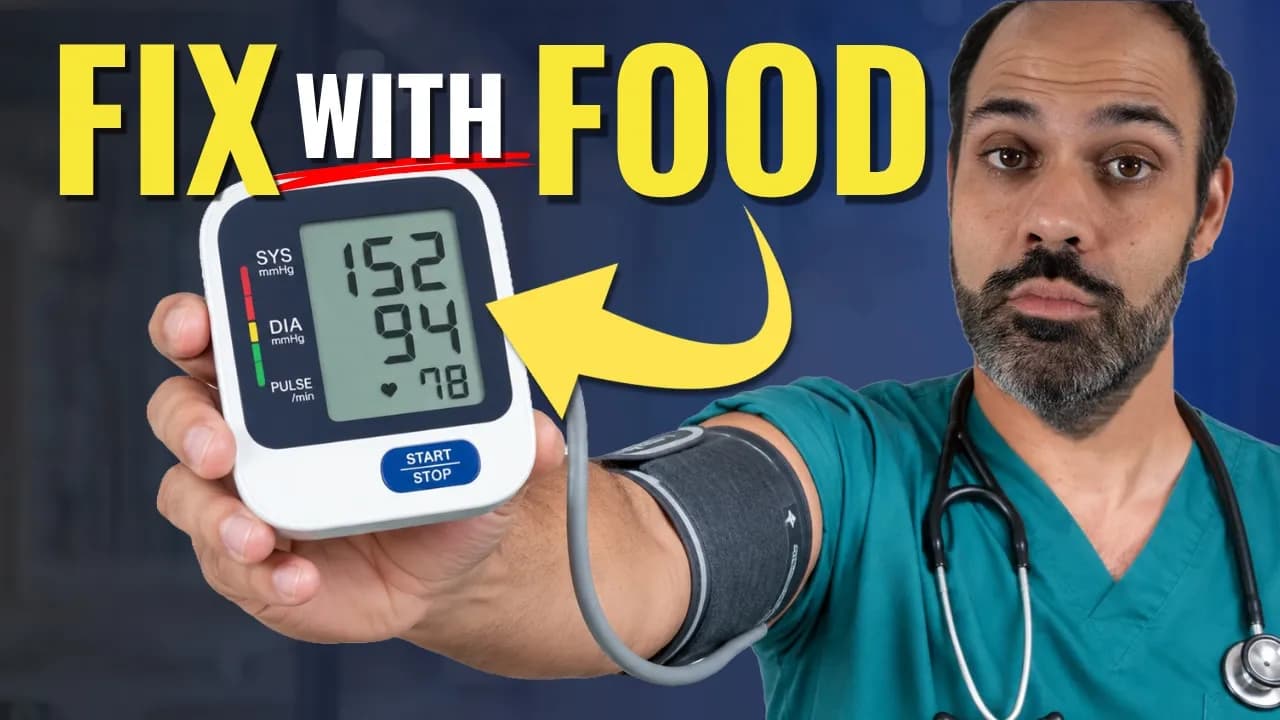
How to Drop Your Blood Pressure Within MINUTES (& It’s Free)
In a Nutshell
Chronic high blood pressure stems mainly from arterial stiffening driven by elevated insulin, magnesium deficiency, stress, sleep apnea, and poor diet rather than just excess sodium. Simple free interventions like 4-second inhale/6-second exhale breathing, 10 minutes of sunlight, potassium-rich foods, magnesium supplementation, exercise, and fixing sleep apnea can each drop systolic pressure several points without drugs. Most hypertension is labeled "essential" because root causes are ignored while focus stays on lifelong medication.
These notes were generated by AI and may contain inaccuracies.
Breathe in through the nose for 4 seconds, then breathe out through the nose for 6 seconds. Use a timer and continue this pattern for several minutes. A blood pressure cuff can measure the effect, which typically produces a drop of 3 to 5 points. The technique works by activating the vagus nerve, the longest nerve in the body that runs from the brain stem through the heart and organs. The vagus nerve fires most strongly during exhalation. People experiencing panic attacks or stress often have very short exhalations, removing the natural braking effect. The same 4-second inhale and 6-second exhale pattern can be used during stress or panic attacks.
Go outside and expose skin to sunlight for 10 minutes. Sunlight hitting the skin releases nitric oxide stored in the skin, which creates a vasodilation effect that widens blood vessels and lowers blood pressure slightly.
Before 2017, stage one hypertension was defined as 140 over 90. After 2017, the threshold changed to 130 over 80, adding 4 million people to medication overnight. Hypertension increases risk of stroke, heart attack, and other complications. Once diagnosed, patients are typically prescribed lifelong medication. The conversation about what causes hypertension and how to correct it is rarely addressed.
Arteries become stiff before hypertension develops. A pulse wave velocity test measures arterial stiffness and can predict high blood pressure before it occurs. Pre-hypertension and pre-pre-hypertension states indicate position on the chain of events leading to hypertension. Ignoring these early states is not advisable.
Ninety percent of hypertension is labeled essential, meaning the cause is unknown. Only 1.9% of health care research examines lifestyle factors, while the majority focuses on pharmaceutical drugs. Blood pressure medications lower readings without addressing arterial stiffening.
Chronic elevation of insulin, a hormone that regulates blood sugar, causes hardening of the arteries. Elevated insulin also causes sodium retention, which leads to fluid retention and increased blood volume. Diuretics are commonly prescribed to flush excess water. Rather than only reducing sodium, increasing potassium intake addresses the sodium-potassium ratio. Daily potassium requirement is 4,700 mg, but supplements are limited to 99 mg tablets. Potassium helps soften arteries.
Refined sugar and starch trigger insulin increases, leading to sodium retention. Pre-diabetics and diabetics commonly experience fluid retention in the lower feet and ankles. Chronic stress causes arterial constriction and activates blood pressure. Low magnesium triggers high blood pressure because magnesium acts as a natural calcium channel blocker, allowing calcium to leave arterial smooth muscle and relax the vessel. Magnesium deficiency produces muscle tightness, nighttime leg cramps, and foot cramps. Refined sugar and stress both deplete magnesium and potassium.
Sleep apnea disrupts sleep and places major stress on the cardiovascular system, raising blood pressure. Inflammation from junk food, poor sleep, and smoking contributes to hypertension. Low sun exposure reduces nitric oxide, infrared benefits, and vitamin D that support arterial health. Fluorescent lighting throughout the day affects blood pressure. The sodium-potassium ratio is critical for maintaining normal blood pressure. A sedentary lifestyle increases blood pressure, while consistent exercise produces significant reductions. Obesity is another contributing factor.
When the environment is disrupted, all body systems struggle, similar to a polluted fish tank where fish become sick regardless of food quality. The body operates on signals including insulin, cortisol, inflammation, sleep quality, and gut function. One primary broken signal can prevent improvement in all other areas.
The DASH diet, which reduces junk food and increases fruits and vegetables while including whole grains, poultry, fish, low red meat, and low saturated fat, can drop blood pressure by 11.5 points when combined with sodium reduction. Typical hypertension medications reduce blood pressure by 8 to 12 points but involve polypharmacy with multiple drugs whose individual effects are difficult to isolate. Medication should not be discontinued without physician supervision, especially when organ damage has occurred.
A CPAP machine for sleep apnea reduces blood pressure by 5 to 10 points. Exercise produces a 4 to 9-point reduction. Garlic lowers blood pressure comparably to exercise. Potassium from foods such as avocados and salads reduces blood pressure by 4 to 8 points. Lowering sodium reduces blood pressure by 2 to 8 points, but excessive sodium reduction can cause muscle problems, fatigue, and sleep issues. Hibiscus tea lowers blood pressure by 5 to 7 points. The DASH diet without sodium reduction produces roughly a 5.5-point drop. The 4-6 breathing technique yields a 3 to 5-point reduction. Magnesium at therapeutic doses of 600 to 800 to 900 mg of magnesium glycinate produces a 3 to 5-point drop, with potentially greater effects at higher therapeutic levels. Sunlight exposure provides a modest reduction of a few points.
Intermittent fasting combined with a low-carb diet creates a large drop in inflammation and refined sugar intake while improving the vascular system.
Keep Dr. Eric Berg DC in your library
Save the videos and channels worth coming back to, and find them again in one place.