How to Lower Blood Pressure (40 Years of Experience in 1 Video)
In a Nutshell
Lower blood pressure naturally by first measuring it correctly (rest 5-10 min, arm at heart level, proper cuff size, average 2-3 readings)—avoiding top 10 errors like wrist cuffs, talking, or uncalibrated devices—to prevent false highs and overdiagnosis. Root cause is often metabolic disease (insulin resistance/prediabetes); reverse with low-carb eating (<100g/day), time-restricted eating (16:8), weight loss, sleep optimization, stress reduction via breathing (e.g., 5s in/5s out), isometric exercises (hand grips/wall squats 3x/week), and foods/supplements like beets, hibiscus tea, garlic, tomatoes, berries, hawthorn (drops up to 17 mmHg systolic). Lifestyle trumps meds; track trends at home, test ABI for plaque, and consult if >140/90 persists—every 10 mmHg drop slashes stroke/heart attack risk.
These notes were generated by AI and may contain inaccuracies.
Lowering your blood pressure without medications is possible. People do it all the time. Most people trying to do it are making a mistake before they even begin. This video shows exactly how to lower your blood pressure naturally, starting with how to measure it properly. This is the most complete guide on lowering blood pressure naturally. It's a compilation of the best content on blood pressure in one master class. Use it anytime. Save it and come back to it. Each section works like its own video. Watching all the way through shows how everything connects and why most people never fix their blood pressure for good.
What if you really don't have high blood pressure? Here are the top 10 errors people make when taking their blood pressure, followed by how to do it right.
Mistake 1: Using a Wrist Cuff
Wrist cuffs are convenient but very inaccurate due to position problems. For a proper reading, the wrist cuff must be exactly at heart level. Any deviation, even a few inches up or down, significantly skews results, leading to falsely elevated or low readings. Wrist cuffs show more variability than upper arm cuffs, the gold standard. Get a validated upper arm cuff tested for reliability. If you must use a wrist cuff, ensure the arm is fully supported at heart level and motionless. Better yet, don't use a wrist cuff.
Mistake 2: Not Resting Before Measuring
Rushing into a doctor's office, climbing stairs, or dealing with traffic stress leads to errors. Rest for 5 to 10 minutes before measurement—at least 5, preferably 10—to stabilize heart rate and blood pressure. Avoid coffee, energy drinks, or smoking for at least 30 minutes before. Don't smoke or use energy drinks at all. Even mild exercise influences readings. Create a calm environment: sit in a quiet space, practice deep breathing. Skipping rest leads to artificially high readings, overdiagnosis, and unnecessary medication.
Mistake 3: Incorrect Arm Positioning
Arm position is critical. If too low, readings are falsely high. Arm should be supported at heart level. Think of the body as a sack of water: pressure increases lower down due to water weight, highest at ankles, lowest at the top. Improper positioning causes errors up to 10 mmHg. Many let their arm dangle or rest on laps. Use an armrest or table for heart-level cuff. Be seated with back supported, feet flat on floor, legs uncrossed. Improper posture causes inaccurate results and treatment.
Mistake 4: Talking During Measurement
Talking increases heart rate and raises systolic blood pressure by 10 to 15 mmHg. Even breathing impacts it. Remain silent and relaxed. Breathe deeply. Turn off TV or radio at home. Quiet environment improves accuracy.
Mistake 5: Wrong Sized Cuff
Cuff too small gives false high readings; too large gives false low. People with larger arms using standard cuffs get falsely high readings. Measure arm circumference and select proper cuff. Cuff should fit manufacturer's recommended range. Many devices have interchangeable cuffs for larger arms. Secure cuff tightly enough to measure blood flow accurately. Look for models with clear cuff sizing guidelines. Inspect for wear like fraying or loss of elasticity.
Mistake 6: Measuring at Wrong Time of Day
Blood pressure fluctuates, peaking in morning, dipping at night, influenced by cortisol. Inconsistent times lead to misinterpretation. Morning readings higher due to circadian rhythms; evening lower. Record time of day with every reading. Measure at same time daily, preferably morning (highest). Or early morning and evening. Keep a log to identify patterns. One or two readings don't give the full picture. Use digital monitor with memory storage.
Mistake 7: Placing Cuff Over Clothing
Cuff over clothing interferes with artery compression, causing false high or inconsistent results—even thin clothing. Roll up sleeves or remove restrictive clothing for bare arm contact. American Heart Association recommends this. Choose loose-fitting attire for appointments. No bulky jewelry.
Mistake 8: Not Emptying Bladder First
Full bladder increases systolic blood pressure by 10 to 15 mmHg. Always empty bladder before measurement, especially in clinical settings.
Mistake 9: Using Poorly Calibrated Device
Monitors need periodic calibration. Poor calibration leads to inaccurate readings, misdiagnosis, improper treatment. Manufacturers recommend annual checks at pharmacy or by manufacturer. Upgrade old devices. Compare cost to medication co-pays or wrong diagnosis impacts. Choose monitors meeting international accuracy standards. Record calibration dates.
Mistake 10: Not Taking Multiple Measurements
Single reading is misleading due to fluctuations from stress, posture, temperature. Take 2-3 readings in succession, average them. Wait at least 1 minute between to return to baseline. Many devices average automatically. For accuracy, measure over several days. Share all numbers with time of day with provider.
Prepare before measurement:
- Avoid caffeine, alcohol, smoking, intense exercise 30 minutes prior.
- Empty bladder.
- Sit in quiet, comfortable place; rest 5+ minutes; deep breathe.
Correct positioning:
- Sit with back support, feet flat, legs uncrossed.
- Support arm at heart level on table/armrest.
- Use correct cuff size: bladder wraps 3/4 upper arm circumference.
- Place cuff snugly, 1 inch (2.5 cm) above elbow crease; align artery marker with brachial artery.
- Remain still, silent; no talking/moving.
- Take 2+ readings 1 minute apart, average; if differ >5 mmHg, take more.
- Measure both arms; use higher reading as reference for future.
After: Record readings with time of day. Measure same time daily. If consistently 140/90+ or 130/80+ (especially with diabetes/prediabetes), consult professional.
White coat hypertension: higher readings in clinical settings due to anxiety. It's real but often overdiagnosed to explain away elevations. Research shows most with it have elevated pressure outside office, indicating underlying problem, often anxiety. Home monitoring reveals true trends. High blood pressure should be taken seriously regardless of cause—don't make excuses. Measure correctly for good diagnosis.
Only 10% are metabolically healthy. High blood pressure links to chronic high insulin: kidneys retain fluid, arteries inflame, vessel walls damage. Advanced glycation end products (AGEs) from high blood sugar stiffen arteries, damage kidney pressure centers, cause fluid retention. Common AGE: glucose-bound hemoglobin (hemoglobin A1c). Vicious spiral: high BP damages arteries, worsens metabolic disease. High BP and weight gain are common first signs of metabolic disease. Prediabetes usually undiagnosed, leading to heart attack, stroke, blindness, kidney disease, plaque, erectile dysfunction. Address with weight loss, diet, activity to reverse prediabetes, reduce BP.
Top 5 home remedies using kitchen items like teas, juices, roots.
#1 Beets: Full of nitrates body converts to nitric oxide (Nobel Prize, Dr. Lou Ignarro, Dr. N.O.). Nitric oxide relaxes arteries, lowers BP. No need for excessive beets; use beetroot supplement. Beeturia (pink urine) harmless. Watch for bloating from fiber, oxalates (avoid if kidney stones history).
#2 Hibiscus Tea: Lowers BP by 10 points. Natural ACE inhibitor (like lisinopril) blocks angiotensin-converting enzyme raising BP. Also rich in polyphenols (antioxidants like in blueberries, red wine) improving endothelial function (artery lining). Helps metabolic processes in intima/endothelium. Reduces cardiovascular/arterial inflammation, risk for heart attack/stroke.
Hibiscus tea relaxes artery walls to lower blood pressure and decreases cardiovascular inflammation. Arteries are like garden hoses: keep them clean, open, and flowing freely. Too many kinks or blockages increase pressure to maintain flow. Hibiscus tea relaxes the garden hose and keeps kinks out.
Studies show drinking two to three cups of hibiscus tea per day for two to four weeks lowers blood pressure by 10 mmHg, as much as blood pressure medicine. It's a natural blood pressure medicine.
Dosing: Put two or three grams of leaves in hot water, steep for 10 to 15 minutes, drink two or three cups a day for a couple of weeks.
Side effects:
- Interactions with blood pressure medicines (acts like blood pressure medicine).
- Rare allergic reactions (similar to ACE inhibitors).
- Speeds up metabolism of acetaminophen or Tylenol; be careful if taking Tylenol.
Garlic, especially aged garlic extract, lowers blood pressure. Key chemicals: allicin (A-L-L-I-C-I-N) and S-allyl cysteine (S-L-L-C-I-S-T-E-N). These relax the muscle layer of artery walls, like natural ACE inhibitors.
Garlic is old folklore and supported by new science. Avoid grain pasta; konjac pasta is different.
Forms:
- Raw garlic is great.
- Cooked garlic works.
- Aged garlic extract is fermented, less pungent, concentrates and stabilizes allicin and S-allyl cysteine, avoids garlic smell.
Side effects:
- Bloating or GI distress.
- Thins blood slightly; careful with blood thinners (usually okay together, check).
- Interactions with some medications; check before taking.
Beetroot is good; use as tea, on food, or supplement (one tablet morning and evening).
Pomegranate juice lowers blood pressure by 7 points. Contains polyphenols (antioxidants), reduces inflammation like hibiscus tea. Drink 8 ounces of 100% pomegranate juice a day. For diabetics, use pomegranate extract due to sugars.
Hibiscus tea and pomegranate are natural ACE inhibitors. Avoid combining with ARBs (angiotensin receptor blockers like Losartan). If on ARB, use hibiscus tea and garlic extract instead (combines ACE and ARB effects). Speaker takes Losartan, occasional hibiscus tea, moderate garlic. For pre-diabetics, monitor blood sugar with pomegranate juice.
Hawthorn (small tree or bush in temperate regions) lowers blood pressure by 17 points systolic, used for millennia. Key compound: flavonoids. Relaxes blood vessels, aids metabolism in artery lining, boosts nitric oxide.
Study: 12-week randomized double-blind trial, 450 mg hawthorn extract twice daily. Diastolic dropped 9 mmHg, systolic 17 mmHg.
Must-do supplement for blood pressure. Not a replacement for lifestyle (exercise, sleep, diet most important).
High blood pressure increases stroke risk 5 to 8 times; stroke is #1 cause of permanent disability. Patients prefer heart attack over stroke (bedridden/wheelchair for decades). Don't mess around with blood pressure.
Supplements not replacement for lifestyle. Blood pressure is a warning sign of life-threatening conditions (underDiagnosed #1 killer worldwide). Medications not best; lifestyle is. High BP damages arteries to brain, kidneys, heart, raising risks of heart attack, stroke, cognitive decline, kidney disease even without symptoms.
Blood pressure is force of blood against artery walls. Top number (systolic): peak pressure wave from heart beat. Bottom number (diastolic): pressure at bottom of wave. Pressure decreases further from heart.
High pressure stresses arteries like overinflated garden hose, injures lining, triggers inflammation, immune cells, cholesterol, cytokines → plaque formation. Key lever for reversing/preventing heart disease.
Not just salt, weight, genetics, age. Reflects autonomic nervous system balance: sympathetic (fight/flight, epinephrine, stress, cortisol) vs. parasympathetic (vagus nerve, rest/digest). Constant stress tenses arteries, raises heart rate/BP.
Brahman Pranayama (slow controlled breathing from yoga/Indian traditions, studied in Western research). 2010 study: 5 minutes/day for 3 days to 1 month dropped systolic BP by 8 points (e.g., 128 to 120). Benefits often in 1-2 weeks, no meds/exercise/diet change.
Protocol:
- Sit comfortably upright.
- Inhale through nose 5 seconds.
- Exhale through mouth 5 seconds (5-10 minutes/day; 10 minutes twice/day better).
Stimulates vagus nerve (exhale through mouth, slow exhalation), slows heart rate, relaxes vessels, improves baroreflex (pressure control system). Humming on exhale optional.
Practice daily signals body to relax. Track resting heart rate (60 good; 65-70 stress sign), HRV (higher better, less stress).
Retrains arteries for better pressure response. Isometric hand grip training lowers resting BP after 10 weeks.
Protocol (3x/week):
- Find T-max (max grip strength): Squeeze device max 4-5 seconds, rest 10 seconds, repeat 3x, average.
- Rest 5 minutes.
- Squeeze at 30% T-max, hold 3 minutes, rest 5 minutes, repeat 5 times (one session, <30 minutes).
Use hand grip device, rehab grip trainer, spring-loaded dynamometer, rubber dog bone, or broom handle with weights/rope. Stimulates vascular tone, nervous system, endothelial function.
Breathing and grip training powerful, but diet changes internal environment (inflammation, insulin, vascular stress).
Tomatoes #1: Contain lycopene (antioxidant, gives red color). Antioxidants combat natural aging (vitamins A, C, E in supplements).
The biggest components of what we think of as natural aging, heart attack, stroke risk, and artery problems are oxidation. Oxidation is the major cause of inflammation. Think of it as burning fuel incorrectly, with the most common cause being prediabetes, diabetes, and metabolic disease.
Lycopene helps relax blood vessels, as do antioxidants. Relaxed blood vessels decrease blood pressure, making the heart work less hard. In 2021, a meta-analysis of studies found a standardized tomato extract lowered blood pressure by about 8 points, significantly reducing heart attack and stroke risk. It was specifically the lycopene content that mattered—the more lycopene, the better the effect.
Tomatoes are naturally low-carb: one medium tomato has about 4 grams of carbs, fitting low-carb and keto diets. Preparation ideas:
- Simple tomato salad with olive oil, garlic, and basil.
- Roast cherry tomatoes with olive oil and herbs.
- Sun-dried tomatoes (before low-carb, used in grits).
- Blend into cold tomato soup (gazpacho).
- Cook into low-carb sauce for zucchini noodles or konjac noodles—avoid adding carbs.
Tomatoes get a bad rap due to high-sugar items like ketchup or sauces with excess sugar and sodium. Sodium is less of an issue for low-carb eaters, but careful for high-sugar diets.
Celery contains 3-n-butylphthalide (NBP), which relaxes muscles around blood vessels (the media), lowering blood pressure. Celery also helps the body excrete salt, which raises blood pressure. Low-carb dieters lose salt naturally; others retain it. The DASH diet assumes salt retention.
In 2022, a study gave celery seed extract daily for 4 weeks to high blood pressure patients, dropping pressure over 10 points on average—huge for reducing risks of heart attack, stroke, kidney disease, blindness, and erectile dysfunction.
Celery is low-carb: one big stalk has about 1 gram. Safe for keto. Ways to eat:
- Celery seed extract.
- Chop into soups or stews.
- Sauté with butter, garlic, onions for sauces or stir-fries.
- Blend into green juice or smoothie with cucumber and lemon—use low-carb ingredients, avoid fruits like bananas.
- Fill sticks with nut butter or cream cheese.
Celery is full of water, fiber (if tolerated), and NBP. Crunching celery supports better health and lower blood pressure.
Berries (blueberries, raspberries, blackberries, chokeberries, strawberries) are full of antioxidants, specifically anthocyanins (give deep purplish-blue/red color). They relax blood vessels and lower blood pressure.
In 2022, analysis of 128 clinical trials found regular berry eaters had lower blood pressure. Chokeberries strongest; blueberries/raspberries helpful 3-5 times/week or daily in small amounts.
Berries are low-carb with water and fiber (if tolerated), keto-friendly. Blueberries higher if overeaten—use small portions.
Low-carb ways:
- Handful with plain low-carb Greek yogurt (avoid sugary/stealth carb versions with 26-30g carbs).
- Smoothie with almond or coconut milk.
- Frozen as cool treat.
- On salad.
- Cooked down with lemon/cinnamon for sauce (no sugar).
Onions contain quercetin, a powerful antioxidant and natural ACE blocker (like drugs ending in -pril: captopril, benazepril, lisinopril; or ARBs like losartan). Blocks angiotensin converting enzyme (ACE) to lower blood pressure.
2015 study: onion/quercetin lowered blood pressure 3-4 points (big deal for heart attack/stroke risk). Red onions have the most quercetin. Half cup chopped red onion: ~5g carbs, fine for low-carb/keto.
Ways: chop/sauté for salads, omelets, greens; grill thick rings (sweet taste); base for soups with garlic/celery; bread onion rings with pistachios or pork panko.
Kiwi has vitamin C, potassium, antioxidants. Antioxidants (like A, C, E) reduce oxidation/inflammation from poor fuel burning (carbs/fats), preventing artery plaque, supporting blood pressure/arterial health.
Potassium balances salt (relevant for non-low-carbers). Study: 3 kiwis/day vs. 1 apple/day for 8 weeks—kiwi group had lower blood pressure.
Each kiwi: ~10g carbs (1-2/day fine). Low-carb ways:
- Slice fresh, skin on/off; halve and spoon.
- Slices on spinach salad with nuts/feta.
- Chilled cubes with strawberries/blackberries.
- Frozen slices in salad/tea.
Pistachios provide potassium (replaces sodium), relax vessels, healthy fats (lower LDL), polyphenols (antioxidants protect vessels/reduce inflammation).
2021 analysis of 13 studies (~500 people): regular pistachios lowered systolic blood pressure ~2 points (significant risk reduction).
1 oz (~49 nuts): 8g carbs, 3g fiber (~5g net)—portion control key (small handful).
Ways: in-shell slows eating; chop/whole on roasted cauliflower/green beans; blend with olive oil/lemon/herbs for chicken/veggies; coating for fried fish.
Portable, tasty, vacation/hike-friendly.
Dark chocolate (72%+ cacao) has flavan-3-ols (antioxidants) that relax vessels, improve flow, drop blood pressure (both numbers).
Meta-analysis of 100+ trials: flavan-3-ol-rich foods reduce oxidation, inflammation, blood pressure.
Warning: many have heavy metals (cadmium, lead). Consumer Reports tested 28 brands; 23 too high. Safe: Ghirardelli Intense Dark 72%, Taza Organic Deliciously Dark 76%, Mast Organic Dark 80%, Valrhona Abinao 85%. Higher cacao = more flavan-3-ols. Minimal ingredients (cocoa mass, butter, little sugar); avoid additives. Acquire taste if from milk chocolate.
Fatty fish (salmon, mackerel, anchovies, sardines, herring, kippers) rich in omega-3 fatty acids: natural blood thinner, antioxidant, reduce artery inflammation.
2022 meta-analysis of 70+ studies (5,000 people): 2-3g omega-3s/day lowered both blood pressure numbers (risk reduction).
Achieve with: 2 salmon servings/week, daily small sardine can, mackerel 2x/week.
Caution: mercury in large/top-chain fish (swordfish, king mackerel, shark). Small sharks ok.
People eat shark steaks and swordfish, which used to be a favorite fish steak, but be careful with them due to contaminants. Microplastics are tiny pieces of plastics in the ocean that fish eat, embedding in the fish meat, which we then consume. Scientists are studying their sources, pathways into the environment, and effects—whether chemicals leach out, they disrupt immune systems, cause mechanical issues, or both. This does not mean stop eating fish. Instead, eat different types of seafood instead of the same thing daily, choose wild-caught or responsibly farmed fish, and trim skin or fat where contaminants accumulate. For those concerned, consider purified fish oil supplements tested for mercury and microplastics.
No need to spend a lot on fish weekly. Small fish like mashed fish (small non-predatory fish) are inexpensive: canned sardines, mackerel, salmon, herring. They don't require refrigeration. Frozen fish is another healthy, long-lasting option. Eat fish regularly, especially on low-carb or keto diets where fatty fish has zero carbs—skip sugary glazes or breaded coatings unless using crushed pistachios or pork panko.
Fermented dairy adds friendly bacteria to milk, breaking down proteins into peptides and carbs. Key peptides IPP and VPP block ACE (angiotensin-converting enzyme), similar to ACE inhibitor drugs like lisinopril or benazepril. Fermentation naturally produces these ACE inhibitors, backed by research including a study in the American Journal of Clinical Nutrition reviewed by the National Institutes of Health. Participants consuming fermented milk rich in VPP and IPP saw systolic blood pressure drop by 6 points and diastolic by 4 points, moving many from high to normal blood pressure, especially for mild hypertension.
Best Fermented Dairy Options
Not all yogurt or kefir is equal—avoid sugary fruit-on-the-bottom types. Choose plain, unsweetened with live active cultures. If accustomed to high-sugar diets, it takes time to adjust to the tangy taste.
- Plain Greek yogurt: Thick, high protein, lower sugar.
- Kefir: Tangy drinkable yogurt, potentially more peptides, originated in Russia; check carbs (avoid brands with 18g in small container).
- Ayran, Laban: Traditional fermented milk drinks in Mediterranean/Middle Eastern diets.
- Filmjölk: Swedish drinkable yogurt, popular in Scandinavia.
- Probiotic cottage cheese: With live cultures listed.
These fit low-carb/keto: plain Greek yogurt ~6g carbs/cup, kefir 8-10g. Keep healthy by adding cinnamon, vanilla extract (no sugar), chia seeds, using in smoothies with berries/spinach (watch carbs), salad dressings, dips, sauces instead of mayo/sour cream.
Even if lactose intolerant, fermentation breaks down most lactose, making yogurt/kefir tolerable unlike milk/ice cream. Non-dairy alternatives: tempeh (fermented soy), miso (fermented soy paste), kimchi, sauerkraut (fermented vegetables supporting gut health/inflammation reduction, though lacking lactotripeptides).
Red meat has a bad reputation for heart health due to weight gain, saturated fats, processed meats like bacon/sausages high in salt/fat. However, lean beef in moderation as part of a healthy diet lowers blood pressure. A 2025 randomized controlled trial on a Mediterranean-style diet (vegetables, fruits, nuts, olive oil) including lean beef (0.5-2.5 oz/day) showed lower blood pressure vs. standard Mediterranean diet. Best results with lean beef; for keto/low-carb, include fattier cuts like ribeye.
Tips: Eat with vegetables (beef stir-fry with bell peppers, broccoli), sauté in chopped celery, onion, garlic; use lemon, garlic, herbs, spices. Fits low-carb/keto.
People in 50s-70s lower blood pressure using simple tools doctors overlook. Every point increase ages arteries faster, raising heart attack/stroke risk (especially stroke). Upcoming: 10 evidence-based strategies with effectiveness, medication replacement potential, execution, and patient stories (names changed).
Susan, 61, library worker, BP ~145/90. On two meds, avoided third. Had late-night snacking (crackers, toast). Changed to stop eating after 4 p.m., breakfast ~8 a.m. (8-hour window). Within a month, systolic <135.
Effectiveness: Late eating elevates insulin overnight, retaining sodium, constricting vessels. Tightening window (earlier) lowers insulin/inflammation, relaxes arteries. 2025 systematic review (15 trials, ~1,000 overweight/obese): systolic drop >4 points, diastolic ~2 points.
Medication replacement: For early-stage/single-med patients, can prevent escalation; for no meds, prevents need.
How to Do It Right
- Simplest: 16:8 window (eat 8 a.m.-4 p.m., fast 16 hours). Better than 12 p.m.-8 p.m. (allows overnight reset without insulin).
- OMAD (one meal a day) or prolonged fasting (>24 hours, e.g., 1 day/week) good but harder; prioritize consistent daily 16:8.
- Consistency key for lifestyle change.
- Avoid overeating when refeeding.
Carlos, 58, construction worker, BP high for decade despite cutting sugar/soda, walking. On two meds, third recommended. Insulin resistant/borderline diabetic. Shifted from starches (sandwich bread, rice): eat meat but no bread/rice. Built meals around proteins (eggs, fish), healthy fats, low-BP veggies. Within 4 weeks, BP <135/85; 4 months, lost ~20 lbs, halved meds.
Why: 90% high BP from undiagnosed metabolic dysfunction/pre-diabetes (doctors miss 3/4 cases). Low-carb (<100g/day) reverses by stopping insulin spikes.
Evidence: 2023 RCT (overweight, high BP, early diabetes): low-carb dropped systolic ~10 points vs. DASH (~5 points) after 4 months.
Medication replacement: Yes, especially early hypertension/insulin resistance.
How to Do It Right
- Cut starches: white rice, sandwich bread, baked goods, cereals, grains, potatoes; avoid government MyPlate (carb-heavy, assumes no metabolic disease).
- Build plate: protein (fish, chicken, eggs), greens, olive oil, nuts, seeds. Don't fear fat (satiety, insulin stability).
- Moderate low-carb: <75g/day for some; speaker does 100g or less (active years), now often <50g or <30g half the week.
- Consistency: Any diet < standard American diet sugar helps, but low-carb best. Assume metabolic disease, remove carbs from Mediterranean/DASH.
Malcolm, 57, hardware store owner, BP rising (138/92 → 142/92 → 148/92). Tried sodium cut, meds, carbs, walks, gym—no change. Program: metabolic flexibility, time-restricted eating, low-insulin meals, resistance training 3x/week + exercise snacks (one-legged step squats, calf raises). Dropped >20 lbs (many fat-to-muscle), BMI -3.5 points. Systolic -9 points, diastolic -4 (to 86-87), mornings <130.
Evidence: 2022 meta-analysis (>3,000 adults): BP drops 6-10+ points with weight loss; stronger with >few pounds (lowers BMI).
Those who lost just a few pounds, enough to lower their BMI by about two points, still saw a drop in systolic pressure over five points. Those who dropped their BMI three or more points, closer to 20 pounds for most adults, saw dramatic improvements: systolic pressure dropped by more than eight points, diastolic by four points. That's the kind of shift that can take someone from stage one hypertension back into the normal range without additional medications. Weight isn't just a number, it's a signal. Losing excess fat, especially visceral fat around organs, reduces inflammation, improves insulin sensitivity, and allows arteries to relax.
Mark, 58, real estate worker, had a routine of a couple glasses of wine with dinner and a nightcap. His blood pressure was 150/92 even on medication. He was actually drinking three or four drinks a night. Alcohol impacts blood pressure in five ways:
- Cranks up stress hormones (fight-or-flight), making heart pump harder and vessels tight, raising pressure even at rest.
- Messes with kidneys' salt handling, causing sodium and fluid retention, increasing volume and pressure.
- Interferes with blood pressure medications.
- Interferes with liver, where many blood pressure meds are processed, reducing effectiveness or causing buildup.
- Throws off routine: miss medications, poor sleep, worse eating; increases appetite, leading to overeating.
If drinking more than two drinks a day, baseline blood pressure is elevated. Cutting back by one or two drinks a day helps. For Mark, cutting intake in half dropped his numbers to around 138/85 within weeks. A meta-analysis of 36 clinical trials with nearly 3,000 people found that for those drinking more than two drinks/day, cutting back reduced systolic by over five points, diastolic by nearly four points, especially for six+ drinks/day.
Ray, 57, active, ate decently, didn't drink, but had high blood pressure and didn't want another pill. Added 250 ml beetroot juice every morning. After a month, systolic dropped 6-8 points. A 2024 meta-analysis of 11 clinical trials in people with BP over 140/90 found daily nitrates (200-800 mg) lowered systolic by more than five points, comparable to early-stage medications. Not a replacement for treatment.
Beets provide natural nitrates that convert to nitric oxide, relaxing arteries for better flow and lower resistance. No wear-off over time. Check with doctor if on blood thinners or have kidney issues. Side effect: pink urine (harmless).
James, 58, landscaping business owner, slept 5.5 hours/night or less, thought it made him productive. BP around 150/95, A1C toward diabetes. Improved sleep hygiene: off screens by 9 PM, dim lights, short walks after dinner, reading, consistent bedtime/wake time even weekends. Within a month, systolic dropped almost 10 points.
Poor sleep keeps sympathetic nervous system in overdrive, high cortisol, stiff arteries, drops insulin sensitivity (raises insulin, sodium retention). A 2025 meta-analysis of 15 sleep intervention studies with 900 people found improving sleep quality/duration reduced systolic by 5 mmHg, diastolic by 3 mmHg; 1-2 more hours: systolic over 7 mmHg, diastolic 5 mmHg.
Recommendations: same bedtime/wake time, increase sleep time, cut screens 1 hour before bed, dark/quiet/cool room, calm evenings, relax not force sleep. Read Why We Sleep by Matthew Walker. Skipping sleep sabotages other efforts.
Carol, 65, retired teacher, grandmother, practiced Brahmari pranayama 5 minutes/day morning before breakfast: close eyes, cover ears, inhale 5 seconds, exhale 15 seconds with soft hum. Felt strange at first, then looked forward to it. BP dropped gradually, heart rate slowed, better sleep, less anxiety.
A recent study on healthy volunteers: 5 minutes dropped systolic and diastolic BP and heart rate significantly, activating rest-and-repair network, relaxing vessels, reducing fight-or-flight. For tense mornings/evenings or stubborn numbers, try slow in, slower out with hum.
Mark, 56, IT worker, sedentary, BP 140s/90s. Did isometric hand grip training twice/week at desk: grip trainer at 30% max strength, hold 2 minutes, rest 2 minutes, 4 rounds (<15-20 min/week). After months, BP 128/84.
Static contraction strengthens artery lining, improves elasticity, reduces sympathetic drive. Study in Journal of Clinical and Diagnostic Research: 3x/week, 15 min/session, 10 weeks dropped systolic and diastolic significantly. Fits routine like exercise snacks.
Rosa, 58, retired nurse, BP 149/93, didn't want pills. Did wall squats: 2 sets of 45 seconds, back flat against wall, knees bent. After 6 weeks, 132/84 without meds.
2023 meta-analysis of 270 RCTs, 16,000 people: isometric training (wall squats top) dropped systolic 8.5 mmHg, diastolic 4.2 mmHg, better than cardio/weights. Holds muscles at 90 degrees, signals arteries, improves vascular resistance, boosts nitric oxide. Low heart rate increase, good for low exertion tolerance.
Barry, 67, retired, widowed, BP 142/92 on two meds. Adopted older lab mix Gus: started walking twice/day, better meals, lost 5 pounds in 6 weeks, BP 134/85.
Meta-analysis of 26 studies: pet owners had lower resting heart rates, mean arterial pressure, systolic ~2 points lower; 19% lower cardiovascular death risk.
Most take BP wrong; 80% of nurses/doctors including cardiologists. Leads to false highs (unnecessary meds) or false normals (missed damage).
Misperception 1: Normal at doctor's means fine. George, 52, annual checks normal, but home monitor showed 140/90; leg pain during walks. Clinics skip rest, wrong cuff/arm position.
Misperception 2: BP doesn't change much. It fluctuates with stress, caffeine, sleep, standing; track trends, not single readings.
Misperception 3: Only older people get high BP. Common in 45-year-olds+ from insulin resistance, poor sleep, weight, inflammation. Speaker's BP rose years before arterial plaque discovery. It was barely
Actually, this is similar to my own story. Years before I found out I had arterial plaque, I noticed my blood pressure started to rise. It was barely high at 130 over 90, but it stayed consistently high. The first time I saw 130 over 90, I didn't worry too much, but it kept showing up over and over. Back then, 15 years ago, I thought I was doing everything right: running marathons, following a low-fat diet, what standard medical care suggested. I even started a blood pressure medication according to standard medical care. Now I know there are other lifestyle changes to do before medications.
Misperception 4: If I'm active and eat well, I don't need to worry about blood pressure
You can be fit, eat clean, and still have high blood pressure, especially if you have insulin resistance, chronic stress, or poor sleep. That's exactly what happened to me.
Misperception 5: I feel fine so my blood pressure must be fine
That's one of the most dangerous beliefs. High blood pressure usually doesn't cause symptoms until it's already caused real damage. If you're waiting for headaches or dizziness, you might be too late.
Misperception 6: A single reading is enough
One reading is just the beginning. Measure both arms, repeat on different days and times. At least three readings under similar conditions give a true baseline, not a snapshot.
I once had 130 over 90 in college, checked multiple times, went to the clinic, and they said no problem.
Misperception 7: Pharmacy cuff is just as good
Most are uncalibrated, overused, placed too low, or sat wrong, giving false highs or lows. Home monitoring done correctly is far more accurate.
Misperception 8: Blood pressure only high at doctor's office (white coat hypertension) doesn't count
It's a warning sign. Stress causes it, not just at the doctor—think highway rage or financial/family challenges. Data shows white coat hypertension brings risk.
Misperception 9: Blood pressure meds fix the problem
They manage numbers but don't fix root causes: inflammation, insulin resistance, lifestyle, stress. It's a bandaid. Address roots with lifestyle, even if meds help.
Misperception 10: Nothing I can do at home
Track correctly, consistently, calmly, and fix lifestyle. Catch issues early to prevent strokes (top cause of permanent disability) and heart attacks (top cause of death).
Give body 5 minutes to settle: sit, rest, breathe, let heart rate calm. Skip this, numbers higher, leading to over-medication or worry.
Sit right: back supported, feet flat, legs uncrossed, arm on table/pillow level with heart.
Cuff: Too small = false high; too big = false low. Check manual for sizing. Place over brachial artery, artery mark aligned.
Stay quiet, no talking/moving/phone. Take 2-3 readings, 1 minute apart, average last two.
Check both arms first; use higher-reading arm ongoing. Measure morning, afternoon, evening over several days for patterns. Never react to single reading.
Disciplined people can stress over numbers, raising BP via cortisol/anxiety. Spot trends, stay calm, consistent.
Over 50% heart attacks have no warning; first symptom sudden death. Use BP cuff to detect plaque/blocked flow.
Steps:
- Lie down, rest 5 minutes.
- BP both arms (lying down more accurate).
- Write systolic numbers.
- Wait 1 minute.
- BP each ankle (cuff above ankle bone over artery). Warning: skip if DVT or painful swollen legs.
- Wait 1 minute between ankles.
Calculation: Highest ankle systolic / highest arm systolic = ABI.
Results:
- 1.0-1.4: normal.
- 0.9-1.0: borderline.
- <0.9: plaque reducing leg flow, higher heart attack/stroke risk.
-
1.4: stiff/calcified arteries.
Won't catch all plaque. Low ABI means act: one patient had low ABI, cleaned diet, strength/HIIT training, stress management, tracking; BP now 116-118 systolic.
Upper arm cuff, not wrist (wrist less accurate, overestimates). Validated automatic: Omron, A&D, Microlife, Welch Allyn. Ensure cuff fits.
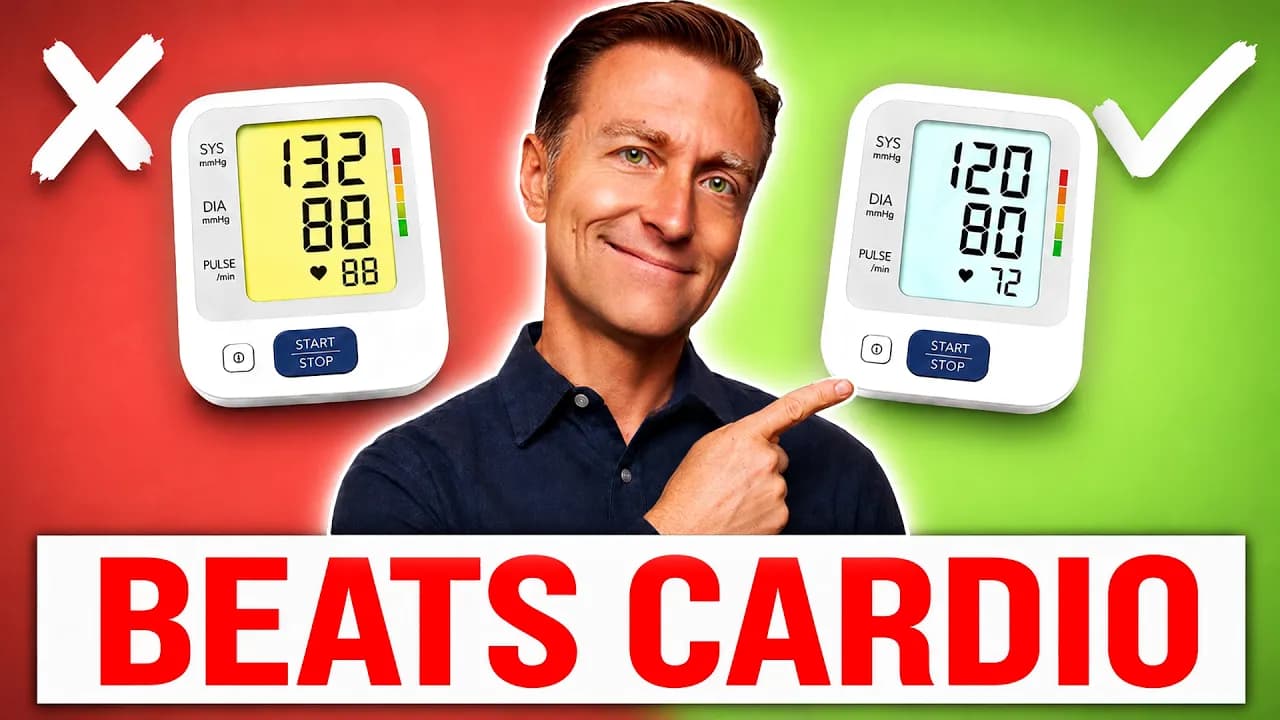
His BP healthy, e.g., low numbers shown.
1. Breathing Exercises
Slow breathing (6-10 breaths/min) decreases BP; meta-analyses show up to 10 points drop. Yoga effective; devices help train.
4-4-8 technique: Inhale 4s, hold 4s, exhale 8s (box breath). Decreases arterial stiffness.
Why: BP components - blood volume (1.2-1.5 gal/min), heart rate/stroke volume, artery stiffness (peripheral resistance). Slow deep breaths create chest pressure, stimulates vagus nerve (wandering, spine to anus, organs), slows heart, opens vessels, aids digestion/sleep.
2. Isometric Exercise (Hand Grip)
Not best for muscle, prefer real exercise daily, but evidence-based for BP.
Squeeze dynamometer/pillow/dog bone (20-30% max strength) 1-2 min, rest 1-3 min, repeat 2-3x (≤10 min/day). Lowers systolic, diastolic, mean arterial BP.
Mechanisms: improves artery elasticity/function, dilation post-effort.
3. [Implied, but transitions to root cause]
Do daily for hours-long effect; permanent via root cause.
#1 neglected cause: insulin resistance, prediabetes, diabetes, high insulin/glucose impact vessels/fat hormones.
Don't do:
- Smoke (kills more via heart attack/stroke than lung cancer).
- Drink alcohol (raises BP; minimal benefits not worth it).
- Eat junk/processed/ultra-processed food (keeps fat/sick/addicted).
Plan:
-
Cut carbs: Low-carb reduces BP. Avoid processed carbs spiking blood sugar. Natural low-GI sources: GI <55, glycemic load ~10 (up to 20), carb:fiber ratio <7 (ideally <5).
- GI: food's blood sugar spike.
- GL: whole meal impact.
- Carb:fiber: more fiber better.
DASH diet (Dietary Approaches to Stop Hypertension): lowers sodium from processed foods, not unprocessed meat/fermented.
-
Exercise daily: Aerobic, resistance (weights), HIIT/REHIT. Not just jogging; all needed. Raises BP short-term, lowers long-term.
-
Fix sleep: Hygiene routine (step-by-step to fall/stay asleep). Read Why We Sleep by Matthew Walker. Sleep impacts metabolic disease/BP; check apnea later.
-
Manage stress: Stress/depression/anxiety affect metabolic disease/BP. This is not a video about how to fix metabolic disease associated with stress and stress
Chronic stress is associated with depression and anxiety, the biggest, most common long-term causes of this kind of stress. They are a big deal but very much related to metabolic diseases. Breathing exercises help immensely to minimize anxiety. Similar to the blood pressure issue itself, finding the stress, depression, or anxiety root cause is critical for a long-term solution.
One type of blood pressure phenomenon is white coat hypertension. It happens to people who, just by looking at a doctor, nurse, or other healthcare professionals or going anywhere near the clinic, see their blood pressure start to rise. If you're one of those people, you don't have to worry about this. Understand it's possible to see high blood pressure at a clinic, so keep measuring at home. Create a log of your blood pressure numbers and take those to your doctor.
You'll also start losing body fat, especially when taking ultra-processed carbs out of your diet. That's a change that impacts blood pressure in a positive way and improves body fat.
If all these don't work, look for the cause and reach out to a doctor who knows where to look. There are hundreds of other causes that can raise blood pressure, from genetic conditions to medications and even supplements.
Three supplements with good evidence to lower blood pressure:
- Vitamin C: 500 milligrams a day lowers systolic blood pressure by about 3 points and diastolic blood pressure by about 1.5 points.
- Garlic: Meta-analysis (study of multiple studies, highest quality evidence) showed 300 to 960 milligrams of garlic every day lowers systolic blood pressure by about 4 points and diastolic pressure by about 2 points.
- Citrulline: 3 to 9 grams a day reduces systolic pressure by 4 points and diastolic by 2 points by increasing nitric oxide. Louis Ignarro (Nobel Prize winner, not Pulitzer) discovered nitric oxide, which expands artery walls, causes vessels to relax, improves blood flow, and decreases inflammation. I take it every day.
A reduction of 2 to 4 points in blood pressure is nowhere near the effect of lifestyle interventions like cutting ultra-processed carbs or even medications, which have a big impact.
One more major mistake causing high blood pressure readings that 97% of people and 80% of cardiologists are making: measuring blood pressure wrong.
Keep Thomas Fordham Brewer MD MPH in your library
Save the videos and channels worth coming back to, and find them again in one place.