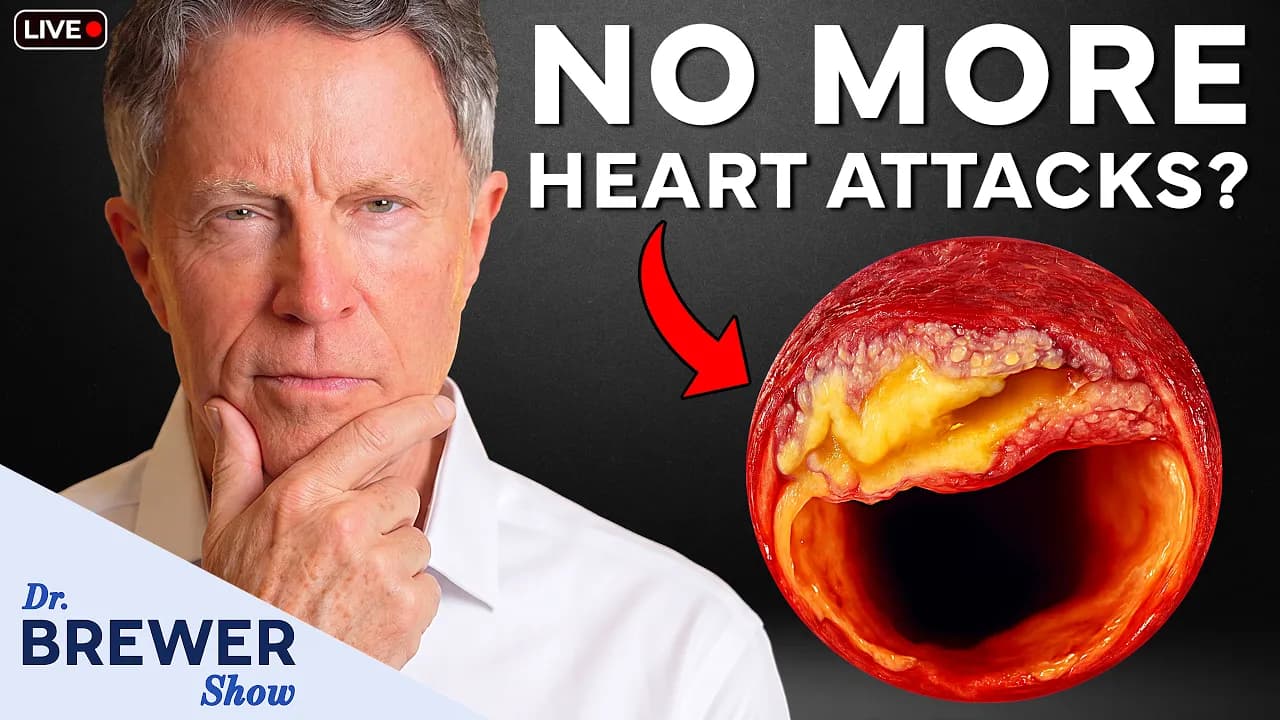
Heart Surgeon: 99 of 100 Get No Benefit From Statins
In a Nutshell
Heart surgeon Dr. Philip Ovadia states that for primary prevention—people without prior heart attacks, stents, or bypasses—99 out of 100 statin users receive no benefit whatsoever, and the single beneficiary only avoids a non-fatal heart attack, not death. Absolute risk reduction is 1% or less, yet marketing uses relative risk figures to inflate perceived benefit, while root drivers like insulin resistance and inflammation go unaddressed. Despite widespread statin use, heart disease deaths have not declined and are now rising, confirming that treating cholesterol numbers instead of metabolic health has failed.
These notes were generated by AI and may contain inaccuracies.
Statins were heavily advertised and marketed to the public. For primary prevention (people who have never had a heart attack, stent, or bypass surgery), there is little to no benefit from taking statins. Statistics indicate that 99 out of every 100 people will not benefit from taking statins. The only person who benefited avoided a non-fatal heart attack. There is absolutely no benefit in prolonging life from taking statins in the context of primary prevention.
These trials were conducted by pharmaceutical companies, and independent verification of their data was never permitted. One might think that as the years passed and more people were prescribed statins, there would have been a significant decrease in heart disease. However, no such decrease has been observed.
Dr. Philip Ovadia is a certified heart surgeon who performed more than 3,000 heart surgeries during a career spanning more than 25 years. He is the author of the books "Stay Away from the Operating Table" and "Stay Away from the Kitchen Table," which topped the New York Times bestseller list. He has a nationwide telemedicine clinic and is licensed to practice medicine in all fifty states.
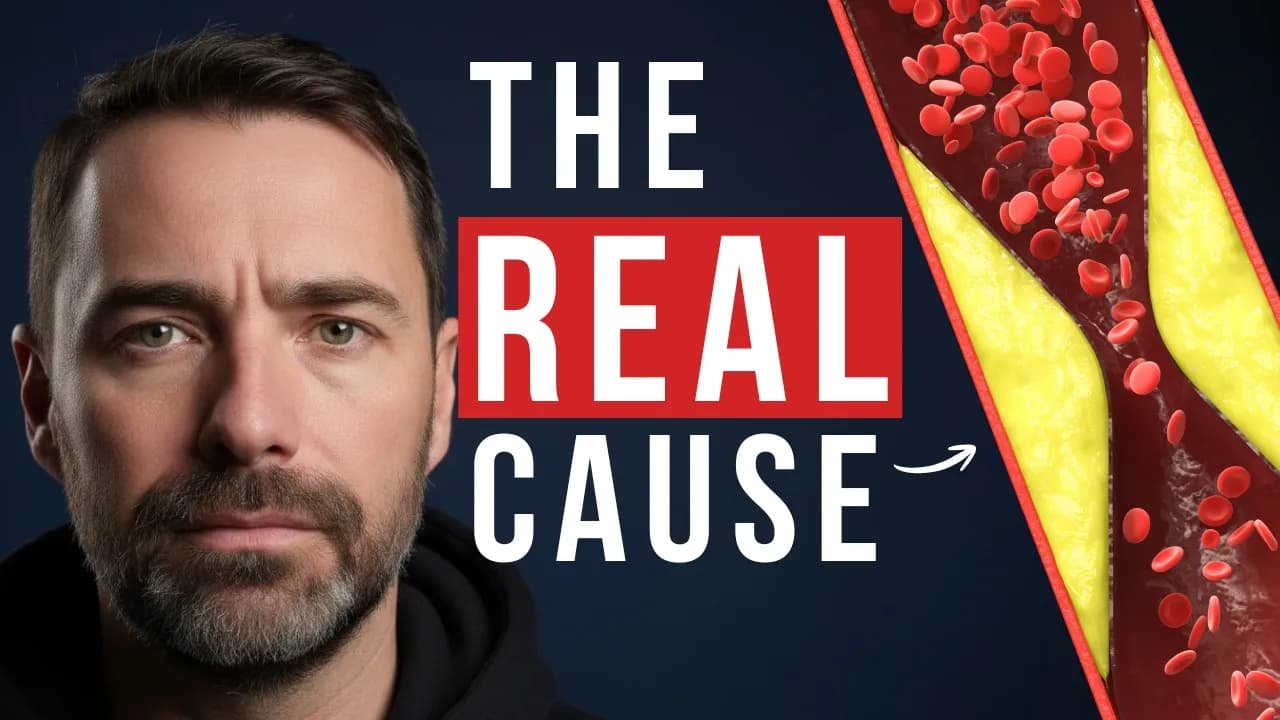
A simple lipid profile is incomplete information for determining whether a person needs statins. This approach causes errors in both directions. Statins are prescribed to people who will not benefit from them at all, while those who have naturally low cholesterol levels but still suffer from insulin resistance and inflammation mistakenly believe they are not at risk.
Before the advent of statins and the focus on LDL cholesterol or apolipoprotein B (apoB), baseline lipid analysis, especially LDL or total cholesterol, was essentially a 50/50 random test and was not an accurate indicator for predicting heart attacks. LDL only became a focus of attention when drugs that affect its level appeared.
Television advertisements claimed that taking statins would cut the risk of heart disease almost in half. These figures were misleading. The fact that marketing and advertising are required to convince people to take these drugs reveals everything needed to know about them. If statins were truly a miracle drug that eliminates the risk of heart disease with no side effects, advertising would not be necessary.
The actual data for primary prevention shows that the absolute reduction in risk with statins is in the range of 1% or less. The number of patients who need treatment (NNT) for primary prevention using statins is between 80 and 120. The benefit for the one person who benefits is avoiding a non-fatal heart attack, not living longer.
Before adopting a meat-based diet, the lipid panel showed LDL at 59, triglycerides at 145, and HDL at 60, giving a triglyceride-to-HDL ratio greater than 2, indicating insulin resistance. The glycated hemoglobin A1C level of 6.1 confirmed insulin resistance. The person was taking statins at the time, yet their doctor was pleased with the low LDL level.
After the dietary change, the metabolic health markers improved significantly despite potentially higher LDL levels, demonstrating that the "before" state carried greater cardiovascular risk than the "after" state.
Statins may provide slight benefit in cases of insulin resistance, inflammation, or low cholesterol quality. However, this benefit is greatly exaggerated, and the risks and side effects of taking statins are not adequately appreciated. If the underlying problem of insulin resistance and inflammation is not addressed, taking a statin may be better than not taking one, but treating insulin resistance and inflammation produces much better results.
Once insulin resistance and inflammation are treated, there is no benefit in taking statins. This has been proven by numerous studies. The goal should be to address the root causes rather than taking statins for life.
The actual data for a person in primary prevention shows an absolute reduction in risk of 1% or less. When telling someone their chances of having a heart attack will be reduced if they take the medicine for 10 years, no one would approve based on absolute numbers. Instead, manipulated figures using relative risks are presented as a 33% or 40% decrease to convince more people.
Doctors are easily deceived because the numbers are presented to them in the same way. About two out of every 100 people may develop heart disease. If they take statins, perhaps only one will get sick. This is how the 50% or 40% discount figures are derived, but in reality, 99 out of 100 people see no benefit.
Despite widespread statin prescriptions, there has been little to no progress in preventing heart disease. The number of deaths from heart disease annually has not seen significant progress in the last forty years; in fact, the situation is getting worse. Slight progress occurred in the late 1980s and 1990s due to decreased smoking rates, which had nothing to do with cholesterol management. Starting in 2000, heart disease deaths began rising again and continue increasing.
Medical technology has improved survival rates after heart attacks through stents and bypass surgeries, but little progress has been made in preventing heart disease in the first place. This represents a complete failure of current approaches.
Dr. Ovadia's books "Stay Away from the Operating Table" and "Stay Away from the Kitchen Table" are recommended. His social media presence includes "I Mend Hearts" on YouTube, Instagram, and other platforms. His telemedicine clinic accepts patients nationwide and internationally. The film "Healing Humanity" is available at healinghumanity.movie.
Keep HomeSteadHow in your library
Save the videos and channels worth coming back to, and find them again in one place.