Statins Vs Aspirin: Which One is Better?
In a Nutshell
The decision between statins and aspirin hinges entirely on whether plaque is actually present in your arteries—imaging (calcium score, CINT, or CT angiogram) is required, as calculators and LDL numbers alone cannot answer this. When plaque exists, start with a low-dose statin to stabilize the fibrous cap, then add low-dose aspirin to reduce clot formation; without plaque, neither medication provides net benefit. Root cause treatment through diet (Mediterranean-style, low refined carbs) and movement outperforms either drug by addressing insulin resistance—the actual driver of plaque formation—while supplements lack outcome data.
These notes were generated by AI and may contain inaccuracies.
If you're in your 50s or 60s and worried about having a heart attack, you've probably been in one of two situations. Either your doctor recommended a statin because of high cholesterol, or you've read online or heard from a friend that you need to take aspirin to avoid a heart attack, or maybe your doctor told you to take it.
The question is which one is true—the aspirin or the statin? Which one's better? Can you choose to take just one of them? Or do you have to take both? Or maybe you just don't have to take either. The alternatives will also be addressed.
Dr. Ford Brewer is a preventive medicine physician with over 40 years of clinical experience who used to teach doctors at Hopkins and ran the program in preventive medicine.
The statin discussion begins because most people were handed that recommendation first. The doctor looked at LDL, saw that it was high, and the statin was the next line on the playbook. However, a statin does a lot more than move the LDL number, and the part that actually prevents the heart attack really doesn't have a whole lot to do with the LDL number.
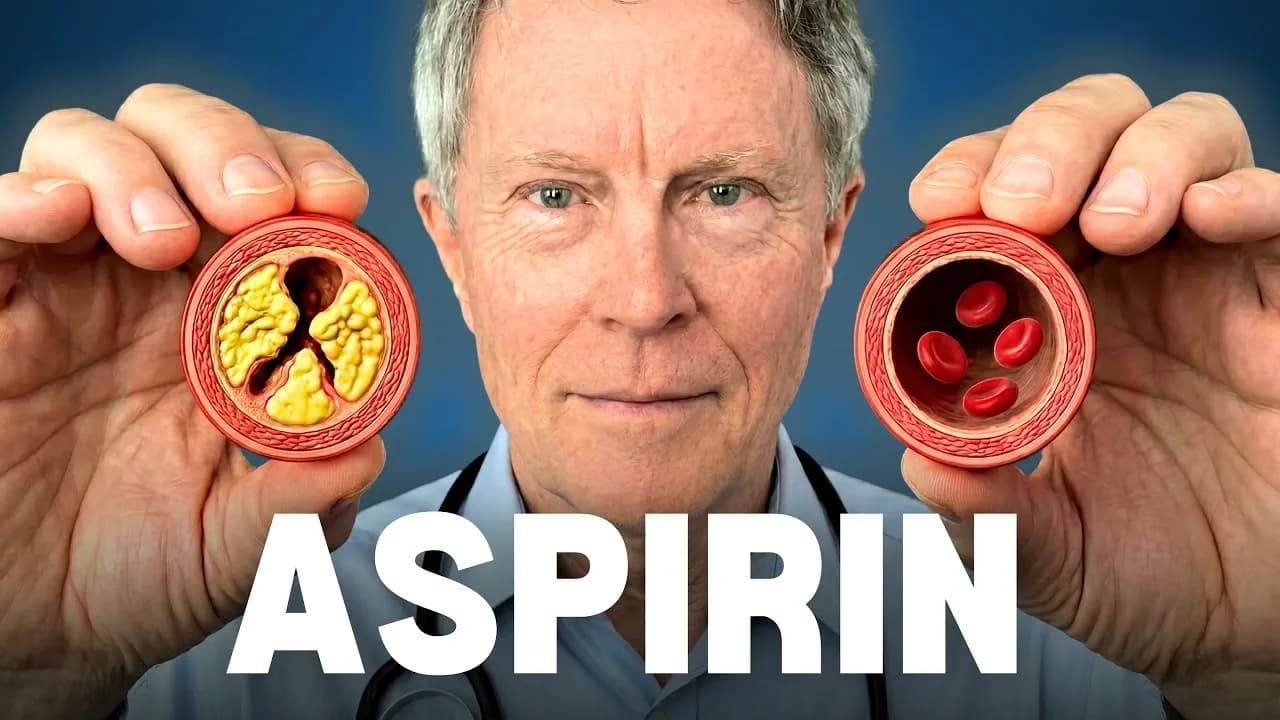
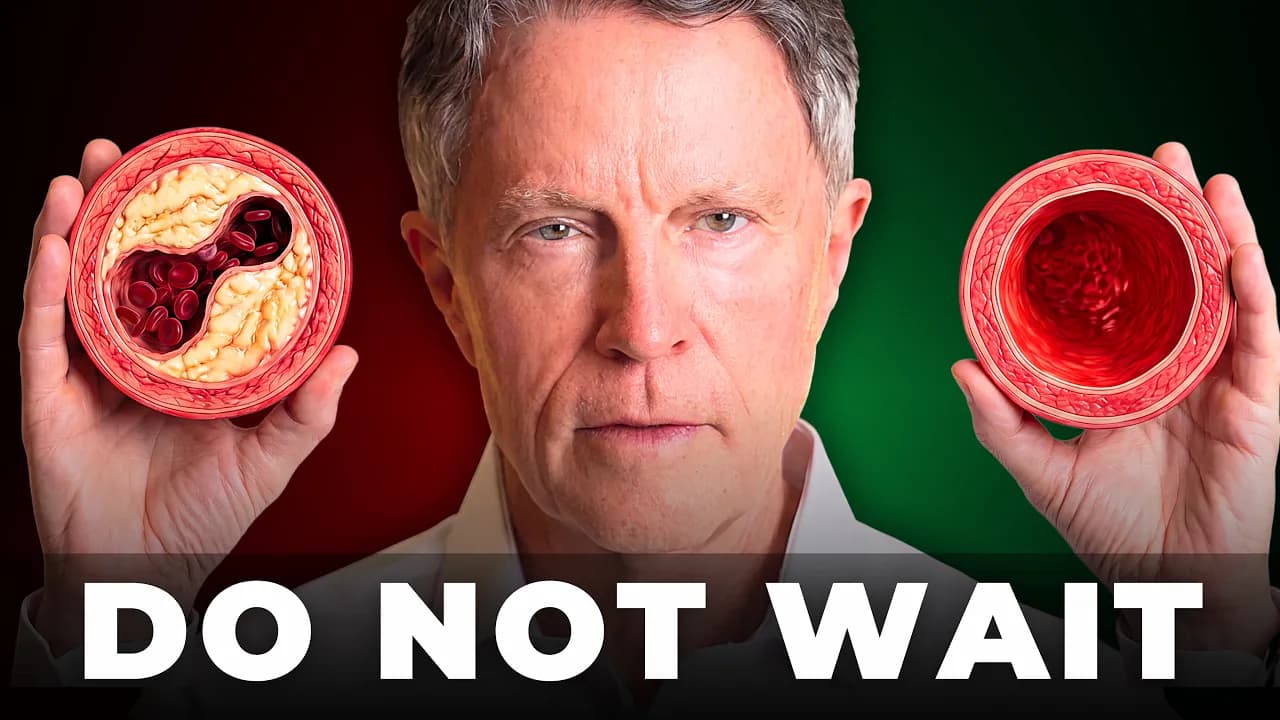
Plaque is not gunk sitting in a pipe. It's inflammation sitting inside the wall of the artery with fat and immune cells packed into that plaque. There's a thin cap stretched over the top ready to pop. The soft non-calcified plaque is the dangerous kind because that cap cracks. A clot forms on the crack and the clot is the heart attack.
A statin calms the inflammation in the wall, thickens the cap, and pushes that soft plaque toward the dense scarred over kind which is stable and really doesn't increase risk for heart attack and stroke. If you take a statin and get a calcium score, the score is very often going up while the risk is going down. The plaque didn't grow—it hardened and calcified, and that's the plaque that doesn't crack.
A statin nudges blood sugar the wrong way. Across the big trials, men on a statin picked up new diabetes about 10% more often than men on a sugar pill. It's a small push into diabetes territory, but it's pushing on the very engine that built the plaque in the first place.
Aspirin works on a completely different part of the process. Platelets are the cells that clump together to plug a leak. Before they clump together, one of them has to send out a signal telling the others to come join. Aspirin shuts that signal off and it shuts it off for good because a platelet cannot repair itself. That's why it's not really a cell—it's called a corpuscle. It cannot repair itself or make a replacement.
Once the low dose tablet of aspirin takes that platelet out of the game for the rest of its life, it runs about a week or 10 days and that's it for that platelet. The dose is so small because that's what's happening—you're not really thinning blood, you're quietly turning down how eager the blood is to clump those platelets.
The statin works on the crack—the plaque that cracks—and it toughens it so it doesn't. Aspirin works on the clot that forms on that crack. These are two different jobs at opposite ends of that same event.
In men and women who've already had a heart attack, a statin cuts the odds of the next heart attack by about 25%. That's been repeated for 30 years in different countries by different people. It's settled evidence.
In men and women who haven't had a heart attack, the picture is different. The relative benefit is still real, but the actual number of heart attacks prevented really depends entirely on who's in the room or who's in the study. Give a statin to a man or woman with plaque in their arteries and you prevent heart attacks. Give it to somebody with clean arteries and a high LDL and you prevent basically nothing because there's nothing there to cause a heart attack.
These trials that were done, nobody in those trials was prescribed statins because of arterial plaque. They prescribe statins because of a number on a lipid panel, a cholesterol panel, or a calculator.
In men who've already had a heart attack, aspirin cuts the odds of a second one by about 20%. That's settled information with 60 years of data.
For healthy men and women, three large trials looked at aspirin in people with no known heart disease. A government task force reviewed all of it together—the US Preventive Services Task Force. The protection was real, but small. Small enough that the bleeding that it caused if you didn't have plaque canceled out the benefit. For men over 60, now they say don't start aspirin just because you're over 60.
There is one study that sorted men by a calcium score—a scan of the heart arteries looking for calcium. If you've got plaque, these preventive things like aspirin and statins help. If you don't have plaque, they don't help. The men with a score of zero on that calcium score had more bleeds caused by the aspirin than heart attacks prevented.
A calcium score only counts one kind of plaque. Calcium is the old scarred over kind of plaque that's stable. It's not going to cause a heart attack. The soft kind, the one that cracks, doesn't show up on a calcium score. That's why we don't do them.
A CINT (carotid intima-media thickness ultrasound) measures the wall thickness in neck arteries and picks up the soft plaque. A coronary CT angiogram with AI analysis can find soft plaque too, right there in the heart arteries, and it's the sharpest picture of plaque that we've ever had.
Both piles of evidence—the statin pile and the aspirin pile—point at the same question that the calculator just can't ask: Do you have plaque or not? Do you have injury in that artery? Do you have disease or just risk? Once there's plaque on the picture, you're not a prevention patient anymore. You have the disease—it's just not announced itself yet, but you have heart disease.
About one person in 10 gets muscle aches on a statin. When researchers gave the same men or women a statin and a sugar pill without telling them which was which, most of the aches did show up on the sugar pill too. So there's a lot of fear there. A statin can push metabolism towards pre-diabetes and can injure muscles and kidneys especially at high doses. Liver trouble happens but it's rare.
The problems with aspirin are usually in the gut and rarely even in the brain, but that risk has been counted in big trials for decades.
One thing about statins and aspirins that other options really don't have so well is dose predictability. You can count on the dosage. Pharmaceutical companies have to run such tight controls over their prescription meds that the dose in the tablet is the dose in the tablet every time. A fixed dose helps prevent, identify, and minimize side effects.
Patients on low-dose aspirin for 15-20 years have no trouble at all. The ones who can't tolerate it find out pretty quickly, usually with their stomach, and then we stop and find something else. With statins, the patients who do fine on them do fine on them for decades. The patients who don't usually know within a month or two. For those people, the dose gets dropped, switched to every other day, or a different drug altogether that works on the same fibrous cap of that plaque.
Which one's better depends on one thing: what's in your arteries? Is there plaque there? On a CINT, calcium score, or CT angiogram, if there's no plaque on these images, then neither the statin nor the aspirin. A statin has no cap to thicken and make fibrous, and the aspirin has more bleeds to cause than heart attacks to prevent. That includes the patient with a high LDL and clean arteries—LDLs have been seen up to several hundred but with clean arteries.
If there is plaque, take a low dose statin first. It works on the thing that cracks. A low dose gets most of that cap thickening with the least push on blood sugar. Then add aspirin, whether you've had a heart attack or not, because the plaque is there and the clot is what kills you.
The only reason to hold the aspirin is something that disqualifies you like an active ulcer, a past serious bleed, blood pressure that's not controlled, another blood thinner already on board, or surgery coming up.
These two medications can be combined. Unlike stacking blood thinners, these two don't overlap at all. The bleeding risk belongs to the aspirin and just the aspirin. Each one gets decided on its own. Most patients with real plaque are on both.
Dr. Brewer is not on baby aspirin anymore because of atrial fibrillation. Because of atrial fibrillation, another blood thinner (rivaroxaban or Xarelto) had to be taken, and used to take Eliquis.
The plaque didn't build up because of a statin deficiency or an aspirin deficiency. When you were in your 20s, you didn't have a statin deficiency, you didn't have an aspirin deficiency, and you didn't have plaque. Refined carbohydrates built it. Insulin resistance was sitting right underneath it and made you intolerant of those carbohydrates. Only 90% of us have that problem these days. Most pre-diabetes never makes it into the chart, never gets treated. The doctor never knew you had it. You never knew you had it.
When you start creating the risk and then finding plaque, it doesn't get blamed on what caused it—the pre-diabetes—because the pre-diabetes was never diagnosed. It gets blamed on what was measured, and that was LDL, a cholesterol number.
The first natural alternative is not really a bottle—it's the diet that shuts the engine off, that cuts the root cause. A major randomized trial put people on a Mediterranean style diet. It was lower in carbs, especially the refined carbs. It cut heart attacks, strokes, and cardiac deaths by about a third. They held their weight steady—it wasn't that they were losing weight. That third is a bigger number than any aspirin or statin ever created or posted in a patient. It works on inflammation, insulin, blood pressure, the artery lining—all of these things at the same time. A statin pulls one lever.
Movement is the second natural approach. You have to get working muscle because it pulls sugar out of your blood. Even if there's no insulin there, there's a thing called GLUT-4 receptors. They bypass ailing insulin receptors.
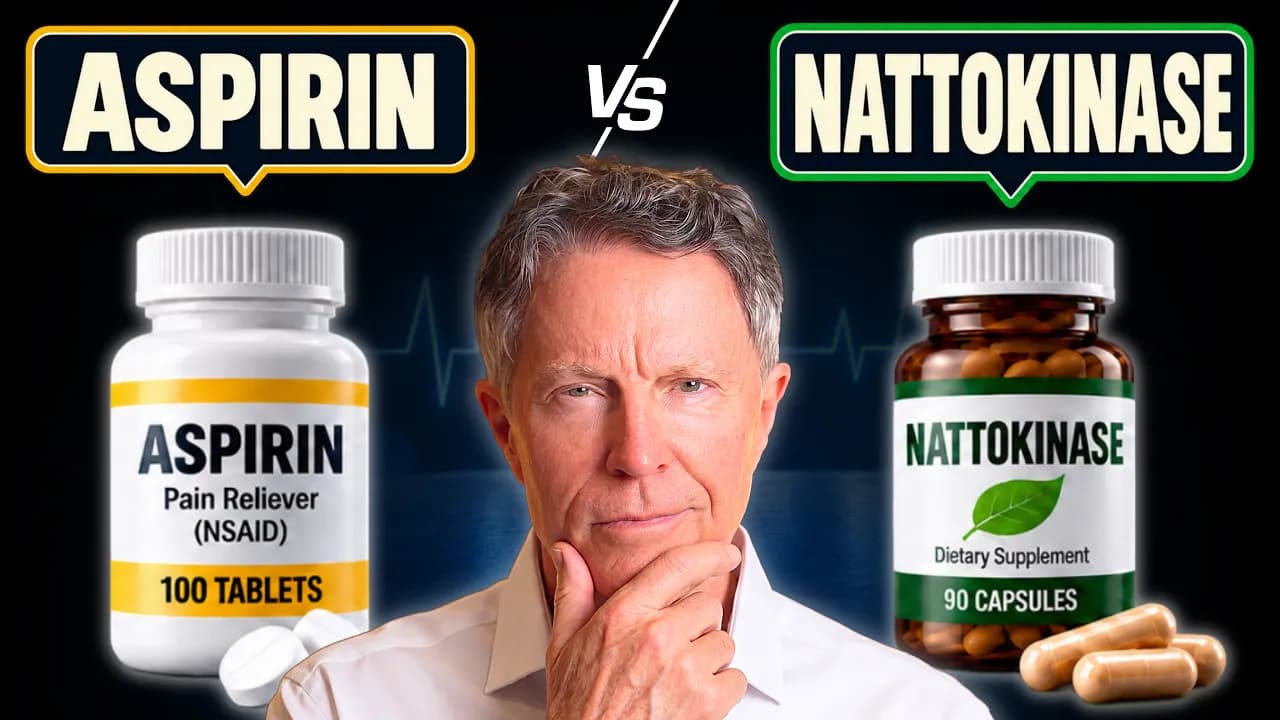
For the aspirin job—the clot side—the bottle people reach for is nattokinase. If they're not going to do aspirin, it does thin the blood. You can measure it in a few hours, just after a dose. Nobody's ever counted heart attacks on it, though. You're taking it on mechanism and nothing more. No real evidence. Don't stack it on aspirin because the bleeding seen with it, including bleeding in the eye, showed up when it was combined with aspirin.
For the statin job—the plaque side—nothing in a bottle matches statin on outcomes. What does have a signal is working on the engine. Berberine has a real effect on blood sugar in men whose sugar handling is already struggling and women too, which is most of the patients watching this. Vitamin D tested into a healthy range rather than just swallowed blind cuts heart attacks by more than half in a small trial of men who'd already had a heart attack.
If you're not taking either pill, fix the engine hard. That's going to be so much more effective than any supplement, any vitamin D, any nattokinase, any aspirin, any statin. Fix the engine. Get the picture and watch that picture change. If the plaque is stabilizing, you've earned the right to stay off the pills. If it isn't, you've chosen to carry that risk.
The question to take to your doctor: Was this statin selected and recommended based on my LDL or my artery? Is it risk or is it really disease? A good doctor's really going to welcome that question.
Almost nobody watching this has actually done the essential step. You have to get the picture. Without it, you're guessing about your own arteries. You have to look inside your arteries. Get that picture—that CT angiogram with AI plaque analysis or a good CINT or even at least just a calcium score. Until you get that picture, you're guessing about your arteries and whether you have disease.
At Premed Health, the team takes a prevention first approach. They help find plaque, find what's feeding the plaque, and walk through what to do about both of them, whether that ends up including a pill or not. It's a telemedicine practice, so there's no office to drive to, no waiting room. You meet from your own couch or desk or dining room table. The labs and scans get done near your house.
Keep Dr. Ford Brewer MD MPH in your library
Save the videos and channels worth coming back to, and find them again in one place.