How Dr K Came Back From Rock Bottom
In a Nutshell
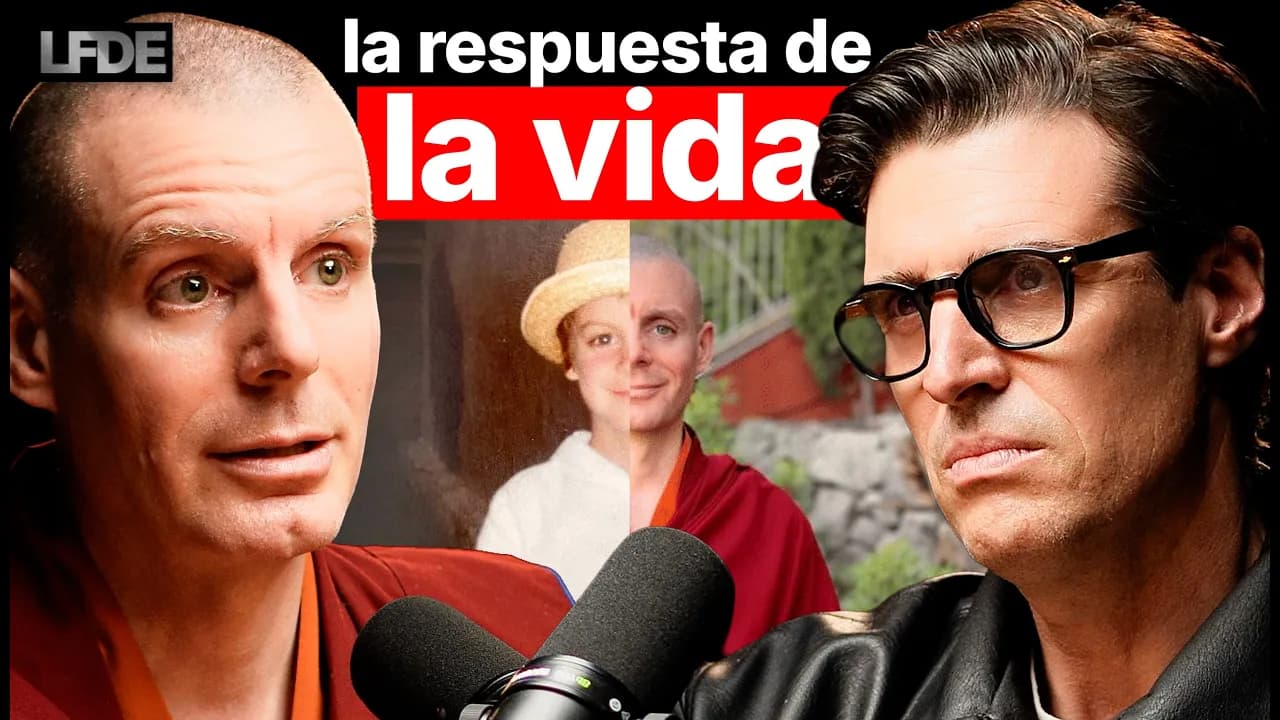
Dr. K hit rock bottom through 16-20 hour gaming binges and nearly failed university with a 2.4 GPA, then received guidance in India to pursue excellence in the material world before monasticism. Despite applying to medical school with a low GPA and only one interview, he experienced karmic acceptance during meditation that he'd face two years of "pointless work" and rejection. The core message is that embracing failure and "pointless work" builds resilience—people who recover from depression become stronger than those who've never experienced it, and reconciliation with loss is essential for transformation.
These notes were generated by AI and may contain inaccuracies.
Dr. K describes a series of personal breakdowns, with one particularly memorable moment that felt like a bottomless pit. During university, he was spending 16 to 20 hours per day playing video games. One morning, he woke up to his alarm and realized it was the day of his final Spanish exam. Despite having studied for 6 hours the night before and only sleeping 2 hours, he decided not to attend the exam. This contributed to him almost failing university.
Two years after nearly failing university, at age 21, Dr. K traveled to India and spent 90 days in an ashram. He identified one particular student at the ashram as his true teacher, believing this person was more spiritually developed than the ashram's official leaders, who exhibited narcissistic behaviors. Dr. K expressed his intention to pursue monasticism (sannyas) and become a monk for the rest of his life. His teacher responded by saying he should return at age 30 to take his vows, but must first complete his education. The teacher warned that unless Dr. K became exceptional in the material world, he would fail, stating that the monastic path is more difficult than reaching the top of one's field in material terms.
Dr. K returned to the United States and within weeks made the decision to become a monk and commit to celibacy, including abstaining from masturbation. Within a week of returning, he met his future wife, who was a first-year student while he was in his third year of university (though in his second year of studies due to previous setbacks). Prior to this relationship, he had been involved in what he describes as "relationship attempts" rather than actual relationships, including experiences in a student fraternity and attending parties.
After several months of dating, Dr. K informed his girlfriend that he needed to become a monk, stating it was temporary. She was 18 years old at the time. He believed she deserved someone better than him. Eventually, he realized that becoming a monk was merely an outward appearance, and the real spiritual work happens internally. He concluded that one does not need to become a monk to do this internal work.
Dr. K graduated with a cumulative GPA of 2.4 after 5.5 years of university. Despite this, he wanted to attend medical school, specifically Harvard Medical School. His motivation stemmed from being the son of two doctors and his Indian background, where becoming a doctor represents the highest aspiration. He wanted to be seen as exceptional - not just an ordinary person of Indian origin, but "the number one Indian."
Both Dr. K and his girlfriend had sworn never to be involved with someone of Indian descent - he had vowed never to be with an Indian girl, and she had vowed never to be with an Indian man. This shared sentiment actually strengthened their relationship, as they would say "screw the Indians" together, citing stereotypes about Indian men being spoiled by their mothers and Indian girls being materialistic.
Dr. K applied to medical school and received only one interview. He drove to the interview with a friend who was also being interviewed that day. After the interview, he felt an overwhelming desire for acceptance. During meditation, which he had been practicing for several years, he prayed desperately, stating he had worked hard, sorted out his life, and overcome a cumulative GPA of 0.9 by taking 24 credit hours in his final semester while studying for the MCAT. He asked God to let him into medical school so he could marry his girlfriend.
During this meditation, Dr. K experienced what he describes as certain knowledge (not merely a suspicion) that he would not get into medical school. He also received the understanding that this process would take approximately two years of what he calls "pointless work." He describes this as a form of karmic necessity rather than a voice. He felt this experience was one of the few times during meditation where something profound occurred.
Despite the difficult news, he experienced a profound sense of calm and relief, even though he knew tremendous pain was coming. This acceptance of what he perceived as karmic necessity became a significant turning point.
Dr. K emphasizes the underestimated value of pointless work and the importance of loss in personal development. He references the saying that the best way to learn Go is to lose your first 100 games. He argues that society focuses excessively on winning and has lost sight of the value of loss and failure. He notes that people who experience a depressive episode and recover become more resilient than those who have never been depressed.
He describes this as a process of reconciliation with one's relationship to failure, which he considers essential for transformation. He mentions working with patients who are more spiritually advanced and observing an acceleration of karma when beginning spiritual practices.
Dr. K reflects that paving one's way to success through intuition is vital, and that this process often involves ordinary things and extended periods of failure. He describes spending a decade and a half failing on his way to his current position, preceded by a full decade of frustration, intense anger about failing, rejection of failure, and self-criticism for failing. He emphasizes that this reconciliation with failure is essential to the transformation being discussed.
Keep Chris Williamson in your library
Save the videos and channels worth coming back to, and find them again in one place.