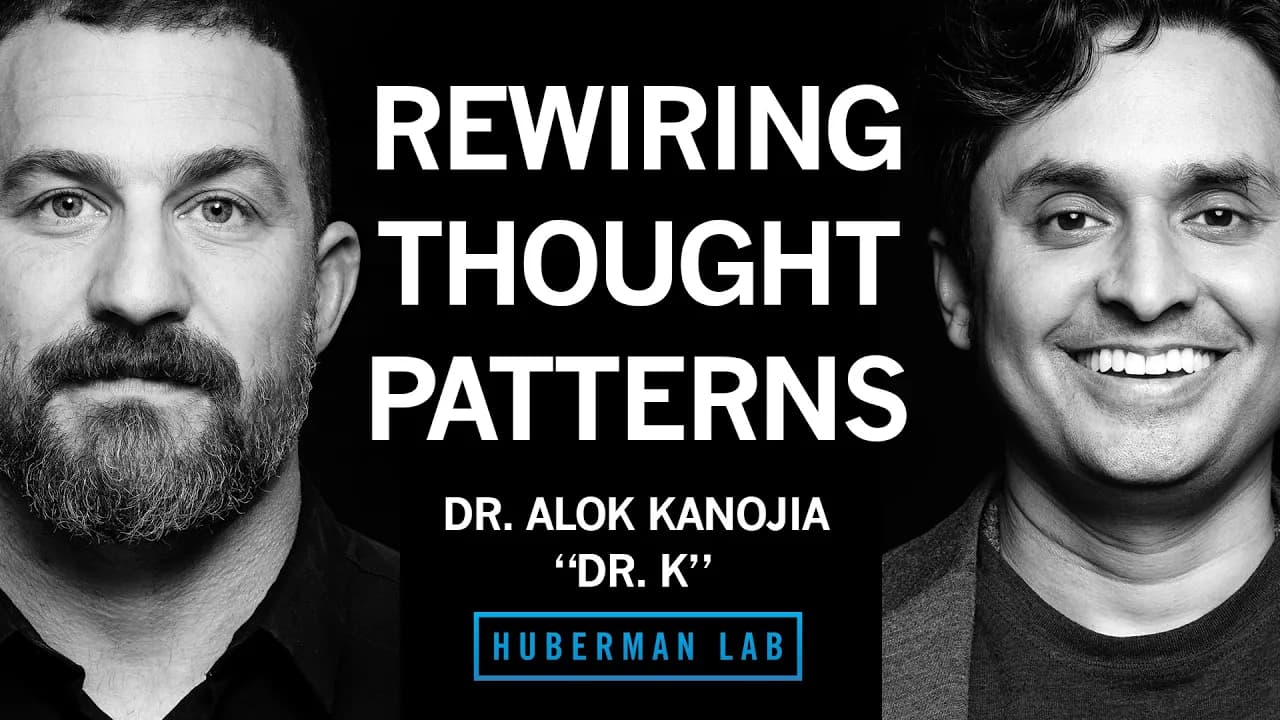
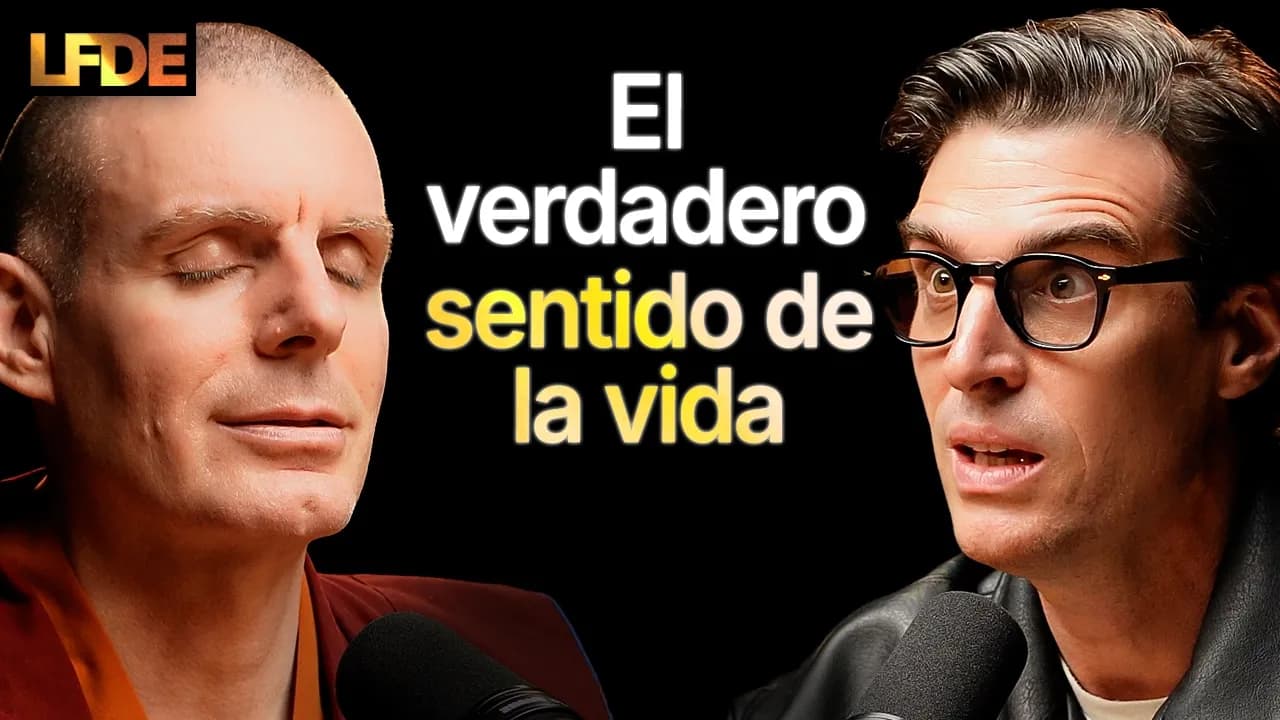
4 Men Share How They Hit Rock Bottom (and got out) - Dr K, Joe Hudson & Connor Beaton
In a Nutshell
Men reach rock bottom when their shame-based motivation finally collapses, forcing them to confront that their drive to achieve was rooted in self-hatred rather than genuine desire. The core choice isn't hitting some dramatic low point but deciding to examine what you actually want beneath the surface goals, then developing awareness of your internal patterns instead of using toxic fuel to climb the mountain. Contentment and self-worth must be cultivated directly rather than earned through achievement, because success achieved through self-abuse leaves you empty at the top.
These notes were generated by AI and may contain inaccuracies.
People of the UK and Ireland, coming to you live. Chris Williamson will be on stage in cities across the UK and Ireland in October, with Dublin sold out and limited tickets available at chriswillson.live. The live show has been over a year in development.
Naval Ravikant states the reason to win the game is to be free of it. The discussion focuses on how men can win the game, maximize everything, achieve as much as possible, and wrangle every bit of motivation, discipline, and raw masculine energy.
There are different sets of challenges when starting from nothing versus arriving at success. People who have difficulty finding a partner when they're a nobody then have difficulty finding a partner who wants them for who they are once they become somebody.
Growing up involves abandoning what works over and over again because it worked back then, and unless you get rid of it, you're going to run into trouble.
Focusing on willpower and discipline creates problems in the future. There's a way to bypass the mountain by tunneling through the bottom. There are things you can do to become materially very successful, but usually doing those things creates issues.
The guy at the bottom doing nothing, the guy at the top who won something, the guy at the bottom who transcended the game and then fked the game through the middle. Fcking the game is upward. Successful people have different challenges - they're not necessarily peaceful or contented.
If you don't have ambition, how are you going to achieve? But if you use ambition to achieve, then you're stuck with ambition-oriented programming. Then you move the goalposts and want more and more, and it's never enough.
Contentment is something you get from the outside like being hungry and eating, but contentment itself is a cultivatable skill. As you cultivate contentment, there are ways to motivate yourself that are not hunger or ambition.
People use toxic fuel to get to the top, achieve what they want, then get stuck in a polluted environment. They've made sacrifices and programmed themselves in a way that leaves them very unhappy.
Everybody is at some point on this mountain, desperately trying to shout at people at base camp to go back. There are bodies on Everest, bodies up there, just littered.
To win the game and replicate what others have done to make money and get Bugattis, the problem is people try to get to the top using dark motivation or toxic fuel - shame-based motivation. They're in pain, suffering, hate themselves, don't like their lives, and that becomes the fuel.
The problem is that it really works and can work well, but it doesn't often lead to the satisfaction and fulfillment people are ultimately seeking. The reconciliation is wanting money but also wanting to like yourself, like your life, like your partner and kids.
The challenge is what to do with the accumulation of pain that exists inside you that's trying to drive you towards perceived success that will alleviate the pain you're carrying.
Naval Ravikant also states it is far easier to achieve our material desires than to renounce them. If you feel unrequited, the world hasn't recognized you, you've always been a piece of s**t or been stepped on or ignored, and you have all this pain and trauma and want to become something - is it not quicker to go up and over the mountain than to go straight through it?
In experience, you can do some pretty amazing things but it usually requires some pretty severe hardships. The guys who say let's go to the top, when men come to work with them, they're up at the top and then realize this wasn't what they thought it was. They still hate themselves, still feel like a piece of s**t, can't enjoy the money they've made. They won the award and it feels hollow and empty, went home and got super stoned and drank themselves to sleep because they still feel hollow inside.
It's not about quickness, it's about how you're going to transmute the suffering that your life is carrying inside yourself to alchemize it into something more meaningful for you and hopefully for the world. That's the function of what initiation was always supposed to be.
One speaker had a slightly different trajectory where their top of the mountain was spiritual awakening. They dedicated to that early from 20 years old, and it was its own hell. There's the hell of trying to make a s**t ton of money and being a winner that way, and this was its own particular hell.
The number one thing is if you're looking at the mountain, asking yourself what it is actually that's going to work at that point. What is it that you actually really want? Ask not just whatever your answer is, let's say it's money, and say okay cool, if I have money, is it done? We're finished. And then if that's not it, no, I also want something else. Okay, is that done? Are you finished then? Keep on asking that question to find actually what the core of the thing that you want is.
A lot of people start charging up that mountain because they were told to want it, because they thought to want it, not because they actually really like deeply looked at is this the thing that they want at their core.
Usually people go for the thing that they see as possible and they often think the thing that they really want is impossible. Worked with billionaires who are like yeah we could make AGI or we could make a $10 billion market cap company, but actually having a happy company, no that's not possible. Or have a happy marriage, maybe that's not possible. Or having happy kids, that's not possible. Something that actually feels much more within reach, much less extraordinary.
Really look at the things in your mind that you're telling yourself aren't possible and really take a deep dive into what makes that so. The best thing to do if you're looking up the mountain is not to decide whether you're going up or whether you're going through, it's to ask yourself what is it that you actually most deeply want here and really spend time with that question.
The experience is that question in itself will drive you through the mountain instead of up and over the mountain.
For some people, there was no ascension of the mountain. It was just bouncing off the bottom. For a lot of young men especially in today's culture and climate, they don't even feel like they're climbing the mountain. They feel like they can't even get to base camp. They're constantly bouncing off the bottom with life, relationships, whatever it is.
One speaker was just lost, wasn't particularly good at anything, ended up bottoming out in their late 20s and having a kind of rock bottom moment that then put them at the base of the mountain to ask that question.
It depends on the man and where they are. Do they even need to get to the base of the mountain? Do they need to get to that place where they can even ask themselves that question?
How many guys use that rock bottom moment to either be crushed by it or propelled by it? Many have been on the receiving end or been the men themselves that get the call, the SOS call of this is it, this is me peering over the abyss moment. What the f**k do I do? I don't even know how to get started.
When working with people, one of the scary things seen is a romantization of rock bottom. People long for that final crash that will break them - abhorrent suicidality or everything that they are on the outside that is weak will be sloughed away and a phoenix will rise from the ashes. They long for this thing.
The really scary thing about rock bottom is that rock bottom doesn't exist. Rock bottom is just the lowest point that you happen to go before you turn around. Rock bottom can have a basement and in the basement there can be a basement. You can go lower and lower and lower.
For people who hear these stories and see the value of rock bottom, rock bottom is the moment that you decide to turn around. It is not this artificial thing that one day, if I fk up my life more and fk it off more, one day I will hit that rock bottom and then I'm going to roll the dice and I will be a god or I will be broken.
They wait for that day. There's this longing for it, this hunger that they want to be tested, and if they fall apart, they fall apart. In doing so, they actually f**k themselves because that day will never come. Rock bottom is a choice, not a place.
It speaks to the cultural absence of any type of initiatory process for people to test themselves emotionally, spiritually, psychologically. In the absence of that, the psyche and ultimately the identity and sense of self still longs for that.
It's a choice point. You don't have to keep going down and keep sabotaging down. At some point you just have to take a choice. You have to make a choice to say I'm going to start, this is it. Sometimes people are waiting for that choice to be made for them. Maybe some external force will make this decision for them, maybe if it gets bad enough, then they'll just magically stop.
You'll stop when you choose to. You'll shift when you choose to. It's like the story of the dog on the porch. There's an old man sitting on the porch with his dog and the mailman comes to deliver the mail every single day and every day the mailman shows up and the dog is whimpering and whimpering and whimpering and finally the mailman says why is the dog so it seems like the dog is in pain and the old man on the porch says yeah the dog's been laying on a nail and the mailman's like well why doesn't he move and he's like I guess he'll move when it gets painful enough and he decides.
For most people they're sitting on the nail. They just didn't want to address the things that were causing them to sabotage and spiral and pull them down.
There's wisdom in both perspectives. There's a weird nuance and the word choice. On some level there's a choice and it feels like a choice. When you do hit rock bottom and have that experience, your identity gets cracked. Who you think you are changes and there is a choicelessness in that as well. There is a bit of grace that occurs.
As there is a way in which you can say there is no rock bottom, there's also a way of saying there is a choicelessness of hitting that rock bottom. The thing that gets missed is the I'm responsible, I'm responsible, I'm responsible, I'm responsible is often slows down the process as opposed to what? Who is responsible if you're not responsible?
There's something known that can't be shared individually. The answer is on this table. The nut to crack like the answer is here, but no one can give it by themselves.
The question is how the f**k do you make that choice. There's something being circled around the drain. The answer is karma, this is meant to happen. That doesn't mean destiny, but there's something about it.
The job is people come into the office and it's how do we get this choice to happen. There's a part that recoils against the word quicker because quicker is feeding into the problem that's going to cause dissatisfaction at the top.
Just like you have to choose, it also can cause you problems. If you say you have to make the choice, a thousand people are going to wake up tomorrow and they're going to say rock bottom is when I make the choice, and they're not able to make the choice. They guess they haven't hit rock bottom yet. Or they're telling them how, and then they're not able to make that choice, and then they feel even worse about themselves because rock bottom is the moment that you make a choice, and look at them, they can't do it. Other people are doing it, but they can't do it. What's wrong with them?
There's something here that needs to be gotten to. Is there a better framing than making a choice at rock bottom? Is there some other way?
What is it besides choice? It's self-awareness. If you understand yourself enough, just like if looking at a watch that's broken and understanding the watch, at some point you're going to understand it enough where fixing it is going to be obvious. The thing that's going to happen is going to be obvious.
That worked for some people. When people start really recognizing how their mind works, what self-abuse pattern looks like. That looking for the bottom is just another way of having self-abuse. Sounding like they have to have choice is just another form of self-abuse.
When they start recognizing the self-abuse and the results of that self-abuse, the experience is then grace, surrender, something happens where it's beyond them. Because the same way it's just like that click that happens in your mind and you're like, oh, this is how you fix the watch.
The personal experience was a surrendering to the truth of existence and a surrendering, a choosing to surrender to wow this is really true. Doing these things or feeling this way or having been acting in this way. An allowing of life source, God, universe, whatever frame you want to put on it to have more of an influence in life.
There's this saying like life is making me happen instead of I'm making my life happen and all the choices are on me. Trauma, abuse, being lost, those types of things move people into a mistrust of life and into I'm going to try and control life.
Part of the place that we reach is I'm going to surrender to life having an influence on me and I'm going to surrender to the truth of my existence of how I feel and what's happening instead of staying in the narration and the story of well here's what I think about it and here's how I feel about it, here's what I should be doing and I can't do that and
The conversation explores the distinction between self-awareness and acceptance, recognizing that phrases like "see what is, accept what is" represent different expressions of the same fundamental concept. The intersection of different perspectives reduces conceptual territory, creating clearer understanding through the process of alignment between different viewpoints.
Chris Williamson describes his experience on Love Island as the "Champions League World Cup final" of being a professional party boy in the UK. The UK lacks the same opportunities for social mobility as the US, which produces 50% of the world's millionaires despite being only 4% of the global population.
Williamson explains how he initially gained access to the show by making himself useful to casting producers at ITV. He advised them on nightclubs and helped find participants for other shows, leveraging his extensive network in the party scene.
The reality TV environment created a "fatal dose of contrast" as Williamson encountered 11 other people embodying the person he thought he was - the extroverted party boy. The 24-hour filming schedule meant that footage captured until 2 a.m. was broadcast the following evening at 7 p.m., creating a permanent treadmill of ambient surveillance.
The show had half as many beds as people, requiring either different sleeping arrangements nightly or consistent partnerships. After a surprise eviction, Williamson was taken to a couples' hotel on the south coast of Mallorca (Palmer), one of the world's best night sky viewing locations.
After reading Paulo Coelho's "The Alchemist" during media lockdown, Williamson experienced a psychedelic-like state during his time on the show. Upon arriving at the couples' hotel with drink limits of 330ml beers, he was given a 500ml beer and found himself alone for the first time in over a month.
Looking up at the Milky Way galaxy for the first time, Williamson had an existential crisis. The universe seemed to laugh at his constructed identity as he realized he wasn't the person he thought he was. This moment occurred at age 27, prompting him to begin six months of sobriety, meditation, and breathwork for the first time.
The Love Island experience coincided with the emergence of Jordan Peterson, Sam Harris, and School of Life content, along with increased exposure to Joe Rogan and Naval Ravikant. This convergence pushed Williamson toward greater self-investigation. He acknowledges that while Love Island might seem like a strange context for a rock bottom story, it represented a magnificent and public existential crisis.
Joe Hudson describes his rock bottom occurring at age 26-27 after meeting his wife through seemingly destined circumstances and getting engaged quickly. Despite living on 200 acres outside Ukiah and spending significant time meditating, he found himself in an abusive relationship with his wife.
The pivotal moment came when his wife threatened to run him over with her Miata while he stood in front of her car holding a pitchfork. This confrontation revealed that he was repeating patterns learned from his parents and that all his identities - valedictorian, successful stock market trader, knowledgeable meditator - collapsed in that moment.
Hudson realized that three fingers point back when pointing at someone else, leading him to focus solely on himself rather than his wife's behavior. He recognized that meditation alone wouldn't solve the underlying issues and began deep investigation through the Hoffman Process, trauma work, and somatic practices.
The discussion explores the tension between having teachable methodologies and the recognition that no amount of technique may be sufficient. There's acknowledgment that while there are ways to consistently intervene with people - including ego dissolution, realizing truth, becoming self-aware, and initiation - there exists something beyond prescriptive approaches.
A mental model emerges: if there were a button that provided 100% peace for life, most people would hesitate to press it because doing so would cause their entire identity to evaporate. This illustrates why people circle the drain of self-investigation rather than fully committing to transformation.
Despite recognizing the limitations of methodology, the conversation acknowledges the need to be prescriptive for viewers seeking practical guidance. While there's acknowledgment that "there is no prescription," the group agrees they should provide concrete methodologies and interventions.
Dr. K describes failing out of college after spending 16-20 hours daily playing video games. He woke up for his Spanish final but decided not to attend despite having studied frantically for six hours the night before, sleeping only two hours.
After spending 90 days in an ashram in India at age 21, Dr. K approached someone he believed to be a guru who was actually another student. This person advised him to wait until age 30 to take monk vows and suggested that becoming exceptional in the material world was necessary preparation for the spiritual path.
Within one week of returning from India and committing to celibacy and monkhood, Dr. K met his future wife. After a string of failed relationships during his fraternity years, he told the freshman he was dating that he needed to become a monk, though she dismissed this initially.
Dr. K eventually realized that monkhood is external while the real work is internal, and that people who dedicate themselves visibly to spiritual practice may be spiritually empty inside. The transcript cuts off mid-sentence describing his graduation with a 2.4 GPA.
Dr. K graduated with a 2.4 GPA after 5.5 years of college. His goal was Harvard Medical School, driven by his identity as the child of doctors and cultural expectations that being a doctor was the highest achievement possible for an Indian person.
Despite his academic struggles, Dr. K worked to improve his record. He took 24 credits in his final semester and studied for the MCAT while attempting to rebuild his GPA from an initial 0.9.
He applied to medical school and received only one interview. During meditation before learning the results, Dr. K experienced what he described as a "knowing" - a clear internal message that medical school was not going to happen and that it would take two years of futile work to process this karmically.
Dr. K emphasized the underestimated value of futile work in personal development. He referenced the saying about learning Go by losing your first 100 games, noting that society focuses excessively on winning while losing sight of the value of losing.
He observed that when working with more spiritually developed patients, there's an acceleration of karma when spiritual practice begins. The process of reaching the top requires going through falls, representing a spiritual principle where the journey involves necessary failures.
Dr. K noted that depression creates resilience - research shows people who go through depression and emerge are far more resilient than those who never experience it.
Connor Beaton described being a "walking contradiction" at age 22 - riding a bright yellow motorcycle with spiked helmet to yoga classes, binge drinking, smoking cigarettes, and attending opera rehearsal as a classical singer. He lived in Vancouver, then Victoria, while completing his degree in music and opera performance.
Behind the scenes, Beaton was dealing with massive porn addiction, weed, booze, and numerous affairs while in a relationship. The relationship ended when his partner discovered his infidelity in what he described as a "cinematic" moment where he could no longer lie or deny the damage caused.
After the breakup, Beaton moved his belongings into storage and lived in his 2007 Pontiac G5 in a Walmart parking lot for several weeks. He didn't want people to know who he had become and couldn't maintain the illusion of being a "good guy" anymore.
One night under the stars in the backseat of his car, Beaton contemplated suicide but realized he didn't want to die. A couple days later, he had a conversation with his 74-year-old singing mentor Bernard, who was trained in Jungian psychology.
Bernard began an apprenticeship with Beaton, who chopped wood, carried water, and helped with Bernard's Dobermans while learning Jungian psychology and about the shadow. This relationship saved Beaton's life and became the inflection point where his old identity could no longer exist.
Five years ago, when Beaton learned his wife was pregnant with their son, he experienced a full-circle moment. During a session with a client, he broke down sobbing from a place of joy, realizing he had made it beyond his previous depths.
Dr. K described his internal experience of success as absurdist and meme-like rather than deeply beautiful. He recently had a conversation with his wife about feeling incredibly lucky, mentioning an email from someone claiming to be UAE royalty wanting to invest in Healthy Gamer, which turned out to be legitimate.
Dr. K experiences success with a sense of disbelief and humor, sometimes marveling at the "cathedral" while giggling at it. He mentioned a persistent background voice asking "when's the shoe going to drop" and return him to his previous place of hell.
Joe Hudson suggested that the realistic outcome of previous failures was everything wanted, making the fear of falling back dissolve. The reframing involves seeing potential intensity and embracing it rather than avoiding it.
Dr. K expressed that he wouldn't want twice the suffering he experienced, stating he's "good now" and doesn't need more. He emphasized that the key question people need to ask is: "What am I going to do with the pain that exists inside of me?"
After a 7-day intensive experience, Dr. K texted about feeling "nails on a chalkboard" whenever telling even small lies, indicating heightened attunement to incongruence. He referenced David Deida's journey from computer science and AI in the 1980s through tantric work, masculinity coaching, and various phases, noting Deida's statement that the pain of being out of alignment with himself is unbearable.
Men are often taught that strength equals suppression - that suppressing feelings perceived as weak makes them appear stronger. The discussion concluded by examining this relationship between suppression and perceived strength.
Suppressing feelings that make someone appear weak creates internal chaos that becomes difficult to reconcile. The more someone suppresses emotions to appear stronger, the more they accumulate unresolved issues inside themselves. At some point, everyone faces a reckoning with their negative self-perception, negative self-treatment, pain, and suffering that exists internally.
Karma represents the principle of cause and effect, not justice or morality. Every action has an equal and opposite reaction, similar to Newton's third law. Karma is not human, moral, or about justice - it simply operates as cause and effect throughout the universe. The common misconception that karma delivers justice confuses people, as evidenced by the fact that stealing can lead to becoming a billionaire rather than punishment.
When examining depression, genetic factors like serotonin transporter structure changes create predisposition, while environmental factors like trauma and adverse childhood experiences also serve as causes. Tracing causality backward reveals that nothing appears truly random - the time consciousness embodied in specific neurons, parental relationships, and life circumstances all connect through chains of cause and effect extending back indefinitely.
The relationship between choice and destiny can be understood as: choosing whether to jump off a cliff is free will, but falling afterward is destiny. People make choices constantly - from turning off alarms to avoid responsibilities - and must live with the consequences. The biggest mistake many men make is trying to avoid the consequences of their choices by looking away from what needs to be addressed.
The brain remains plastic 24 hours a day, 7 days a week, constantly wiring itself based on actions or inactions. There is no such thing as waiting until tomorrow to address something, because not doing a task today trains the brain to avoid tasks. The organism that exists tomorrow will not be the same as today - it will be trained differently based on today's choices.
When climbing the metaphorical mountain, learning agency comes before surrender. The developmental progression moves from victim to actor, then from actor to emotion, and finally from emotion to spirit. Each stage has its appropriate time and purpose.
Every epiphany represents a rut waiting to happen. The realization of having agency and personal responsibility is crucial, but it can become limiting if it doesn't eventually evolve into understanding that everything involves grace and surrender. Ideas should be evaluated based on whether they create freedom today, not whether they are permanently right or wrong.
Tools that help escape difficult situations can become captors when the situation changes. What was once helpful 100% of the time may become helpful only 5% of the time, requiring the development of additional capabilities while maintaining selective use of previous tools.
Society promotes the idea that people can reach a state of being finished with growth and work. This manifests in desires for passive income, retirement, or enlightenment as endpoints where no further effort is required. However, life continues to present new challenges that prevent anyone from being truly done with learning and growth.
The ego seeks finality - a place where everything becomes completely okay and no further dealing with difficulties is required. This represents the ego's way of reinstating itself. No life form ever stops evolving, and the concept of being done contradicts the nature of existence itself.
Modern society has olders rather than elders - people who reach a point where they stop maturing because continued growth is difficult. The therapeutic industrial complex sells quick fixes and endpoints, forgetting to teach that maturation involves becoming capable of deeper service to others, community, and the world.
The most dangerous manuals people follow are the unconscious values absorbed through osmosis during upbringing. These source codes require unpicking, and while therapy can help with this process, it sometimes leads to extreme measures like cutting off parents as a nuclear approach to addressing deeply embedded patterns.
Two distinct developmental needs exist: self-worth, which is relational and attachment-based, and self-esteem, which involves confidence, competence, and capability. Many people lack inherent worth and attempt to acquire it through stacking competencies and proficiencies, but this creates a performance-based identity where love becomes contingent on continued achievement.
Competence and success in the world have value and provide good perspective from the top of the mountain, but they cannot substitute for addressing issues at the bottom. People often deal with discomfort only when they choose its flavor - an ultrarunner may handle extreme physical challenges while avoiding difficult conversations at home.
When afraid of not achieving something, people trick themselves into not wanting it. This mechanism leads to substituting achievable goals for impossible ones - instead of facing that parents may never provide love, someone tries to make them proud as a substitute.
Wanting is one of the most difficult emotions for people to allow themselves to experience. Most people find it incredibly uncomfortable to sit down and deeply feel the sensation of wanting without immediately trying to satisfy it. When someone wants something like nicotine, they typically grab it right away to eliminate the feeling of wanting rather than allowing themselves to experience that emotional state.
The feeling of wanting requires acknowledging that you are not in control of your desires or needs. This acknowledgment destroys the identity structure of "it's me, I've got to do it" and forces recognition of something greater than oneself. Gratitude creates a similar experience of acknowledging something beyond personal control.
Constant self-referential thoughts and default mode network activation create depression, narcissism, and other psychological issues. Allowing yourself to feel wanting actually starts deteriorating your identity structure, which is why people resist this emotional experience.
The approach is not about trusting or distrusting desires, but about feeling them completely. When examining any want, the process involves asking what need lies behind that want. Superficial wants like pornography serve as strategies to reach basic core wants such as connection or calmness. Because people don't want to feel the core want or pain underneath, they move directly to the surface-level strategy.
Want represents the biological source of survival and the foundation of all suffering. Contentment is defined as the absence of want. Even basic biological responses like an amoeba moving away from toxic pH demonstrate this fundamental drive. Fear represents a want for safety, anger represents a want for territory, and lust represents wanting. Even procrastination represents a want for the avoidance of hard work.
The Buddha taught that pain itself is inevitable in life, but suffering comes from our reaction to that pain. We can only control our reactions to events. However, pleasure is equally beyond our control. When pleasure is used as an antidote to pain and becomes attached to, it creates obsession. Holding onto pleasure or striving to satisfy wants leads to losing control of one's life.
A meditation teacher shared his experience of being addicted to potato chips while living in India. He would resist the fresh-made potato chips sold on the street, then crack and eat them, feeling shame afterward. His teacher instructed him to stop resisting the potato chips entirely. Instead of beating himself up, he was told to get a bag whenever he wanted them, but to simply notice what happens within himself when he wants a potato chip. The instruction was to observe the nature of satisfaction received from the potato chip without judgment.
Awareness itself serves as a methodology rather than always requiring action. This approach can feel threatening because awareness potentially eliminates the need for professional intervention. When people trust their own awareness, external guidance becomes unnecessary. The question of "how much awareness is sufficient" reflects a misunderstanding - the issue is trusting awareness rather than achieving some threshold level.
For porn addiction, one effective approach involves using porn whenever desired while maintaining awareness, but ensuring each use is more enjoyable than the previous time. This requires bringing deep presence to the experience rather than using it to escape emotional states. The goal is savoring the pleasure rather than seeking quick release. This exercise disrupts bad habits quickly because it requires presence and shifts the experience from escape to actual enjoyment.
Pleasure and contentment are inversely related at the neuroscience level. Dopamine and serotonin function inversely - a highly dopaminergic lifestyle leads to decreased serotonin levels and increased discontent. People then chase dopamine as a substitute for serotonin. Contentment reduces the draw toward dopamine-based behaviors. Yogis demonstrate this principle - their contentment allows them to engage in pleasure without the same compulsive drive.
When conscious awareness activates the anterior cingulate cortex, the automaticity of the brain turns off. This explains why bringing awareness to experiences reduces their compulsive power. When people lean into emotions and feel them fully rather than avoiding them, the emotional patterns lose their controlling strength.
Habits like pornography use follow predictable cycles where uncomfortable emotions trigger the behavior, followed by post-use shame. Creating a pattern interrupt involves setting a timer, sitting down, breathing, and feeling into the avoided emotion. This "fire meditation" moves toward rather than away from difficult feelings. Jung's principle states that when facing a monster in a dream, turning toward it rather than running often causes it to dissipate.
Change requires some form of confrontation. Many young men have been taught that confrontation is toxic or wrong, leading to avoidance of internal emotional confrontation. While physical confrontation may feel acceptable, confronting feelings of sadness, weakness, or fear was never taught. Dysfunction often stems from experiencing internal states that feel unacceptable and developing avoidance strategies.
Shame functions as a compliance-based emotion that people deploy to force themselves into desired behaviors, often learned from environments where parents used shame to gain compliance. However, shame places the person in a perpetual one-down position. Long-term shaming becomes an identity structure where people believe something is fundamentally defective within them, then attempt to use more shame to escape this experience.
An effective exercise involves writing out specific internal shame dialogue verbatim, then reading it aloud to another person. This externalizes the shame and reveals how irrational it sounds when spoken to someone else. The things people tell themselves they "should" do are often the things they never accomplish because shame locks bad habits in place rather than motivating change.
Shame cannot be deployed or leveraged to reach genuine success and fulfillment. People may use shame to achieve external accomplishments like winning awards, but it fails to create internal satisfaction. Shame sends the message that you are broken, faulty, or damaged rather than whole and capable.
The idea of using shame to motivate performance is fundamentally flawed. An NFL football player cannot succeed by repeatedly telling himself he is broken and incapable. This internal dialogue directly contradicts the self-belief required for achievement.
Different populations respond differently to shame-based messaging. On 4chan, people can engage in harsh self-criticism and shame-based language throughout the day. The platform attracts individuals who have been banned from other communities and represents a specific demographic that may tolerate or even thrive under shame-based communication.
When people are confronted with how they speak to themselves by imagining speaking that way to others, it creates significant impact for most of the population. Imposter syndrome exemplifies this pattern: people attribute their own successes to luck while attributing others' successes to hard work. This reveals the inconsistency between how they treat themselves versus others.
Shame functions as the most motivating emotion and serves as the lock for habits. Many people operate under the assumption that self-criticism is their primary motivational system. When this system is challenged or removed, people experience identity crisis and question who they are without shame as their driving force.
Shame can drive achievement but prevents people from experiencing the rewards of their accomplishments. Individuals leverage shame to reach goals and attain success, yet arrive at the top feeling empty because the internal compliance system that drove them cannot generate genuine fulfillment or satisfaction.
Shame proves ineffective at stopping behaviors, particularly addictive ones. Shaming yourself cannot effectively stop pornography use, smoking, or other compulsive behaviors. The distinction lies between starting versus stopping: shame may serve as a temporary kickstarter for new behaviors but cannot sustain long-term change.
Shame functions as dirty fuel that burns out quickly. While it may initiate action, it cannot sustain prolonged effort or regular practice. Long-term shame applied to consistent behaviors like exercise leads to eventual burnout and abandonment of the activity.
Shame achieves outcomes, but these outcomes fail to address the original problem that shame was attempting to solve. The behaviors shame cannot effectively stop are neuroscientifically specific, particularly addictive behaviors where shame activates the very structures people use the behavior to regulate.
Pornography's addictive quality stems from its emotional regulation component. From a neuroscience perspective, sexual content triggers a response where everything else leaves awareness, similar to how even elderly individuals with severe illness can engage in sexual behavior. Shame fuels and activates the neurological structures that pornography is used to calm.
Many people's primary challenge is not stopping behaviors but rather an inefficiency in starting them. The example given involves a 24-year-old individual spending excessive time on pornography, unable to leave the house, secure employment, or pursue goals. Shame serves as a powerful motivator for this population to initiate action.
People resist releasing shame because they fear what exists without it. Shame provides such powerful motivation that individuals become terrified of losing their primary drive mechanism. The fear centers on identity: without shame, who will they become and how will they achieve?
Shame roots itself in personality rather than core self. It functions as blinders that prevent individuals from seeing their inherent worth, self-worth, and value. The ego structure becomes so intertwined with shame that it defines identity. The differentiation between personhood and behavior becomes essential: loving someone for who they are regardless of what they do.
People struggling with shame often never received proper differentiation between their personhood and their behavior. Through trauma, abuse, neglect, or abandonment, their sense of self became equated with being broken. They cannot access or recognize their inherent goodness separate from their actions or achievements.
All rock bottom experiences involve confrontation with shame. The process includes both recognizing the shame and releasing it. The core belief becomes: something is fundamentally wrong and must be rooted out and fixed.
Some individuals resist letting go of shame because it threatens their ego structure. Their sense of identity is so entangled with shame that releasing it creates existential uncertainty about who they would be without it.
Shame represents the gap between what someone is and what they want to be. Without desire, shame cannot exist. Many people abandon their wants because they believe achievement is impossible, avoiding the pain of wanting something they cannot attain.
The concept of failing forward implies failure guarantees eventual success, which misrepresents reality. The actual requirement is developing the capacity to fail without the guarantee of success. Freedom requires facing failure directly and accepting the possibility of continued failure without collapse.
- Connor Beaton: Mantalks on YouTube and Instagram, book titled "Men's Work"
- Joe Hudson: Artofaccomplishment.com, YouTube channel, and podcast
- Dr. K (Healthy Gamer): YouTube channel, membership program called "The Alliance" with approximately 1500 members
A relationship enters and impacts you at some point. The critical distinction involves whether the relationship becomes something you need for validation versus whether you can experience awe and be affected by it. The balance between not needing a relationship while still being open to its impact represents the optimal approach.
Deep relationship with another person constitutes a deeper relationship with oneself. The differentiation between self and other eventually collapses into recognizing unity at the ground level. Relationship becomes a mirror for projections and a pathway to self-understanding.
A beginner's guide to spirituality was proposed as a potential future discussion topic, addressing the sense that there is something more and how to step into spiritual exploration. Alternative topics suggested include sex and spirituality.
Keep Chris Williamson in your library
Save the videos and channels worth coming back to, and find them again in one place.