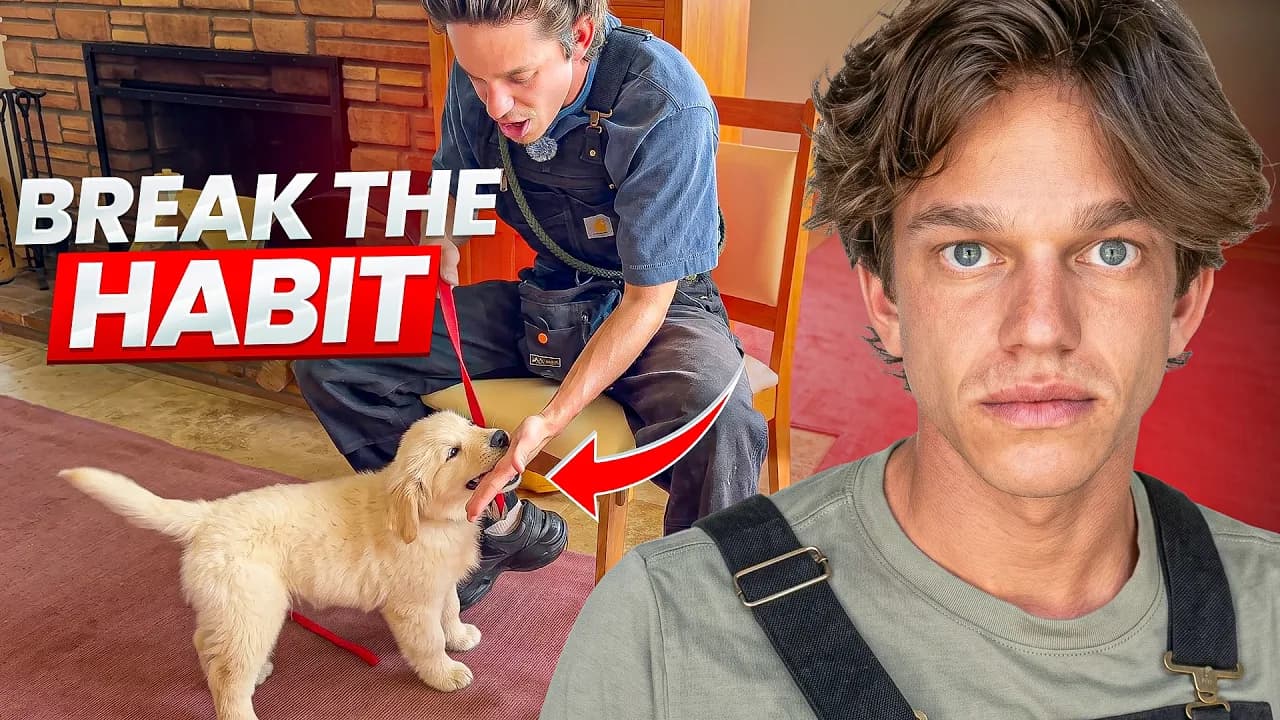
How I Fix Crying In The Crate
In a Nutshell
To stop crate crying, follow a strict pre-crate routine: potty the puppy on leash right before crating, cover the crate so it can’t see you, and stay consistent with set nap times. Never let the puppy out while it’s crying; instead, toss treats through a small gap in the cover during the first ten minutes and walk away. Over weeks of this consistency, the crying drops to near zero.
These notes were generated by AI and may contain inaccuracies.
A common scenario occurs when a puppy is getting tired, starts biting, and is ready to sleep. The owner puts the puppy in the crate with a treat, but within seconds the puppy begins whining, which escalates to barking and screaming. This crying can last 10 minutes, 20 minutes, or even 30 minutes. Owners may give in due to phone calls, feeling upset about the crying, or concern for neighbors, taking the puppy out to sleep on the couch instead, which ruins crate training progress.
This video provides rules given to private clients as a checklist to follow before putting a puppy in the crate to help the puppy become accustomed to it and reduce constant crying.
The puppy cries in the crate. This is very normal. This video is not a guide on how to completely stop crying forever. This will show you how to reduce crate crying to a minimum, and over a few weeks of consistent effort, you can reach a point where your puppy will never cry in the crate.
Puppies cry in the crate as a natural survival process. When puppies feel stuck in a small box, they cry to call their mother for safety. This is not something to feel guilty about. However, if a puppy knows when it will be put in the crate, it is much less likely to cry.
The first checklist item is keeping the puppy in a routine. The puppy should go in and out of the crate at roughly the same time every day. Choose one or two specific times during the day, such as 9 am to 12 pm or 3 pm to 6 pm, when the puppy will be inside the crate. The same rule applies at night - choose a consistent time such as 9 pm or 10 pm. Consistency is the key to keeping a puppy calm in the crate.
The next checklist item is ensuring the puppy has a chance to urinate or defecate just before being put in the crate. A puppy with a full bladder will definitely cry and scream. Tie the puppy to the potty area with a leash, ask the puppy to go, and stand there quietly. The moment the puppy finishes using the bathroom, immediately say "yes," give a treat or reward, then walk the puppy to the crate.
This creates a habit where the puppy will always potty outside just before being put in the crate because it knows it is nap time. The best strategy is to potty train just 2 minutes before putting the puppy in the crate, but if the puppy is slow to go to the bathroom, take it 10 minutes earlier. Be patient when taking the puppy out to potty - sometimes standing there for 5 minutes is necessary. Using a leash is always recommended, even in a fenced yard, because puppies may start running around and become restless.
Once the puppy is inside the crate, cover it with a blanket. Many puppies experience FOMO (fear of missing out), meaning they don't like being away from their owner even without separation anxiety. They see their owner in the kitchen or on the couch and want to be with them. When they can see the owner, eye contact creates a kind of conversation that encourages crying.
Covering the crate with a blanket keeps the puppy out of sight so it cannot see the owner, making it much easier for the puppy to calm down.
During the first 10 minutes the puppy is in the crate, go near the crate, slightly remove the blanket covering it to create a small gap, and throw a treat every minute or two, even if the puppy cries. This is not rewarding the crying habit because the puppy is not crying for food - it is crying because it wants to get out.
Do not take the puppy out of the crate if it cries. Only remove the puppy if there is a very urgent need to go outside. If all previous rules have been followed correctly, the puppy does not need to go to the toilet. When the puppy first goes in the crate and cries for 30 minutes, ensure it cannot get out of the crate in any way. Go to another room, put on noise-cancelling headphones, and do your best to avoid the puppy.
For more detailed advice on crate training and puppy training, a platform called Boop at boop.app.co provides customized training plans, detailed videos, and community support. Users take a quiz about their dog to receive a customized plan for less than $1 a day.
Keep Ethan McMahon Dog Training in your library
Save the videos and channels worth coming back to, and find them again in one place.