How Much Worse Will The Market Crash (KNOW THIS NOW)
In a Nutshell
The current market decline has lasted 40-42 days, and investors should prepare for potential extensions to 6-12 months based on historical patterns. Past crashes like 2022 (35% drop over 371 days) and COVID-19 (30% drop over 35 days) show markets recover despite ongoing negative conditions like tariffs, inflation, and geopolitical conflicts. The strategy is to invest gradually in quality ETFs like TQQQ or S&P 500 using small positions rather than committing large amounts upfront, while avoiding margin/leverage and focusing on long-term value over market timing.
These notes were generated by AI and may contain inaccuracies.
The market is falling and investors need to understand how long this might continue and what to know before deciding to invest. Looking back at past bear markets and recessions reveals the psychology behind market movements, including what negative catalysts caused current market panic and what recovery looks like.
The platform being used is Webull, which is commission-free and offers new users 12 free shares for signing up. For investors who want to invest without unnecessary complication, the Nasdaq ETF (TQQQ) and S&P 500 ETF provide automatic diversification. The Nasdaq is largely technology-based and more volatile, while the S&P 500 tends to outperform hedge funds.
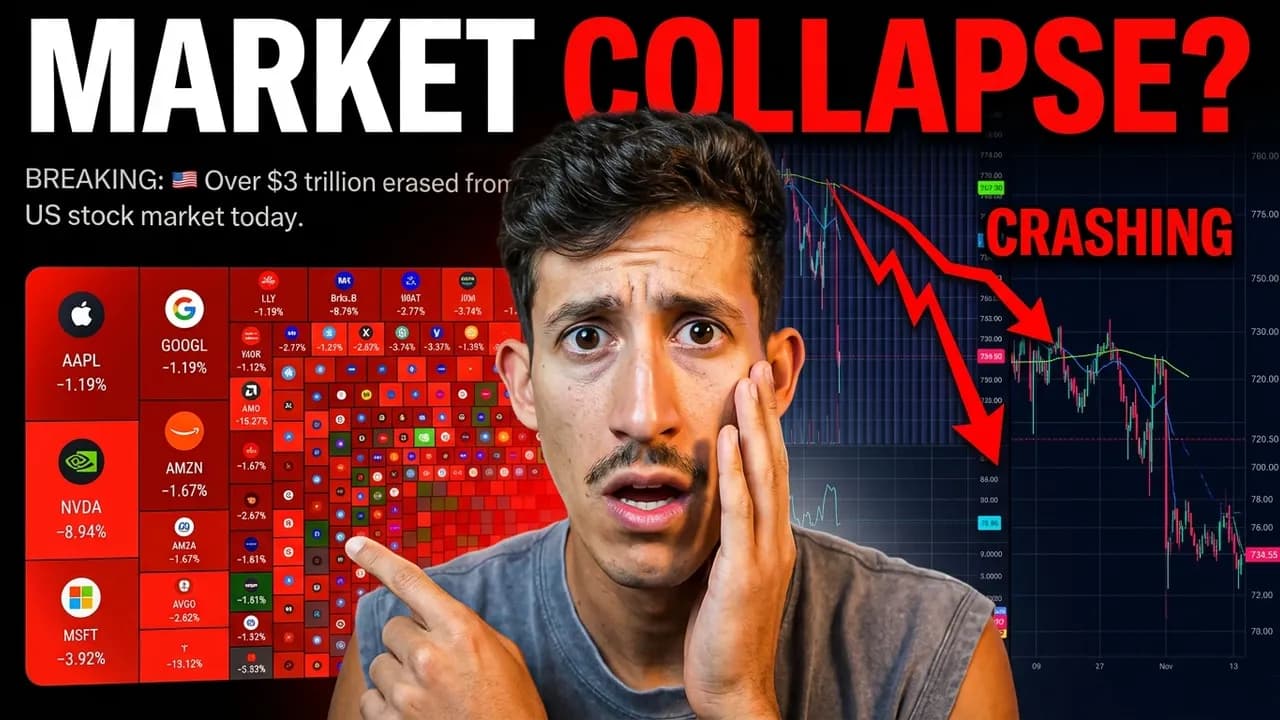
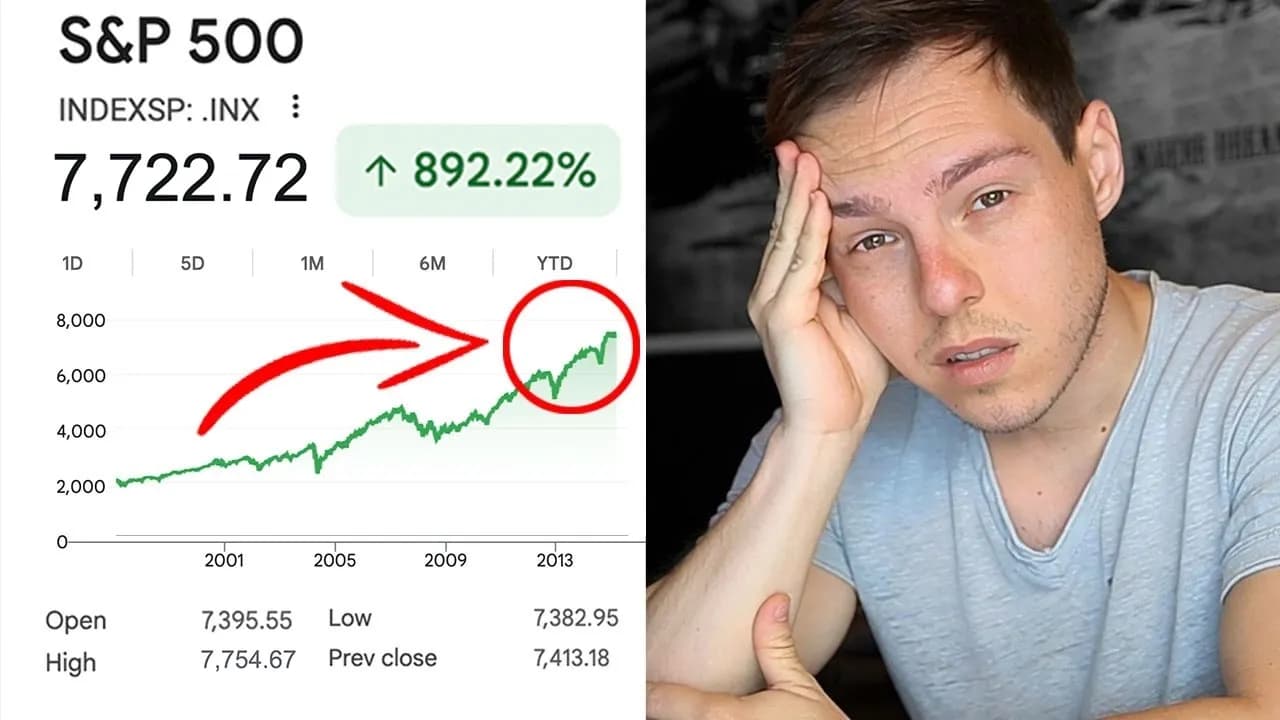
The current S&P 500 decline has lasted about 40 days from its highest point to the most recent low point. The Nasdaq (QQQ) has fallen 20 percent quarter-over-quarter from its high to current low over approximately 42 days. At previous market peaks, warnings about inflation, impending interest rate hikes, and economic recession were ignored by the market.
Looking at previous price declines, the 2025 tariffs period lasted about 49 days from peak to decline. The market fell due to tariffs that Trump imposed, which were expected to cause inflation. The tariffs were taxes typically imposed on consumers, with companies paying for them and passing costs on to customers. The market had been down for about 50 days when Trump was actively tweeting that it was a good time to buy, particularly active after the midterm elections.
The tariffs still exist today, yet the market recovered. New tariffs were announced during this period, causing some price declines, but markets suddenly stopped caring about them. The market fell for about 50 days due to tariffs, but the tariffs did not disappear - the market simply overcame its concerns about them.
The 2022 market crash was one of the most difficult periods, with inflation at its highest in 40 years reaching 9.1%. The market fell from the end of 2021 peak and reached new lows for 371 consecutive days. The decline was 35% over 371 days, with aggressive declines within the first 168 days, followed by some recovery before falling again.
Inflation was excessive, prompting the Federal Reserve to fight inflation by raising interest rates aggressively. Interest rates were increased by 25 basis points, 50 basis points, and even 75 basis points. Raising interest rates is not positive for the market as it slows down the economy, leading to recession. When the market started to recover, the Ukraine-Russia war started, complicating the situation.
A support level was eventually found despite inflation remaining a concern and the Russia-Ukraine conflict continuing. The market recovered because it eventually forgets and forgives negative events. Business returns to normal, and while there were negative impacts that worried the market for a long time, these concerns were eventually overcome when businesses were valued.
The COVID-19 pandemic caused a major landslide at the beginning of 2020, lasting 35 days with a 30% decline. The market crash occurred during scary times with global pandemic and quarantine measures. The market began recovering even though COVID patients continued to exist beyond the initial crash period, demonstrating how markets can recover despite ongoing negative conditions.
When markets calm down and become attractive again, money returns to the market. The faster money was sold off, the faster recovery occurred. COVID-19 continued rising in infections even as markets recovered, showing that negative impacts lose their market-moving power when fear has been accounted for. The market recovered to reach new highs despite ongoing COVID concerns.
The 2022 market crash lasted about 12 months with real reasons behind it including high inflation, Federal Reserve interest rate hikes, and the Ukraine-Russia invasion. The market eventually recovered despite these real concerns continuing. This pattern of recovery despite persistent negative factors has occurred in every market collapse in history.
Real concerns exist in the current market just as in past declines. The 2025 tariffs, Trump policies, real sell-offs, real losses, and real fear are all present. However, the tariffs still exist while markets have recovered and business continues normally. This pattern of market recovery despite ongoing negative factors repeats throughout market history.
Past market declines have lasted more than 300 days, with some approaching 400 days. Currently at day 42 of decline, investors should prepare for the possibility that conditions could worsen. If this were a new investor situation, preparation should account for potential extensions of 6 months or 12 months, as future duration cannot be predicted.
With $1,000 to invest, putting everything in immediately given uncertainty would not be the smartest approach. Things can get worse before they get better, and previous drops have reached 35% with declines lasting over 300 days. No one can predict the best time to invest. The focus should be on whether long-term value exists in current investments rather than trying to time the market perfectly.
Real businesses, real companies, and real indexes are being discussed rather than crypto or speculation. The goal is to avoid buying too much at the beginning and paying the price later by underestimating how bad the situation could become. History has shown that past market downturns were ideal times for long-term investing.
Even when buying during market crashes like 2025, investing too early or too much under excessive pressure could result in selling at a loss. This doesn't mean profits couldn't be made during recovery, but rather that proper preparation was lacking. The recommendation is that even if 10 shares can be afforded, it's better to buy just one share initially.
Margin and leverage should not be used. Understanding that things can get worse before they get better puts investors in a position where chances of winning are much higher than chances of losing. The more speculative or risky an investment, the greater the potential reward but also the greater the risk. Focus should be on fundamentally good quality companies.
Past price declines were great investment opportunities but could have been terrible times to invest if too much risk was taken. The current situation is no exception. Preparation should focus on winning without getting knocked out of the market or taking excessive risks that create stress preventing investors from holding through difficult periods.
The future cannot be predicted, but this doesn't mean the future cannot be invested in. Starting with smaller amounts like $100 rather than $10,000 allows investors to experience percentage declines and recoveries. Being able to invest in uncertain times is a great opportunity if it can be afforded, but overconfidence and excessive greed should be avoided as these cause the most damage.
Even after 11 years of market experience, continuous learning continues. The market offers substantial learning opportunities, and sharing knowledge helps other investors navigate market conditions effectively.
Keep Ricky Gutierrez in your library
Save the videos and channels worth coming back to, and find them again in one place.