The Stock Market Just Exceeded The 2001 Dotcom Bubble
In a Nutshell
The video warns that the current bull market—already up 129% since late 2022—matches the scale of past bubbles and is driven by record individual-investor buying, record-high margin debt, and 33% of U.S. wealth in equities. History shows three multi-year “lost decades” (1929–1954, 1966–1982, 2000–2010) where real returns were flat or deeply negative, and today’s low forward-return forecasts (3–6% or even negative) from Vanguard, Goldman Sachs, and GMO suggest the next decade may look similar. The takeaway is to size positions so a long draw-down won’t panic you, treat euphoric sentiment as a red flag, and diversify beyond U.S. large-cap stocks into bonds, international equities, cash, gold, or real estate.
These notes were generated by AI and may contain inaccuracies.
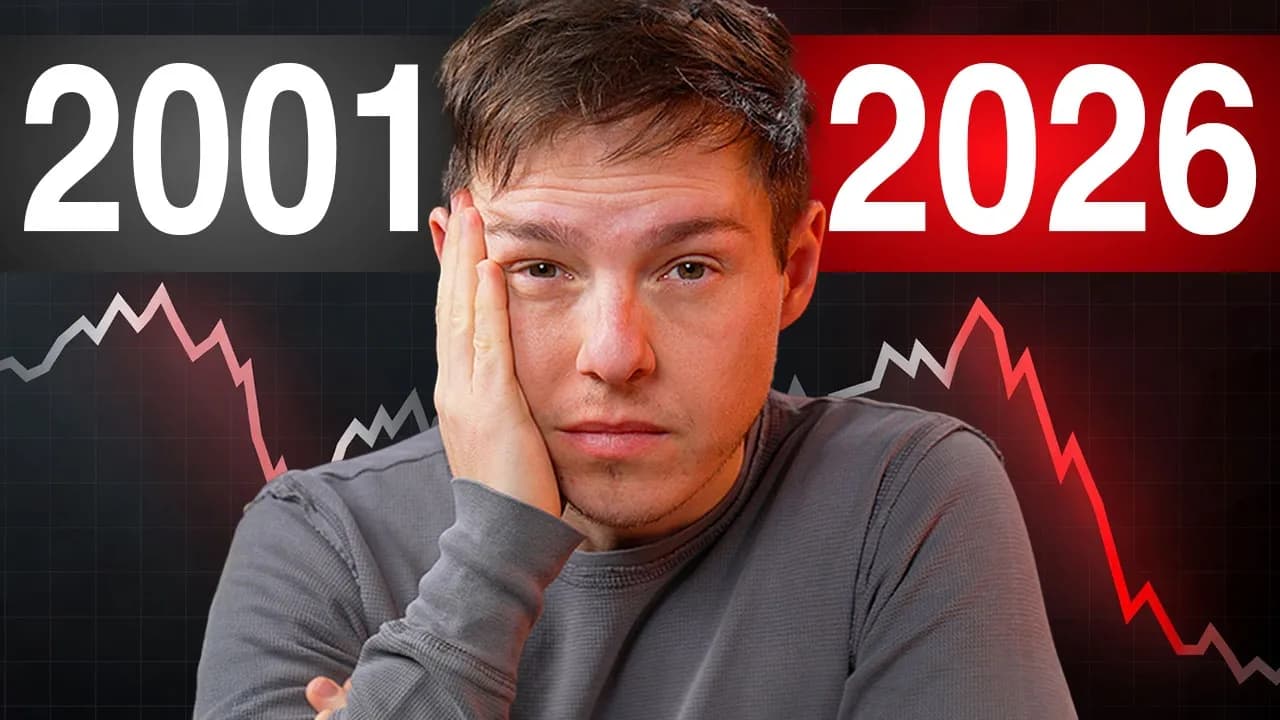
Graham expresses genuine concern about investors who have convinced themselves that the stock market is an easy way to make money and that every dip is just another buying opportunity. He warns that eventually there will be a downturn that lasts so long that an entire generation of investors will begin to wonder whether the market will ever recover. He notes this is not hypothetical, citing historical periods of negative returns from 1929 to the 1950s, 1966 to 1982, and 1997 to 2009.
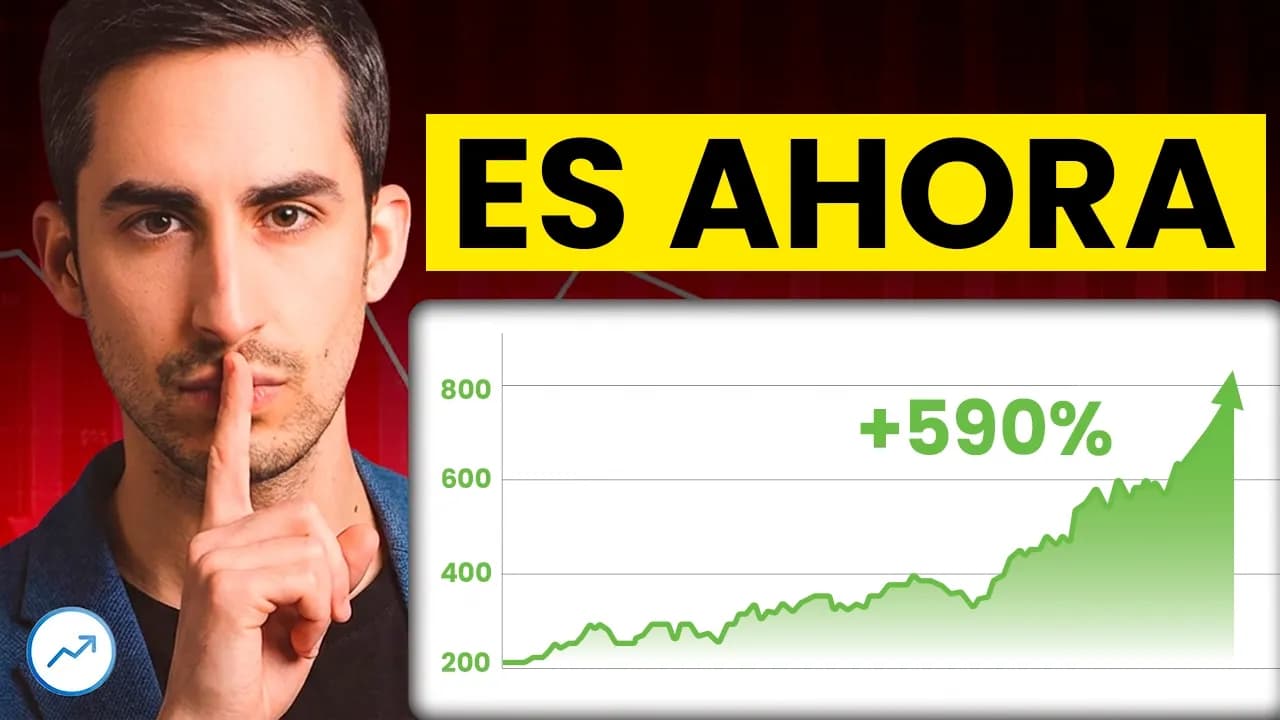
The current bull market began in late 2022, with the S&P 500 achieving returns of over 129%. Buying at the bottom would have more than doubled investments in 4 years. Dips have been bought immediately, with the April 2025 tariff panic resulting in 60% additional profit from that low to present. According to Citadel Securities, on days when the S&P 500 is down, individual investors buy about 3.5 times their usual daily trading volume, compared to 1.4 times on up days. In July of this year, not a single day passed where individual investors were net sellers on the Citadel platform.
Since 2009, the S&P 500 has delivered returns of approximately 14.8%, compared to a long-term average of just over 11%. However, buying dips only works when the stock market is recovering, and historically this does not always happen.
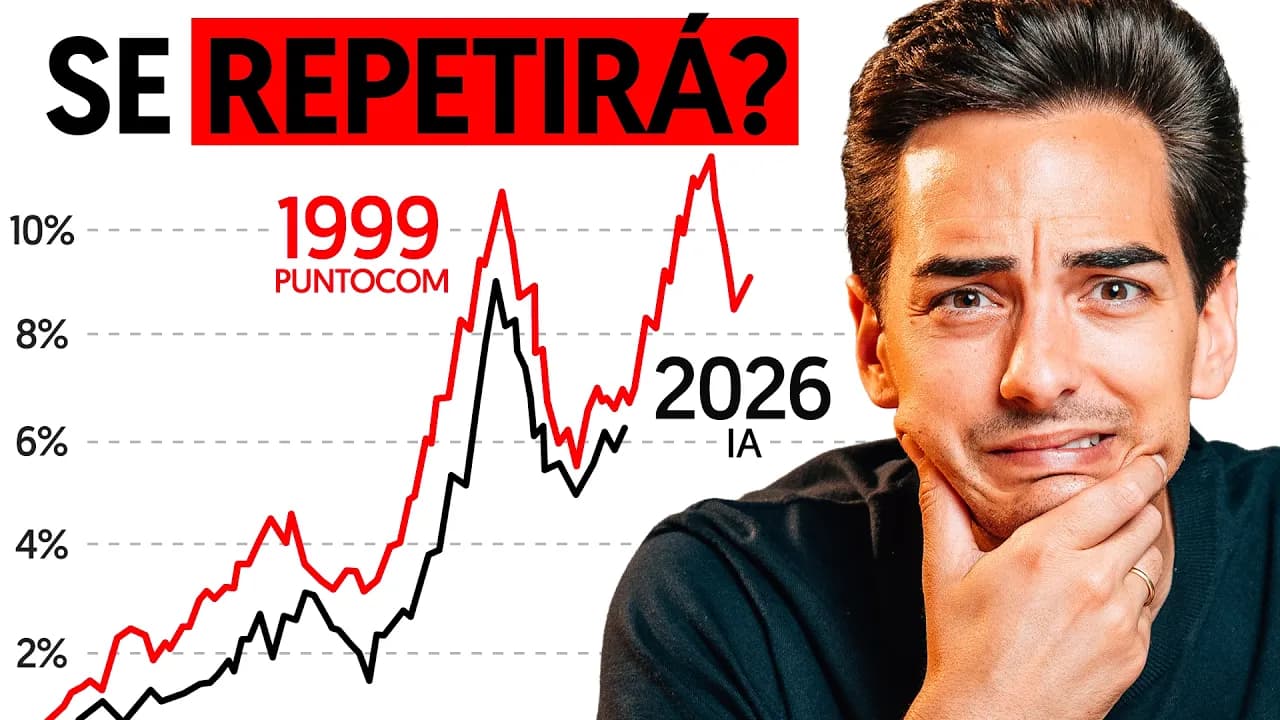
The lost decade is defined as a real period where the stock market does not move in any direction for more than 10 years. The first occurred during the Great Depression, with the market peaking in September 1929 and taking more than 25 years until late 1954 to return to that level. The second was the 1970s, where the Dow Jones reached nearly 1,000 points in 1966 then stopped growing for 16 years. When adjusted for inflation, the real decline was about 74%. The third was the early 21st century, where $10,000 invested in the S&P 500 on January 1, 2000 would have been worth about $9,000 after 10 years including dividends. The Nasdaq took 15 years, 1 month, and 13 days to return to its previous high.
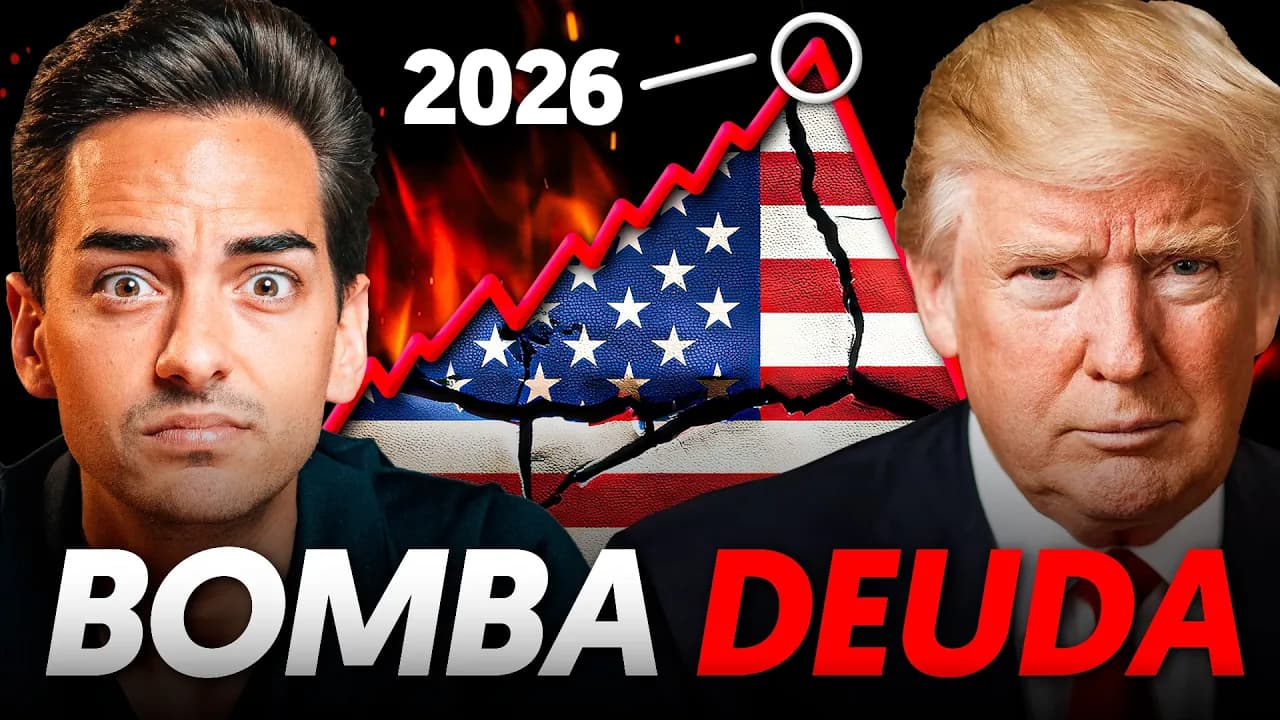
At the end of last year, a record 33% of total American wealth was invested in the stock market. Margin debt is at its highest level. The speaker warns that while this works when prices rise, it's not guaranteed to last forever.
Surfshark VPN is promoted as protection for online privacy by encrypting data, hiding IP addresses, and preventing hackers from identifying location and download history. Features include Clean Web to block ads, trackers, malware, and phishing attempts, plus data leak alerts. The service has a no-logs policy and one account protects unlimited devices.
Vanguard expects US stocks to deliver 4-5% annual returns over the next 5-10 years. Goldman Sachs predicted 3% annual growth for the S&P 500 over the next decade in October 2024, with 72% probability stocks would underperform Treasury bonds, later raising the forecast to 6.5% annually with a 3-10% range. GMO predicts -6% real returns for major US companies over the next seven years. Optimistic views include Deutsche Bank and Morgan Stanley raising year-end S&P 500 targets to 8,000, with Yardeni Research at 8,300 based on expected 24% earnings growth. There is a record $8 trillion in money market funds that could flow back into stocks.
The average post-World War II bull market lasted 5.6 years with 167% gains. The current market has been around for about 4 years with approximately 129% gains.
The speaker shares experiences from 2008 when markets crashed and housing prices dropped 26%, noting cash was temporarily the best performing asset. Properties worth $350,000 were bought for $60,000 that are now worth eight times that amount. In 2020, markets collapsed but the S&P 500 ended the year at record highs. In 2022, Jeremy Grantham warned the S&P 500 could fall to 2,500, and Bloomberg Economics estimated 100% probability of recession within 12 months on October 17, just five days after the bull market began.
From 2000-2009, $1 in the S&P 500 turned to 90 cents, but US government bonds nearly doubled, gold turned nearly $4, and a 60/40 stocks-bonds portfolio ended with modest gains. The top 10 companies now make up about 39% of the S&P 500 index. International stocks achieved 32% returns last year compared to 18% for the S&P 500, the first outperformance since 2022.
Treasury bonds are offering yields around 5.3%, some of the highest in over 20 years. JPMorgan research shows that $10,000 invested in the S&P 500 from 2005-2024 would now be worth about $71,000, but missing only the best 10 trading days drops this to $32,000, with seven of those ten best days occurring during worst market periods. The stock market triples on average in the decade following previous ones.
- Make investment size appropriate so downturns don't cause panic
- Treat emotions as a counter-signal
- Keep buying and ignore noise with money prepared to see decrease in value
The speaker notes that when everyone is euphoric, it's often not the right time to buy, but when everyone says the situation is dire and panic spreads, that's usually a good buying opportunity.
The speaker believes either valuations will rise and continue the bull market, or valuations will fall leading to a relatively stable stock market as in the mid-2000s. During the 1990s, the market was expensive according to CAPE ratio yet doubled in value. The concern is people investing all money in stocks expecting 10-15% annual returns without alternatives, which could lead to harsh shocks. The recommendation is diversification beyond US stocks and S&P 500 to include international investments, bonds, high-yield savings accounts, gold, real estate, or valuable collectibles.
The speaker mentions Blossom Social platform where his personal investment portfolio is published, showing day-to-day performance compared to others like Caleb Hammer. The platform is free with the link in the description.
Keep Graham Stephan in your library
Save the videos and channels worth coming back to, and find them again in one place.