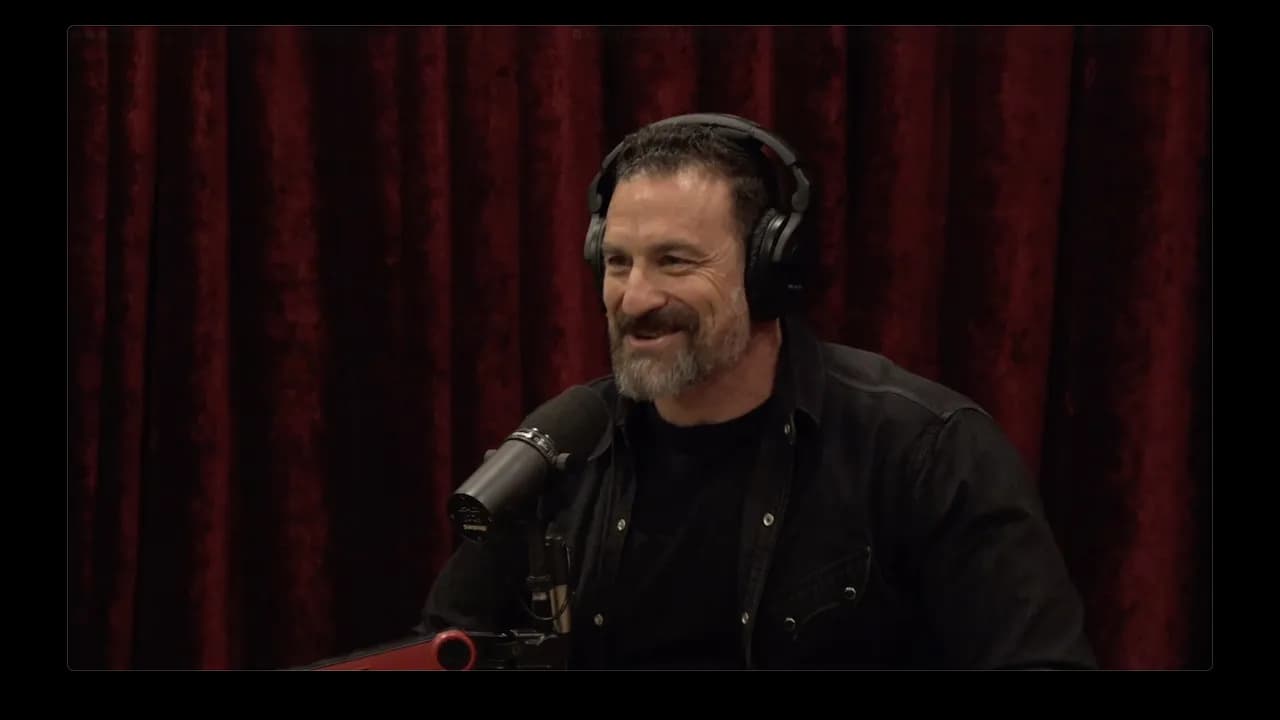
How to Access Your Creativity | Rick Rubin
In a Nutshell
Rick Rubin describes creativity as elusive clouds or dreams accessed by tuning into bodily excitement, capturing fleeting ideas, and following personal energy without external validation or rigid rules—prioritizing "this is how I see it" over commercial appeal. Key tools include disengaging from projects to let the subconscious work, nature immersion (beach walks, sun exposure), meditation (TM, awareness practices), wrestling/punk for playful chaos, and reverse-engineered phases: seed collection, experimentation, crafting, completion. Adults must unlearn perceptual filters and confabulations, embrace self-doubt as a balancer, and stay open to clues from the world, recognizing no idea is truly new but novel recombinations thrill through authenticity.
These notes were generated by AI and may contain inaccuracies.
Andrew Huberman introduces the Huberman Lab podcast, discussing science and science-based tools for everyday life. He is a professor of neurobiology and ophthalmology at Stanford School of Medicine. Guest is Rick Rubin, credited as one of the most creative and prolific music producers of all time. Artists he has worked with and discovered include LL Cool J, Public Enemy, Minor Threat, Fugazi, Beastie Boys, Jesus and Mary Chain, Jay-Z, Red Hot Chili Peppers, Metallica, Green Day, Tom Petty, System of a Down, Joe Strummer, Kanye West, Johnny Cash, Adele, and many more.
Rick is considered an enigma for extracting the best creative artistry from diverse people and genres. His expertise extends beyond music to writing, film, science, and all domains involving new, original thought, ideas, and production.
Discussion covers abstract themes like what creativity is and its origins, to concrete, everyday, tool-based approaches. Includes subconscious interaction with conscious mind and nature, with practical tools for accessing creativity.
Rick's new book: The Creative Act: A Way of Being by Rick Rubin. Andrew has read it three times cover to cover and is reading it a fourth time. Rich with wisdom applied in work and everyday life. Translates understanding of creative process meaningfully for anyone, not limited to music. Sheds light on fundamental human features enabling novel ideas that thrill, entertain, scare, make laugh or cry.
Rick generously offers to answer questions about creativity. Submit in YouTube comments as "Question for Rick Rubin": [question], kept relatively short. Will record and post as clip on Huberman Lab Clips channel.
Podcast separate from Andrew's Stanford teaching and research. Aims to bring zero-cost science information to public.
Maui Nui: Nutrient-dense, delicious red meat from USDA-certified wild harvesting of invasive deer on Maui. 1 gram quality protein per pound body weight per day for tissue repair including brain. Lean venison jerky, ground venison, steaks. Try at mauinuivenison.com/huberman for 20% off first order.
Thesis: Custom nootropics tailored to needs (focus, creativity, task switching, imagination, memory). Andrew uses Clarity formula for cognitive work. takethesis.com/huberman, code Huberman for 10% off first box.
WHOOP: Fitness wearable tracking activity, sleep, providing real-time feedback. Andrew on Scientific Advisory Council. joinwhoop.com/huberman for first month free.
Momentous Supplements: High-quality, single-ingredient, international shipping. livemomentous.com/huberman.
Creativity hardest topic in neuroscience to capture. Convergent vs. divergent thinking defined, but strictly, involves rearranging existing elements or inventing new ones. Rick's book convinces no internal source of creativity exists on its own.
Ideas like clouds: momentary shape, texture, then change or gone. Joe Strummer (whom Andrew admires as hero): "if you have an idea, you have to write it down. You may end up throwing it away, but if you wait, it will be gone." Andrew has system to capture ideas.
Best analogy: like a dream. Dreams don't make sense; remember parts, writing them down brings more back as abstract images, may understand later or not. Art-making: follow feelings of excitement, enthusiasm, interest, curiosity ("I want to know more"), leaning forward. Follow energy in body: "There's something here. I want to know more." Not intellectual process, hard to talk about, elusive.
Lex Fridman podcast with Balaji Srinivasan: rats trained for lever presses on even/odd/fifth, but not primes. Humans/rats can't train for primes. Implies not in touch with optimal schedules (e.g., sipping when thirsty may not be optimal). Creative process fed by external things; no language for it like using even numbers for primes.
Language insufficient for creativity; closer to magic than science.
Kids have better access: open, no baggage, no belief systems, don't know how things "should" work, see what is. Adults select data points for survival, procreation, feeding; learn right/wrong, imitate inspirations, undermining purity.
Imitation builds skill (e.g., singer imitates then finds own voice), but young kids sing/make in own voice from not knowing. Rick started music without experience, unknowingly broke rules by doing what seemed right.
No entirely new ideas; new combinations of existing ideas presented newly. Most interesting things: familiar elements joined in never-seen-before way.
Creativity hints felt in body (nervous system everywhere). Brain damage changes person more than limb amputation. Body signals generic (stomach hurts/feels good, warm/cold); thoughts near-infinite.
Rick: surge of energy, not localized. First time: hearing Beatles at 3-4 years old.
Andrew: Beatles never moved him; taste obscure. Rick suggests Beatles Anthology 8-part series.
Andrew loves Ramones documentary: jeans, aviators, name changes, hatred, drama, three chords, New York kids' energy.
In studio, engage in moment, not rely on language. Actionable suggestions, try, get data: moving toward/away. Like tasting two dishes, pick preferred. Not about social media performance.
E.g., "I like this better, needs salt" – taste, adjust. Be in tune with own feelings despite others' differing views (school teaches rule-following; art chips away scaffolding).
Impose own rules for shape (e.g., painting only green/red). Limits force problem-solving. Digital age: infinite choices (guitars, orchestras on demand) don't necessarily improve work. Understand own feelings amid other voices.
Understanding how you feel in the face of other voices, without second guessing yourself, is probably the single most important thing to practice as an artist. The key skill is knowing how you feel and owning your feelings. It's not "I know what's right for you," but "I know for me." The reason to be an artist is to demonstrate "this is how I see it." Undermining your taste for a commercial idea defeats the purpose. This process is about doing you and showing who you are. People can like it or not, but this is how you see it.
Andrew Huberman: In science, training graduate students, I had mentors, one an iconoclast, now dead. All my advisors are dead—suicide, cancer, cancer. The joke is you don't want me to work for you. My last advisor, Ben, said the one thing he can't teach is taste, and the predictor of those who never develop it are perfectionists who filter perfection through others' feedback. He sought people putting up a middle finger to feedback—not getting things badly wrong, but with compulsion to do it their way. When someone seems to really enjoy themselves or the emotion is real, people feel a gravitational pull.
Example: Growing up in skateboarding, we started baggy, sagging clothes, got teased endlessly one year in school. Then hip hop came out with sagging jeans/shorts. Next year, the same teasers were doing it. That's when it clicked: most people don't know what they like; they like what people they like with certainty do.
In creativity, what's real? Whoever creates the most convincing story captures audiences, but creative artists must depart from that.
Rick Rubin: Coming up with a story to please others is a commercial endeavor, not artistic.
Andrew Huberman: In your book, creativity as a cloud is a powerful anchor. Neurobiology of strategy: animals accomplishing goals (eat, mate, find water) use narrow visual focus, narrowing the playbook. For new creative ideas, broadening vision or thinking is essential.
Rick Rubin: It could be broadening or narrowing, but changing the aperture from the standard to present something new—maybe you knew but didn't know you knew. Like a comedian: outrageous but true, no one said it that way. Truth makes it funny. Science is like that: once the light flashes, it's obvious, like we knew it forever.
Artists' superpower: accepting we don't know anything. Thinking we know limits the world to a box. We could throw away all current science and start from scratch, creating something different.
Andrew Huberman: Offline, you asked neurosurgeon Eddie Chang (top 1% neuroscientist, pulls speech from locked-in syndrome patients): What % of medical textbooks today is accurate? He said maybe half. Consequence: incalculable. Science discoveries come from chance or hard work, but all involve lots of lab time.
Rick Rubin: Breakthroughs assume prior information is true. If prior is wrong, discoveries are built on sand. We're too close, with assumptions. New discoveries build on beliefs.
Andrew Huberman: Beastie Boys' Sabotage from skateboarding movie, interwoven worlds via Spike Jonze. You said Beastie Boys started as joke from NY hardcore punk scene, inside jokes.
Rick Rubin: Weren't paying attention at all. When making Licensed to Ill, hip hop was tiny underground; no one thought it'd mean anything. Made for crazy friends.
Andrew Huberman: Today, release on Twitter/Instagram in 10 seconds, get immediate external feedback, iterate. Problematic for creativity? 15-20 years ago, less feedback until release, more time in creative rainforest.
Rick Rubin: Not wrong/right, just more info to use or not. Make something, put out, people don't like: go harder in your direction. Different stories: they like/dislike for different reasons. Control only your relation to what you make. External info undermining clarity is bad for art. Always made what I like or what was missing as a fan.
Andrew Huberman: It's a compulsion, yanking from other options. Source as brain function in touch with bodily signals—what feels right. Vast playbook beyond short-term adaptive. In album/song, eventually strategy implementation: song order, melodies sequence.
Rick Rubin: Not just music. All part of same arc. Good feeling when done—commitment. Until signed off, can experiment forever. Use next project as motivation to finish current: tinkering delays the next.
Source is organizing principle of everything—trees grow, mountains form, all discoveries/art/designs/machines from it. We are antenna/vehicle for source.
Andrew Huberman: Imagination unconstrained, physical world by physics. Work between. Nature infinite options, e.g., color palette: rock's color too varied for paint match.
Andrew Huberman: Delight peering different scales: oil drop high-res, Earth/galaxy. Neuroscientist Richard Axel (Nobel, olfaction): brain does abstraction—no photo in brain, neuron ensemble. Science tinkers by removing/adding. Rothko removed white/high contrast, altered color space (like that dress illusion). Tapped fundamental, art/science converge: something amazing to enough people, defies language. Ever encounter fundamental principle showing up different forms?
Rick Rubin: Daily sights as impressive as oil drop/Hubble, but numb from familiarity. Novelty thrills. Rothko: magic from angle evaporates from side. Painting experiment: study model in next room without equipment, paint from memory in separate room—what data points stuck, forms experience (may not look photographic). Picasso from African art: eyes different levels give more info than photo.
Dramatic sunset, whale at beach, dragonfly/bird in space: confronts mystery, breaks trance. Reveals deficient perceptual filters.
Rick Rubin: Yes.
Rothko reveals how color normally looks is not the only way it looks. All of color is about contrast. What something is next to dictates what it looks like, origin of the dress meme. Seeing a whale reveals the vastness of the ocean universe we are normally blind to. Delight comes from contrast of how little we recognize, reminds of comedy.
In comedy, sometimes shock, sometimes absolute truth revealed. Saw Seth Rogen at Vulcan Club in Austin, small club. He led a story everyone knew the punchline to, and when he delivered it exactly as expected, it was hilarious.
And it felt good.
Normally humor is jarring surprise, but neuroscience of laughter is lame, always about surprise. Rogen built anticipation with beautiful delivery. Delight from laughing at perceptual deficit, how little we know.
It could be the sense of community when it goes exactly as expected, reinforcement, we're saying it together.
Music from 14-25 gets routed into nervous system, phase of identity crisis. Young people defining personality, wondering who they are. Songs and artists individual. Music we hear then emotionally tuned because sensors not shut down as much?
Sets up semi-deprived filter, missing other music like Beatles or Fleetwood Mac. Worked in punk, hip hop, Neil Diamond, Eminem, Slayer. Societally constrained to one group in high school/college. OK to love Bob Dylan and punk after Tim Armstrong said he loves Bob Dylan and Grateful Dead. Ramones and Clash love Beatles.
Reason it imprints: at 14-15, start choosing music, it's finally mine, parents/older siblings may not like it, always has impression this is ours.
How to wipe slate clean for new project? Transplant to science, podcasting. Podcast should evolve, not look like episode two in five years, truer to interests. If not interested in biology same way, hope it changes.
InsideTracker analyzes blood and DNA data for personalized nutrition to reach health goals. Regular blood work essential for metabolic factors, lipids, hormones impacting health. Provides actionable nutritional, behavioral, supplementation interventions to optimize. insidetracker.com/huberman for 20% off.
Lovers of sunlight, horizons as energy gift. Process for removing daily functions to access inner receiver, tuning radio to clear static.
Dedicate all of self to project for period (20 minutes or 5 hours), total focus, no distractions. When away, don't think about it, no materials, stay far away. Best: engage fully in Project B, C, D in between.
Relates to book chapter on disengaging. Subconscious works it through even when disengaged. Don't stew over problem; hold lightly. Starting project: anxious, no idea what happens, out of control. Prefer no backup plan. Anxiety until first thread appears, usually first day or two.
You are here on the map feels OK.
Anxiety as readiness: constricts visual field appropriately, mobilizes forward. Animals/humans in high anxiety move toward goal. Heroes like Rosa Parks, Muhammad Ali experienced anxiety in forward tilt.
Everything energetic: from anger, joy, delight, love as ultimate reservoir. Music from youth loved because matched where we were, relationship of love, felt loved by it, true to who we were.
Collaboration with universe. Artists/scientists complicated. Scientists in prefrontal rules for degrees, playful like Richard Axel but rigorous. Musical artists zany, chaotic lives, Ramones documentary chaos. Substance abuse, personal issues in science too.
How work with those getting in own way? Internal chaos sometimes essential for certain artists. Rarely see chaotic part; they serious about craft, focused, more than jumping on stage shows. Comedians too.
Boxing example: Floyd Mayweather, Money Team, cars/money perception. Sparring partner: 30-60 min sparring no rest, fresh partners, run 3-4x/24hrs, intense training destroys partners. Playful perception hides rigor. Psychologically, opponent confidence if thinks not serious.
Continuum: narrow focus/training/craft vs. cloud/nebulous. Pareidolia: tendency to see shapes in clouds/trees as ice cream cone, man in moon. Brain places symbolic filters. Fusiform face gyrus for face recognition. Prosopagnosia: see faces but don't recognize JFK, Madonna, Lex Fridman.
In project start: everyone professionals. In cloud, aware of technical risks, check if rolling if good happens.
Once flow happening, sit back and watch, never break it. Team resonance knows when "It" happens if paying attention. Thread sometimes particular to taste.
That might be particular based on taste or an artist's taste. Someone involved might say, let's listen back to that. I think that was better than we thought. That can happen.
You talked about walking in, certain data points, you recognize me, but it's like looking at a cloud shorthand. We go through our lives doing this all day with everything we see. The shorthand, in the case of me, turns out to be right. It checks out. If it's something we don't know, something unfamiliar, something happens on the street that doesn't make sense, something out of the ordinary. The first thing is this doesn't make sense. Then subconsciously, unconsciously, without thinking, we create a story that explains what just happened, a hypothetical that makes it OK. Maybe he's running because his dog ran away, and he's chasing his dog. As soon as we have that thought, we relax, because now it's not just a guy running, which is weird, but he's probably running after his dog. We register that story we made up, without knowing we were making it up, as what happened. Later, if someone says, did you see that guy running out of the house? Yeah, he was chasing his dog. We won't realize it was a hypothetical story, the first possible explanation that allowed us to continue walking.
That's our whole lives: reacting to things, making up a story of what we think may have happened, without realizing that's what we're doing, then living the rest of our lives as if that thing we made up really happened, and we never know.
We confabulate from birth until death. There's a well-observed phenomenon in people with memory deficits. Sad example: someone with Alzheimer's dementia finds themselves in the hallway at night and says, what are you doing here? They'll say, oh, I was going to get a glass of water, but they're walking away from the direction that would make sense.
Alcoholics who drink enough develop Korsakoff syndrome, where a certain brain area gets messed up. Ask them what they're doing here, and they come up with incredible stories that have no bearing on reality. They believe that's what happened with 100% certainty.
This relates to the controversy around repressed memories. You can pull memories from young people of things that never happened. Demonstrated over and over. Courtrooms are cautious about repressed memories. We tend to trust victims, but accuracy of details is complicated. Two people have very different accounts of the same experiences, shown in the laboratory.
We are the storytelling species. — Salman Rushdie
We're storytelling machines.
We are very limited filters. The mantis shrimp sees 67 shades of red for every one we see. They have access to things we don't.
Recent tangent: device that amplifies electrical signals from cactus, translates to two or three pitches of sound—the music is beautiful. Like whale song, which we think is beautiful, but maybe they're cursing or having psychoanalytic conversations about childhood traumas. We decide whale song is beautiful, cactus are just plants. It's beautiful to us, and we're right that it is to us, but it doesn't mean we know anything about it.
We have perceptual filters. We only see, hear, smell, taste what we can, then the brain works in symbols. Person with messed up shoes must be homeless. Instances: saw what thought was homeless vagrant in academic building—turned out most accomplished person in the field. Happened at Berkeley.
Perception, symbol representations, memories entirely confabulated based on deficient symbol and perceptual representation.
We know how the brain works: through very limited filters. Knowing that, looking to nature, looking outside is critical.
It's all lies. Back to nature, the only truth. — Rick Rubin (text response)
When I say it's all lies, based on our limited facility to see and understand. We can't know much. Our resolution is so low—we're grasping at straws. We have no idea. Great power in knowing that. If you think you know what's going on, you're being deceived—not because somebody is deceiving you, but because they're telling you what they see, and they don't know. Everything we know is made up. Maybe it's true, maybe not.
This brings us to pro wrestling. It's closer to reality than anything else we watch. We know it's made up, a performance, storytelling. We think wrestling is fake, world is real—wrestling's real, world's fake.
In the book, entertain the idea of the opposite being true. Fields like Byron Katie's work: take a statement, poke at its authenticity. In science, raise hypotheses, true or false. Observational studies reveal: patient with bullet hole through brain area shows deficit in seeing faces, reverse-engineer understanding.
Considering the opposite is like seeing the whale at the surface—opposite of experience might be complete experience.
Consider the inverse all the time. Relates to how we see colors based on contrast: blue only blue in relation to yellow. If not considering yellow, blue doesn't exist. Night only because there's day. Yin yang—light and shadow always. Always another side, focus on one aspect, but other aspect teaches something.
Nervous system does everything this way. Hubel and Wiesel: force person to look at something without moving eyes, image disappears—normally eyes make micro-movements, comparing pixel by pixel.
Until mentioned, unaware of sensation on backs of thighs. Pressure or smell habituates—neurons still firing, but we become blind and deaf. Nervous system habituates when signal constant, only signal-through-noise jolts attention.
Attention and awareness prominent themes, with insight into paying better attention differently for people.
Watched wrestling growing up south of Cow Palace—WWF, Koko B. Ware with macaw (obsessed with tropical birds), George "The Animal" Steele who ate the ring. He was a professor in real life.
Loved The Wrestler (Darren Aronofsky, Mickey Rourke), filmed in Asbury Park with eerie abandoned amusement park scene.
At 11-13, entering puberty—most rapid aging, rule set changes. Understanding of sex changes rulebook of perception. Gap between reality and fiction blurry, like Stand By Me campfire: who would win, Superman or Mighty Mouse? Mighty Mouse is cartoon, Superman wins. Healthy not to let it crystallize.
Wrestling accesses energy state where reality is blurry? Anything possible, archetypes like Greek myths, Bible. Maintains playfulness, expect unexpected. Energy of sport with no competition—everyone working together like ballet, great skill. Relaxes, no need to think, just enjoy.
Dopamine universal currency of delight, pleasure, motivation seeking.
Animals learn 3-press lever for reward, can switch, but not prime numbers or high abstraction. Humans not great at optimal foraging rule sets.
Experiment on dopamine in watching sport/comedy: surprise in comedy causes dopamine. Basketball: anticipation every team switch, bigger if unexpected like swatted three-pointer into half-court shot.
Wrestling: don't know script, anything could happen—dopamine surge/drip unpredictable but frequent enough (11 hours/week). Creative process similar: don't know where nuggets/loose threads, but experience knows they're there, map forms. Energy of sport, not specifics—energy it creates in observer.
Wrestling honest in world where nothing is—little data, make up stories, trusted sources pass as gospel. With wrestling, know maybe true/maybe not. Fun: real life bleeds in—two wrestlers marry/divorce, best friends turn, leg breaks. Scripted/predetermined, but wonder where reality is. Boxing might be fixed, baseball sign-stealing scandal (catcher signals deconstructed, World Series team). Wrestling: anything goes, no scandal—world really like that. Comforting mystery.
People surprise in all directions. Lady Gaga at event in meat outfit—statement against meat, for meat, carnivore diet, veganism, or neither.
Wrestling broke with the norm by creating different rules or breaking boundaries. We associate outside the current playbook with creativity, unless it crosses a line into theater for theater's sake. In wrestling, theater is the goal; everyone who watches knows and agrees to suspend outside reality.
Everybody boos for the bad guys and cheers for the good guys, knowing that backstage they're probably friends.
Kids around 11 might think it's real. Lars Frederiksen, rhythm guitar player for Rancid, loves wrestling because he grew up in Campbell in the South Bay with no teams—no San Jose Earthquakes then, no football team, no good sports teams—but wrestling was on television.
Skateboarding is similar: unpredictable, no real rulebook, maniacal about style—making it look good, smooth, catching with the front foot. Trends and styles change. In football, the goal is to get in the end zone and win; it doesn't matter if you run ugly if you're fastest—football players might cringe, but in skateboarding, that would get you ridiculed. Wrestling is all performance: charisma, physical ability, storytelling, whether you want to watch them win or lose, cheer or boo.
Wrestling reminds of opera, but opera stories are known; wrestling is real-time iteration, especially since people get hurt doing crazy physical stuff, so stories change if someone can't show up next week. Something interesting and unexpected always happens.
Andrew shares using chaos like punk rock shows (Agnostic Front, Chaos, Transplants) to reset OCD/Tourette's tendencies and structured thinking from childhood (arranging stuffed animals, LEGOs) and science precision. Aquariums provide non-linearity: fish go unpredictably, tranquility without A-B-C sequence—A, Z, Z, Q. Better than psychedelics for regular access.
Rick's book discusses ocean, clouds, nature: predictable location (sun rises/sets), yet chaotic (wave foam unpredictable, tides reliable). Wrestling, punk rock, ocean, aquaria combine structure and no structure.
Some places don't change, some change a lot. Rick walks a Hawaii beach every morning; after a year, left for six months, returned to an entirely different beach. Contrasts with childhood backyard in the house lived in first seven years—probably looks similar now. Depending on project, go to high-change place (connection to Earth) or low-change place. Both open different psyche aspects.
Andrew fascinated by New York mid-'80s/'90s, East-to-West Coast creatives migration. Loves Basquiat movie for characters (Parker Posey, Dennis Hopper, Christopher Walken) and era images. Wishes time machine there. People say New York, San Francisco, LA aren't what they used to be—disruptive. Natural landscapes changing (fires) accepted as normal/healthy. Kids growing up now see current cities as normal, cool or not.
Rick not attached to past New York, doesn't look back—optics present and forward, no nostalgia. Can hear past songs without pining. Unique quality; many emotionally anchored to past or future-trip. Wrestling cleanses palate like sorbet between savory/sweet—biological neutralization. Wrestling before sleep ensures good night's sleep, relaxing, low stakes entertainment. Sometimes exciting dopamine hits, but doesn't care outcome.
Wrestlers get hurt often—like stuntmen. In The Wrestler, staples into skin. Lucha libre: hands dipped in glass. Crazy stuff happens. Rick watches before sleep. Yoga nidra or pro wrestling good for clearing mind/peace before sleep—not horror or violent things like Dahmer.
Liminal states before/emerging from sleep powerful. Rick wakes slowly, likes not engaging too soon. Falls asleep to lectures/podcasts/audiobooks to avoid own thoughts.
Andrew's grandfather fell asleep to sports radio, smoker—wife ensured no fire. Rick wakes, gets sun ASAP (hopes for hour), then beach walk 1-1.5 hours, alone, listening to lectures/podcasts/audiobooks (no phone looking). Notes ideas in phone. Andrew does long Sunday hikes/jogs, audio-scripts into phone (voice memos, rev.com transcribes). Richard Axel paces office talking into phone for manuscripts. Woody Allen movie: Alan Alda speaks comedy ideas into phone (pretentious). Harvey Milk (Sean Penn film) tapes predictions at kitchen table.
Joe Strummer on writing things down. Overcome egotistical guilt: ideas (experiments, health questions) can grow into big trees. Notes for personal interest, not others—universe weaves into projects. Like coal/kindling, but not extractive.
After walk, deal with needs, prepare for work. Work is free: welcoming good, paying attention, willing it but can't force—be present/ready.
Dancing with structure/lack: deadlines relevant later. Used to grind (no dinner, coffee pot), a lot over life, less now.
Phases of work (reverse-engineered from instincts/book):
- Seed collecting: Ongoing, no deadline—anything interesting (read more, movie? If not, pursue because desired).
- Experimentation: Set stage (plant seed, water, sun), wait to sprout—not dictating.
- Crafting: Trim, combine plants—material to shape.
- Completion/finishing: Final edit, shareable version—deadline helps here, not earlier.
Phases overlap, not linear—always collecting seeds, experimenting. By deep crafting, see end, set internal deadline (not public, to allow discoveries). Break rule if best for project. Realized via book; previously assumed no deadlines throughout, leading to overruns.
Rick Rubin describes his book as reverse engineered principles from good decision making and making things, asking if there's a principle at play that could be useful outside specific cases and how to explain it.
Andrew Huberman notes the chapter on self-doubt: > "Self-doubt lives in all of us. And while we may wish it was gone, it is there to serve us." It describes how to dance with self-doubt. Huberman references the psychological phrase > "if nothing matters, anything goes," usually pathological for self-destruction, but a light version applies to creativity: ignoring outcomes, who likes it, focusing on delighting yourself creates an infinite rule set initially.
As one improves—landing free throws, hitting home runs, producing platinum albums—self-confidence rises, self-doubt falls. But successful people face pressure to repeat success or arrogance from ease, thinking no need to apply oneself.
Self-doubt acts as a check: helpful or undermining. If undermining, nothing gets made. As a balancer, it's okay to have full confidence yet second-guess for the best result. > "You can doubt your way to a great work, to a masterpiece." Questioning pushes beyond accepting "I made it so it's good."
Huberman observes more people driven by self-doubt and need to perform than arrogance. Psychiatrist Carl DiSalvo (guest on podcast) said we never know how others feel; language poorly explains feelings. Observe behavior instead.
Returning to process with scripted routine, but accessing wrestling, sleep/dreaming, ocean—predictably accessible yet unpredictable (ocean completely so). Rubin listens to unknown music: classical, some jazz, old unheard music for surprise; Shazams liked tracks.
Huberman asks if music works better live than recorded. Rubin: Some artists great live but not on record, e.g., Grateful Dead—albums not strong, but live recordings interesting, different, unpredictable.
Huberman confesses sister's Grateful Dead fandom, attended shows with endless drum solos called space (antithesis of punk's 90-120 second songs). Fans love uncertainty.
Grateful Dead seek something live; when found, exciting—not scripted, real moment. Rubin aims for this in studio: imperfect but real happenings, unique, unrepeatable. Like jazz: no map, full attention—deciding to play/add, reacting. Listener feels shared excitement. Dead vary songs live; albums don't capture essence. Fans recorded/videotaped (band supported taping/trading).
Redefined followers: people drove city-to-city, as each show differed—not like repeating a movie. Comparable to cults (often end badly); Huberman mentions Jonestown Massacre punch mixer from his high school. Rubin asks if true; Huberman thinks so, credits sister's '70s/'80s dark psychology trivia. Rubin recommends Season of the Witch about San Francisco '60s.
Creative process captures moments emerging in time, like conveyor belt of things passing by—not gritting teeth (Hemingway/Bukowski quote about blood on forehead). Like lab: pursuing one thing, spotting another, deciding to pivot (night/week/career). Attachment to past playbook (what worked) hinders; book warns: > "To be aware of the assumption that the way you work is the best way simply because it's the way you've done it before."
Success fools into thinking it's the way; it's just one way that worked then. Advice from experienced based on their life/experience, not yours—may suit them, not you. E.g., Rubin vegan 22 years, switched to animal protein, changed diet, lost weight. Told method made others lose weight, but he didn't initially.
Hard to know what's right for self; if cracked, be happy but question if only/better way. Avoid comfort in knowing "how it works" from outcomes.
Huberman raised in science with rule: brain plastic until ~25, then critical periods end (dictated like religion, from Nobel to scientific great-grandparents David Hubel/Torsten Wiesel—deserved but wrong). Suppressed; Mike Merzenich/Gregg Recanzone showed adult plasticity, now emerging. Textbooks propagated; changed behavior.
Rubin: Why only then? Fields run by small cabals invested in status quo.
Years wasted; BBC specials spread it. Podcast shines light on crazy ideas. Both obsessed with light health benefits (negative ion therapy from Michael Terman at Columbia; 1916 Nobel for phototherapy for lupus). Red light unusual (sunsets/stoplights), undermines business models.
Acupuncture dismissed as no mechanism; Harvard's Qiufu Ma lab finds anti-inflammation, gut microbiome effects (known thousands of years). Rubin's friend healed back pain instantly via acupuncture, skipped maintenance believing no science despite personal proof—now published in premier journals.
Journal editorial dictates publication/media coverage. Tides changing: hypnosis, yoga nidra effective. Future editors (now kids) will accept sound wave therapy, tuning forks.
Filter through biology/sociology/culture.
Rubin: Knows what he likes/works for him, tries things from anywhere (Stanford/street guy). No tight hold. NCCIH (NIH division) on complementary/alternative health; director published acupuncture anti-cancer data.
Sheds light on Andrew Wiles, Paul Stamets. Ozone therapy, nutrition (once dismissed; food everything).
Online nutrition third rail: vegans, omnivores, carnivore MD, Liver King. Like pro-wrestling characters in domains (fashion, music, sports, science)—taking seriously.
Don't know anything; try interesting ideas. If works, good; else try other. Fringy/unrealistic intriguing—feels like hidden truth. Not big on drugs/psychedelics (never done, not against; prefers non-pharmacological). Behavioral tools safest, iterative (vs. pills, except parkour risk).
Rubin's works: music, comedy, film producing. Strummer's law: > "No input no output" (on Huberman's lab wall with Strummer/bulldog pic). Can't create in empty room; access world.
World gives clues if paying attention—whispered/screamed. Chapter ~"Look for clues": phrases trigger thoughts, unexpected sights, recommendations (coincidence if one, not if three). Universe supports creativity through you/others.
Huberman's guest Justin Sonnenburg (gut microbiome): trillions microbiota make neurotransmitters, govern brain/decision-making/appetite. We think them cargo, but maybe we're vehicles—they're in charge (exchanged via handshakes/eyes). Intelligence as thinking? Maybe manipulated house cats optimizing survival via love/kissing/handwashing.
Laird Hamilton: sauna heat discomfort from bad body critters unable to handle it.
Rick Rubin suggests entities trying to convince us from the inside to get out, possibly explaining the compulsion to leave Earth. Andrew Huberman notes Elon Musk's Mars efforts might align with this desire. Considering the opposite is key, akin to scientific inquiry where you challenge findings by asking, "What if it's something else?"
Alia Crum's graduate thesis explored if exercise effects are placebo. While calories are burned, many positive effects—lowering blood pressure, relieving stress—are placebo-driven, overlooked due to focus on calories.
Rick Rubin emphasizes belief's power: believing you can make something great increases chances of success. Harnessing belief is healthy.
Andrew Huberman notes Rubin affirms all creative elements exist externally; we select from a conveyor belt of gifts—first notice it, then the gifts, grab and open one to start something beautiful. Everything Rubin creates stems from noticing something new.
Being happy isn't required for creation; unhappy people create. Key is paying attention, staying undistracted. Staying present in the work is most important. Emotions matter less unless they block feeling the work's impact, like physical pain overriding art's effect.
Transmutation turns one emotion into adaptive action. Undistracted times yield great productivity. Success distracts, as in fighting sports where money shifts focus from origins, losing underdog mentality.
Meditation doesn't focus on the brain. Types include:
- Mantra meditation: Creates trance, overriding conscious mind with sound, word, or phrase (e.g., loving-kindness phrases).
- Breath focus: Single-pointed to block self-talk.
- Awareness meditation: Notice sensations without story—e.g., ear ringing, car sounds, chest feeling, jaw tension, warmth, itch. Inventory everything as it arises, eyes open or closed.
In all, no thinking; awareness of sense perceptions or blocking thought.
Started at 14 with TM (Transcendental Meditation), most practiced. Tried others, Tai Chi. Meditated 5-6 years, stopped at university, resumed later realizing its profundity. Beach walks as meditation. Typically first thing upon waking, in sun with eyes closed; second before dinner. On airplanes, up to full NY-LA flight (time stops like sleep).
Rubin shared meditations, including transcontinental flight one. Huberman adopts it, suggests linking for listeners.
Monroe Institute's Surgical Series aids healing post-surgery, reduces trauma, speeds recovery via audio. Rubin used pre-surgery: eyes closed, went inward; staff mistook calm for sedation based on vitals.
Meditation works if you learn and do it—no good/bad versions.
Andrew Huberman thanks Rubin for music (past and future), time sharing process, book The Creative Act: A Way of Being. Read twice, will reread; gems in every digestible chapter. Discarded neuroscience lens midway for new perspective. Rubin as portal and friend.
Rick Rubin: "I love you. I'm so happy to be here with you. Any time I get to see you, it's a good day."
Check Rubin's book for creativity knowledge. Submit questions in YouTube comments as QUESTION FOR RICK RUBIN; Huberman will ask in follow-up, post on clips channel.
Subscribe to YouTube, Spotify, Apple (5-star reviews). Comments for questions/topics/guests. Sponsor support. Supplements via Momentous (livemomentous.com/huberman): high-quality, single-ingredient, international shipping for sleep, focus, hormones.
Follow Huberman Lab on Instagram, Twitter, LinkedIn, Facebook. Neural Network Newsletter at hubermanlab.com (free, monthly summaries/toolkits).
Keep Andrew Huberman in your library
Save the videos and channels worth coming back to, and find them again in one place.