How to Find Clogged Arteries AT HOME (Easy and Fast)
In a Nutshell
The Ankle Brachial Index (ABI) test, performed at home with a blood pressure cuff after 5 minutes lying flat, compares highest systolic ankle pressure to highest arm pressure: 1.0-1.3 is normal, while <0.9 or >1.4 signals vascular disease (consult a doctor immediately; avoid if leg clots, recent surgery, or severe swelling). Recommended for ages 50+ (especially with risks like smoking, diabetes, high BP) to detect peripheral artery disease (PAD) early, though it misses soft plaque causing heart attacks/strokes—follow up with CIMT or calcium score if concerned. Address root causes like undiagnosed metabolic disease via lifestyle (low-carb/fiber-rich diet, exercise), not just statins; normal ABI doesn't rule out all risks.
These notes were generated by AI and may contain inaccuracies.
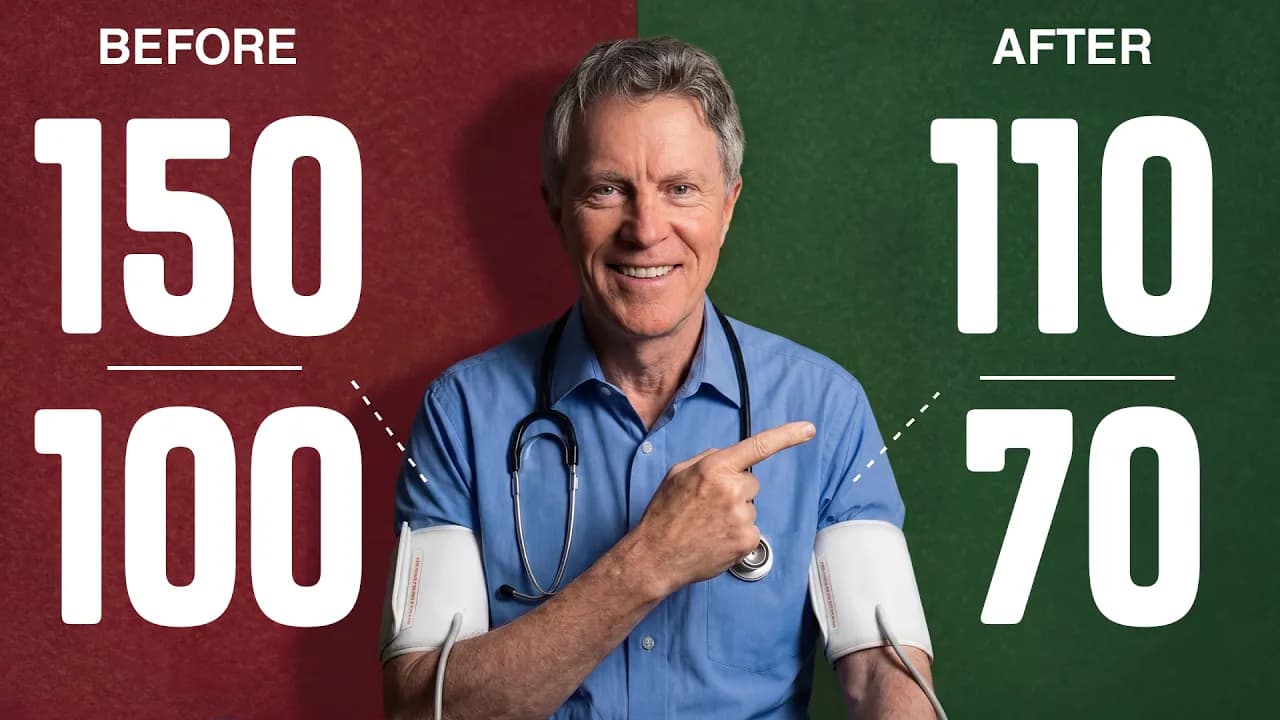
Test for clogged arteries at home using a blood pressure monitor or cuff and five minutes lying flat. Dr. Ford Brewer and Dr. Vega explain the test, how to perform it, and results interpretation.
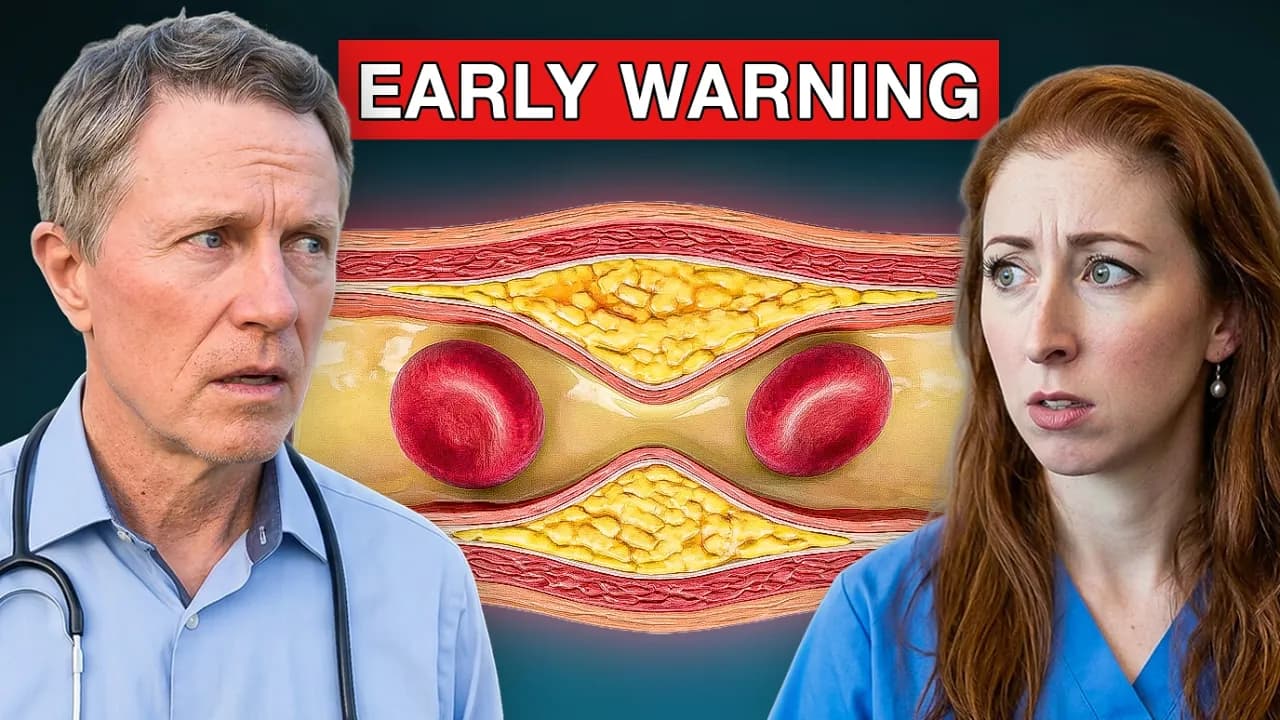
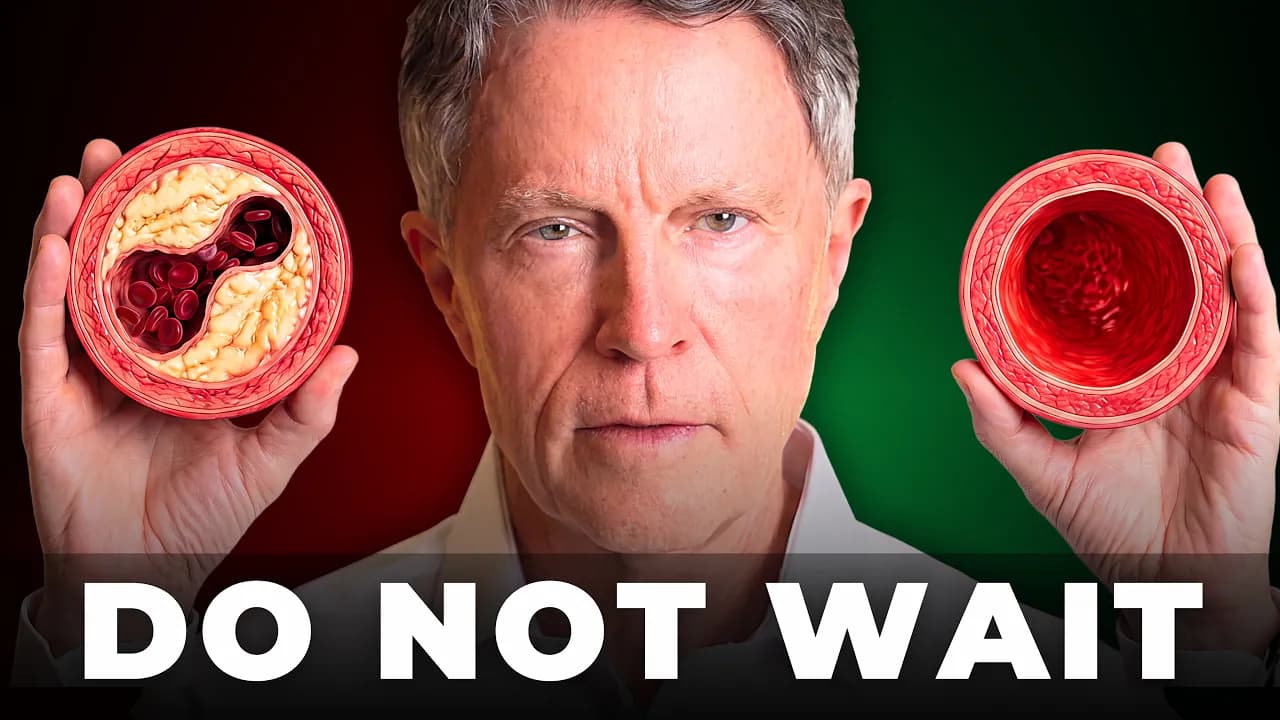
Finding clogged arteries typically requires hospital, expensive equipment, doctor's order. By diagnosis time, disease has built for years due to inflammation creating plaque.
ABI measures blood pressure at ankle and compares to arm. Ratio indicates if plaque restricts blood flow to leg arteries. Bad leg result flags issues for heart, brain, eyes, erectile function, kidneys—tissues with high blood supply needs. Test misses early plaque but detects serious trouble.
ABI: Ankle Brachial Index (ankle pressure / brachial arm pressure).
Don't wait for symptoms like leg pain on walking (intermittent claudication), slow-healing wounds, foot color changes—disease already advanced.
- Age 65+ even without symptoms.
- Age 55+ especially with risk factors: smoking, diabetes (90% undiagnosed), high blood pressure, abnormal lipids/cholesterol.
- Age 50-55 if never had one.
- Leg symptoms: do immediately.
Routine ABI controversial for low-risk young people (30-40s) due to false positives, like Apple Watch atrial fib detection.
- Known/suspected blood clot in leg (cuff compression could dislodge).
- Recent leg bypass surgery or vascular procedure.
- Severe leg pain, open wounds, major swelling, cast, heavy bandaging, significant edema/lymphedema (unreliable readings, potential harm).
Abnormal results (<0.9 or >1.4): consult doctor immediately—not for self-management.
Rest lying flat 5 minutes. Use blood pressure cuff. Record:
- Left arm
- Right arm
- Left ankle (artery behind ankle bone)
- Right ankle
Demo: Cuff positioned over artery, firm but not tight. Right arm: 107/69. Leg scratches from clearing thorns. Good technique critical over monitor brand (Omron, Welch Allyn recommended; check certification, full batteries).
Normal demo shows no significant plaque, consistent with speaker's hill sprints.
Peripheral Artery Disease (PAD): Clogged leg arteries detectable by ABI.
Genetics: Significant if metabolic disease (common, often undiagnosed). Men get metabolic/vascular disease ~10 years before women. Smoking wrecks arteries worse than diabetes, glucose, lupus, being male—burns vessels daily.
Ratio = highest ankle systolic BP / highest arm (brachial) systolic BP (left or right).
- 1.0-1.3: Normal, no significant BP change arm-to-leg.
- <0.9: Vascular disease.
- >1.3 (or >1.4): Vascular disease (stiff/calcified arteries, common in diabetes/chronic kidney disease; cuff can't compress properly).
Both abnormal: see doctor to rule out.
Normal ABI rules out major flow-limiting blockages in large leg arteries (aorta to pelvis to legs) at rest—not zero plaque or zero heart attack/stroke risk.
"It's not how much plaque you have that causes events. It's whether or not the plaque is soft, inflamed, and therefore able to squirt out a little bit of it and form a clot."
Heart attacks/strokes from small soft plaque rupture/clot, not slow narrowing (why unpredictable, stress tests fail—e.g., Tim Russert normal stress test, died months later). Even post-event patients often lack flow impact.
Normal ABI + low CV inflammatory markers correlates with low MACE risk (Major Adverse Cardiovascular Events: heart attack, stroke, blindness, kidney disease)—but not definitive for ruling out.
Proven plaque: consider low-dose aspirin, low-dose statin (not before plaque evidence).
Address root cause (most common: metabolic disease, undiagnosed in >75% as doctors miss it).
Avoid false reassurance: normal ABI like fasting blood sugar 90 that spikes >200 post-glucose.
ABI catches late-stage flow-impacting plaque; events often earlier.
Better tests: CIMT, calcium score, CT angiogram (sees plaque types in coronary arteries).
Vascular surgeons (e.g., Dr. Lily Johnston) prefer clinic ABI with Doppler ultrasound/technician for precision.
Counter: Stanford studies support simple cuff ABI as screening. Home version practical/inexpensive for early flag when advanced tests unavailable.
The number one referral source is the patient's local doctor. Patients get frustrated with doctors who do not listen, do not think deeply, do not address root causes, and just prescribe medications like statins quickly.
AI has had a huge impact, with up to 47% of searches previously done on Google and YouTube (number two search engine) now using AI. The problem with AI is it pulls from the internet, so if internet information is wrong, AI repeats it.
They do not think like the rest of the profession, rejecting the idea of checking LDL and prescribing statins if above 70. There is correlation with high LDL due to metabolic disease, but new evidence like lean mass hyper-responders shows people with pristine metabolic health but LDL at 200, 300, 400, 500, even over 600 and 700.
Started serious work on their digital twin six months ago, initial work a year ago. Attended a YouTube meeting focused on AI where experts helped them start. Trained their own ChatGPT on their knowledge. Currently, 50 people using it: 30 beta tester patients and 20 staff, including health coaches with doctorates. Need another 50 to 150 volunteers for beta testing.
If we had paid for a Super Bowl commercial, you'd be broke by now.
Unlike general AI (ChatGPT, Amazon, Gemini) that grabs internet data, their beta AI digital twin, trained for over a year on Dr. Brewer's knowledge starting January, provides direct answers from him. Link in comments for beta; if broken, comment "I want to volunteer" on video. Works internationally, e.g., for UK users.
For ABI, use highest systolic blood pressure from ankles and arms, not diastolic or highest of either.
Example:
- Right ankle: 115/70
- Left ankle: 118/75 → highest systolic 118
- Right arm: 112/68
- Left arm: 110/70 → highest systolic 112
- Ratio: 118 / 112 = 1.05 (normal)
ABI 1.0 to 1.3 or 1.4: no symptoms, good for legs, but does not mean no plaque, especially with metabolic disease. Get screening like CIMT (carotid intima media thickness test) on neck carotid artery for plaque thickness. Carotid plaque indicates stroke risk (worse than heart attack) and systemic metabolic issue—only 2% probability of plaque in neck without heart or vice versa.
Do not stop at normal ABI; address drivers: smoking (radioactive for arteries), diabetes, prediabetes, undiagnosed metabolic disease (most common, age-related, stronger in 50s-70s). Aging strengthens metabolic risk more than obesity epidemic.
If ABI outside average, see vascular surgeon urgently.
No one pill, supplement, diet, or carb restriction alone fixes it. Requires managing blood sugar spikes over 140, daily exercise, sleep, stress. Patients often prescribed Lipitor 40mg as sole solution.
ADA recommends 40-60% calories from carbs; only 3-4 years ago acknowledged low-carb as an "option." Now GLP-1 agonists are first or second line for obesity/diabetes, implying inject despite high-carb diet. GLP-1s help hormonally but fail without addressing addiction, habits, lifestyle—patients still struggle to lose weight.
Carb necessity rooted in psyche, e.g., spaghetti dinner before marathons (Dr. Brewer's worst marathon after one). Grain carbs provide instant energy perception via glycogen storage, but glycogen not bottleneck for endurance—vascular, muscular, mental prep are. Same for football; low-carbers still have liver glycogen.
Excess blood glucose burns arteries, so body uses it quickly/low-cost; not primary fuel, but emergency/spare. ADA recommends up to 65% carbs.
Pine needles (carbs): quick bursts, easy start, but smother fire if overused (smoking pile). Log (fat): harder to start, burns cleaner/longer. Fat harder to adapt to but healthier long-term, higher calories. Unburnt carbs float in blood doing damage like unburnt pine needles.
Prefer resistant starches over junk (may reduce spikes, some evidence). Use carbohydrate-to-fiber ratio: for every 5g carbs, at least 1g fiber—slows absorption, reduces glucose spikes.
Carnivore works as elimination diet (eliminates carbs), good to stop digging out of hole, but many plateau and shift to keto/carnivore hybrid or omnivore. Some sustain long-term; Dr. Brewer's LDL rose to 180 on carnivore (lean mass hyper-responder traits), switched back for enjoyment of salads/plants.
House calls feature real volunteers sharing stories, raiding kitchens to check food, addressing real vascular disease challenges. Examples: Harlan (near Dallas, right politically) and Hobie (left politically), similar issues. Available on Dr. Brewer channel post-video.
Thank you for joining us; it was a pleasure, and we'll look forward to talking next Thursday. Additionally, this Saturday there's another video about aspirin to clear up confusion from the previous aspirin video.
Dr. Bruce and your channel management business—you're very good at creating a lot of confusion. This is a confusing enough space as it is with insulin resistance—what does all that mean?—and then you come in and say don't take D3 K2 at the same time.
We're not going to talk about that; we're going to talk about aspirin this Saturday. Leave your quote, Dr. Bruce, and I will shut this up.
Growing old is not for sissies. That's why we do what we do, but it's a lot easier with healthy arteries, and we're going to talk about that in a little bit.
Thank you for joining us, and we'll see you next.
Keep Thomas Fordham Brewer MD MPH in your library
Save the videos and channels worth coming back to, and find them again in one place.