How to Find Clogged Arteries Before it's too late (ft. Dr. Johnston)
In a Nutshell
Dangerous soft plaque silently builds in arteries, risking sudden heart attacks, strokes, or amputations via rupture—not gradual narrowing—yet can be detected early and stabilized (or even reversed) with tools like CIMT for intima-media thickness and soft plaque, CCTA with AI for total plaque burden/volume/density, and CAC as a cheap initial screen (avoid repeats). Lifestyle changes (low-carb diet, exercise, weight loss), plus meds like low-dose statins, dramatically lowered one doctor's arterial age by 20 years on CIMT; focus on converting unstable soft plaque to stable calcified plaque and tracking inflammation via IMT over quantity changes prone to error. Prevent disability over mere death by acting early—especially with family history, diabetes, or smoking—using staging like cancer to guide aggressive risk reduction before late-stage surgery.
These notes were generated by AI and may contain inaccuracies.
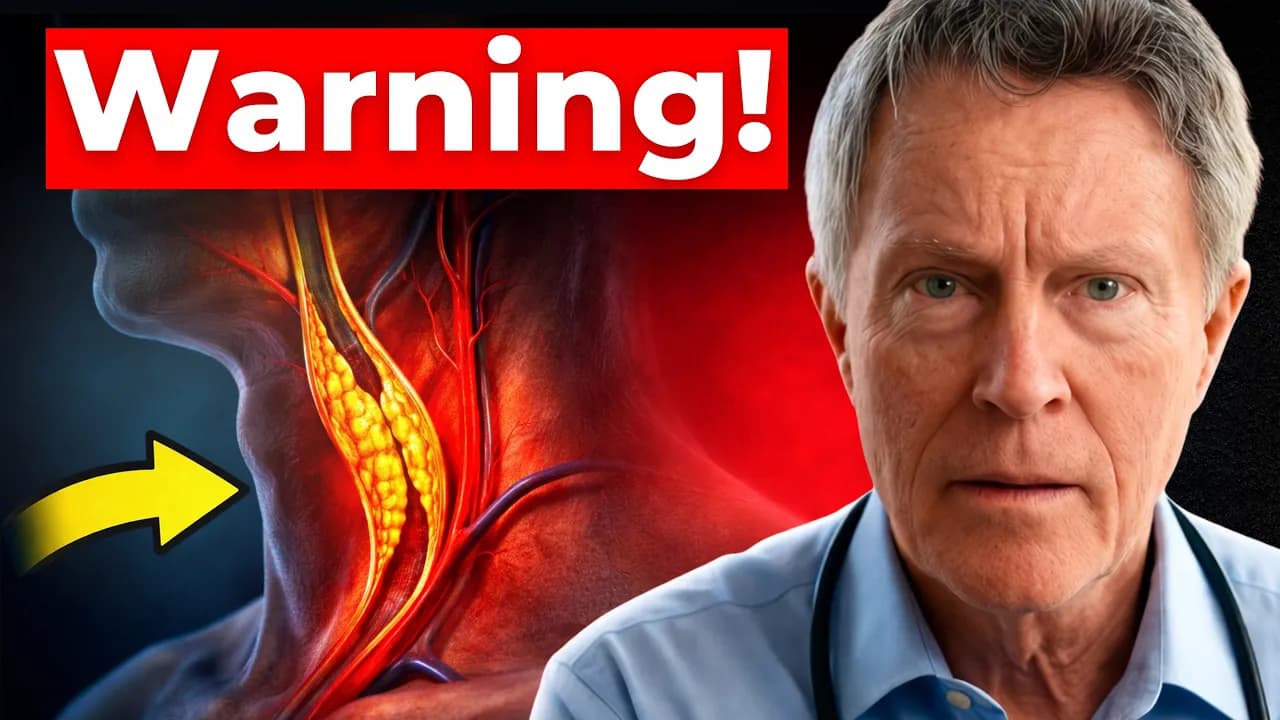
Millions of men and women have dangerous plaque silently building inside their arteries. One microscopic crack in that plaque could end their story in minutes. Ways exist to find plaque before it finds you. Dr. Lily Johnston, vascular surgeon, opens, repairs, and protects blood vessels for brain, heart, and legs. Conversation covers how plaque hides in artery wall before symptoms, imaging and tests to reveal plaque early, and warning signs most brush off.
Everybody's got a plan until you get hit in the face. (Mike Tyson)
Host at age 57 got bad news of plaque and not-so-stable plaque—got hit in the face. Many in 50s, 60s, 70s get same punch and change plans. People think they did okay with nutrition and exercise, but life (family, work, travel) took over. Then they get serious, make changes, and get gut punch with plaque. All prior health improvements were not for nothing—provides longer runway to fix, manage, stabilize, if not reverse plaque. Some is genetic bad hand; bodies respond differently to modern environment (air pollution, microplastics, stress). Nutrition and movement worked; easier to manage when lifestyle dialed in. May still need more tools.
Dr. Johnston is vascular surgeon, still practices. Spent years making peace with awful disease: plaque rupture in neck causes stroke; in leg risks limb loss, amputation; kidney failure needs dialysis. Mortality rate of peripheral arterial disease (PAD) equals stage four cancer. Surgical management of PAD (plaque outside heart) is stage 4 cancer treatment. Why not diagnose and manage earlier, like cancer doctors, to avoid operating table with metastatic disease—like band-aid on hole in Hoover Dam.
Patient Harlon Bounds in Texas: pre-teen (10-12 years old), stole cigarettes from car dashboard, became lifelong smoker. Knew it would make him die younger, but at 10, dying at 55 vs 75 didn't matter. At 55, changed mind. Had significant vascular disease, full diabetic—two worst things for arteries. Lifestyle changes: complete diet change, lost 40 lbs, improved walking. Less fortunate group exists.
In 70s-90s, stroke or limb event still disabling—someone has to wipe your butt. Not better just because older. Goal: prevent morbidity, disability, reliance on others (nursing home, medical team for arm/leg immobility). Patient example: carotid artery disease in neck, second stroke, recovered enough to be nearly suicidal—couldn't care for self, get out of wheelchair, feed self, but brain recognized indefinite situation. Devastating; family helpless. Not trying to prevent death (life is terminal), but death with disability from this disease.
Patients come saying "I don't want a heart attack," then shift to "I don't want stroke and be bedridden." Want to change health span, not lifespan. Met Dr. Johnston at low carb conference doing CIMT (carotid intima-media thickness). Her work with late-stage patients (losing brain parts, limbs) aims to walk backwards, prevent reaching operating table.
Easier starting early—like paths diverging; smaller changes over years/decades. Late-stage (stage four) requires enormous work: tools, medications, procedures to put genie back. Early (10-20 years ahead, little plaque on ultrasound): lifestyle may do it all, add medications/tools based on philosophy, family history, risks. Great hope in early action.
Host's first popular video: shared reversing plaque story via CIMT. At Hopkins (host ER doc training, Dr. Johnston vascular training), saw too many preventable heart attacks/strokes—shifted to prevention. People don't listen. Host had metabolic disease, pre-diabetes (challenged glucose 170s-180s), cut carbs, lost pounds, low-dose statin—arterial age on CIMT dropped from 73-year-old to 57 then 53 (20 years). Haters: PhD with cardiologist (head at Cedars-Sinai) say reversing plaque impossible.
Dr. Johnston (Hopkins MPH): plaque reversal (shrinking atheromas/fatty plaques) possible, shown by intravascular ultrasound (IVUS), OCT in coronaries—shrink/stabilize plaque volume. Unclear if shrinking vs stabilizing matters more; data not entirely clear. Stabilization is win from outcomes perspective. IMT (intimal medial thickening in carotid): active inflammation signal; rapid progression becomes plaque. IMT down means calming inflammation, slowing plaque growth elsewhere (intuitive, not fully data-supported, low harm). Use IMT as barometer for risk factor control post-heart attack when cardiac imaging tough.
Host opinion: doesn't reverse much oxidized LDL; reverses inflammation/inflammatory components (rare). Stabilize plaque—approaches risk of no-plaque person. Goal: stabilize, not reverse. On CIMT, plaque measurement less reliable (not multiple angles/measurements). Plaque volume change: celebrate big drops (10 to 5 real), small (5.5 to 5.3) maybe error. CCTA (coronary CT angiogram) with AI more quantitative, shows real reversal.
Reliable: soft plaque vs stable plaque. Plaque quantity muddier, even state-of-the-art. Dr. Todd Eldridge made CIMT (especially IMT) precise/reliable.
Dr. Johnston trained decade as surgeon/vascular surgeon. Exam for Dr. Todd Eldridge's CardioRisk: double-blinded trial—scanned 5 random Salt Lake City patients (2 exams each), pitted against his 20-year sonographer. Blinded to independent statistician; results within standard deviation. Only randomized controlled skill test in training—why confident in tool.
Host tried early CardioRisk, returned device—too demanding. Certified registered vascular interpreter for ultrasound; thought breeze, but had to work.
Patients improve lifestyle (triglycerides down, HDL up, lose visceral fat, better OGTT/insulin), but panic: repeat calcium score higher (not lower); 2mm CIMT increase. Or new to it: high calcium score, get healthy, repeat goes up.
Dr. Johnston: never repeat calcium score unless chasing double zero (age 60+, prove minimal risk after prior zero—reassuring). Screening tool, not for monitoring. CAC/IMT rise with age—use percentiles vs age/gender peers. Increase may be stabilization (70-80% soft plaque to calcified) vs progression. Studies show CAC increase links to events—two populations: stabilizers (lower risk) vs poor control (higher risk). Old paradigm (aspirin/statin) inadequate for many. No point repeating positive CAC—we know plaque exists. Instead: more soft plaque? Converted soft to stable? Inflammation improved? Missed risks (periodontal disease, toxins)? Use CCTA/CIMT forward. Rarely order repeat CAC; painful walking patients back from panic.
CAC most accessible ($100 at SimonMed), cardiology preferred for risk stratification (fine once). Not preferred—order if patient insists/no resources for CCTA/CIMT.
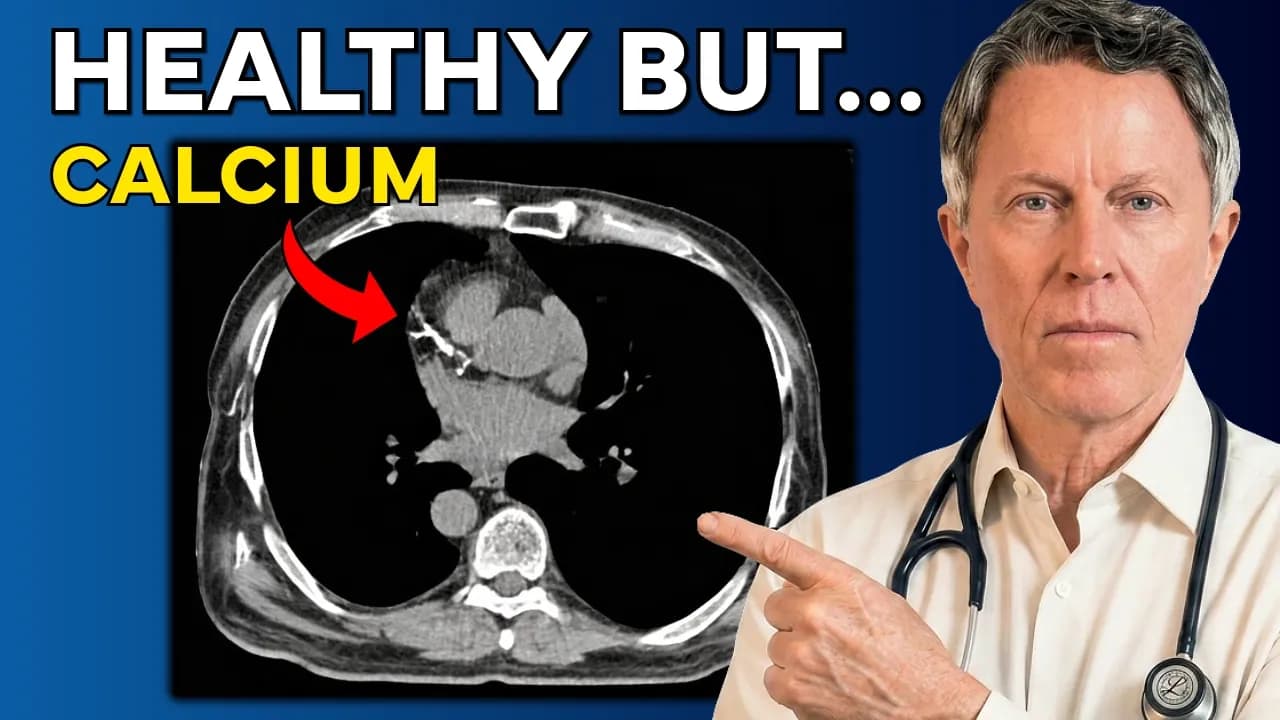
Confusion: CAC and CCTA both CT scans. CCTA: IV contrast dye, gates to heartbeat (coronaries 2-3mm, moving 60-70x/min). Low resting heart rate, dye injected, pictures time heartbeat—sees flow channel (dye inside artery), plaque in wall (calcified + soft). CAC shows 20-30% total plaque (rest soft, vulnerable—causes rupture, heart attack/stroke/limb events). CAC 100 = 20-30% visible (varies by metabolic health); rest soft. Not slow narrowing to 100% (that's stable chest pain: exercise squeezing better with rest).
When people have squeezing or pain in the chest when they exercise that gets better with rest, it's like the cramping in the legs with walking when there is plaque in the leg arteries called claudication. That's stable, predictable, comes on with exercise, goes away with rest, and relates to the narrowing. But the heart attack event is the sudden rupture of soft plaque, which is what we're trying to mitigate.
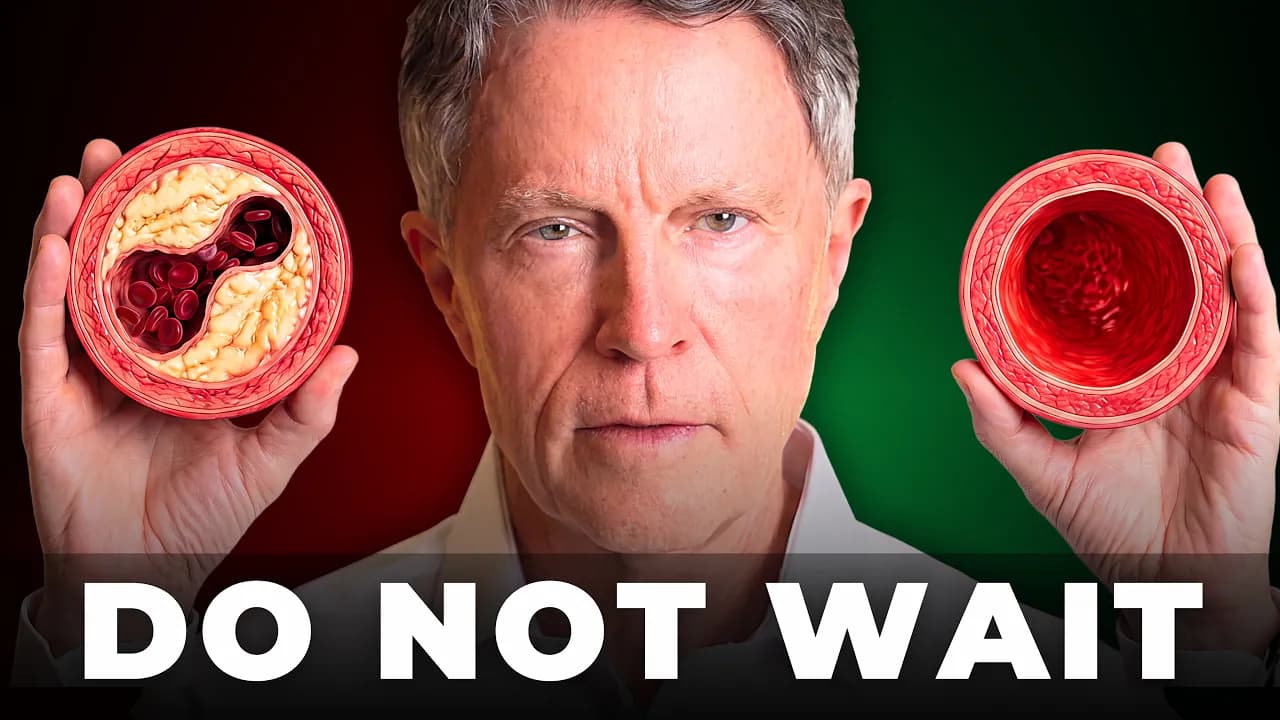
Common sense suggests plaque slowly squeezes the artery until flow stops, causing a heart attack, but that's not the case. If it were, we could predict heart attacks, but we can't. There are two types of plaque: stable plaque and unstable plaque (with at least three subtypes or more). Unstable plaque causes risk because it can leach out or squeeze out, touch the blood, and cause a clot. If the clot is big enough and goes to the heart, it's a heart attack; to the brain, a stroke. Microscopic clots happening daily make heart muscle or brain tissue look like Swiss cheese.
Three big ways to evaluate plaque: CAC (calcium score) is easy, objective, harder to mess up than CIMT, but only shows stable plaque, not risky soft plaque. CIMT is great, but focus on amount of plaque is least reliable; hard to get, better for soft plaque. CCTA (coronary CT angiogram) uses dye for deeper look, available long time, but AI analysis has changed it. Manual CCTA reads weren't much better than good CIMT, but AI makes it definitive for plaque analysis.
Overlay analysis with AI has changed the game. Cardiologists focused on degree of artery narrowing for stents or angio, location of plaque, and lumen narrowing. Plaque not significantly narrowing the channel was ignored. But plaque grows outward first to preserve blood flow before narrowing the channel (stenosis). Human reads focused on lumen narrowing, missing total plaque burden—e.g., one tiny plaque causing 90% stenosis vs. same volume spread out. AI quantitates total plaque burden, distribution, plaque density (how much radiation it absorbs), identifying soft vulnerable plaque likely to rupture vs. heterogeneous stabilizing plaque vs. calcified plaque (seen in CAC or Agatston score).
Most folks are looking at plumbing—how much blood flow. Stable plaque may look like it's impacting plumbing but won't cause a heart attack.
For asymptomatic patients, it's not about plumbing but plaque. Majority of heart attacks happen in people without flow impact but with soft plaque that clots. Quote from Princeton Longevity Institute: majority of heart attacks in those without flow problem but with plaque—soft, not impacting flow, yet causes heart attack via clot.
Focus on: amount of very soft vulnerable plaque, heterogeneous plaque, location. Total plaque volume for data-driven patients. Proposed staging systems for cardiovascular disease like cancer staging to set risk reduction thresholds—use all tools or one at a time, repeat imaging to see if unstable converts to stable, or if more plaque forms.
Key numbers: soft plaque, total plaque, portion heterogeneous, portion soft. Local groups may provide manual CT interpretation without AI, missing details.
For high CAC (1,000 or 2,000), AI shows distribution—e.g., only in one vessel like left circumflex (no three-vessel disease, no need for cath if asymptomatic); or three-vessel or left main equivalent may warrant invasive coronary angiogram for confirmation. Patients with left main severe plaque or all three big branches (gateway to left heart) may benefit from prophylactic treatment—a minority.
For patients with family history (e.g., 30-year-old son like dad), treat whole family—started with dad, then mom, now son. People must be ready for change, starting in kitchen, commitment to movement, stress, sleep. No pill substitutes. Young people (20s-30s) care about daily feel/look, not distant death—e.g., drink 8 Red Bulls for energy, accept being heavy as "big boned," given up on diet/exercise.
Restore hope with evidence-based approach for energy, play with kids, no joint pain. Pull on daily life desires to reignite change. Fear not long-term; don't bully or scare without hope—leads to panic, Dr. Googling, Reddit horror stories, giving up. Atherosclerosis takes decades; pick one thing (daily walk, skip breakfast, cut oatmeal/biscuits and gravy), get easy win, build trust. Feel better, reduce Red Bulls (to sugar-free, then none). Use full toolkit: hormones, nutrition, movement, sleep (screen for sleep apnea). Start slow, build confidence—they'll follow.
Motivation often from dad’s heart attack ensuring kids avoid it. Frustration when patients ignore advice (e.g., 10-year-old smoking plan, diabetes denial, biscuits and gravy).
Glycemic control key in plaque process. Different diseases: inflammatory (rheumatoid arthritis, visceral adiposity, autoimmune)—C-reactive protein tracked; inherited dyslipidemia (Lp(a), FH); smokers, nicotine, heavy metals, microplastics. Nutrition focus. Diabetes rots arteries; rheumatoid arthritis as bad but rarer, overlooked; psoriatic arthritis similar, inflammatory—rheumatologists follow C-reactive protein. Same end arterial inflammation as high glucose/insulin.
Keep Thomas Fordham Brewer MD MPH in your library
Save the videos and channels worth coming back to, and find them again in one place.