Brutally Honest Advice About Cleaning Arteries (Stop Doing THIS)
In a Nutshell
Most heart attacks occur from soft plaque rupture and clotting, not gradual arterial narrowing, and the root cause is insulin resistance and inflammation driven by excess carbohydrates—not high LDL cholesterol. Standard tests like stress tests, calcium scores, fasting glucose, and basic lipid panels miss the real risk factors; instead, measure insulin response, inflammation markers (MPO, Lp-PLA2, hs-CRP), and soft plaque via CIMT or AI-analyzed CT angiography. The fix requires removing high-glycemic carbs, exercising intensely, fixing sleep apnea and other hidden damage sources, and using targeted supplements or low-dose meds only after addressing the underlying metabolic damage.
These notes were generated by AI and may contain inaccuracies.
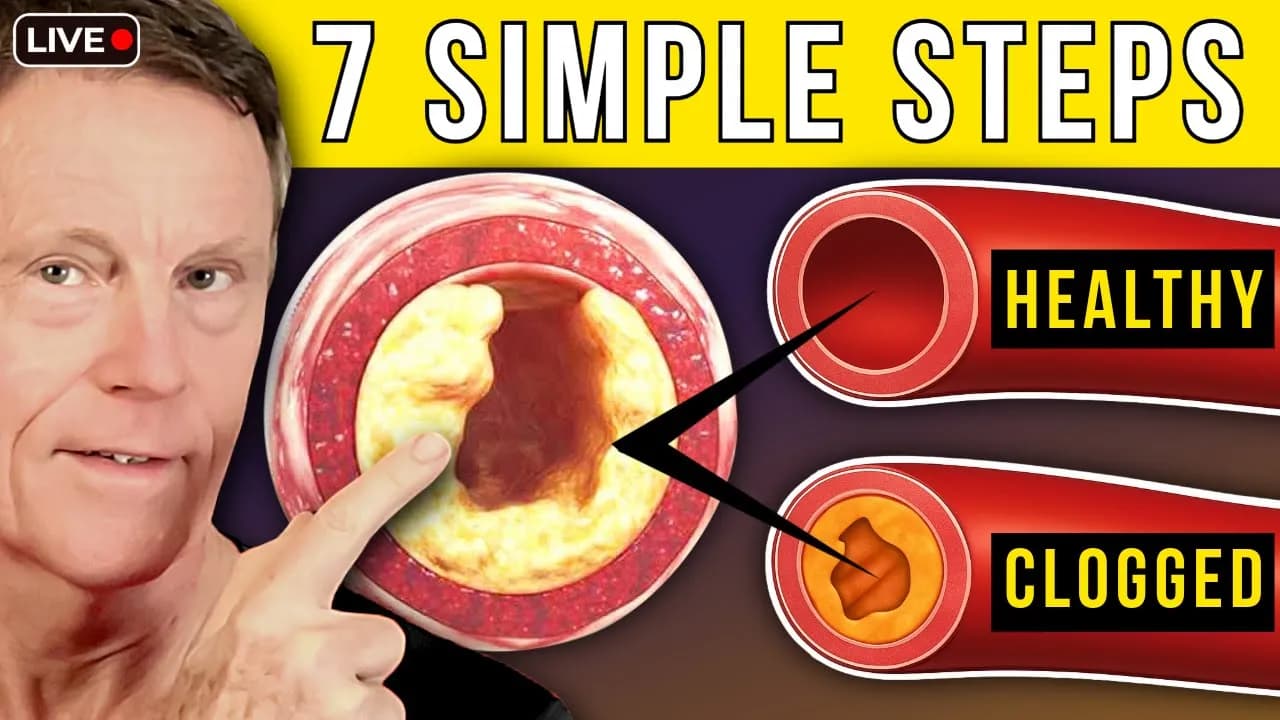
If you were told that you have plaque in your arteries, your initial response might be: "Okay, how do I get rid of this?" The idea of opening blocked arteries begins with a false assumption. That is, a blocked artery automatically means a higher risk. But the reality is a little more complicated than that. Plaque does not settle in the pipe like dirt in a drain strainer. Rather, it is inside the pipe wall, and it got there because the pipe wall lining was damaged. The body tried to patch it up, and it did. Blocked arteries are a problem. But at the same time, it shouldn't be a death sentence. I'm Dr. Ford Brewer, and in this video you'll learn what you can realistically change about the plaque in your arteries. What your test results can and cannot tell you, and the six areas I focus on when building a prevention plan.
The first symptom experienced by about half of heart attack patients is immediate death. This is because the plaque in the artery wall comes in two types. The first type is soft plaque. It is a pocket of sticky, greasy material. They are inflammatory cells that resemble mucus. It is stable under a thin layer of tissue. The other type of plaque is calcified plaque. It's solid. It's cruel. It resembles scar tissue and is stable. The soft type is the one that causes death. The covering tears, that small, thin part of the fibrous covering over that soft plaque. The blood touches what is underneath it. A blood clot forms in seconds. That clot could then break off. If it travels to the heart and is large enough, it is a heart attack. If it reaches the brain and is large enough, it is a stroke. It completely blocks the artery. This is what causes the damage. Tearing and clotting. In a wall that has been damaged perhaps for years, or perhaps only for a few months.
About two-thirds of heart attacks occur when blockages are less than 50%. In other words, most people believe it is a plaque that slowly closes until blood flow is cut off. This is not what actually happens. That plaque forms, and if it becomes soft, it forms a clot. The blood clot is what causes the blockage. So, it was a sudden event. It's not a slow shutdown. In two-thirds of people who have heart attacks, there was not enough blockage to show up even in a stress test. The artery was not closed enough to show a positive result in the stress test. There was only one soft spot, and that spot was the one that tore. The stress test only shows a positive result after exceeding the 50% mark. Therefore, a normal result does not really mean that you are healthy. This is one of my biggest concerns regarding stress tests. It does not actually predict heart attacks. Your blockages are not severe enough to be noticeable yet. However, you are at risk of having a heart attack and a stroke.
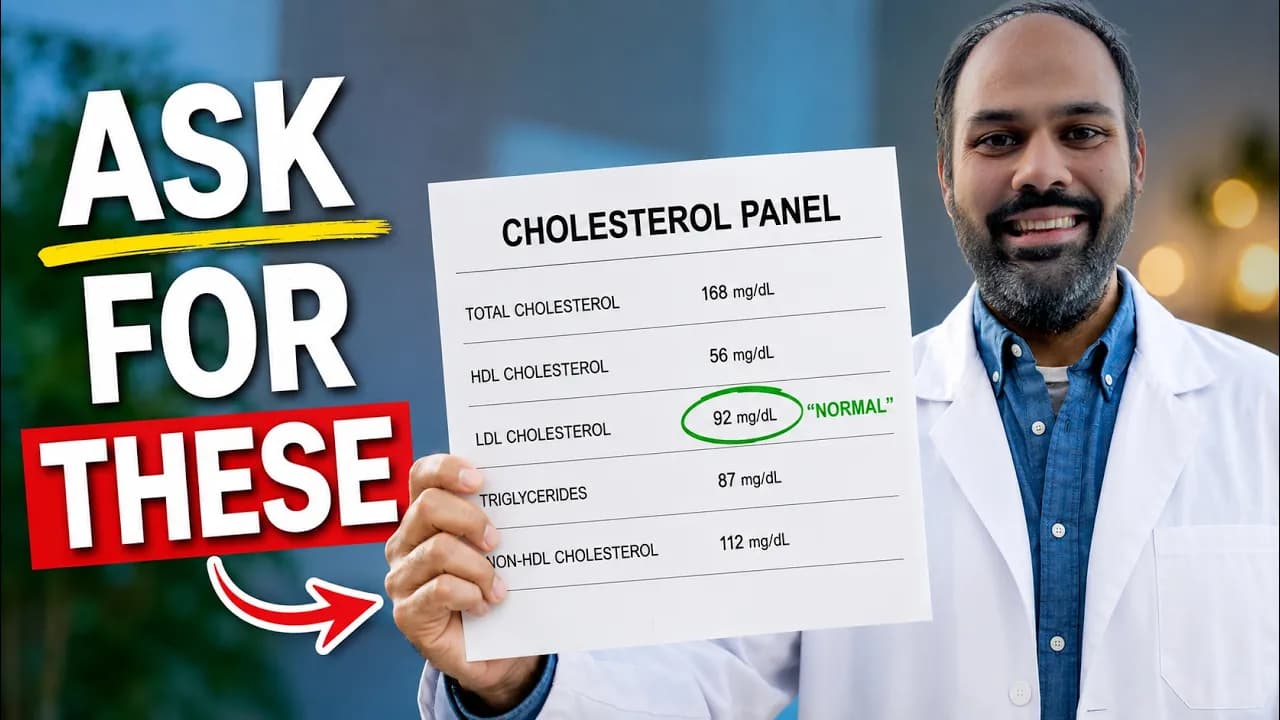
So, it was never just that cholesterol was slightly high, and therefore caused clogged arteries. The risk lies in whether you have soft plaques, and whether they are inflamed enough to cause this damage. But to find out what type of plaque you have, soft or stable, you need to get tested, and know how to get tested. The tests your doctor ordered were not designed to detect this. Therefore, you urgently need to know what to test instead, and in what order. Most people perform the tests incorrectly. This is not their fault. They received the tests that their doctor had requested. Those tests were designed to find only one number, which is LDL. Therefore, they focus on LDL. Or, for some recently, on the apoB. Once they get their LDL or apoB results, they either relax because it's under 100 or panic because it's 160 or higher. Both things rely on a number that doesn't tell us anything real. Perhaps a little, but not much, about the health of your artery wall.
I will tell you what I look at and in what order I follow it. I'll start with the problem of diabetes because, in my experience, it's the source of most of these injuries. It's not cholesterol, it's sugar. It's not made entirely from sugar, but from carbohydrates. Carbohydrates and insulin. The glucose level moves during fasting at a later time. The same applies to the glycated hemoglobin (HbA1c) test. The pancreas is doing its job perfectly. He will continue to pump more and more insulin to keep his glucose level in the normal range for years. Therefore, the fasting glucose number looks good. Throughout that time, year after year, insulin itself rises excessively, and remains very high, damaging the wall of your artery. That's glycocalyx, that thin, mucus-like substance that lines the artery wall.
The test that detects this early, i.e., high insulin, is the glucose tolerance test with insulin measurement alongside glucose. It is called OGTT, the oral glucose tolerance test with insulin response measurement. If you don't measure your insulin, you'll still miss about 15% of this problem, and sometimes 20% or more. Most people don't even undergo the OGTT glucose tolerance test. They only measure fasting glucose or glycated hemoglobin (HbA1c). Even the American Diabetes Association, which is still far behind on this issue, acknowledges that more than half of prediabetes, diabetes, and metabolic diseases go undetected when looking only at fasting glucose and HbA1c. A two-week glucose monitoring device can tell you the same story while you're in your kitchen. You don't even need to go to the lab. Analyzing your lipids or cholesterol can actually start to point out that problem as well. Triglycerides divided by good cholesterol (HDL), you will see that in your cholesterol analysis. But most people don't look at it. If you take this percentage, and no one will give you this percentage, then you have to do it yourself. They will give you a range of other ratios, but not this one. A triglyceride to HDL ratio of two is considered acceptable. One is considered excellent, especially less than one. Above three, I am absolutely certain of what the endurance test will show. These are clear signs of metabolic disease, insulin resistance, and prediabetes, which, incidentally, never appear in medical records.
So, what's happening is that LDL cholesterol, or now apoB, is being blamed for the risk of undiagnosed metabolic disease. So, when I look at patients who have had a heart attack and have good cholesterol, I find a sugar problem most of the time. And you know what else? When I research people who have had a stroke and have high cholesterol, guess what I find? I always find the problem of high blood sugar most of the time.
My next destination is the inflammation panel, which tells you whether your plaques are dormant or active. Myeloperoxidase, also known as MPO, is an enzyme released by white blood cells when they attack something in the artery wall. It attacks something in the artery wall in an attempt to dissolve it. What are you attacking? It attacks atherosclerotic plaques. It creates soft plaques from those plaques it has detected in the artery wall. The enzyme Lp-PLA 2 is a similar model to that. It is a sign of inflammation. It is located within the plaque itself. It is very closely associated with plaques that contain high levels of bad cholesterol (LDL). Highly sensitive CRP, or HS-CRP, serves as a more general warning sign. There is also a urine test called the microalbumin ratio, or MACR. It shows whether the smallest blood vessels in your body, i.e., in your kidneys, and those arteries and capillaries, are leaking fluids. If it is leaking albumin or protein, i.e., the exact albumin percentage, there is a good chance that it is leaking it due to injuries in the artery wall.
Now, there are more tests to identify inflammation problems, and this is what I help my patients discover—the inflammation problems and the root causes of the disease—when they contact me for consultation. These blood tests are only part of the whole picture. What can we learn by looking at the arteries themselves? Not through blood tests, but through examining the arteries themselves. Doctors call this "plaque morphology" or its shape. In other words, you are looking at the plaque itself, its texture and size. Ultrasound imaging of the carotid artery, if performed correctly, can measure blood flow, but it does not measure wall thickness with great accuracy. What you need is what is called a CIMT test, which is a test to measure the thickness of the carotid artery lining. It uses the same technology and the same equipment used in carotid artery ultrasound examination. But it goes much deeper in terms of analysis to understand the thickness of the wall itself. Because it can detect soft plaques, something that a calcium measurement test cannot do. The calcium measurement test is useful, and I order it, but it only counts hard, calcified plaques. In other words, the calcium test is useful and great, and it is better than the stress test, but it only shows you if you have scarring. It does not show you the danger posed by soft plaques. So, the calcium score only counts scars, and will not tell you which wounds are still open or how much risk you still face.
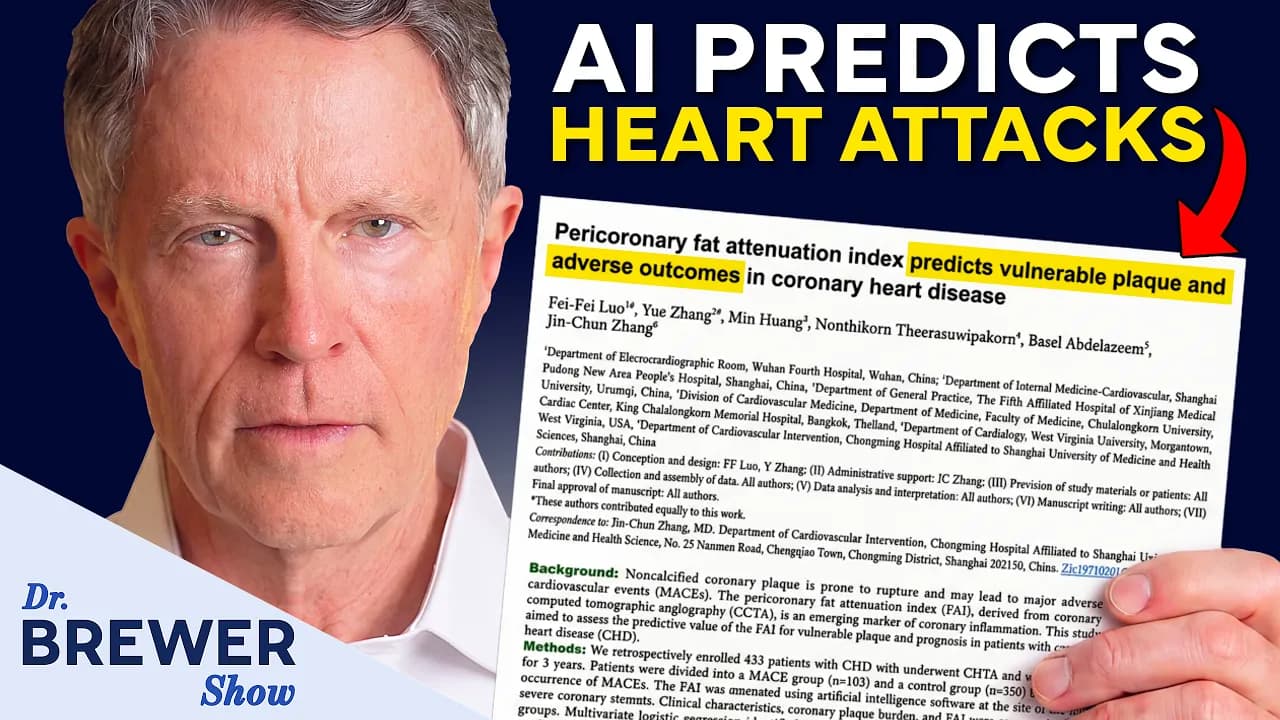
The best image available today is a tomography angiography. You read its results using artificial intelligence. However, CT angiography, which is read by humans in a normal way, is not very useful. This has been the case for years. But now that we can read it with artificial intelligence, AI systems can read the soft plaques and their quantity. In other words, the amount of risk you face. While humans were unable to read that in the past. So, you can get calcified and soft plaques, and you can do what is called plaque analysis and understand how much soft plaque you have, and how much risk you are at.
Now let's go back to some tests. What about cholesterol testing? I am reading cholesterol tests. I read it last, after everything else. First, take a look at the triglycerides and cholesterol residues in that cholesterol panel. Look at lipoprotein (a), which also plays a role, then bad cholesterol (LDL) and protein (apoB). Read it the way you read the number of trucks. Do you remember Dave Feldman's analogy for trucks? The number of trucks on the road and the number of boats in the port matter, but what matters far more is whether the road is in disrepair. So again, a lot of people come to me. Sometimes they started bringing in their own fractionation results, and fractionation is what counts those molecules. Often, many particles appear, and people feel scared. But once you delve deeper into understanding this, you realize that the real danger is whether the road is worn out. It's not the number of molecules present. Here's what the tests are really about. It tells you what damages the wall, and whether there is damage to the wall or not. So you are addressing what is damaging the wall instead of chasing patches over and over again. That's why I keep returning to this artery wall. This is the damage that is happening now. In the man who looks fine on paper, and the woman who looks and feels fine. Men and women whose partners depend on them as partners, not as patients or disabled people in need of care. Whose grandchildren need a grandfather on the field, not sitting on the balcony in a wheelchair. It's all about staying able for the people who need you to be.
Now, once you know what is damaging the wall, you still need to know what the actual repair looks like in an inspection. Because if you read it incorrectly, you will stop completely when the results start to appear. So, to understand this, you first need to know what it means to open blocked arteries, because when people take a strong approach to this, the total volume of plaque can shrink by a small percentage. Believe it or not, you hear that all the time. No, you never shrink the plaques. This is not entirely true. This is what I saw in my carotid artery scans, and it was related to my lifestyle more than anything else. I discovered I had prediabetes, and then the condition progressed with age to full-blown diabetes. So, because of that problem, I had to stop eating carbohydrates. And when I did that, my arteries became much healthier. Now, the most important change is not in the size of the plaques anyway. So, don't get too caught up in the idea of getting rid of plaque. In fact, I do this work all day, every day, and lots of people come to me saying, "Oh, I want to get rid of my plaque." This is good. We can think about that. We can look into this. But here's what we really want to do. We want to change its composition. We want to convert them into solid plaques. Any soft plaques you have, we want to find them, and then we want to change their composition into hard plaques. Because once you do that, you have completely eliminated the danger. Soft plaques become dense, calcified, and stable plaques. In computed tomography angiography, this is shown by a decrease in the number of soft plaques, while the calcium number increases. Based on the calcium measurement alone, it may appear as though your condition has worsened. But you did not do anything wrong. Instead, it has become a safer situation. Therefore, the goal is not to have a completely clean artery free of scars. The goal is to have plaques that will not tear in a wall that is no longer being damaged. A healed scar instead of an open wound. You measure this with soft plaque tests, and never by LDL cholesterol or calcium measurements alone. These metrics will not tell you what you need to know. I have seen people give up the whole attempt when their calcium readings start to rise. It was like a panic. They said, "My condition has gotten worse, not better." They were addressing their problem and then stopped because they looked at the wrong scale. From my point of view, this is a completely wrong conclusion.
However, knowing what recovery looks like does not, in itself, heal anything. You have to do more than just acquire knowledge. You have to apply that. You have to do the work, and you need to know what that work is in order. Here's what you need to do now. First, check, don't guess. Measure what I described earlier. All of that. You can't fix what you haven't discovered. Second, cut out harmful carbohydrates. Address the problem of sugar and insulin because that is what causes the damage. Those sugary carbohydrates raise your blood sugar and therefore raise your insulin level. For most people, this means reducing refined carbohydrates, such as bread, rice, potatoes, and sugar. However, most people think that sugar is the only problem and forget the real culprits in the diet, which are bread, rice, and potatoes, because they are the biggest source of carbohydrates that raise blood sugar levels. Now, allowing a glucose monitor to show you which foods personally raise your blood sugar level is one of the key elements here. It's very simple and you don't need a doctor to do it. Just get a continuous glucose monitor (CGM), and start monitoring what raises your blood sugar level.
Now, here's one thing you should pay attention to. It sounds very simple and easy, but especially if you are in the early stages of metabolic diseases, the beginning of prediabetes, or even the beginning of full-blown diabetes, blood sugar often does not rise much with these foods. Then you think: "Oh my God, I'm fine." I see patients and people who come to me all the time. What they didn't realize was this: in the early stages of the disease, which may last for the first 10 years while the arteries are damaged. In the early stages of the disease, the pancreas can produce enough insulin, so even if you have insulin resistance, it still produces enough to overcome the problem. Increased insulin also causes this damage, whether you see spikes in blood sugar or not. Keep that in mind as you do this. The goal is to have small, flat post-meal blood sugar curves or no curve at all. Now, this is the second step. So, the first step is to test and not guess. The second step is to eliminate those high-glycemic index carbohydrates from your diet.
The third step is to exercise intensely. Use your muscles. Muscles are where sugar goes to get out of your blood. The more you use it, the less your blood sugar level will rise. And you know what else? Metabolically healthy muscles are your best internal safety valve against aging. Aging in general, because it is closely linked to metabolic disease problems. Lift weights a few times a week. Lift heavy objects. Walk after meals. Make those exercises more intense. 10 minutes is enough to change the sugar curve. You can start with tonight's dinner. Just go for a brisk 10-minute walk after dinner. But there is more that needs to be done. Do resistance exercises. Intensify your walking. This is part of step three. Step four, address the other obstacles you face. Things like untreated sleep apnea and high blood pressure during the night. Both cause direct damage to the artery wall. Both are strongly associated with prediabetes, metabolic disorders, and diabetes. If you snore, get tested. If you don't know your blood pressure at night, find out. Gum diseases. It's one of those things that people don't think about, and it's something I find all the time. Visceral fat. The fat around the abdominal organs, inside the stomach, is not fat on the sides, but inside. A DEXA scan is the only thing that really measures it well. I know I've seen devices like InBody. They have some fairly good numbers, but I don't trust most things except for a DEXA scan or an abdominal MRI. Now, think of something else. Bowel problems, chronic infections, a thyroid gland that is not functioning properly. All these things you want to look for are found in step four. This repair can relieve the burden on the artery wall. So, that was step four.
Step five, consider supplements such as vitamin D3 and K2. You know, when I finished my studies, I was in that group of doctors who said, "You know what? Supplements are just expensive urine." Well, the more I delve into this, the more I learn, and this is one of the things I've learned. Supplements can be important. It can be very useful. Magnesium, niacin when necessary, and berberine. Berberine is very effective and is actually a key component of my glucose management supplement. There are many other supplements as well. I have discussed this in other videos. Finally, the medications. So, this is number six. Number one, check and don't guess. Number two, reduce those sugary carbohydrates. Number three, add intensity to your workout. Number four, remove the obstacles. Number five, supplements. Take supplements when necessary. This brings us to the sixth point, finally, medicines. It is indeed important. A low dose of statins or colchicine when inflammation tests indicate that the wall is active or when plaques are present. A low dose of aspirin for blood clotting when it makes sense. Each one of these things is real and I use it. I am also a big user of the first peptides that came out, which have been around for years now. Monjaro, semaglutide, depending on how you pronounce it. These things have brought about a tremendous change in diabetes care. If you understand type 2 diabetes, you will understand why it has brought about major changes in the management of obesity and weight gain.
For most people, the whole plan was simply to take a statin and come back after a year. I know, I did it too, but it goes much deeper than that. I prescribe statins, at low doses, for patients with plaque and inflammation because it calms the artery wall, but it is not just a statin. It's much bigger than just lowering cholesterol. Statins can be helpful, and I always face a lot of criticism when I mention that. It still does not address the underlying sugar problem or the lifestyle issues that are tearing the artery wall. If statins are the basis, the basis of your plan, and if they are your entire plan, then you don't have a plan. Each of these medications is real, and I use them, but none of them will clear the arteries of a man or woman who takes steps 1 to 5. You can't get over a bad diet with running, supplements, or medications. This is blunt, straightforward advice. You cannot overcome a bad diet by running, supplements, or medications. But what you can do is make these changes and then reassess using a CIMT scan once a year or a new AI-analyzed CT angiography every 3 years. Most patients will experience stabilization of the deposits if they perform the required work.
But this leads me to the part I've been saving. All of the above is information, and you already had most of it. The reason people don't get rid of their deposits is not because they don't know that sugar is harmful. The discipline required to do this must be achieved, and it must last for more than a few months. It should last for years. I've been doing that for decades. Information does not support anyone for years or decades. What supports it? the goal. Therefore, the difficult step is to determine what you are preserving your ability for. List the names of those people who depend on you. Do you want to... I recently spoke to someone who was saying, "Yes, you know, I know I have a problem, but I really don't like exercising and I like eating M&M's." So I said to him, "Okay." He had two daughters, aged three and five, and she asked him, "Wouldn't you like to be there to accompany these two girls to their wedding?" "And do you think these two girls might have children at some point?" "How would you like to be there to play with those children?" You could tell that it affected him. The reason you might eat something different at a restaurant when everyone else is ordering bread or spaghetti is because of the people in your life. Who are you here for? Part of this urgency I feel is not clinical. I don't believe my body belongs to me to neglect and exhaust. It is the tool I have been given to be useful. And I think the same applies to your body as well. When I put it in this context, discipline is no longer just a diet I follow, but becomes my lifestyle in eating. The duty I owe. The one that endured when nothing else did.
This leads me to the one mistake that I have seen intelligent people make more than any other mistake. How does someone who knows they cannot overcome malnutrition with medication end up trying to do so? And it cancels all six of those steps he took at once. They are trying to do it on their own. They receive the tests, or half of them, and look at them. They don't realize that you don't interpret it the way ChatGPT or "Dr. Google" do. They get the wrong explanation, think they're fine, and forget about it. Or they do everything correctly for 18 months and never discover the gum infection that was the root cause of everything that was happening. Interpreting the soft plaque scan against the insulin curve against the inflammation list requires a team that does this type of work daily. A team that does this work daily is what we built at PrevMed. This is what we founded PrevMed to be. If you are frustrated with your current care, or feel that no one is looking at the big picture, there is another way. We perform the tests you described, read them with you, and help you understand them. We will develop a plan based on what actually damages your artery wall, a plan that makes sense to you. What you feel comfortable doing, what you have the discipline to do, and where you are currently on your journey. Then we go back and re-measure to see what works and what doesn't. Then we adjust that plan based on what you need, not what someone else needs or what a content creator thinks might help. It depends on what you need. Everything is done via telemedicine. From your own home.
Vitamins D3 and K2 are among the most beneficial supplements used to treat arteries. Learn how to use D3 and K2 by clicking on the video link provided.
Getting old is not for the weak. The speaker is sixty-nine years old and will be seventy soon. Aging is much better with healthy arteries.
What happens in the wall behind your numbers is the essence of what this channel is about. To receive more of this content, subscribe so you don't miss the next video.
Keep Dr. Ford Brewer MD MPH in your library
Save the videos and channels worth coming back to, and find them again in one place.