The Truth About Your Calcium Score and Heart Attack Risk
In a Nutshell
Calcium score measures stable, calcified plaque—a lifetime burden marker—but misses dangerous soft, fatty plaque prone to rupture and heart attacks; a zero score is reassuring but not foolproof, especially in diabetics or smokers, while high scores (even >1000) indicate past damage that can be stabilized via lifestyle changes. Event risk rises sharply from zero to any detectable calcium (1-99 range), making the test ideal for gray-zone patients to guide prevention, but avoid routine rescans (every 3-5 years max). For soft plaque, use CIMT ultrasound or AI-enhanced CT angiogram, alongside checks for inflammation and metabolic health like insulin resistance.
These notes were generated by AI and may contain inaccuracies.
If you're over 40 and your doctor mentions a heart calcium score, many people worry that a zero means you're totally safe but a high number means you're going to have a heart attack, maybe even tomorrow. Research shows that the calcium score does not tell you how close you are to a heart attack. The most dangerous plaque in your arteries—soft, fatty plaque—won't show up on that test at all.
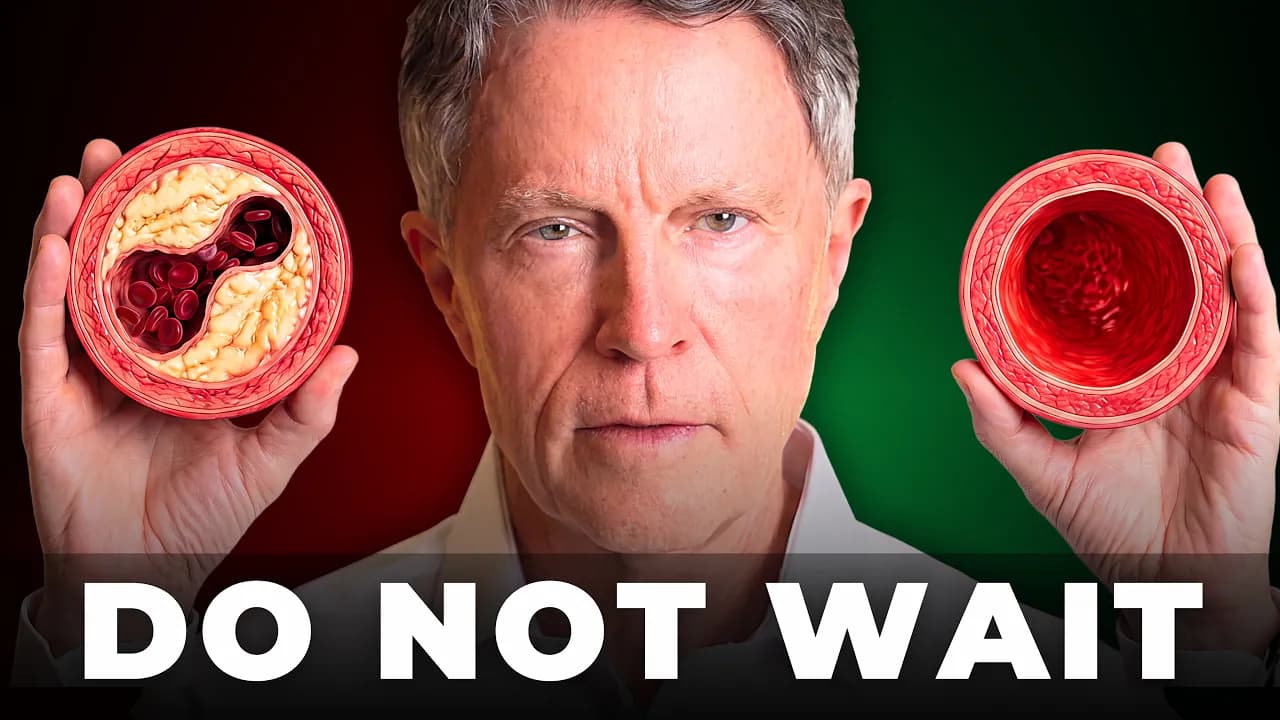
The calcium score is one of the most useful tests in preventive medicine from a cardiology perspective, but it's also one of the most misunderstood. It detects calcification of plaque—calcified plaque, the hardened scars left behind by years of plaque buildup in your heart arteries. It's essentially the scar tissue of old damage. Calcified plaque is not the dangerous kind. The dangerous kind is soft, fatty plaque that hasn't hardened yet, most likely to rupture and cause a heart attack. These are two completely different things.
The score tells you how much plaque has accumulated in your arteries over your lifetime—a burden marker, a lifetime snapshot. It does not indicate whether a specific piece of plaque is about to cause an event or how close you are to a heart attack next week.
A high score does not automatically mean high danger. Not all calcified plaque behaves the same. There's stable, armored, dense calcification that's not growing or rupture-prone, and progressing calcification mixed with soft components driven by ongoing inflammation.
Research shows patients with calcium scores over 1000 had lower event risk than patients with far lower numbers—lower risk than expected. Why? Their biology had changed: fixed blood sugar, reduced inflammation, completely different lifestyle from when plaque accumulated. The number reflects past damage; current biology reflects what's happening now, which can be totally different. A high score in a well-managed patient reflects disease you used to have plus stability you're now building. How dangerous your score is today depends less on the number and more on the biology driving it, which changes with lifestyle.
A zero calcium score is genuinely good news. Large studies show very low cardiac events over 5 to 10 years in most asymptomatic adults with a zero score. But the scan only detects calcified plaque. Soft plaque, most likely to rupture, is invisible. Patients can carry significant dangerous soft plaque and still get a zero.
Pay attention if you're younger, diabetic, have metabolic disease, pre-diabetes (90% undiagnosed), smokers, or family history. Zero means no visible calcified plaque, not no plaque at all.
The threshold that changes everything is the flip from zero to one. Any calcium confirms arterial plaque—you have coronary artery disease (subclinical, no symptoms yet). Event rates start rising as soon as calcium is detectable, even in the 1-99 range. These ranges are not likely to impact flow in arteries.
The test is most useful in the gray zone: not clearly low risk, not clearly high risk, where the result changes how aggressively you manage risk factors. Useful for 30-year-olds with strong family history or who've been obese and lost weight. If estimated risk is borderline, any calcium significantly raises concern.
Less useful if you already have known heart disease (qualify for intensive prevention anyway), symptoms like chest pain or abnormal stress test (need imaging for soft plaque and blockage), or young with mostly soft plaque and no calcification.
Routine rescanning to track progression is not recommended—no strong evidence that adjusting treatment based on progression improves outcomes. Scan uses radiation; repeating without clinical reason adds exposure without benefit. Calcium burden changes slowly; rescanning sooner than 3-5 years rarely shows meaningful change. If score was high enough for serious prevention (lifestyle, blood sugar control, metabolic health), follow-up won't change what you should do. It's a once every 5 years decision tool, not a lab marker to recheck yearly.
Look for soft plaque directly:
- CIMT (carotid intima media thickness test): ultrasound of neck arteries for soft plaque. Neck plaque indicates 98% probability of heart plaque (systemic). Also avoids stroke.
- CT angiogram (CTA) with AI analysis for heart soft plaque. AI sees gradations human eye can't. Get plaque analysis, not flow test.
CIMT looks in neck; CTA with AI in heart—for complete picture of unstable soft plaque calcium score misses.
Check inflammation (vascular inflammation drives plaque growth and instability) and metabolic health (insulin resistance, pre-diabetes, blood sugar problems, visceral fat—the root cause of most heart attack risk).
Don't stop at calcium score—use as starting point, not finish line. Work with your doctor. Use this for better conversations.
Team has helped thousands. Click link or call to talk to experts. Check linked video for more on CIMT and soft plaque. Growing old is not for sissies, but it's easier with healthy arteries.
Keep Thomas Fordham Brewer MD MPH in your library
Save the videos and channels worth coming back to, and find them again in one place.