This Test Predicts 98% of Heart Attacks (Please Don't Wait)
In a Nutshell
CIMT (Carotid Intima-Media Thickness) ultrasound detects unstable soft plaque in neck arteries early—predicting 98% of heart attacks per the CAFÉ study—outperforming stress tests and cholesterol checks, which miss plaque until it's advanced. Unlike CAC scores that only quantify stable calcified plaque, CIMT tracks plaque stability, progression, and early risk without radiation or contrast, making it ideal for prevention; CT angiograms offer more detail but at higher cost. Get baseline CIMT scans to monitor trends: no plaque is reassuring, soft plaque demands aggressive intervention, calcified plaque signals stabilization.
These notes were generated by AI and may contain inaccuracies.
There's an easy and inexpensive test that can predict up to 98% of heart attacks, but most people haven't heard of it. Mostly because doctors are not even aware of it. In this video, Dr. Ford Brewer, a preventive medicine specialist with over 40 years of experience, explains the test, how he uses it with patients, and how to get it to know true heart attack risk.
Typical patient Paul did everything right. His stress test came back completely normal. His cholesterol numbers looked really good overall. The doctor visit ended calmly with a reassuring handshake: "You're going to be fine." Two years later, Paul had a heart attack.
This story is not rare. It raises a hard question: How can tests look fine while plaque is growing inside arteries quietly but lethally?
Most heart attacks don't come from high cholesterol. They come from plaque that nobody found early enough. Stress tests are useful for symptoms, not early plaque detection. A treadmill stress test detects flow problems, which require over 50% blockage—severe disease. That's why people get reassured even when disease is present: doctor looks at stress test and cholesterol, says "you're fine."
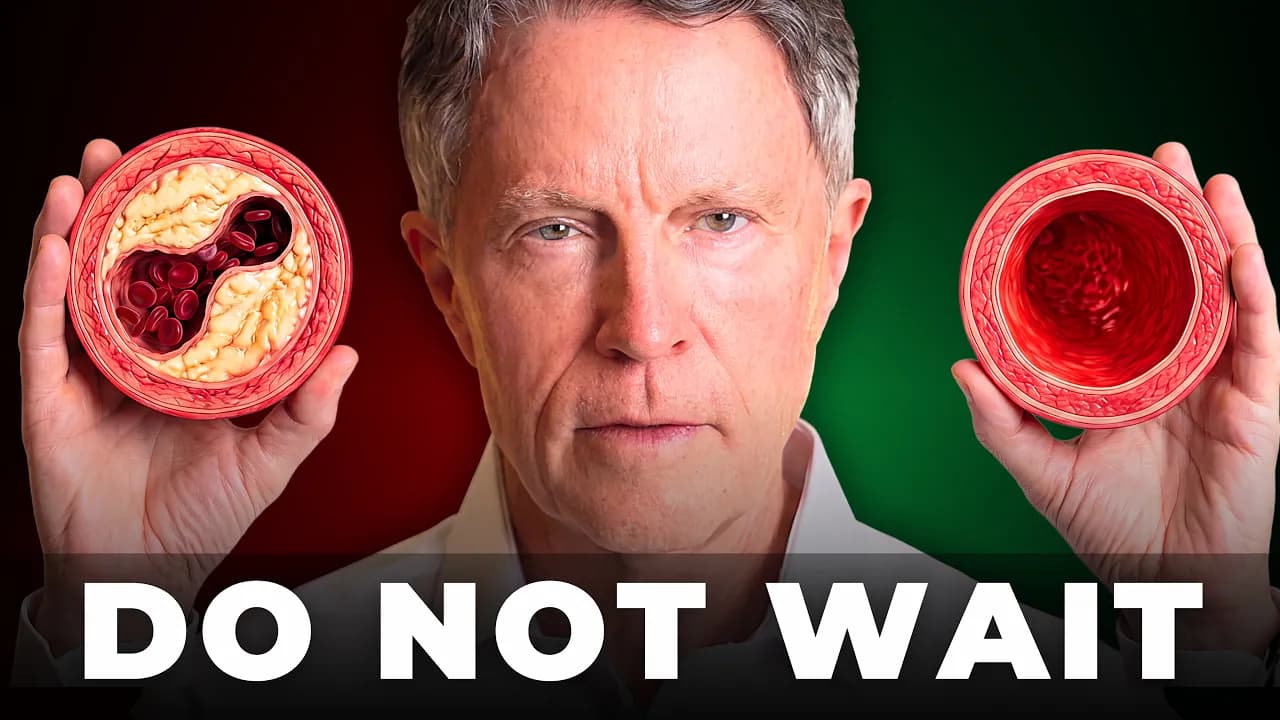
There are two broad kinds of plaque in arteries:
- Hard calcified plaque: more stable.
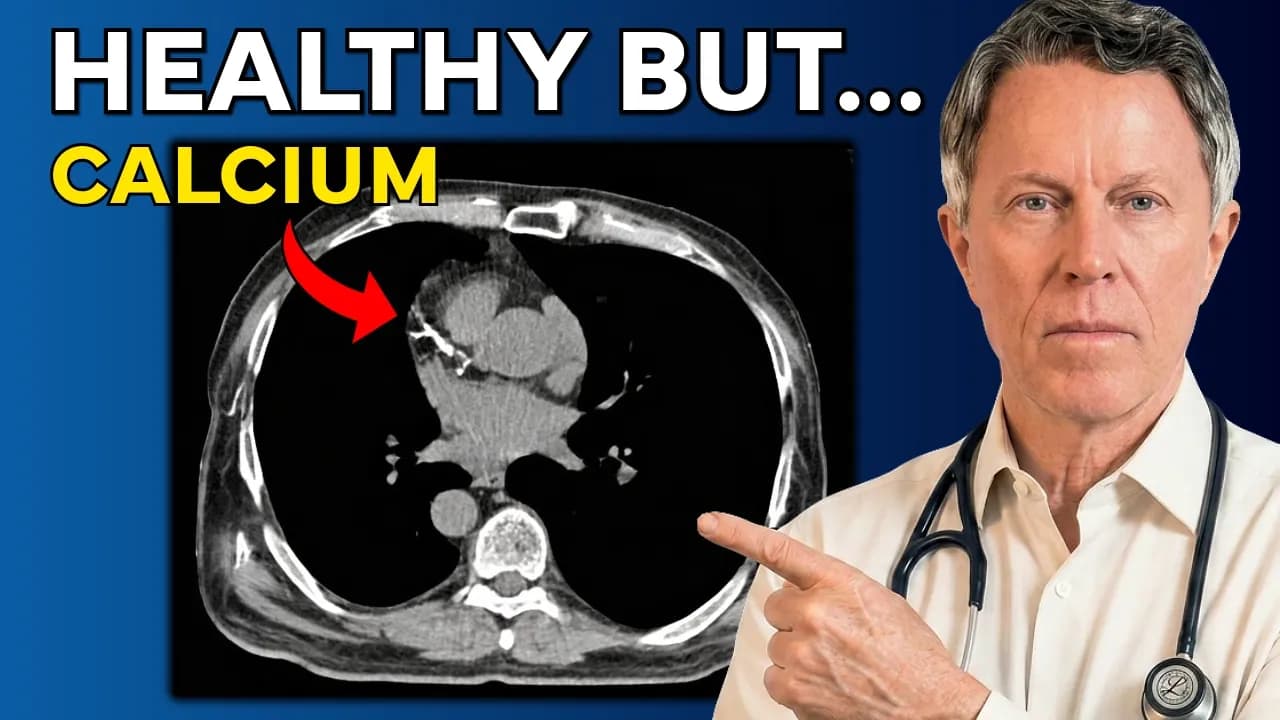
- Soft, non-calcified plaque: unstable, more biologically active, rupture-prone, with inflammatory fluid; it's living tissue.
Soft plaque breaks through a weakened plaque cover, causes a clot when it touches blood. That clot, if big enough:
- To the heart: heart attack.
- To the brain: stroke.
When small and microscopic, it showers the heart or brain for days, weeks, months, years, slowly losing function—looks microscopically like Swiss cheese.
We want to find soft plaque early.
The 98% figure comes from a subgroup analysis in the CAFÉ study (carotid plaque work). Researchers found 98% of people with a specific range of plaque—not enough to restrict blood flow, but enough to clearly detect—went on to have cardiovascular events.
At that time, researchers did not understand what they were seeing. Key insight: Plaque present but not severe enough to affect flow is often the most dangerous stage. Finding plaque at that stage identifies real risk, especially soft plaque. Stabilizing or calcifying it drops risk to about that of someone with no plaque—a major missed opportunity worldwide.
Across multiple studies, carotid plaque presence predicts future heart attack and cardiovascular death.
Risk calculators like Framingham use age, blood pressure, cholesterol—but they estimate risk. Plaque shows reality.
Better question: Do I already have plaque? If yes, is it stable?
CIMT stands for carotid intima-media thickness. It's an ultrasound of the carotid arteries in the neck. Measures two things: arterial wall thickness and calcification of the plaque. If plaque is present, you see it directly.
CIMT demonstrates higher risk of heart attack and stroke.
CIMT is not great at measuring exact plaque volume. But it shines at detecting plaque presence and tracking calcification or stability. Think of CIMT as a plaque stability tool.
Yes, there's a better test: gold standard CT angiogram with AI analysis. For most patients beyond initial stabilization months, CT angiogram shows stability—no need to repeat at $1,000–$2,000 when CIMT can track if plaque is progressing, stabilizing, regressing, or destabilizing.
Tests by Questions Answered
-
Some tests answer quantity: How much plaque?
-
Some answer stability: If plaque, how dangerous?
-
Calcium score (CAC): measures calcified plaque burden. Estimates quantity of stable plaque only. Misses soft plaque. Calcified plaque is stable and does not confer significantly more risk than no plaque.
Imagine two people same age:
- Person 1: CAC of zero, but soft plaque building.
- Person 2: higher CAC, but dense stable plaque.
Which is safer today? Cannot answer with calcium alone. Stability matters.
CIMT shows plaque before it calcifies—uncalcified, unstable plaque and risk. Tracks plaque behavior. Best for early prevention.
CTA (coronary CT angiography with AI) does both well: quantifies total plaque, characterizes composition (soft and calcified).
- Calcium score: quantity of stable plaque (lifetime plaque creation view).
- CIMT: stability and early change; shows soft plaque risk (predicts 98% in CAFÉ study).
- CT angiogram with AI: both quantity and composition, but uses radiopaque dye, costs a lot.
Places for each depending on goal.
Advantages: no radiation, no IV contrast, non-invasive, quick, inexpensive.
Downsides: operator-dependent. Technique matters—can miss growth/regression by angle. Rushed CIMT can under- or over-call plaque/thickness.
Patients often panic over apparent huge increase despite improving lifestyle/metabolic numbers—calm them: not the right test for that purpose.
Want provider who measures plaque, not just wall thickness.
Uses CIMT as baseline and trend.
- If CIMT shows soft plaque: take seriously—disease process active. Not great at quantifying amount, but excellent at showing soft plaque/risk. Means better prevention plan needed.
- If only calcified plaque: biology calmer; patient mostly out of woods (but it was unstable before stabilizing).
- If no plaque: reassuring, but not lifetime guarantee.
Real power: progression over time. One scan = snapshot. Two scans = movie. Tells where you are on disease timeline.
Goal: clarity, not fear.
Obstruction is late disease. Don't wait for obstruction.
If getting CIMT to find risk, you're way too late—you've already gone through risk. Plaque is early disease.
Download free seven-step heart attack prevention guide (linked/QR code).
Growing old is not for sissies, but it's a lot easier with healthy arteries. If you're 30 or 40, don't wait till 68 to figure that out.
Keep Thomas Fordham Brewer MD MPH in your library
Save the videos and channels worth coming back to, and find them again in one place.