How To Get Healthy Part 2 — Dr. Sean 'O Mara
These notes were generated by AI and may contain inaccuracies.
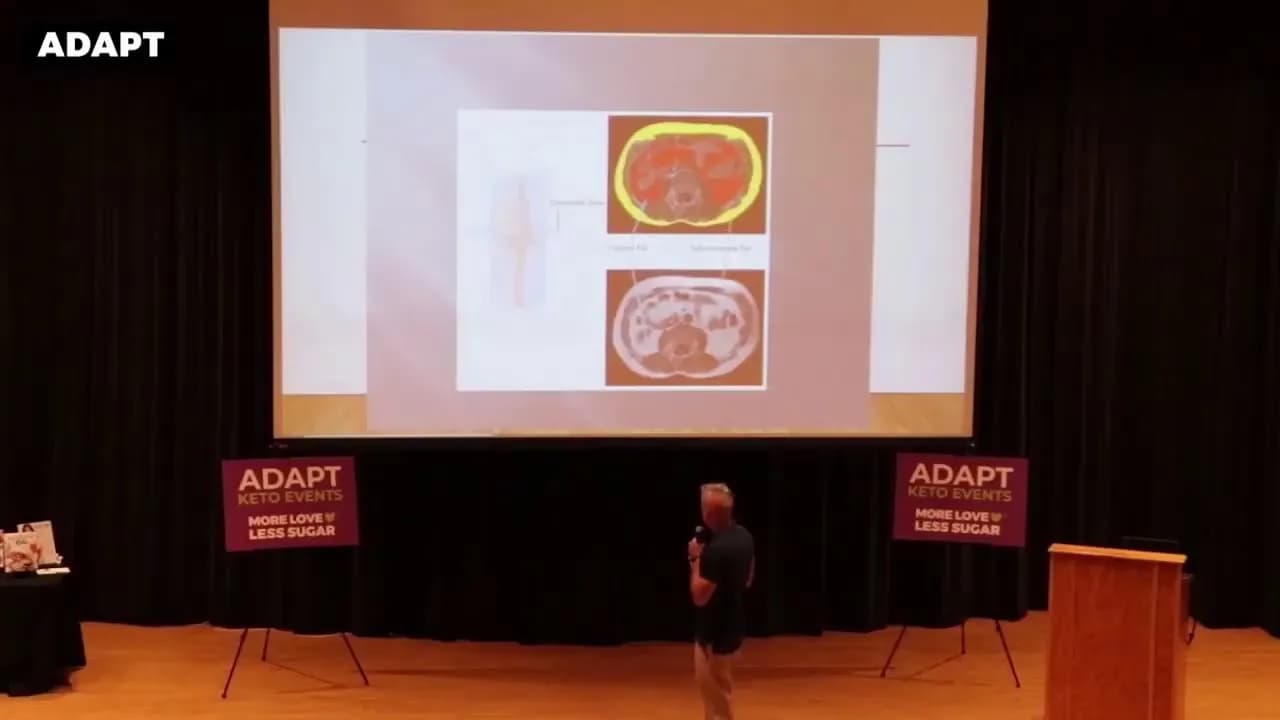
This guy is super healthy. His psoas muscles are enormous, kissing his abdominal rectus. Giant oblique muscles, very little visceral fat in abdomen, no subcutaneous fat. Olympic athlete who doesn't do pull-ups, push-ups, or lift weights—he's a sprinter. Sprinting is a survival skill: 30,000 years ago, if you couldn't sprint, you died. To get healthy, get clients to sprint—even if old. Speaker is 56 and sprints virtually every day or every other day, short sprints. Start slow, work up; talk to physician for safe high-intensity exercise. Designed to sprint even in later years; speaker is pretty fast for 56.
MRI of guy with fair amount of visceral fat, already high-fat low-carb ketogenic, doing sunshine, walking, high-intensity exercise, sleeping well, sauna, hot/cold therapies. Chronically running 10 miles a day, 5 times a week troubled speaker. Told him stop running, try sprinting. In less than 2 months, got jacked up—at 58 years old, had to ask if on steroids. High-intensity exercise matters; how you exercise plays a role.
NFL football player legs have little subcutaneous fat; Olympic sprinter has no subcutaneous fat, beautiful legs. Series of MRI scans: 68-year-old business executive dropped visceral fat visibly in 2 weeks between week 0 and week 35 without exercising one minute. Cutting processed foods and carbohydrates makes visible internal changes. Big believer: if it doesn't get measured, it doesn't get fixed. Many patients don't lose weight—they lose visceral fat but build muscle. Measure to know.
Resilient people work hard; others need measurements for encouragement. Speaker prayed for affordable measurement without MRI. In sagittal plane scan, red line from here to here gets smaller when lying down—that's exploitable. With Asperger's, figured it out. Measure distance laying down with ruler or yardstick; track over time, it goes down. Visceral fat stays up (Mount Fuji effect) when lying down; subcutaneous fat rolls to sides. Pre-menopause: mostly subcutaneous fat; post-menopause: build visceral fat (great equalizer). If no MRI, do this measurement.
Developed device to measure it easier; giving away to charity. Business people can develop it—patent ready—to help people who can't afford MRI.
Started measuring brain because clients reported better information processing and memory. Does getting rid of visceral fat make you smarter? Scanned brains: cerebral arteries hazy from atherosclerotic cardiovascular plaque (schmutz in pipes), causing disease, muscle atrophy, heart attacks, strokes. One artery almost completely blocked—common stroke site. Opened up in 10 months with high-fat low-carb ketogenic lifestyle, walking, high-intensity exercise, sunshine.
Can reverse cerebral atrophy—brain shrinks with age, causing slow talking. Want brain working fast and sharp for grandchildren. Elderly traditionally source of wisdom, but obesity/diabetes decreasing interest from millennials/younger. Biological: disease-ridden bodies signal poor hunter-gatherers. Get healthy to reclaim influence.
Brains with more blood flow shrink slower or grow.
Speaker's leg 2014: big eczema plaque, bleeding, blood-stained sheets. 2016: shape changed, eczema gone. 2019: more hair regrowth. Increase blood flow, hair gets healthier—possible to reverse thinning hair, receding hairlines. Legs had anterior lateral alopecia, now hair regrowing. Visible pulses in arms (radial, ulnar, brachial, dorsalis pedis) in 56-year-old—not normal unless optimally healthy.
Face before high-fat low-carb; now changes signal optimal health. Big facial changes mean good chance of optimizing health. Hunter-gatherer software in brain: 30,000 years ago, would join clan.
Other examples: soldier in 3 months improved appearance; guy in 1 year (fathers/mothers would worry if he wanted to marry daughter before); army medic in 3 months significant facial change. Wear health on faces. Go ketogenic, face changes. Plan to data mine social media (Facebook, LinkedIn) for facial changes on ketogenic via AI/machine learning.
Guy went low-fat, exercised/running a lot: lost weight but face aged. Tim Russer: 5 years difference before fatal heart attack—inflammation from stress, lack of sleep, cortisol, poor lifestyle despite same weight.
Track these changes as visceral fat goes, arteries open:
- Squatting ability: Squat with heels on ground (like healthy guy in audience). Raised to not do it; lose capability from chronic disease, degenerative joints. Regain on ketogenic.
- Sit-to-stand test: Sit/stand from ground without using hands/body parts.
- One-legged stand: Stand on one leg, eyes closed, still. Average 50-year-old: 5 seconds; 10-12-year-old like tree. Improves on ketogenic.
- Limbal ring: Dark ring around iris in kids (blueprint of health). Lose it, get gray ring. Track in mirror/photographs.
- Finger puckering: Fingers pucker fast when pulled (like kids). Speaker's started in sauna ~1 year ago from improved blood flow.
- Sweating speed/degree: Faster sweat = open arteries/capillaries.
- Urination speed/degree: Kids pee fast after water; adults regain it.
- Defecation time/degree: Fast, smooth bowel movements on ketogenic (away from constipation).
- Less sunburn: 10 hours in Kuwait sun, no sunscreen, no burn (vs. young soldiers). Google 'keto comma sunburn'.
- Less bug bites: Rarely get mosquitoes (kids do).
- Improved walking: Smooth saunter/gait like sprinters (vs. marathoners). Track stars vs. runners.
- Abdominal musculature: Nice muscle tone holding arms up from perfusion, even 50s/60s.
- Postprandial cold: Get cold fast after eating—blood shunts to gut (fight/flight readiness).
- Blushing: Healthy kids blush fast; exploit biologically (hug, affirm). Adult clients regaining it.
- Wound healing: Older heal slower, no scars; scars sign of health (tribes scarify for attractiveness).
- Blood pressure urge to avoid: Feel urge when cuff squeezes—detects quick change.
- Red lips: Kids have super red lips from blood flow; get healthy for it (no lipstick needed).
- Hunter-gatherer face: Lean faces like soccer players, track stars (sprinting/high-intensity).
Keep Sean OMara, MD JD, Health & Performance Optimizing in your library
Save the videos and channels worth coming back to, and find them again in one place.