How To Grow A $1 Million Portfolio
These notes were generated by AI and may contain inaccuracies.
Most investors would love a million-dollar portfolio. Investments that large generate over $100,000 in annual gains, enough to cover most expenses. Compounding past a million dollars makes it easier; every subsequent year yields more from the existing capital.
Getting to a million dollars seems intimidating and daunting, almost impossible unless you're a YouTuber or have a super high-paying job. Many overlook how accomplishable it is, getting lost in distractions instead of realistic steps. It requires work, discipline, and good decisions. A basic framework or game plan is important.
Looking into 2026 and wrapping up 2025, this is the blueprint for growing a portfolio to $1 million, based on years of personal experience and analyzing thousands of investors. It applies no matter the current portfolio size, aiming for quick, predictable growth. It's only a few basic principles.
News includes Whimo speed bump from San Francisco power outage causing traffic jams. Fail of the week from Wall Street Bets: individual sold home, invested proceeds in stock market using options, lost all money without paying taxes on home sale, now owes $179,000 to IRS, $100,000 to creditors, blames ADHD.
For many at $50,000 or $75,000, reaching a million feels impossible. That's normal, but every person can get there with the right steps and disciplined approach. This is the best way based on analysis, personal experience, and tens of thousands of investors in a community of over 10,000 with net worth clubs sharing progress from $25,000 to $50,000 to $100,000 to $500,000 to a million and beyond.
A million dollars isn't what it was 20 years ago, but compounding becomes very easy above it. At $1.35 million compounding at 10-15% adds $150,000-$200,000 per year in net gains. Next year's gains are greater due to larger baseline; gains grow exponentially.
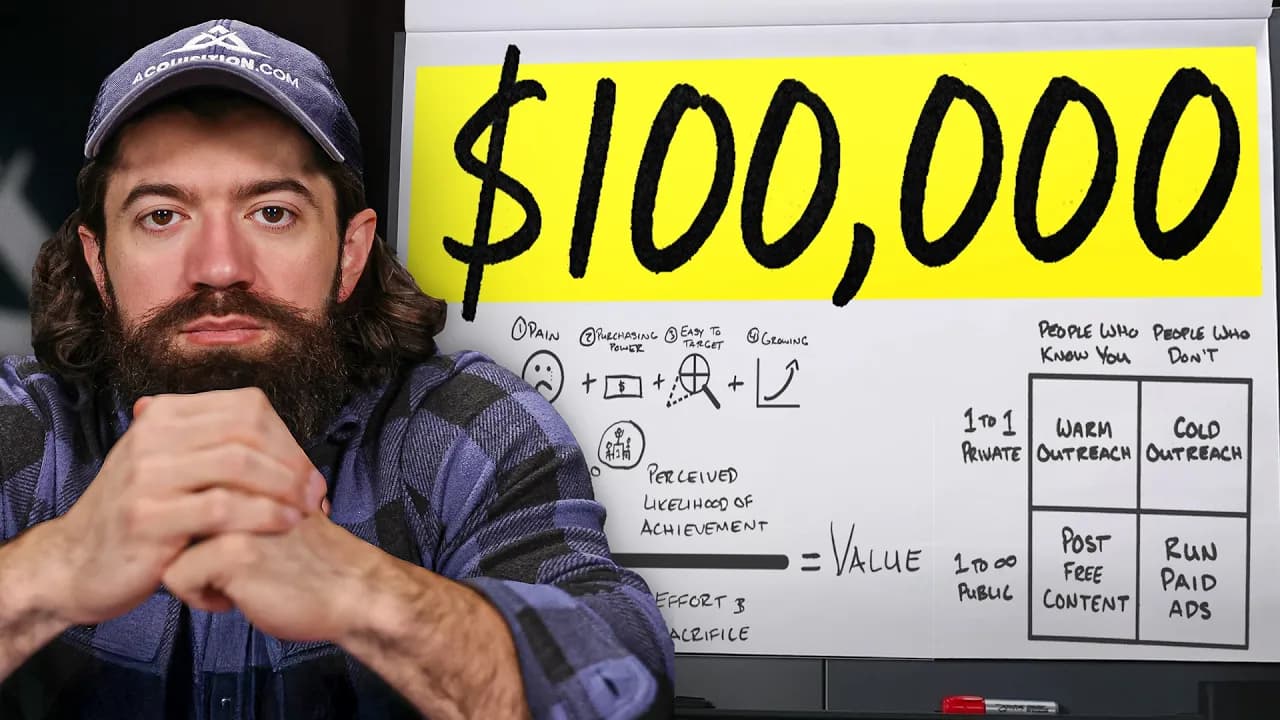
Most important metric for those below $1 million: gap between income and expenses, not portfolio return. Every investor focuses on return, wanting best stocks, but that's not primary if just starting. Above $1-3 million, return becomes primary, but most don't have that.
People with large portfolios had active, healthy income streams to build it. Near impossible to invest out of poverty-level income without extreme debt (outliers, survivorship bias). If low-paying job with no extra cash, increase active income: learn new trades, opportunities, networking, job fairs.
Maximize budget with operating leverage: grow revenue faster than expenses, like Netflix (revenue ~15% growth, content budget 7% growth). Results: operating margins increase, profitability up, cash flow up. Apply personally: as salary raises, secondary/part-time/contract work add income, don't grow expenses at same rate. Avoid 1:1. Earning extra $10,000/year spent on DoorDash/Starbucks/eating out is lifestyle creep.
Be excellent capital allocator. No shortcuts in stock market; get-rich-quick schemes scam. Don't increase risk (higher yields, leverage, speculative stocks, options). Risk doesn't guarantee faster growth; Howard Marks: if risk guaranteed growth, it wouldn't be risk.
Grow salary, extra income instead—controllable, no downside. Avoid temptations to grow faster via risk, as in fail of the week. Invest repeatedly every week; new money to stocks.
Critics say easy for speaker with YouTube/Quaaltrim income, but follows same principle: focus on income short-term. YouTube/Quaaltrim sped growth, but invested consistently even as developer, saved hundreds of thousands for home, then restarted savings/YouTube. Dozens in community have bigger portfolios from various industries, all with healthy active income initially.
Stock picker; past picks: Apple (made $35,000), Netflix 2021-2022 (big recovery, $200 to $1,000/share, gained 70 million subscribers), Google 2025 (nearly doubled in passive income portfolio, also in story fund).
Stock picking not sports betting/gambling via short-term outlooks/6-month catalysts. Best returns from owning businesses with durable fundamentals, long-term growth flywheels, deeply embedded products, real pricing power compounding over years. Warren Buffett, Peter Lynch, Dev Kantisia, Charlie Munger, Benjamin Graham, Phil Fisher made gains holding quality compounders multi-year, not 2-3 months.
Quality: combination of growth and predictability. Highly predictable fast-growing = high quality. Low predictability/low growth = avoid. Avoid longshot bets (gambling, waste time/mental space/capital; Peter Lynch: almost never work).
Buy quality companies at attractive valuation vs. historical/future estimates. Mastercard example: over 10 years, trailing PE high at 60 (peak, avoid), average 40, recently low end. Bought $30,000, then $20,000, $15,000, $12,000 within 4 days around $536/share during dip; stock went up predictably. Deliberate: 5-year historical trading, bought at lowest valuation.
Good investing: buy quality (not longshots) at great valuations. No guarantees, but great process + strong companies + good valuations = more winners than losers.
When to sell: hold genuine compounding machines long-term, not react to short-term valuations/catalysts. Selling great company due to short-term concern or higher valuation misses broader story/arc over decades. Let companies compound; don't get in way.
Avoid constantly lowering portfolio quality for lower valuation; don't trade quality for valuation—losing recipe long-term.
Active income, aggressive investing, intelligent budgeting (you as capital allocator; habit to investments). Companies that are toll booths, predictable compounding machines, deeply embedded—sleep well adding as they make rich. Minimize trading; don't sell for lower-valued/new stocks.
Building to $1 million takes work, active income, consistency, discipline, but everyone can. Don't be discouraged; snowball gets easier. Dedicated approach/basic philosophies get there sooner than believed.
Whimo caused stir in San Francisco from massive blackout/power outage stopping street lights, affecting Whimo (lined up at intersections, stationary). Widespread gridlock with non-functioning signals/transit disruptions.
Whimo: >"Yesterday's power outage was widespread event that caused gridlock across San Francisco with non-functioning traffic signals and transit disruptions. While the failure of the utility infrastructure was significant, we are committed to ensuring our technology adjusts to traffic flow during such events."
Whimo driver treats non-functioning signals as four-way stop, but scale led to stationary vehicles confirming intersections. Majority trips completed before safe return to depots/pull-over; service shut down until power back.
Elon Musk: >"Tesla robo taxis were unaffected by the San Francisco power outage."
Tesla robo taxis don't exist driverless in California; driver-assisted with human required by law to take over. Apples-to-oranges comparison. Tesla lacks permits for driverless without safety supervisor. If Whimo had driver assistant, no issues.
Doesn't change bullish view on Whimo/Google; like AWS outage (full day), YouTube down hours, Netflix live streaming lag/disconnections. Anytime these
Companies like Netflix have had live streaming events with lagging and people getting disconnected. Anytime these companies do big things at scale, there are going to be some hiccups. This one resulted in no deaths or accidents, no big tragedy caused by it. They simply caused some roadblocks for a short amount of time. To me, it doesn't change the story of Whimo at all.
This is a person that had, just recently even this year, a million dollars. Now, their portfolio size is $3,000 and they owe over $250,000 to the creditors and the IRS. He inherited the home that he grew up in but wasn't living in it. He sold the home, got a bunch of money from selling it, and then did not pay the sales tax on the home. So now he's stuck owing the IRS $179,000.
He says, > "Firstly, I already know what most of you are thinking. How could you do this? Trust me, I know. I'm in an absolute low right now, and I pray that one day I can pull back. I managed to get a temporary extension for what is owed, but I lost everything because I got lucky with Liberation Day. I made a lot because I had plans to start my life with my girlfriend. She doesn't know yet, but each day I don't tell her is killing me. I sold the house I grew up in, a burden I never wanted to deal with, and I explicitly said, I don't want to worry about what is owed. I was naive enough to not do my taxes on my own, which came around Liberation Day, and I genuinely did not expect to end the year this way."
He made plans on paying his taxes several times and let it slip by. He has ADHD and struggles with it daily, chasing the dopamine and panicked, fumbled hard. > "Please don't do what I did. Do not chase the dream because you'll be left with a nightmare. It's so bad."
At the beginning of the year, he had $515,000 from the home sale. Then he gambled with options. That's how you have those type of massive spikes where it goes from $500,000 to a million. At the highest point, he had $1,700,000. The second peak, he got back up to $580,000, but he stayed in. His greed forced him to stay in where he subsequently lost it all.
Obviously, there's the low-hanging fruit here, which is just don't do this type of stuff where you mess with options, where you treat the stock market like gambling.
One thing to address specifically is him trying to shift the blame to ADHD. This is not the results of ADHD. ADHD does not have the side effect of losing all of your money by making a series of the most poor choices you can financially possible. That's not ADHD's fault. He wants to look for different things that he can blame outside of himself, but this is his own problem. He made this decision and ADHD is not the culprit. The culprit here is greed. This is the actions of an incredibly greedy person. Someone that was handed money that he has no appreciation for whatsoever. Money that he inherited from the house he grew up in. Money that his parents probably worked over decades to pay off. Money that he should have been an intelligent steward over. Instead, he acted greedy and selfishly, gambling it in the stock market. And then when the money does collapse, he blames it on ADHD.
This is by all accounts a massive fail of the week. But hopefully he can start fresh and learn something new from this and have a greater appreciation for the money he has because he had to work for it himself. In these cases, in the end, it can ultimately end up being a good thing.
Keep Joseph Carlson in your library
Save the videos and channels worth coming back to, and find them again in one place.