How to Hit ‘Reset’ on a Broken Microbiome
These notes were generated by AI and may contain inaccuracies.
Early humans lived in dirt around animals in real sunlight with real darkness. Food was unprocessed, unsterile, and full of microbes that co-evolved with us. Guts and environments were in harmony. Today, microbes are under attack by sugary breakfast cereals, stressful jobs, pesticides, antibiotics, and long ingredient lists. We live in a world our biology doesn't recognize, reflected in health.
Speaker's personal story: As a newborn, had 106°F fever; doctors gave strong antibiotics, scarring microbiome for life, increasing inflammatory bowel disease risk by 500%, which developed.
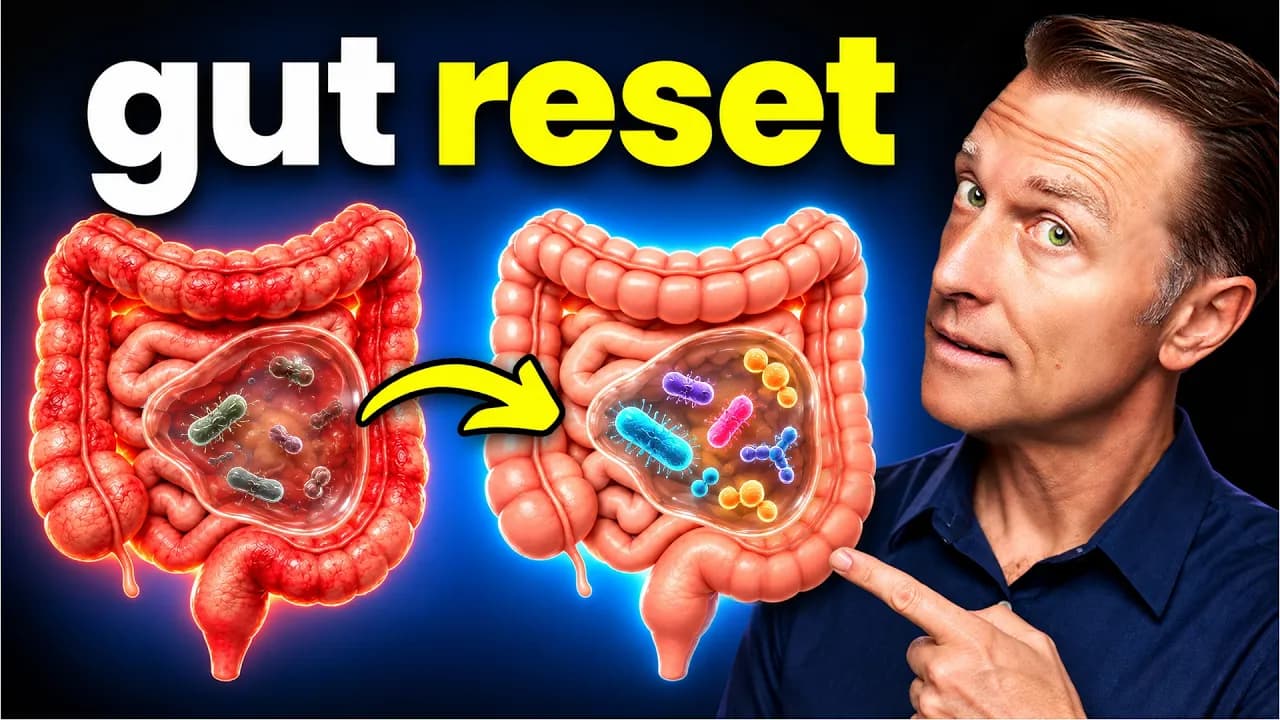
Big question: If gut ecosystem is broken, can you hit reset?
Diversity breeds resilience. Fiber elimination diets induce remission in 60-85% of inflammatory bowel disease cases. Defines fitness as tolerance to challenge. Interventions can impair metabolic health through microbiome disruption.
Four phases: 1. Elimination, 2. Early Repopulation (or repopulation), 3. Advanced Repopulation and Challenge, 4. Maintenance. Covers diet specifics, food selection, sequencing, beyond diet.
Wipe slate clean like shaking an etch sketch, not making microbiome sterile (impossible, avoid antibiotics). Use elimination diet to starve bad bugs/pathogens. Most effective: animal-based carnivore-style for ~8 weeks. Removes plant material that feeds gut microbiota (good and bad), starves problematic pathogenic species and sugar feeders.
Justification: Underrecognized clinical practices like fiber elimination diets treat treatment-resistant inflammatory bowel disease, inducing remission in 60-85% of cases. In dysbiosis, removing components that feed pathogens is therapeutic.
Eat nutritionally complete: Include organ meats (liver, heart) and whole organisms like whole sardines for micronutrients. Speaker finds sustainable (likes beef, eggs, fish, organ meats, sardines). If not, use carefully selected multivitamins (brand suggestions in newsletter).
Minimum: Keep calcium up with supplement before dairy (hard from non-dairy animal foods). Or mineral water like Gerald Steiner (260mg calcium/bottle, high in lithium good for brain).
Fats: On strict carnivore, tallow and ghee. OK to include minimally processed plant-based like extra-virgin olive oil, avocado oil, macadamia nut oil.
Transition symptoms: GI upset, diarrhea, rarely constipation (or apparent due to reduced stool mass). For uncomfortable constipation, magnesium citrate 400-600mg before bed during transition. Free constipation master class in newsletter.
Lasts 6-12 weeks. Why: Diversity breeds resilience, like flourishing coral reef or rainforest. More diverse ecosystem resilient to stressors; defines fitness as tolerance to challenge. Human data: 117-year-old superager Maria had remarkably youthful, diverse microbiome possibly contributing to healthspan/lifespan.
Caveat: Diversity not everything; some interventions improve metabolic health while decreasing diversity. Still, cultivate diverse microbiome with health-favoring species for long-term health.
How: Reintroduce probiotics and prebiotics. Start with bland fermented foods like kimchi, pickles; consider probiotic supplements.
Sponsor: Winnow probiotic, engineered for microplastics/nanoplastics (everywhere in environment, water, air). NEJM study: Microplastics in blood vessels increase heart attack/stroke/death risk by 350%; enter immune cells/macrophages, cause inflammation. Winnow strains bind microplastics for flushing before bloodstream. Speaker is scientific adviser (conflict of interest). Use code stay curious for 15% off. More science in newsletter, paper on microplastics in brain, conversation with Dr. Matthew Dunn, PhD, CEO of Winnow Labs.
Keep plant intake low; cook fruits/vegetables (except fermented) for digestibility. Introduce new foods slowly/small amounts. Starter foods: cooked zucchini, summer squash, avocado, olives, sauerkraut, pickles, Jerusalem artichokes or globe artichokes (digestible low doses, pre/probiotic properties). Brands: Real Pickles kimchi.
Track intake/symptoms rigorously with food log (handwritten, Word, Excel) for N=1 relationships.
Introduce dairy: Focus A2 casein (sheep, goat, buffalo; or labeled A2 cow). A1 casein more inflammatory/GI upset/autoimmune; evolutionarily new from cattle domestication. Top: goat milk kefir, blue cheeses from sheep/goat (e.g., Roquefort favorite). Carveout: Low-sugar high-protein yogurts (hard to find A2). Brands: Siggi's plain skyr yogurt, Alexandria A2 plain yogurt, Wabe organic Aussie-style plain Greek yogurt, Fage 5%.
Extends phase 2: Increase variety, dose, challenge of foods. Try harder-to-digest challenge foods; expect mild/moderate symptoms (resolve over time); scale back if serious GI discomfort.
- Cruciferous vegetables: broccoli, cauliflower, Brussels sprouts
- Nuts/seeds (raw): Start macadamia (easier), then walnuts, sesame, tahini
- Raw vegetables: Simple salads with extra-virgin olive oil dressing
Keep probiotics/fermented foods up; continue food/symptom logging.
Find sustainable/enjoyable pattern supporting microbiome. Cycle back to earlier phase for micro-reset if needed.
Avoid completely/forever (as much as possible):
- Artificial sweeteners (aspartame, saccharine, sucralose): Impair metabolic health via microbiome disruption. 7-day trial: 4/7 participants developed insulin resistance in 5 days of modest intake. Microbiomes transplanted to germ-free mice caused insulin resistance in mice.
- Artificial food colorants (yellow 6, red 3): Disrupt microbiome, linked to inflammation in pre-clinical models.
- Oral/IV antibiotics: Disruptive; use only if necessary (consult doctor).
- Mysterious additives: Avoid unrecognizable ingredients; like roulette with gut.
Natural sweeteners (allulose, stevia, monk fruit) likely safer.
- Meal timing: Eating window <12 hours; avoid late meals (disrupts circadian/microbiome).
- Light exposure: Daily natural sunlight for circadian rhythms (microbiome has clock needing light/meal timing input).
- Stress: Disrupts via vagus nerve; brain signal changes gut secretions (Brunner's glands) feeding/staving bacteria. Manage with meditation, deep breathing, hot baths, relaxing/TV with loved one (trashy reality TV as hack).
Closing: Self-experimental framework, not medical advice. Everyone's microbiome different; science lacks precise protocols. Through community, questioning, safe N=1 experimentation, make progress on health journeys. Sometimes hit reset.
Keep Nick Norwitz in your library
Save the videos and channels worth coming back to, and find them again in one place.