'How We Changed Our Minds About Psychedelics’ panel at #SXSW 2023
These notes were generated by AI and may contain inaccuracies.
Seatbelt sign is on, no room in overhead compartments, full house. Full House Full Hearts empty mind.
Daniel Goldberg, co-founder of Palo Santo, a venture capital fund focused on psychedelic therapeutics. Busy day yesterday with a small banking crisis involving Silicon Valley Bank. Poke at friends in LA and Austin saying money is energy or energy is money—that won't fly with Silicon Valley Bank. Check in with friends in business, it's scary. No time to prepare due to crisis, wrote notes at the pool. Less organized than usual, contrasting co-founder Tim Schlid's brilliant organized panel 'To Trip or Not to Trip' with OGs of psychedelic science.
David Nichols, unparalleled in psychedelic science history, reminded that we lost decades of progress during Nixon's drug war. Field today seems tribal with 'I was here first' mentality. Elders in the space may be scared of where we're going, but the train has left the station. Welcoming new voices, talent, new ideas to advance work. No one represents inclusivity and generosity more than Paul Stamets and Julie Holland.
Julie Holland Introduction
Julie Holland is a psychiatrist, psychopharmacologist, author, important advocate for psychedelic movement, one of the coolest people in the space.
Paul Stamets Introduction
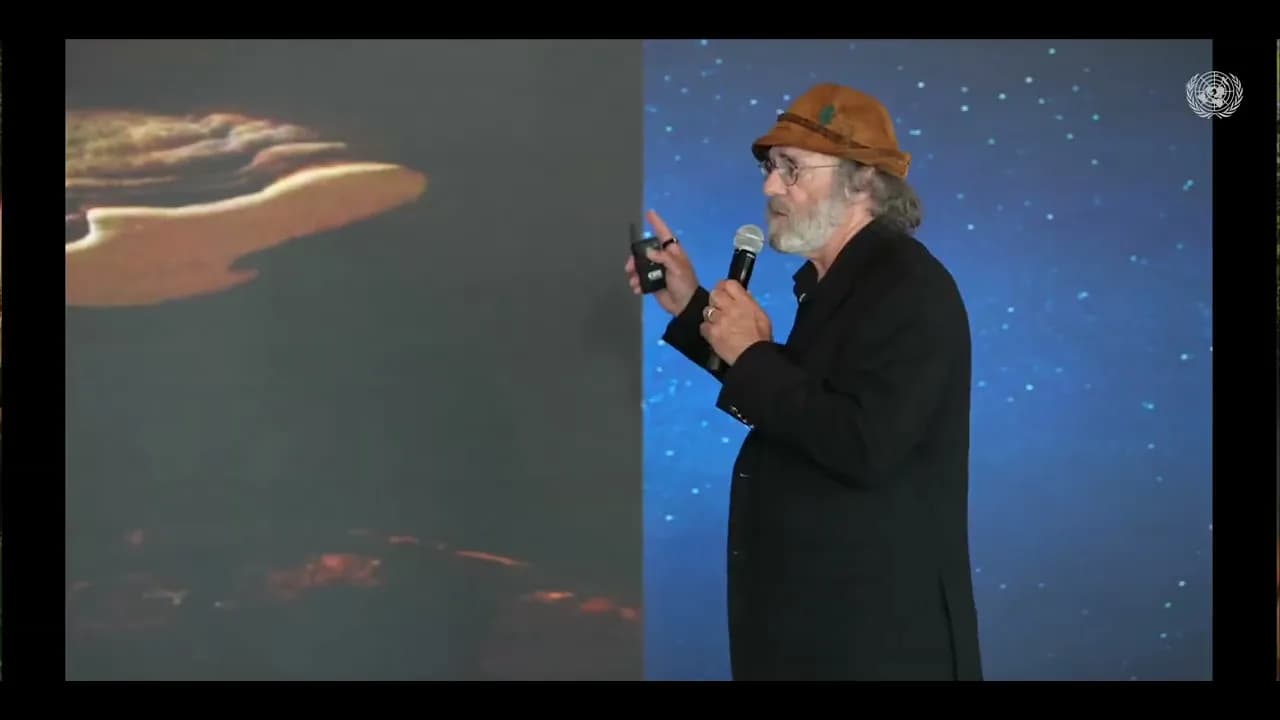
Paul Stamets, world's most famous mycologist, author, medical researcher, entrepreneur, intellectual and industry leader in fungi, habitat, medicinal use, production. Rock star whose message resonates with new audiences, brings esoteric topic to life, fills listeners with hope, optimism, and call to action.
Movies and books over past five years brought unimaginable audiences. Entry into space via media. Audience poll: hands raised for Fantastic Fungi, How to Change Your Mind (Netflix and book), Hamilton's Pharmacopeia, Dosed: From Shock to Awe, Have a Good Trip, Psychedelia: The History of Science and Mystical, Reefer Madness, Doors of Perception, Ayala Waldman, Good Chemistry (Julie Holland).
Question to Paul: when did the shift happen? Paul started first book at 19, published in 1978 (45 years ago), Psilocybin Mushrooms and Their Allies. Studied taxonomy, created taxonomic keys for family containing Psilocybe cubensis (later Psilocybe cubensis, Stropharia cubensis, Stropharia foenisecii with annulus ring on stem).
Inspired by brother John at age 14. Friend Ryan's father found John's book Altered States of Consciousness and burned it, inspiring Paul. John returned from Colombia and Mexico with tripping stories; John went to Yale.
Media, films, books are stories and narratives. Indigenous cultures passed knowledge generationally through millennia via songs, legends, tales. New media: internet, books, films. Paul and Julie are voices in a long lineage of psychedelic experts carrying knowledge forward.
Only know what's edible or poisonous from people who've eaten them before (true for plants, frogs). Mushrooms are ephemeral, visible for few days, then rot. Unlike animals/plants in constant viewscape allowing familiarity and confidence. Mushrooms: some feed, kill, heal, send on spiritual journey, disappear for year or years. Indigenous cultures had cognizant mycologists.
Shoutout to Pioneering Women Mycologists
Maria Sabina (shaman) and Valentina Wasson (Russian doctor), both mycologists who identified mushrooms safely in wilds. Over 14,000 mushroom species identified, genome of over 150,000 estimated, kingdom of about 2 million fungi mostly unidentified.
In 1974-1975, attended first mycological congress with long hair and beard (went through puberty early). Treated like a leper, force field of repulsion, 20-foot circle around him due to interest in magic mushrooms. Dr. Daniel Stuntz (University of Washington, studied mushrooms 40-50 years) had never seen psilocybin mushrooms before they became common due to wood chip landscaping in 1960s. Psilocybe species rare except liberty caps (hard to identify, grow in pastures, no bluish bruising, purple round spores).
Paul embedded in subject, went to libraries but references razored out from books/papers on psilocybin mushrooms. Dr. Stuntz took him into private library at University of Washington botany department. Joined Puget Sound Mycological Society, elected vice president of key council (40-50 people writing taxonomic keys to mushrooms).
Audience poll: how many have not tripped on psilocybin mushrooms? About 10 out of 250. Protect minorities of opinion—they drive innovation, not conventional wisdom. Edge runners, strange people outside comfort zones make giant leaps in science/exploration. Paul blend of liberal and conservative; conservatives conserve safeguards, edge runners challenge safety nets of conventional wisdom/religion. Shoutout to all marginalized minorities (racial, cultural, sexual)—vanguard of innovation, heroes of movement.
Messaging unchanged since 1985. Wrote papers on giving condoms and clean needles for HIV—vanguard then. First MDMA experience 1985, went on local AM Philadelphia morning show. Goal: educate on drug potential and harm. Pendulum swinging toward transgressions/boundary violations lately. People tripping are vulnerable—need trustworthy people with good energy/auras. Focus on harm reduction due to potential benefits.
Julie's Books
- 2001: Ecstasy: The Complete Guide (non-profit to fund MDMA research)
- The Pot Book: Complete Guide to Cannabis (non-profit funding clinical research)
- Good Chemistry: The Science of Connection from Soul to Psychedelics (book signing right after panel)
Proselytizing about connection: feeling part of something bigger, everything connected. Cannabis is psychedelic—even tiny bit connects to body/nature, larger dose to universe. Larger psychedelic doses give sense of connection, good personally and for society/culture.
Media Appearances
On Today Show 26-27 times educating on drugs good/bad, psychiatric conditions (thanks Charlie Sheen, Lindsay Lohan for selling Weekends at Bellevue). 8 minutes on Kelly Ripa/Ryan Seacrest (Disney, mainstream)—covered macro/microdosing, ketamine, ibogaine, ayahuasca.
Signal-noise ratio matters, sound bites shouldn't be taken out of context. Bad sound bite on podcast: veterans are like seizing babies (sticky bipartisan stories: sick kids, first responders, veterans).
CNN Weed Documentary
Involved, taught Sanjay Gupta's producer about CBD, interviewed Sanjay on CBD/epilepsy. Showed 2-year-old babies having seizures (e.g., Charlotte Figi improved with CBD), convinced people.
Does non-fiction books, TV talking head, documentaries. Working on scripted show with Scott Steindorf (Station Eleven executive producer, interested in psychedelics)—announced at SXSW. Not only team; opportunity to educate, include harm reduction, avoid clickbait.
Daniel from Chicago area (psychedelic desert, few universities/trials). Coming out of psychedelic closet, stories impacted others. Recommended How to Change Your Mind, Fantastic Fungi (took wife to Gene Siskel Film Center, huge impact), Julie's book for women in family/friends. Each story/film/book/media speaks to different people. Intergenerational movement—parents not in psychedelics, now multiple generations sharing.
Paul's motto: nature provides (30 years). Received DEA license for psilocybin, passed background check. People ask where to get psilocybin—grandkids 16-25 probably know.
Anecdote with Child
Lives on remote island Desolation Sound, British Columbia (95% time, extraordinary isolation). Gassing boat at water-access-only village dock, 6-8-year-old girl recognizes him: 'Are you Paul Stamets?' (in bumfuck nowhere). She gets Amazon, ran to parents excited: 'This is supposed to happen.'
A young girl was enthused about the movie Fantastic Fungi, and her favorite part was when monkeys ate mushrooms and their eyes twinkled. This signals the next generation's interest. Paul Stamets notes with chagrin and sadness that before his father died, his father asked to trip on psilocybin mushrooms with him and Alexander Smith, father of American mycology, who published many new species of solanus mushrooms and monographs at University of Michigan. Both were father figures to Stamets.
Stamets asked both men's wives—Helen (Alexander Smith's wife, renowned mycologist) and his father's wife—to join them. Both declined. Stamets respectfully declined to guide the journeys alone, as the men were in their 70s and it could profoundly change them. He didn't want to drive a wedge in their relationships. Therapists and psychiatrists are crucial for safeguard rails post-journey. After an extraordinary experience, the guide disappears, leaving partners to handle the aftermath. Stamets visited his father on vacation and would leave soon after; Alexander Smith would face the same with Helen.
These are powerful medicines, but what happens afterwards?
The key is not just the journey, but the path before and after—processing and talking it out.
Dr. Pam Krysko, giant in the Canadian psychedelic movement, part of Canadian Psychedelic Association and Roots to Thrive, conducts group therapy for end-of-life despair, distress, and anxiety in stage four diagnosed patients using high doses of psilocybin with Canadian government approval. This model is being replicated, with indigenous input. Groups of eight patients have eight support people: physicians, skilled individuals, indigenous elders.
Sharing a common malady and death sentence, they prepare over several weeks, journey together, and form a community to support each other when others aren't available. This builds bridges, bonds, and shared destiny—contrasting solitary journeys like Stamets' father and Alexander Smith would have faced.
Avoid retreats in Costa Rica, Jamaica, or Cusco, Peru, where you pay a fee and sit with strangers—a formula for disaster. One bad trip traumatizes the group. Shared common purpose is key; group models have powerful potential.
Dr. Krysko, thank you for your leadership.
They're publishing results. She's speaking tomorrow at 2:30 with Stamets, Natalie Gagnon, and Xiao Jay on psychedelics for women (men allowed). Competing panel: Business of Psychedelics 2.0 at same time.
Paul Stamets has been a tremendous ally. Pre-COVID, a consciousness conference had eight or nine men on a panel (e.g., Paul Stamets, Andy Weil). Julianne emailed friends, pointing out the all-male lineup. Stamets responded first: "Oh my God, no, this is terrible... we need more women like you." They added women, but then Melania Trump—and COVID shifted it online.
Paul Stamets is a Lieutenant Commander. Chicken-or-egg: Did Star Trek: Discovery name a character after his astromycology work, or vice versa?
CBS arranged a call with 12 Star Trek: Discovery writers at Stamets' remote island cabin (built like Star Trek Enterprise, mushroom gill rafters, three hexagons for bees, 36-foot big hexagon, 22-foot Starship shapes). Writers asked for ideas. Stamets pitched mycelium as organization of dark matter, computer, internet, neurons—all web-like interlacing networks. Fungi exist throughout the universe. Instead of hyperdrive, tap mycelial universe for instantaneous jumps via dark matter networks.
Stamets offered ideas for free as a Star Trek fan, valuing its model of tolerance, diversity, Prime Directive, cooperation—science fiction becoming science fact. He blurted: "I always wanted to be the first Astromycologist." They used it. Two weeks pre-airing, they called: Character Anthony Rapp (playing Stamets) is gay. Stamets: "Badge of honor."
First three episodes showed Astromycologist Paul Stamets as a total jerk. Friends warned of reputation damage. Explanation: Stamets enters mycelial spore drive, fuses with blue glowing mycelium, emerges a nice person. Stamets "came out of the psychedelic closet"; character out of another.
Julianne has outed herself as a cannabis user, MDMA user, and psychedelic parent.
Julianne's first experience at age 45 was MDMA (planned psilocybin; read Michael Pollan's book). Profound, built bravery for mushrooms, but her mushroom relationship is troubled. Advice for those jumping to giant psilocybin doses with challenging experiences, amid dogma on starting protocols?
Julianne (consultant): Personal bias—start with MDMA: subtle shift, controllable, maps landmines and work areas.
MDMA is like a house with all lights on, doors unlocked—explore closets, beds, but hit scary spots to return to later (more MDMA or psilocybin).
Challenges:
- People on psych meds (hard to taper off antidepressants).
- Microdosing or ketamine possible on psych meds.
- Ayahuasca impossible on most psych meds.
- MDMA often won't work depending on meds.
- Psilocybin complicated.
Drug interactions are key risk (few medical risks otherwise). Drug policy creates risks: unknown purity, substitution, counterfeits, poisoned supply.
Abuse everywhere: doctors, dentists, chiropractors, priests, military, underground/clinical/retreat psychedelic scenes. Nine Perfect Strangers poorly educated on consent.
Need consultants on shows for screening, preparation, integration. Clinical trials screen rigorously:
- No personal history of manic episode or psychosis.
- No first-degree relative with mania or psychosis.
Post-FDA approval, less screening when more available.
Screening will be difficult, trying to run more people at once because the two-clinician-one-participant model isn't cost-effective, so there will be many bumps in the road. Prepare for them if the pendulum swings that way. Messaging about harms is part of getting back to movies and being on Joe Rogan.
You should obey the law.
Challenge is obeying state law or federal law in states like Colorado and Oregon that have legalized. With microdose.me study and doctors collecting hundreds of case reports where people got off anti-depressants with microdosing. Attentive physicians look for N=1 studies, remarkable breakthroughs not conventional, and document them. Journals on best outcome cases where diagnosis had no remedy, then stumbled upon something.
Hundreds of case reports wake clinicians up: "Wow, something is happening here, we need to study it." Grassroots movement populates databases with information physicians wouldn't see from seeing 100 patients a month; now 100,000 people reporting, clinicians pay attention.
For those who weren't there yesterday: 120 clinical trials registered on psilocybin at clinicaltrials.gov—extraordinary, only one back in 1999.
Lots of hype and high expectations, but as trials publish, many extraordinary claims are substantiated: alcohol use disorder, opioid use disorder, kicking tobacco—three different drugs, three different receptors, yet fundamentally changing neurological health of addicts.
Course of data substantiates these claims heretofore seen as exaggerations; looking more real.
Treatment-resistant depression patients who've tried all medicines, TMS, etc., come to psychedelics as last hope, "this is going to work," but it doesn't for some. Those people are in a bad state; few and far between, but happens. Some people just don't respond to mushrooms—unknown why.
Published paper: people on SSRIs long-term, came off for MDMA study—never on SSRIs had robust response; those off SSRIs had less response. Underground reports: people on SSRIs for decades don't have robust response to mushrooms even after coming off. People come off meds for experiences, but wasn't what they expected—recent underground: negative feedback, "I didn't get enlightened."
Not one-and-done; whole process, may need to do a couple times, need support between and after. Integration matters, especially after.
Fundamental flaw in clinical trials: placebo blind double control. One group placebo, other high-dose psilocybin. Cartoon: six patients sitting, six dancing; sitting ones say, "Guess we're in the placebo group." Ethical issue: treating treatment-resistant depression, end of line, nothing worked, hoping for psilocybin, get placebo as baseline for comparison—fundamentally flawed.
25-30 trials using inactive placebos vs. high doses—scientifically impugnable, how past IRB? Hubris of scientists who haven't tripped, treating as other medicine.
Take every such trial circumspectly—inflating data due to contrast. Moral responsibility for causing more depression by de-selection. In some psilocybin studies, only suicidality in placebo group.
When advising studies vs. underground: most clinical studies 50/50 chance of getting medicine; doing it for science, not self. Arguing against placebo forever. Designing MDMA study for schizophrenia—no placebo; paranoid patients, no games. Everyone placebo first to learn, second time active drug knowingly. Okay because you know it.
Mydriatic drops (dilating eye drops) for everyone—cheap way to make pupils big like tripping, doctors think everyone tripping; increased light makes things trippy. Reminiscent of MDMA or psilocybin—like fractals, geometrical patterns.
VR gets partway but not the feeling of unanimity welling up, one with universe—deep inside core, not just visuals.
Clinicians using VR think they induce psychoactive experience—not the same.
Many lack visuals, not visually oriented. Aphantasia: some visualize mother's face, yesterday's meal; others close eyes, black. Aphantasia people don't have visuals; focusing on pretty colors misses it.
Terence McKenna, Christian Rätsch, Eduardo Luna, and speaker in Palenque ruins, ate bunch of cubensis, no flashlight, pitch black jungle trail back to Chongka resort (two miles). Feeling path with feet, staying close.
Speaker had Nikon camera with flash: flashed ahead, saw trail. Group of eight posed in front of flash repeatedly: "Greatest shamanic tool ever."
Harm reduction message (session videoed): story of addressing stammer younger via tree-climbing in lightning storm—branch only three feet off ground.
Someone in green room shared stammer story, thanked speaker—meaningful.
Worldwide, lightning strikes associated with mushroom formations: Northern Plains First Nations (white circles on teepees = puffballs); Ireland, Europe, Mesoamerica, Japan, Russia.
Japanese group: 50-100,000 volts, 110 millionth burst doubled shiitake production—electricity pulses stimulate mushrooms.
Tripping epiphany: 8 miles mycelium per cubic inch soil, every footprint on 300 miles mycelium. After millions years evolution, mycelium smart.
Lightning strike: flash, thunder—mycelium responds to forest stimuli (rain drop, temperature drop, CO2 wick, light, low sound frequencies). Mycelium fibers like piano/guitar strings vibrate from waves, alerting rain coming, wicks moisture.
Drum circles (births, deaths, harvests): mycelium listens to tribal vibrations, grows, channels nutrients to plants/herbs/vegetables/fruits. Mycelium as presence surrounding us, sound-sensitive to footprints, lightning, voices, toning.
Gift to panelists: bronze Garuda opium weight, Southeast Asia, ~150 years old, measured opium quantities—harm reduction. Get drug testing kits from DanceSafe, good scale. Ensure legal, talk to doctor.
Thanks to panelists for time, stories—inspired moderator's life change. Work aims to do same for others.
Book signing: now at bookstore for Good Chemistry; tomorrow 1 PM at Host Defense booth downstairs.
Keep Paul Stamets in your library
Save the videos and channels worth coming back to, and find them again in one place.