I Made a Bet with Tesla
In a Nutshell
Tesla founder Elon Musk's Cybercab robotaxi won't be delivered to consumers for $30,000 by end of 2026. Three major barriers remain unresolved: achieving reliable full self-driving capability, passing legislation to allow steering-wheel-free vehicles, and hitting the price target. The creator's confidence stems from Tesla's history of missed deadlines and regulatory hurdles that have blocked similar concept features from reaching production for decades.
These notes were generated by AI and may contain inaccuracies.
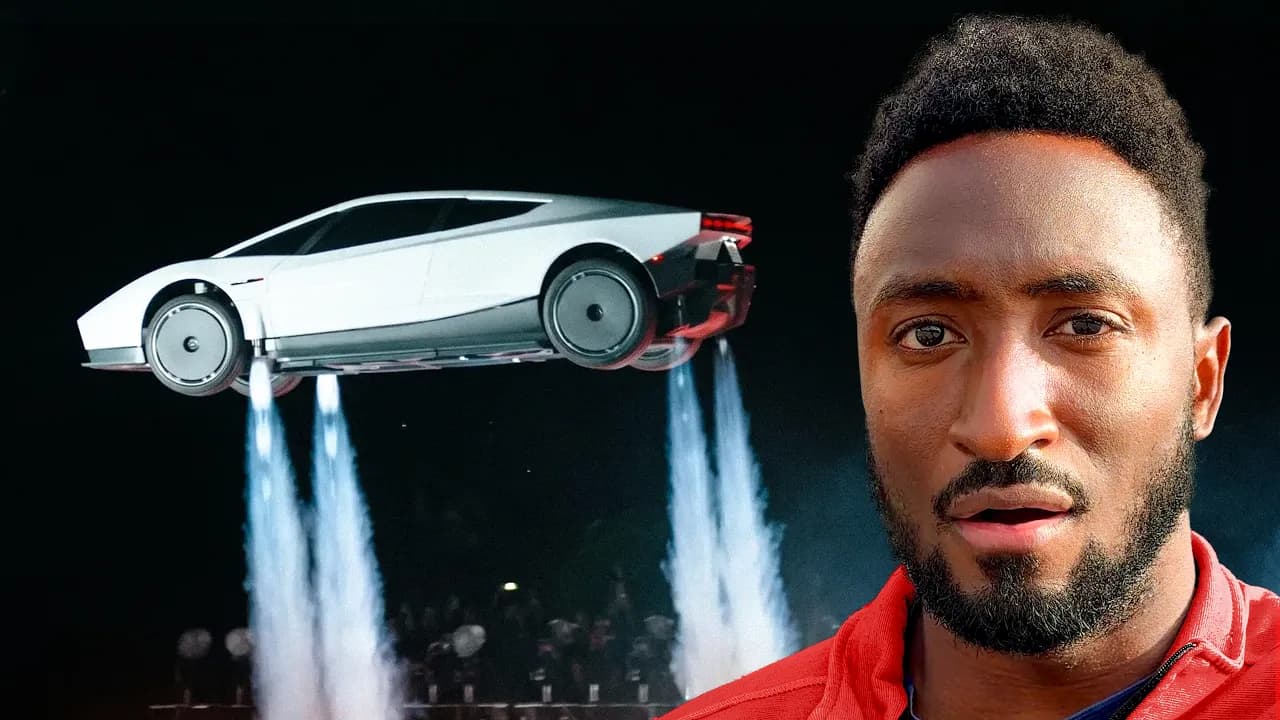
A year prior to this video, the creator attended Tesla's event unveiling the Cybercab, a two-seater vehicle with butterfly doors, no steering wheel, no pedals, and no charge port. The vehicle was positioned as a robotaxi that would join a fleet and self-drive to shuttle people around, generating income for the owner. The creator made a bet that Tesla would not deliver this vehicle to regular consumers for $30,000 before the end of 2026, stating they would shave their head on camera if Tesla succeeded.
The bet specifically concerns the Cybercab not shipping to consumers like the audience for $30,000 before the end of 2026. The creator expressed high confidence that this timeline would not be met, citing Tesla's history of announcing ambitious timelines that are not achieved.
Tesla has a established pattern of promising ambitious products and timelines that are not met. The creator was slightly nervous when Tesla announced a new robotaxi event for September 2026 in Austin, Texas on September 3rd. The event had a limited invite list that excluded journalists and restricted plus-ones to non-content creators, which raised concerns about transparency.
The day before the September 2026 event, Cybercabs were visible throughout Austin in their geofenced operating area. The vehicles had undergone minor modifications including a colored LED light on the front to help identify specific vehicles, with matching interior display lighting. The butterfly doors were noted as opening wide into traffic, potentially causing issues in dense urban environments like New York City.
The event itself announced that the Cybercab would join the robotaxi service in existing geofenced areas, but provided no concrete new developments regarding the promised timeline or specifications.
The creator outlined three major obstacles that make the 2026 timeline unrealistic:
-
Full self-driving capability must be solved completely, including determining acceptable failure rates and operating conditions across all environments versus geofenced areas. This problem has been worked on for many years by numerous companies without complete resolution.
-
Legislation and regulations must allow vehicles without steering wheels or pedals to be sold to consumers. The creator compared this to the persistent requirement for side-view mirrors on production vehicles despite concept cars frequently omitting them. Even countries that technically don't require side-view mirrors are rare, suggesting regulatory change will be extremely difficult.
-
Pricing at $30,000 or less must be achieved, compared to the current cheapest Tesla Model 3 at approximately $35,000. While this may be feasible given the simpler design, smaller battery, and reduced glass, it remains a significant challenge.
The creator drew parallels between Tesla's robotaxi announcements and Google's 2015 Google Glass launch. Google Glass was announced as a product when the technology was not ready for widespread adoption, leading to social backlash including bans from certain establishments and the term "Glassholes" for enthusiasts. The technology was simply ahead of its time, with the ideal version not possible with available technology in 2015.
Ten years later in 2026, every major tech company is developing smart glasses, suggesting the original concept was valid but prematurely announced. The creator sees similar patterns with Tesla's Cybercab and Robovan announcements, which are positioned as imminent products despite current technological and regulatory limitations.
The Robovan, a 20-seater autonomous transportation pod announced alongside the Cybercab, remains listed on Tesla's website as "arriving soon" despite no concrete progress toward the specifications originally promised.
The creator challenged Twitter users convinced that Tesla will meet the timeline to take the opposite side of the bet. If the creator is wrong, they will shave their head on camera and donate to cancer research. If opponents are wrong, they must shave their head at the end of 2026. The creator expressed confidence that three months remained to prove the bet correct.
Keep Marques Brownlee in your library
Save the videos and channels worth coming back to, and find them again in one place.