Iran War Expert: The 8 Most Dangerous Weeks Begin Now! | Prof Robert Pape
In a Nutshell
The eight-week post-US midterm period marks a critical escalation risk as Trump prepares 72-hour strikes on Iranian leadership, energy, and military targets while Russia threatens Ukrainian civilian infrastructure. Political violence is surging with 40-60 million Americans supporting force for or against Trump, creating conditions for domestic chaos during the congressional transition. The core danger: simultaneous Iran and Ukraine escalations could trigger cyber attacks, energy crises, and violent populism that spirals into broader war without congressional oversight after Democrats potentially take control.
These notes were generated by AI and may contain inaccuracies.
The United States is entering the eight most dangerous weeks since the Iran war began, coinciding with the US midterms that will determine the fate of President Trump's administration. The transition of power period is the most dangerous time for political violence, as demonstrated by January 6. President Trump has promised repeatedly to escalate the Iran conflict after the elections.
The world is moving deeper into an escalation trap with three converging dangerous issues: the US midterms and transfer of power, the ongoing Iran war, and Russia's threat to escalate against Ukrainian civilian infrastructure. The midterms involve voting that has stopped, followed by counting, certification, and a two-month process of seating victors.
In the United States, presidents serve four-year terms while Congress elections occur every two years. When presidential elections do not coincide with congressional elections, they are called midterms. The US Congress consists of the House of Representatives and the Senate, both of which pass legislation. Republicans currently control both chambers, allowing easier passage of laws. Midterms could result in Democrats gaining control of one or both chambers, creating checks and balances on presidential power.
The Constitution establishes a system of checks and balances between Congress, the president, and the Supreme Court. When different parties control Congress and the presidency, policies are moderated. When the same party controls both the presidency and Congress, there is little check on presidential power, particularly in international affairs and domestic policy. Loss of Republican control of the House and Senate would severely check President Trump's power.
Political violence is particularly dangerous during the transition of power. Over 40 million Americans support using the US military to suppress Democratic protesters against the Trump agenda, while over 60 million support using force to prevent Trump from being president. These numbers have doubled since September 2024. Multiple assassination attempts against President Trump occurred two years ago, and Charlie Kirk was assassinated one year ago. The current numbers are worse than during those periods.
If Democrats control one or both chambers of Congress, this represents the virtual political destruction of the Trump presidency. Democrats would have subpoena power to compel testimony from Trump administration members under penalty of jail or prison. They would also have impeachment power over President Trump and cabinet members including Secretary Hegseth, the Attorney General, and the Department of Homeland Security Secretary. Control of the Senate could enable removal of officials with support from disgruntled Republicans.
Mass deportations and consistent operations within government departments would become extremely difficult amid months of turmoil and cabinet heads facing removal proceedings. The midterm results will determine whether President Trump can maintain MAGA agenda implementation.
The midterm transition period could dovetail with escalation in the Iran war. President Trump has promised repeatedly to escalate after the elections and is now post-election. The third concurrent issue involves President Putin threatening to escalate against Ukrainian civilian infrastructure, targeting electric power in Kyiv, Kharkiv, and Odessa, creating concerns about a "dark winter" in Ukraine.
The eight-week period begins with the question of whether President Trump will accept election results, or whether Democrats will accept not taking control of Congress if they lose. This comes immediately after Trump's promise of heavy US and Israeli strikes against Iran right after the midterms.
Trump has described the situation as "decision time" between reaching a deal or taking action to "finish them off." He has stated that "anything is possible" regarding strikes and declined to take options off the table. Preparations include removing embassy personnel and families from Saudi Arabia and multiple frontline Gulf states. Trump has requested detailed attack plans from the military, with orders given to CENTCOM to execute plans within maximum 96 hours of receiving the go code.
The plan on Trump's desk involves hitting targets in Iran over a three-day period. Target sets include missile sites, drone launch hubs, IRGC command centers, and energy infrastructure over 72 hours to force capitulation without triggering prolonged ground war. This resembles the "Instant Thunder" air campaign from the 1991 Gulf War, which targeted 84 leadership and infrastructure targets to paralyze Saddam Hussein's regime.
An escalation trap occurs when a strong country attacks a weaker country and achieves tactical success, but the weaker country gains strategic power. In this case, Iran gained heavy control of the Strait of Hormuz and 20% of the world's oil supply immediately after initial US and Israeli attacks.
International politics is not a chess game where one side can offer a draw when behind. A better analogy is roulette, where gamblers who lose continue doubling down on the same bet, making riskier wagers to recover losses. Each escalation rung represents a larger bet with higher stakes, including American gas prices, American lives, and American interest rates.
Trump bet that killing the Supreme Leader would weaken Iran, but this failed. He then bet on a six-week air campaign rather than two or three days of bombing, which also failed as Iran maintained control of the Strait of Hormuz. The current bet involves a blockade, which has failed after six months as Iran has not conceded or collapsed.
Trump borrowed political support from his MAGA party and congressional control to win back losses, but faces a January 3 deadline when a new Congress convenes. Republican senators and congresspeople facing job losses to Democrats are pulling away from Trump. Additionally, Trump's crypto investments and family financial interests depend heavily on his political power, creating massive personal financial stakes beyond political humiliation.
Presidents do not abandon their party, agenda, and legacy. Lyndon Johnson went through a similar escalation process in Vietnam, doubling down as each rung cost more political support while chasing losses. The election represents the equivalent of a bookie demanding repayment, with the losing president's legacy being the worst outcome.
The three-day plan is not a minor operation despite the short timeframe. It involves leadership targeting, economic targeting including refineries, economic power, and bridges. This represents a whole new level of targeting beyond what the word "three" suggests. The plan is designed as a rapid, high-intensity aerial campaign if post-election negotiations break down.
Media analysis has become more sophisticated but remains incomplete. The leaks about the three-day plan are consistent, but the target sets represent significant escalation beyond initial assumptions. Trump has paused major strikes until after the November 3 midterms but characterized the post-election window as a final choice between a diplomatic deal or initiating strikes to "finish it off."
The Instant Thunder plan from 1991 was originally planned as three days with three additional days of backup strikes, but extended to 43 days without paralyzing Iraq's military. The three-day bombing campaign against Iran could similarly drag on if initial strikes fail to achieve objectives.
Once the military leadership stratum is destroyed, there is nobody left to come to the table. Trump has occasionally said he's not sure who to negotiate with, and by day six or seven of this campaign, the ability to identify negotiating partners becomes even more difficult. The plan is designed to completely paralyze the body of the military rather than simply tilt the balance of hawks and doves inside the government.
If the military is not fully paralyzed, the remaining Iranian military forces will retain significant power to strike back. These forces can lash back in multiple ways, including attacks against airports in the region. This mirrors what happened after the Gulf War when Saddam Hussein bombed sites in Riyadh, killing personnel there. The United States was never able to stop the Scud missiles of Iraq.
The pattern of escalation has already been demonstrated by Iran's ally, the Houthis in Yemen. During the escalating conflict between Saudi Arabia and the Houthis, the Houthis directly struck terminals three and four on separate days at Riyadh International Airport with missiles, killing over a dozen people and wounding over 300. This marked the first time in that war that civilians were intentionally targeted, and the attacks occurred over multiple days.
The attacks follow the "Instant Thunder" style air campaign executed against Saddam Hussein in 1991. This approach targets regime infrastructure including oil refineries and electric power systems. The 1991 campaign killed between 5,000 and 15,000 civilians. The plan explicitly acknowledges that civilian deaths are inevitable rather than avoiding them.
Inspired attacks are terrorist attacks that are not command-directed by a government. The supreme leader may even be dead as a result of the campaign. These attacks emerge from the pool of sentiments expressed by the 10 million plus Iranians who came out to support the supreme leader and called for revenge. Individuals act on their own to carry out terrorist attacks or suicide terrorist attacks without direct orders from Iran.
A co-pilot on a flight from Dubai to Tel Aviv carrying about 170 civilians, approximately 100 of whom were Israelis, attempted to seize control of the aircraft using a hatchet from the cockpit. The attack occurred 30 minutes from Tel Aviv, after 2.5 hours of flight time. The co-pilot first asked to pray, then struck the pilot from behind with the crash axe. The pilot initially thought a heavy piece of equipment had fallen on his head before realizing he was under assault.
The timing and location of the attack indicate suicide terrorist intent rather than simple suicide. If the co-pilot only wanted to kill himself, he would have acted immediately after takeoff rather than waiting until 30 minutes from Tel Aviv. The 3-hour flight duration from Dubai to Tel Aviv meant the attacker needed to get close enough to potentially ram the plane into Tel Aviv, killing people both on the plane and on the ground.
The pilot reported that the morning started very normally. The first officer asked to pray, which is a very common ritual among religious suicide attackers before carrying out their attacks. The pilot's vision tunneled from blood loss as he focused on releasing his seat belt and crawling toward the cockpit door release. Each burst of physical effort caused him to fade in and out of consciousness while feeling the aircraft plunge violently nose down.
A passenger who happened to be a pilot with the knowledge to land the plane was on board, providing an unintentional backup that proved extremely fortuitous. Passengers rushed through the door, restrained the co-pilot, and the backup pilot successfully landed the aircraft.
The election results create incentives to pursue this military path, but the consequences extend beyond Iran. Gas prices and diesel prices are expected to rise significantly. The housing market, already frozen, will freeze up even more. These effects will impact not just the U.S. economy but the world economy through public perception and market reactions.
The dynamics mirror what occurred in France, where riots spread across multiple cities rather than remaining localized events. Rising prices due to the Iran war contributed to the French riots, and similar patterns are expected to emerge elsewhere in Europe.
All three major dynamics are occurring simultaneously over the same eight-week period. The contentious election process, including ballot counting and certification, overlaps with the Iran escalation and developments in the Russia-Ukraine conflict.
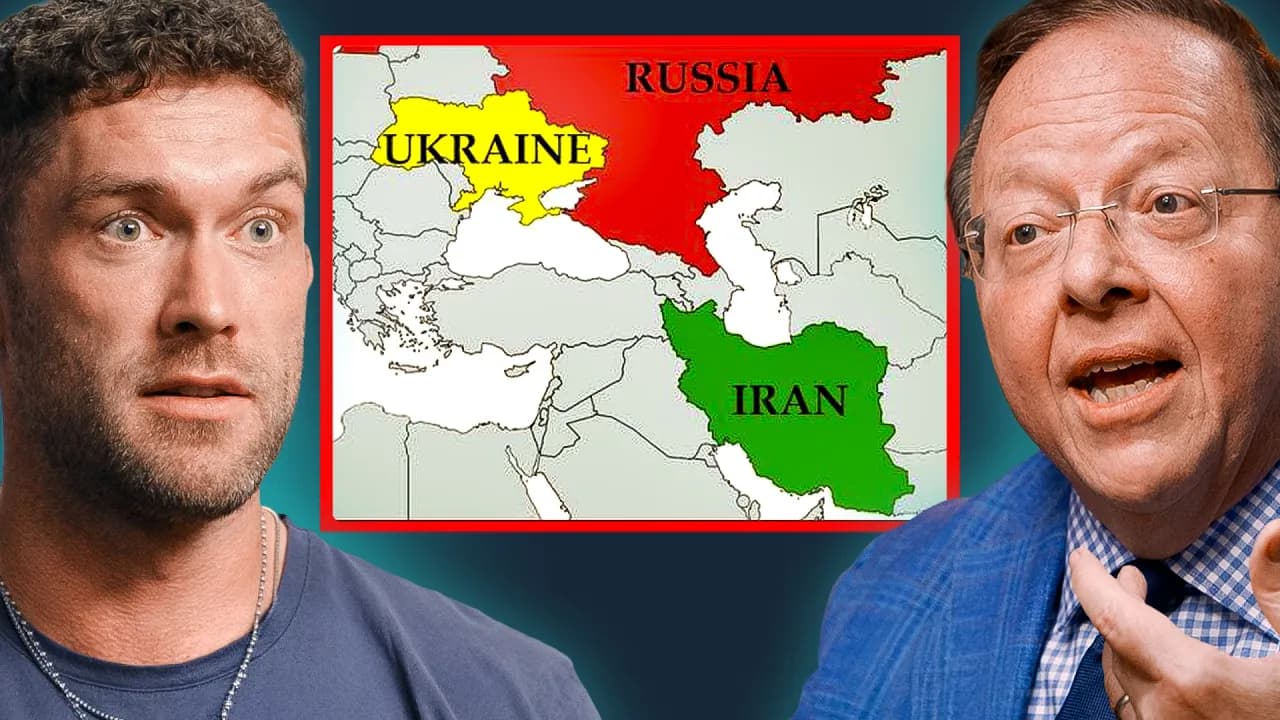
Putin wants more than a photo opportunity with Trump. He wants real pressure on Ukraine to cede territory. Based on maps from August 2022, Putin has officially annexed four oblasts including Crimea and Donbas, but has not physically taken control of all the territory. He seeks the remaining white areas on the map representing unconquered portions of these oblasts.
Putin has also discussed Nova Russia, the next set of oblasts behind the first four, where vast numbers of Russian speakers live in Ukraine. The debate centers on whether Putin wants only the currently unconquered portions of the four annexed oblasts or also these additional territories.
After four years and a minimum of 250,000 dead Russian soldiers, Putin has gained only about 1% of Ukraine's territory. He remains far from controlling the white areas representing his territorial objectives, and he is nowhere near the second force of oblasts he may also want.
Trump cannot deliver Ukrainian territory because only Ukraine can surrender it. For Zelensky to surrender not just the territory Russia currently holds but additional areas would place his life and his family's life in danger, as he could be killed by his own people or military for giving up territory.
Around Thanksgiving, when Putin realizes Trump cannot deliver Ukrainian territory, he is likely to escalate by attacking electric power stations in Kyiv, Kharkiv, and Odessa. The goal is to knock out 90% of power in these cities for a month or two, not merely cause temporary brownouts.
Putin launched nearly 200,000 Russian troops to take not just southern and eastern Ukraine but also Kyiv itself, aiming to control almost half the country. Having lost this objective, he faces his own escalation trap where accepting surrender or capitulation would require dealing with his own military and facing the fate of authoritarian leaders who lose major wars.
Violent populism occurs when political violence moves from the fringe to the mainstream, involving large numbers of violent actors rather than small isolated groups. It transforms from isolated political assassination attempts to strings of them over years, and from localized protests like the Rodney King riots in LA to spreading events that affect multiple locations.
Violent populism functions like a wildfire with combustible material that can be predicted but sparks that cannot. The combustible material consists of over 40 million Americans who support political violence for Trump's goals and over 60 million who support political violence against Trump's goals.
January 6 demonstrates violent populism in action. Trump's December 19th, 2020 tweet called MAGA supporters to Washington. His speech at the Ellipse channeled the combustible material, and his subsequent tweet claiming Mike Pence had let them down served as the spark that caused the crowd to burst into the Capitol with chants of "Hang Mike Pence."
The French riots demonstrate how violent populism spreads beyond localized events. What began as protests in Paris expanded to multiple cities across France, then occurred again a week later and spread beyond France's borders. This pattern shows how focal point events can touch off widespread sentiments.
Major problems are developing simultaneously inside the United States, in Iran, and in the Russia-Ukraine war. These are no longer disconnected events but feeding into each other, with the Ukraine conflict also increasing energy prices globally.
The UK government has asked people to stock up on batteries, beans, flashlights, and water in preparation for potential internet disruptions and other problems. This preparation anticipates scenarios where Ukraine backs Russia into a corner, potentially leading Russia to punish Ukraine's European supporters including Britain.
UK Defense Minister called for household preparations against potential hostile state attacks, cyber warfare, or infrastructure collapse, advising families to stockpile at least 3 days of essential supplies. The Be Ready campaign specifically recommends 3 liters of bottled water per person per day, 3-day cache of non-perishable tinned food, battery-powered wind-up torches, radios, power banks, first aid kits, and physical cash because ATMs would not function during cyber attacks.
This government warning triggered panic buying across Britain, with supermarket shelves stripped of bottled water and canned goods.
The United States is pulling back personnel and families from embassies across the Middle East, indicating governments are recognizing the escalating risks. These preparations show that officials are paying attention to the potential for cyber attacks that could knock out internet access for several days or electric power systems.
During summer in Minnesota and other states, power and water systems went offline in July. The New York Times was the only publication to report that US intelligence directly attributed these attacks to Iran, stating the incident bore Iran's fingerprints for cyber attack. Other media outlets did not follow up on the story, suggesting US intelligence may have instructed them to suppress coverage.
During the 1991 Gulf War, the Pentagon worked with CNN, ABC, and other networks to control news coverage. Before the 2003 Iraq War, similar media management continued. On a CNN set, a famous reporter asked what topics should not be discussed with the public before cameras rolled, demonstrating how journalists were asked to establish ground rules about what could not be shared.
The Insurrection Act allows the president to use US military, National Guard, or reserves within American borders against US citizens. President Trump stated in a Time magazine interview on October 1st that he might invoke this act and would not take it off the table. This represents a significant departure from the Posse Comitatus policy that traditionally prevents military use against domestic populations.
US Marines are being positioned for potential limited ground operations in Iran. The strategy would involve a 3-day bombing campaign to paralyze Iranian military capabilities, followed by ground forces targeting remaining Iranian military remnants. Once initiated, this sequence would be difficult to stop, potentially leading to Iranian retaliation against Gulf states' infrastructure.
Cyber attacks that could occur would not be brief internet outages but sustained attacks causing massive economic damage. European publics would demand retaliation against Moscow, potentially leading to direct European military action against Russia. This scenario represents the conditions for World War III, where major powers attack each other's homelands directly rather than through proxies.
Firebreak 1: Every member of Congress in the lame duck session and newly elected members should declare no escalation by the Trump administration in Iran until the new Congress is seated, unless Iran strikes first.
Firebreak 2: Every governor and mayor should call for a two-month moratorium on all federally armed agents in their cities unless specifically requested by local officials, preventing violent populism from escalating.
Firebreak 3: Pakistan, Qatar, and India should call on all countries to keep hands off civilians, prohibiting direct targeting of civilian infrastructure or residential areas.
Three-day emergency supplies would be insufficient because attacks could recur. Day one uses one bottle of water, day two requires both bottles as supplies dwindle, and by day three supplies are exhausted. The real solution lies in preventing escalation through the three firebreaks rather than individual preparation.
Ordinary citizens should email, text, and call political leaders to advocate for the three firebreaks. This approach allows the public to influence outcomes rather than being controlled by events. Social media platforms enable substantive conversations about risks and consequences that were impossible during the Iraq and Afghanistan wars.
Approximately 130 million people are directly affected: 40 million in Ukraine and 90 million in Iran, all living amid the escalating conflicts and chaos.
Robert Pape has advised every White House since 9/11, including the chief of staff of the Air Force. People in positions of power have contacted him for advice following media appearances, demonstrating that public discussion of consequences can influence decision-making processes.
YouTube has this new crazy algorithm where they know exactly what video you would like to watch next based on AI and all of your viewing behavior. The algorithm says that this video is the perfect video for you. It's different for everybody looking right now. Check this video out and it might be loved.
Keep The Diary Of A CEO in your library
Save the videos and channels worth coming back to, and find them again in one place.