Iran's HEU; One Mother's Story; Wild Concerto | 60 Minutes Full Episodes
In a Nutshell
Iran's underground stockpile of highly enriched uranium (HEU)—enough for 10 nuclear bombs—poses a major threat, with the 1991 Project Sapphire operation in Kazakhstan serving as a successful blueprint for covert U.S. extraction, though replicating it in Iran's fortified Isfahan tunnels would require thousands of troops and risk heavy casualties amid fragile ceasefires. Rachel Goldberg-Polin recounts her son Hersh's abduction, torture, and execution by Hamas after the October 7, 2023 Nova Festival attack, sharing his life-affirming mantra from captivity and her ongoing advocacy for hostages. Stewart Copeland's Wild Concerto blends rare animal sounds from naturalist Martin Stewart's 30,000-hour archive—including endangered species like hyenas and golden Panamanian frogs—with orchestral music to highlight biodiversity loss and inspire conservation.
These notes were generated by AI and may contain inaccuracies.
The war with Iran hinges on HEU (highly enriched uranium). Iran has enough underground to make 10 nuclear bombs. A covert mission 32 years ago provides a blueprint, but a similar operation in Iran would be difficult. Would it be worth risking American lives? "In my opinion, yes."
Tonight's stories: mother's fight for son taken hostage by Hamas on October 7th, 2023; Stewart Copeland's music with animals.
HEU is essential for nuclear weapons. Iran has enough for 10 atomic bombs. International inspectors barred since last June after U.S. and Israel struck three nuclear sites. Over seven weeks of war, President Trump insists U.S. will secure remainder, either boots on ground or deal with regime for scientists to secure and return stockpile to U.S.
In 1994, after Soviet Union fall, Andrew Weber, young foreign service officer in Kazakhstan (fourth largest nuclear arsenal), found HEU in factory. Iran pursuing nuclear material regionally.
Diplomacy and moose hunting trip built trust with factory director. Note on tiny paper: "U 235 90% 600 kilograms"—dozens of nuclear weapons worth, 90% enriched uranium metal ready for bombs. Went to President Bill Clinton. U.S.-Kazakhstan agreement: U.S. takes stockpile to block Iran, North Korea.
Weber led Project Sapphire. Photos: canisters with 1,300+ pounds bomb-grade uranium, protected by militia woman with sidearm and padlock. Three C-5 Galaxy planes carried 31 specialists from Defense and Energy depts. 450 drums for nuclear cargo, crash-proof. Covert as humanitarian mission. 30+ people, 5-6 weeks packaging, no leaks.
Loaded on rickety Soviet trucks over black ice roads—most vulnerable moment, hidden from Iranians, criminals. Planes to Oak Ridge, Tennessee DOE complex. Weber later Assistant Secretary of Defense for nuclear deterrence. Six weeks total.
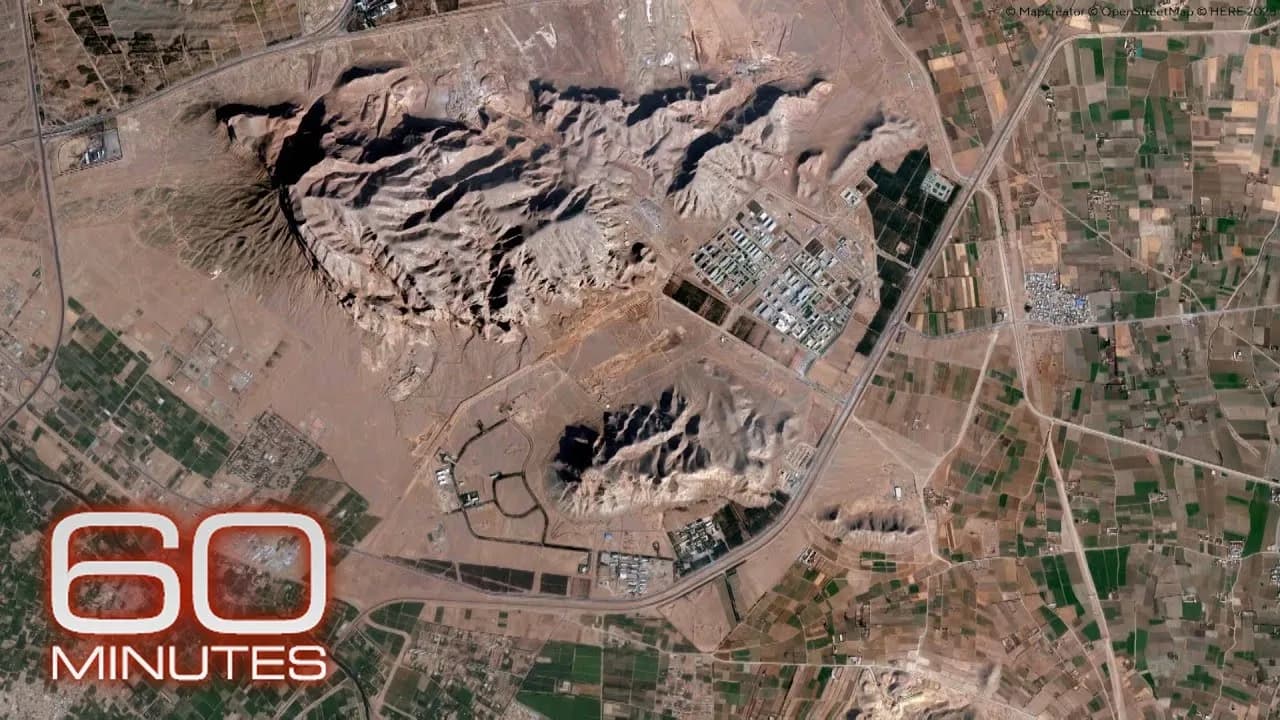
In Iran, unilateral team impossible without great risk. Need thousands of U.S. troops for secure perimeter at Isfahan facility, deep tunnels under mountain in desert. HEU in scuba tank-sized containers, too deep for bunker-busters. Satellite images: tunnel entrances blocked with dirt, then roadblocks—fearing U.S./Israeli raid.
U.S. special forces train for deep underground facilities. Dr. Matthew Bunn, former White House nuclear advisor, Belfer Center: satellites show surface only, not underground. Trump said Iran's program obliterated last June—no, still enough material for bombs. Strikes set back but substantial capabilities remain; can't bomb away knowledge.
Inspectors: Iran has ~1,000 pounds uranium at 60% enriched—enough for 10-11 bombs with little more enrichment. Pickaxe Mountain: satellite images February show entrance to massive facility under rock.
No lasting military solution. Scott Roker, ex-NNSA official ($24B DOE agency): NNSA would lead if deal. Removed material from many countries with willing partners—never without cooperation.
Trump: Iran agreed to hand over "nuclear dust" in war-end deal. Iran denied. "Iran will not have a nuclear weapon and we're going to get the dust back... either we'll get it back from them or we'll take it."
Ret. Vice Admiral Robert Harward, ex-Navy SEAL, deputy USCENTCOM: high-risk operation, weeks, large footprint all military branches. Occupy territory, force entry. Possible—like Afghanistan runway in desert for C-17s. Threats: Iranian drones, missiles. Expect casualties.
Fragile ceasefire expires Wednesday. Bunn: no trust—verification. Iran lied 20+ years about peaceful program. Need: no HEU, in-depth international monitoring. Not optimistic post-war, Trump strikes.
Hamas attack on Israel 2.5 years ago started Gaza war. Many mothers lost children. Rachel Goldberg-Polin, American-Israeli in Jerusalem 18 years with husband Jon, three kids. Son Hersh (30), wounded, taken hostage October 7th at Nova Music Festival. Family fought 328 days; executed in Gaza tunnel. Now living after child's death.
"To know your child is tortured, tormented, starved, abused, maimed... excruciating. Then learning executed—those 330 days were the good part... now rest of life without piece of me."
"Millions buried children... creates light to give words to pain."
Hersh: "easy," universe matched him to her.
Hersh with best friend Aner Shapira at festival near Gaza. Hamas slaughtered 378, wounded hundreds. Aner and Hersh hid in shelter crammed with 2 dozen. Aner threw back 10+ grenades; killed, others continued. 16 killed in shelter.
Four wounded young men (including Hersh, arm blown off) taken on pickup truck to Gaza. Video from terrorist phone: Hersh with bone out forearm, walked on own feet—proof alive. Rachel: first convo Oct 16; thankful humanely informed.
Rachel: face of crisis—met pope, leaders, 100s interviews. Wore tape with days since Oct 7 (250 hostages). "I love you. Stay strong. Survive." Command to self too. Collapsed in pain: "How much longer?"
Day 201: Hamas video of Hersh, arm stump—propaganda, gave adrenaline.
Day 328: families screamed names to Gaza. That day Hersh murdered. "Did he hear me?" Or: other ways to hear parents.
Aug 31, 2024, Rafah tunnel: Israeli soldiers found body. Shot 6x close range with 5 others executed. Thousands at funeral. "Finally, my sweet boy... you're free!"
Continued advocacy. Feb 2025: Or Levi released with two others. Learned wife Eynav killed Oct 7, Hersh murdered. Wanted to meet Goldbergs.
Or with Hersh 3 days in tunnel. Hersh laughed about lost arm/hand, smiled unbroken. Mantra: "He who has a why can bear any how" (from Viktor Frankl's Man's Search for Meaning, Nietzsche origin). Became everyone's mantra.
Or tattooed it. Told son: "your name"—his why. Hersh's why: pointed to parents—you.
"Shocking life-affirming CPR... figure your why... even losing me."
Or: Hersh said mother spoke to U.S. Secretary of State—heard her voice on news, knew nobodies fighting hard.
Rachel's book When We See You Again (out this week): pain chronic, not linear. Grief as "precious badge of love" continuing to grow.
Jan: last hostage body returned—843 days. Took down tapes on wall (burial day). Kept Hersh's room. Tapes: "symbols of failure"—fought, got all home, not alive. "100% not enough."
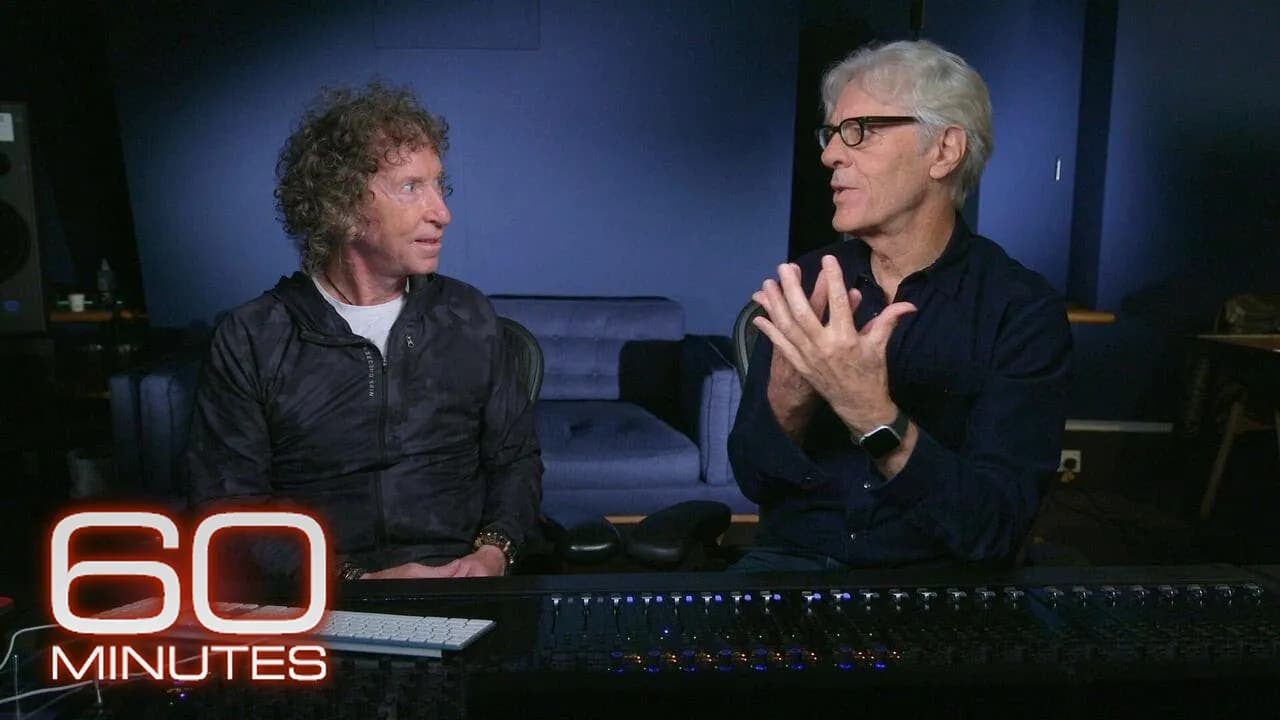
Stewart Copeland, Police drummer (with Sting, Andy Summers)—75M records. Teamed with naturalist Martin Stewart for album using hyenas, owls, howler monkeys from Stewart's 100,000 recordings (30,000 hours), some extinct/endangered.
At Abbey Road (Beatles studio): wrens, bears, frogs, kookaburra, wongo pigeon, screaming piha (natural fit), Arctic wolves (trombones make them Pavarotti).
Copeland: raw sounds dictate instruments. Wolves howled to musicians' headsets.
Copeland's path: post-Police, scored Rumble Fish (Francis Ford Coppola)—rhythm from barking dogs, billiard balls, pile drivers as found sound. More movies followed.
Stewart Copeland started writing classical music, including an opera with the Deutsch National Theater in Germany. Copeland found a new love in composing parts that are fun to play. In his Los Angeles studio filled with instruments, he noodles around on them while composing. The drummer, who had never followed sheet music, became a maestro.
You loved the drums right from the start. The power. The power.
What is it about the orchestra you love so much? It's the beauty.
Copeland's father raised him to be a jazz musician, while his mother quietly played Stravinsky, Ravel. This created a mix in his mind: Jimi Hendrix in one ear, Igor Stravinsky in the other, always interacting. These sounds appear in Wild Concerto.
Martin Stewart has eavesdropped on nature for over 60 years, starting at age 11 with a tape recorder in Bluebell Woods near his home in Middle England. His first recording was the Eurasian blackbird. What began as a boyhood lark became a career with a mission.
I always believe the reason I'm on this planet is to fight for the animals and the environment. And it's kind of my rent for being here. I feel empowered to kind of give that message.
The message: We're losing some of the most precious species on Earth. He monitors places over 20 years and notes significant changes. Audio is the barometer of the planet: the dipper indicates stream or river health, the frog marsh health, birds plant health.
At home in Florida, Stewart takes his microphone out daily like a doctor with a stethoscope, listening to ocean white noise, cicadas. He's worried about catastrophic wildlife decline, in contact with global wildlife populations.
Stewart has the last known recording of the golden Panamanian frog in digital form. The northern white rhino is extinct in the wild. Other recordings: howler monkey spoiling for a fight, crocodile that swallowed one of his microphones, hyenas.
Stewart Copeland's favorite animal is the hyena, with a rare recording from Skeleton Coast in Namibia. Hyenas have a wide vocabulary: loving sounds, aggressive sounds, laughing hyena.
How does the loving sound sound like? Like this.
Copeland and his wife adopted hyena love sounds in their relationship: a little kinky, but it works. Hyenas feature in Wild Concerto.
How did you come up with a composition that enhanced the sound of the hyenas? I have asked the Lord above that question many times. And what did he say? He said, I don't know, just see if you can make a living out of it. Just be you.
Working at Abbey Road was a revelation for Martin Stewart, used to being alone in wild spaces. He shared his life work with Copeland due to living with cancer.
It's hard to talk about that stuff, Bill. But I got ill. And my niece, Amanda, who works at the BBC, and she said, we have to preserve your archive. You need people. You need people to see what you have.
His illness is not the only crisis; he fears more extinctions as the world grows. Part of his audio archive is a mausoleum to past lives.
If we keep stealing from nature, then the inevitable is going to happen. We're going to to lose a lot more. What is the inevitable? Mass extinction.
In his lifetime, losses continue without slowing. To counter: show people the beauty to make them fall in love, tipping the balance. Hopes Wild Concerto draws in listeners to screaming pia or go-away bird.
Copeland among the converted:
Okay, what's the Walla Walla Walla Walla? Here we go. What's that? Walla Walla Walla. Which is the marbled frogmouth. Marbled frogmouth. I remember that.
Wild Concerto immortalizes animal songs as a human tribute, heartfelt elegy to Mother Nature's orchestra.
Take a tour through Stewart Copeland's studio at 60minutesovertime.com. Sting gave Copeland this little guitar.
The last minute of 60 Minutes sponsored by UnitedHealthcare: Coverage you can count on for your whole life ahead.
Chef Jose Andres, born in Spain, became American citizen in 2014. His relief organization, World Central Kitchen, served 600 million meals to people in need.
How does food fit into America's story? America is a food nation, founded as a land of longer tables, where everybody is welcome.
Food is more than traditions; it's the future. America's strength depends on feeding ourselves and the world, caring for growers, harvesters, cooks, ensuring no child goes hungry.
It's our responsibility as the richest nation in history to feed the hungry and care for the poor. It's our legacy. It's our destiny.
In worst moments, best of America shows up at the long table, reminding who we are: We, the people. Only then, food becomes hope.
I'm Anderson Cooper. We'll be back next week with another edition of 60 Minutes.
Keep 60 Minutes in your library
Save the videos and channels worth coming back to, and find them again in one place.