Is High Cholesterol Clogging your Arteries: NEW Evidence (ft. Dave Feldman & Nick Norwitz)
In a Nutshell
A study on lean mass hyperresponders (metabolically healthy low-carb dieters with LDL 180-591 mg/dL) found no association between high LDL/ApoB and plaque progression, with low overall progression and some regression confirmed by HeartFlow and Qangio analyses, but flawed unblinded Cleerly data prompted voluntary paper retraction after failed reanalysis requests. Critics like Thomas Dayspring dismiss it despite consistent findings across blinded datasets showing baseline plaque—not LDL—predicts progression. Laypeople on keto/carnivore diets with high LDL but good metabolic markers should prioritize full risk assessment over statin monotherapy, as lifestyle improvements outperform drugs and challenge LDL-centric dogma.
These notes were generated by AI and may contain inaccuracies.
A patient on a low-carb diet reported LDL close to 200 to their doctor, who called it lethal and blamed the diet. The patient is metabolically healthy, exercises, lost weight, and reversed metabolic disease. Hundreds of similar patients are frustrated with doctors testing only LDL and prescribing statins without considering metabolic markers.
Doctors often test only LDL, prescribe statins, and move on. Patients feel they know more than their doctors. 80% of disease, death, and disability stems from chronic disease, mostly related to artery health with age.
Guests Dave Feldman and Nick Norwitz published data challenged by lipidologists like Thomas Dayspring, who claim it proves nothing. As a physician with personal experience and hundreds of patients, the host questions if LDL is the major cause of artery issues and if statin prescriptions based solely on LDL tests are appropriate.
The paper has not been posted as retracted; authors requested withdrawal in December, expecting confirmation as retraction in mid-January due to the Cleerly analysis. This is discussed on social media.
Dave Feldman is an early retired tech professional, skilled scientist, and high-level poker player.
Nick Norwitz: Dartmouth undergrad, University of Oxford PhD, Harvard MD; family in medicine (parents MD PhDs, siblings and partners in medicine). Raised in academia, yet experienced issues with this project highlighting problems in science and medicine. Retraction not forced; they've tried correcting the record for 11 months since April 7 publication, expending significant effort. Science and medicine are messy; apologizes for confusion. Critics refuse to engage with bullet-point clarifications.
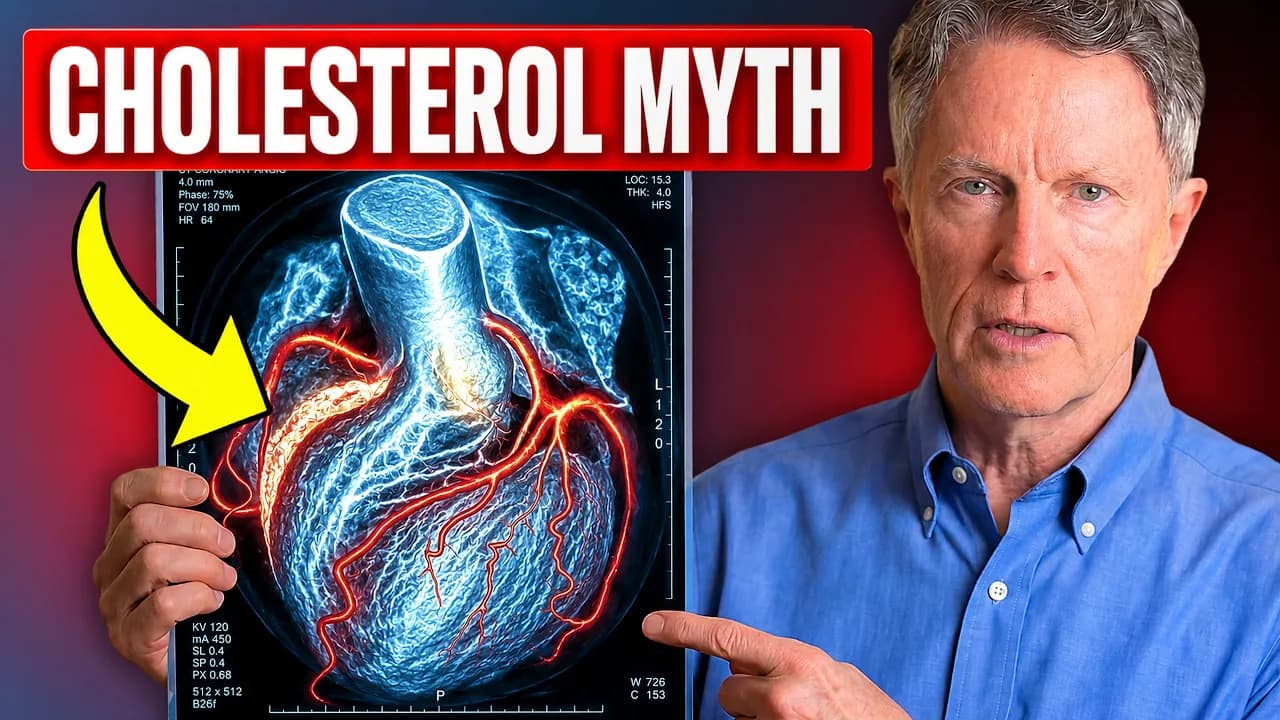
Assumption: LDL causes heart attack, stroke, and plaque. Doctors test LDL (180-591 mg/dL in study) and prescribe statins. Study on lean mass hyperresponders (metabolically healthy, low triglycerides, good HDL) showed no significant plaque risk or variation despite high LDL.
Initial analysis of 100 lean mass hyperresponders showed no more plaque than others; one-year follow-up showed minimal plaque development except in Cleerly dataset, which didn't correlate with other three datasets.
Scans are source of truth; four analyses conducted:
- Semi-quantitative analysis (used in Cholesterol Code movie, premiering next week at conference): cohort-wide low plaque, some rapid progressors and regressors, heterogeneous.
- Cleerly (AI quantitative analysis, second but valued for accuracy): agreed baseline plaque predicts progression and no LDL/ ApoB association with progression, but differed from semi-quantitative. Post-publication raw data revealed Cleerly anomalies: no regressors (except one post-procedure), zero CAC participants had most rapid progression (unlike external studies), patterns unmatched externally.
- HeartFlow and Qangio analyses: matched semi-quantitative (regressors, positive CAC more progression).
Citizen Science Foundation (Dave as president) repeatedly requested Cleerly quality control and fully blinded reanalysis; first scans unblinded. Cleerly refused. Led to withdrawal request, approved as retraction by JACC: Advances on January 12.
Cleerly analysis unblinded (inappropriate), refused redo despite offers to pay. Qangio (prespecified) and blinded HeartFlow agreed, showed low population-level plaque progression, disagreed with Cleerly. 8 participants resubmitted scans to Cleerly blindly via cardiologists: 4 had complete inversion from progression to regression. Probability of unblinded showing zero regressors then blinded n=8 showing 4 regressors is extremely low (analogy: blindfolded hurricane punt into solo cup).
Key finding replicated across all datasets: baseline plaque predicts progression; LDL and ApoB not associated.
Followed proper channels, gave journal and Cleerly time/opportunities to correct.
Original study: LDL/ ApoB not associated with plaque progression in this group (not driving). Pushback latched onto flawed Cleerly data; other analyses correct.
Cannot claim full certainty; pursued every avenue for Cleerly blinded analysis (still desired for community/participants). Diplomatic efforts failed despite mounting evidence.
PhD in metabolic sciences from Oxford (not Cambridge), Harvard MD.
Not critiquing individual clinicians (heroic work). Focus: lean mass hyperresponders (~12 papers) as outliers unlocking cardiovascular insights. Systematic suppression, dogmatic pushback, straw-manning instead of engagement. Pursuing truth: retracted paper despite names attached because new information demands it.
Nick expresses frustration with prominent cardiologists misrepresenting their work. He offers to fly one out for a scientific conference debate, covering hotel and flight, or hold a virtual discussion. Critics decline but continue giving opinions. Nick throws down the gauntlet for serious conversations based on facts, stating uninformed positions add kindling to their fire. He and colleagues Dave and Adrian will keep pushing for truth, undeterred by bullying or bureaucracy, as shown by that morning's event. Nick delivers his insomniac monologue and departs amid laughter.
Host appreciates Nick sharing, referencing Galileo's Revenge to highlight the heat they face. People turning dogma on its head centuries ago lost their heads literally, but now they're just under pressure.
Another speaker digests the discussion on publishing, paper, dataset. Asks Dave and Dr. B: What does this mean for laypeople on keto, carnivore, or low-carb diets who lost weight but have high LDL, struggling with cardiologists?
With the paper releasing amid detractors creating confusion, Dave responds cautiously, avoiding medical advice. His role is gathering and organizing data. The CLEARLY curveball this year was an important test; it couldn't be dismissed simply. They want proper analysis. Despite noise, other analyses including eight resubmitted scans from participants align, showing cohort-wide low plaque progression in this middle-aged population, with subsets of rapid progressors and regressors—expected in middle age, but not with sky-high LDL.
Two years ago, baseline match analysis with Miami Heart showed identical plaque, theirs trending slightly better. Theirs is the best scan set for metabolically healthy people with high average LDL levels (prospective longitudinal study, only one aware of). Participants average over half a decade on diet. Data tests assumption that high LDL dose-dependently correlates with plaque progression.
Dave stays scientific: more research needed, including third scans (5-6 years data) and companion study with full control group, funding closing next week at COI conference (third/final charity fundraising event). Detractors claim no data despite body of evidence; challenge that. Should have studied metabolically healthy high LDL/ ApoB long before keto, as poor metabolic health confounds lipid profiles (even modest LDL increase with sky-high ApoB).
Dr. B agrees doctors rushing LDL tests and statins are wrong. Prevention standards say cardiovascular risk evaluation isn't just LDL and statin—known for years. Diabetes, metabolic disease, lifestyle are major drivers. Debate: LDL vs. metabolic disease priority. Patients resisting statin-only approach are correct; doctors must assess lifestyle fully. Dave's evidence faces pushback from conflicted folks (not just study, but lipidologists, cardiologists prescribing statins for reimbursement).
Honeypot in networking: fake vulnerable server attracting hackers like flypaper. CLEARLY dataset acted similarly post-release (full data public). Detractors saw nearly all progression, wouldn't shift opinions despite accessible data checks (e.g., plausible low plaque levels, machine error). Dave raised points in June 1st PhD presentation. Now with CLEARLY questions, reveals critic stances. At COSI next week, Dave will discuss: science demands respectful challenges, self-challenge. Relies on good-faith detractors for feedback. Need all data/concepts on table for 40,000-foot view and intelligent conversation. Galileo example: data wasn't enough then.
Truth not driving behavior. Reframe for Roger L Larsson: Lean mass hyper-responders (LMHR) are small population (low-carbers, keto, carnivores), lifestyle improving health. Detractors misrepresent as "LDL doesn't matter."
Dr. B: More LMHR than thought; increasing low-carb/saturated fat popularity reveals them (worked human genetics lab, studies FH). Roger might be one untried. Logic: Doctors test LDL for vascular disease, statinate if high—repetitive medicine problem. If true, study participants (no other issues, LDL up to 591) should show vascular disease development.
Dave (engineer): Isolate variables. Heart disease studies cluster high LDL with confounders. Lowering LDL in metabolic syndrome (e.g., PCSK9 inhibitors) doesn't eliminate risk. Their data: substantially higher LDL isolated from risk cluster shows no independent causality association. Careful on causation vs. association (his LDL 250-270 past 10 years). Drugs like statins have inconsistent benefits, multi-effects (anti-inflammatory). Lifestyle anti-inflammatory changes underexplored—no RCTs comparing to drugs.
No big pharma funds lifestyle RCTs (loses money vs. drugs). Hard: tracking diet/exercise accurately long-term; prescribing takes time vs. quick statin script.
Dave qualifies: lifestyle doesn't always win vs. drugs, but he's seen huge improvements. Soapbox: More content on diet for cardiovascular health vs. lipids/supplements. Lipid hypothesis believers concede metabolic health's gigantic effect—wish equal emphasis.
Dr. B: Can't outprescribe lifestyle (evidence, Hopkins epidemiology faculty). Started channel for that; lifestyle under-credited. Multiple RCTs exist.
Multiple randomized clinical trials show lifestyle interventions are highly effective. A New England Journal study 10 years ago compared metformin to minimal lifestyle improvements; lifestyle was three times more powerful than the common diabetes drug. Similar findings exist for statins.
Despite criticizing quick statin use, the speaker uses statins as a physician trained in standard medicine, but not to treat LDL—for something else, in less than 10% of cases. Standard committees emphasize lifestyle as most important, though busy physicians often fail to translate this.
"Lifestyle is medicine."
Question on keto study: No correlation between LDLC and ApoB with arterial plaque, but what about small dense LDL?
No analysis done yet. Dave Feldman's opinion: Pattern A vs. Pattern B (Ronald Krauss's work) based on proportion, not absolute numbers. Example:
- Severe metabolic syndrome patient: LDL particle count 900 (low LDL-C), 700 small dense (~78% small dense).
- Lean mass hyperresponder: LDL particle count 3500 (high LDL-C), 1000 small dense (~29% small dense).
Proportion higher in unhealthy (pattern B); lower in healthy (pattern A). Suspects healthier outcomes despite absolute differences. Running correlations on all blood work.
Physician agrees: Proportion of small dense LDL matters more than absolute numbers clinically.
Thomas Dayspring introduced this concept, despite disagreeing with study criticism.
Daily practice reviews labs, medications, lifestyle with health coaches and Dr. Brewer. Offer 45-60 minute meetings. Contact: 859-721-1414 to become patient.
Backlash on Clearly: Used for insightful plaque quantification alongside HeartFlow. Video mention: 8-10 from original keto CTA study got independent Clearly analyses; results differed completely from published.
Question: Clearly's CT angiogram accuracy vs. politics/conflicts in reanalysis?
Concerns specific to dataset, not underlying Clearly technology. Steelman: Dataset issue explains discordance. 8 participants' re-scans consistent if repeated. Cannot opine further (lawyers). Frustrated; expected fully blinded analyses for longitudinal study. Wants Clearly to return to table.
Transparency on conflicts appreciated; doesn't assume they drive decisions. Speaker agrees: Studies should be blinded.
Still uses Clearly clinically: Limited choices (HeartFlow, Qangio, Clearly). Clearly whiffed research participation, but distinguishes from day-to-day medicine. Analysts likely not blinded to patient/date, assuming progression.
Analysis force-sorted assuming plaque always worsens (unblinded to chronological order). Hypothesis: Sorted so lower plaque first, higher second.
Bathroom scale analogy: Accurate for bowling balls (large changes), but for marbles (small plaque), below noise floor—expect bidirectional scatter. Low-plaque CTs hard to measure accurately (AI distinguishing noise).
HeartFlow analyses show bidirectional scatter at low plaque levels, as expected. Clearly showed unidirectional progression even at lowest levels—anomalous vs. all other studies.
Acknowledged upfront: Of 33 HeartFlow regressors, some may be noise below threshold.
Smallest detectable change: HeartFlow reliable at 50 mm³ and above (50/50 below). Confident changes in ~7-8 participants.
Powerful data: High LDL participants (e.g., Nick Norwitz TC 700, 6 with LDL ≥400) for 5.5 years show no rapid progression expected per Brown/Goldstein.
One-year follow-up (100 people, ~2 years since baseline).
- HeartFlow: 33/95 regressors (>33%).
- Qangio: 15/99 regressors.
- Clearly: 97/99 progression, 2 no change.
15-33% showed regression.
Matt Budoff (interacted with Dave): Some regressors true, not noise.
Opinion: Trust progression/regression only if visually verified or substantial/two datasets agree. Documentary interviews 4 visually verified by Budoff's team (shows changes).
Premiere next week at Las Vegas conference. Gatherings worldwide; check cholesterolcodemov.com to attend/host (local theaters). Later on major streaming platform.
Previous Vegas event: Featured preview (not premiere); delayed full release due to April 7th paper, Clearly events, retraction—added footage, story changed.
Hoped for story of science self-correcting to blinded analysis. New film differs at beginning/end.
Mark Twain quote: "The recent rumors of my death are somewhat overstated."
Cholesterol Code from blog (cholesterolcode.com).
Dave Feldman discusses the relevance of a corrigendum in the paper, noting politics around changes, letters to the editor, or retraction. From an engineering perspective, he views retractions or corrections as routine like software patches: if a build has issues, pull it and fix it. He would have corrected his blog immediately if Ford Brewer pointed out an error, crediting Brewer for posting a change log. This experience leads him to recommend posting all future papers as pre-prints upfront, even if it reduces chances of high-impact journal acceptance, to enable easier corrections. He advocates making science more like his blog for faster fixes.
As a practicing physician, past scientist, and Christian, the host notes he's not surprised by issues in publication machinery, as people managing it make pride-driven mistakes. The truth will emerge despite resistance.
Dave expresses thanks that events last year led to partnering with HeartFlow. They provided fully blinded analysis from the start, preferring operational blinding. HeartFlow responds promptly to emails and calls, is pro-science, and Dave wants them in future imaging studies.
The host notes they haven't covered key topics like Thomas Daypring's response to the study (a major leader on the other side; host is a fan but disagrees). Suggests rain check for later discussion. Mentions Jimmy wants Dr. Alo on; Dave emailed Dr. Alo to collaborate, but he refused to have Dr. Brewer on his space, seeming personal.
Dave would love Dr. Alo on, betting they have more in common than disagreements, like with Dr. Carvalho (plant-based, but they had a blast agreeing on much). Direct invitation: Dr. Alo, if watching at 1:33, you're welcome; Dave promises not to bite.
Host encourages keeping the faith and good work. Dave credits the audience and others for carrying the torch to right answers, values wide spectrum of opinions at the table for full facts. Host: "Decrease the heat, increase the light." Playful exchange about kudos. Signs off: see you next week.
Keep Thomas Fordham Brewer MD MPH in your library
Save the videos and channels worth coming back to, and find them again in one place.