This 7-Year Experiment Should Have Killed Me
In a Nutshell
Dr. Nick Norwitz lived with severe inflammatory bowel disease until a ketogenic diet put it into full remission, but it raised his LDL cholesterol to nearly 600 mg/dL for seven years. An advanced heart scan showed zero plaque despite these extreme levels, supporting the lipid energy model that links fat metabolism on low-carb diets to high cholesterol without increased cardiovascular risk. He argues medicine overemphasizes LDL in isolation and that context, metabolic health, and individual factors matter more than population averages or standard guidelines.
These notes were generated by AI and may contain inaccuracies.
Dr. Nick Norwitz is an MD PhD and metabolic health scientist who has been running a personal experiment for the last 7 years that should be killing him. He had a full ride to Oxford for his PhD with a position at Harvard Medical School set afterwards. Behind the scenes, he developed severe inflammatory bowel disease that caused malnutrition, weight dropping below 100 lb, and multiple hospitalizations. He experienced chronic fear, social isolation, and could not date due to unpredictable episodes of violent, painful, bloody diarrhea.
The condition worsened to the point where he wanted to die and was in and out of intensive care while starting his PhD alone in another country. At his lowest point, he tried an extreme low-carb ketogenic diet. His inflammatory bowel disease went fully into remission, confirmed not just by symptoms but by biomarkers and colonoscopy with biopsy showing no disease activity.
The ketogenic diet caused his cholesterol to rise dramatically. LDL cholesterol increased from around 90 to nearly 600, with total cholesterol topping 700. He has lived with these levels for 7 years despite medical school textbooks indicating his heart should be clogged with plaque and he should be dying. He accepted these risks because the same factor saving his life from inflammatory bowel disease is what elevates his cholesterol.
Dr. Norwitz scheduled an advanced heart scan to determine if high cholesterol was actually causing plaque buildup in his arteries. The scan would reveal whether his high cholesterol was killing him or if more context was needed. This challenges conventional cholesterol dogma.
On the morning of the scan at 5:04 AM with the appointment at 8:30 AM, he had been awake for two hours feeling anxious yet excited to obtain the data. He arrived late after struggling to find parking in 4° weather with heavy snowfall in Boston. He needed to use the bathroom beforehand because the contrast dye creates a sensation of needing to urinate.
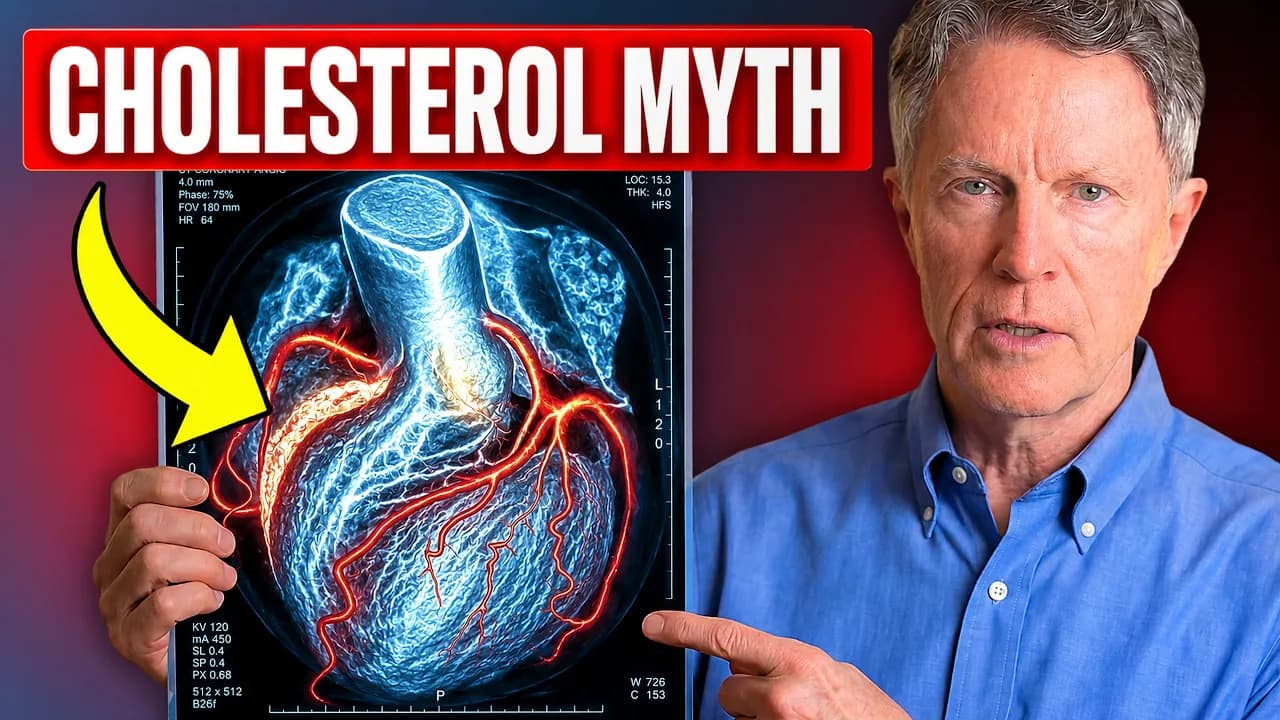
The advanced scan results showed zero plaque. This was not a standard coronary artery calcium scan but an advanced imaging study detecting both calcified and soft plaque, quantified by artificial intelligence down to the lowest millimeter cubed.
The procedure involved injection of contrast dye that circulates through the body including heart vessels. The patient sits in a tube while an x-ray scanner spins rapidly taking multiple angle images. The contrast absorbs x-rays strongly, causing contrast-filled arteries to appear bright. Hundreds of cross-sectional slices are reconstructed into a full 3D image of the heart. Expert readers and artificial intelligence trace each artery to quantify exact plaque amounts and identify any narrowings.
Dr. Norwitz's zero plaque result is notable because plaque is common even in people in their 30s. He spoke with the CEO of the AI company who confirmed this prevalence. Some influencers in their 30s discuss having 61.3 mm cubed of plaque despite long-term adherence to cholesterol-lowering diets. Medical textbooks suggest children with similarly high cholesterol levels should experience full heart attacks by around age 10.
A peer-reviewed case study on this case was published and made open access. The link is available below the video for readers to access.
In biology and medicine, context is everything. The same measurement can have completely different meanings depending on the individual situation. Height example: Shaquille O'Neal is 7'1" due to genetics leading to NBA success and wealth, while another person at 7'1" might have a brain tumor secreting growth hormone that would be fatal if untreated. The same applies to cholesterol, which can be elevated due to broken genetics such as familial hypercholesterolemia, poor metabolic health including obesity and insulin resistance, or excellent metabolic health with fat-fueled metabolism from a therapeutic low-carb diet.
The lipid energy model explains how a fat-fueled metabolism on a low-carb diet for medical reasons can drive high cholesterol levels. This is Dr. Norwitz's situation. Adding carbohydrates would shift metabolism toward burning more carbs and less fat, theoretically removing the driver and lowering cholesterol. He tested this hypothesis using Oreo cookies in a published study on PubMed. The cookies outperformed high-dose statin therapy in a crossover trial, producing a drop of 273 mg per deciliter or 71%.
Modern medicine often loses context for the sake of algorithms that allow systems to function. While individual doctors may genuinely want the best for patients, the system treats populations rather than individuals. Dr. Norwitz felt misunderstood when his extremely high cholesterol developed because it did not match anything taught in medical training.
His experience inspired curiosity that overcame fear and gave him courage to bet against decades of cardiology established by more experienced physicians and scientists. Science allows data to judge ideas rather than credentials. After maintaining cholesterol over 700 for 7 years, his hypothesis was confirmed by the scan results showing no plaque.
Cholesterol receives excessive attention due to historical factors, available treatment tools, and business models rather than biological importance alone. This is not a conspiracy theory. LDL is not unimportant, but monomaniacal focus on single variables while ignoring larger context can harm patients.
Some may worry that challenging the idea that high LDL is always dangerous could lead people to misinterpret the message and put themselves at risk. Dr. Norwitz understands this concern but believes it disrespects patient intelligence. The goal is to respect the whole person and full context rather than treating individuals as population averages.
Patients have both the right and responsibility to advocate for themselves and ask uncomfortable questions. Almost none of us are population averages. Dr. Norwitz directed viewers to a movie about people like him who medicine often misunderstands and mistreats. The film presents a different view of cholesterol and is available on Amazon.
Dr. Norwitz stepped away from recording to speak vulnerably about walking away from traditional medicine. He spent his life training to become a doctor and scientist in a household with two MD-PhD parents, one a Marshall Scholar and one a Rhodes Scholar. He graduated valedictorian from an Ivy League college and completed medical school and PhD training. Despite this, he chose not to apply for medical residency and stepped off the traditional path entirely.
His personal experience showed that the medical system, despite its strengths, is not built to solve root cause problems for many people or ask the questions that could have saved his life. Medicine needs to evolve. He believes people willing to think differently and play different roles, including as communicators, are needed. He aims to provide tools and perspective he wishes he had, emphasizing that Ivy League degrees are not required to understand one's body.
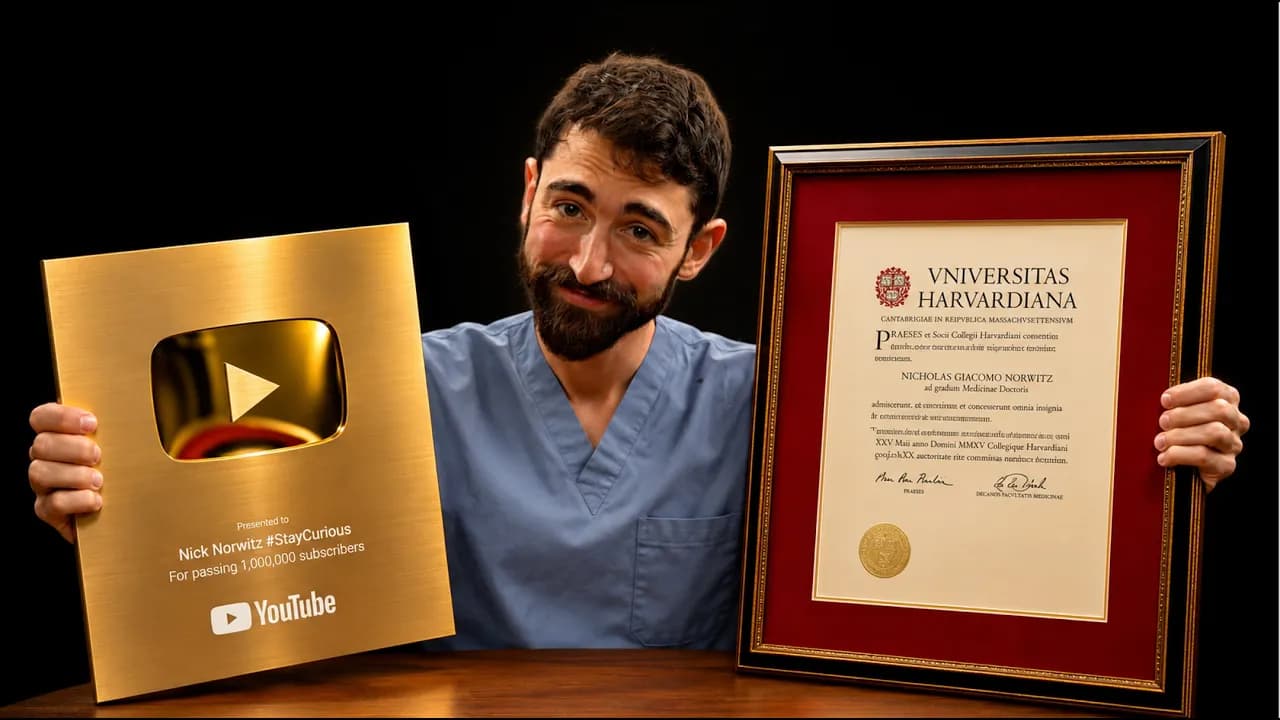
Curiosity is a human superpower built into DNA. Dr. Norwitz's goal is to help others uncover this spirit of curiosity, which may be the most powerful medicine. His experiment is not killing him, so he will continue sharing. He thanked viewers for reaching one million subscribers and announced plans to build a proper studio with the resources provided by their support.
Keep Nick Norwitz in your library
Save the videos and channels worth coming back to, and find them again in one place.