John Malkovich: The 60 Minutes Interview
In a Nutshell
John Malkovich, the 72-year-old actor known for his distinctive persona and nuanced performances across villains and complex characters, reflects on his 50-year career spanning stage triumphs like True West and Broadway's Death of a Salesman, to iconic film roles in Dangerous Liaisons, In the Line of Fire, and Con Air. He emphasizes his democratic approach to material—enjoying blockbusters as much as arthouse films—and his resilience after losing his savings to Bernie Madoff's Ponzi scheme, which he recovered from with Midwestern pragmatism. Malkovich also discusses his latest role in Wild Horse 9, the surreal Being John Malkovich, and his refusal to analyze his own method, asserting there's no teachable "John Malkovich method"—you're simply being him.
These notes were generated by AI and may contain inaccuracies.
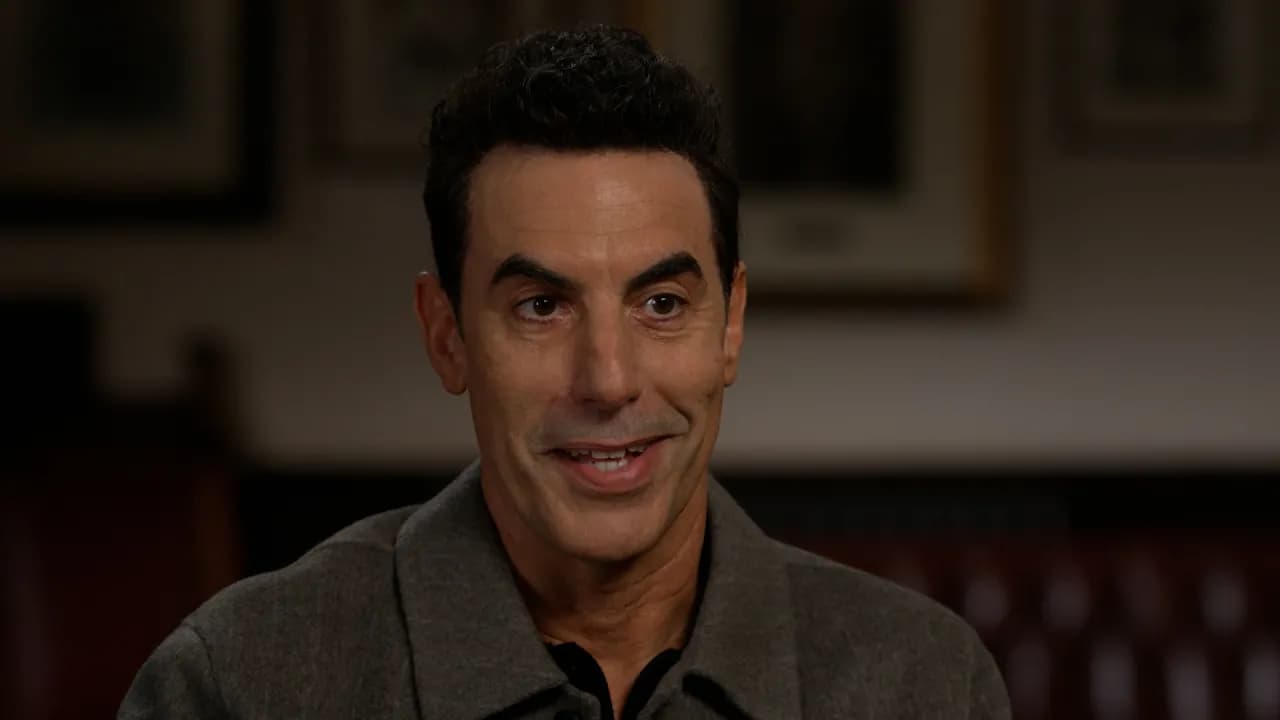
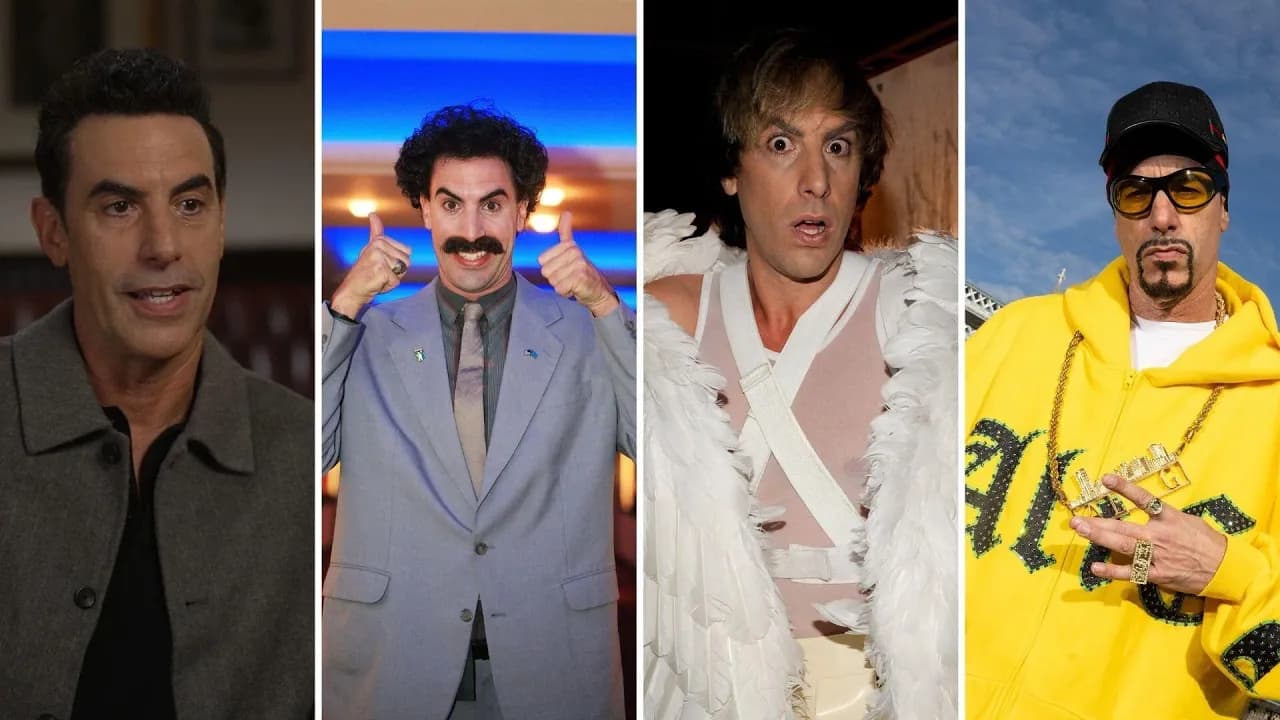
John Malkovich is so distinctive he's almost his own genre, with a unique persona conspicuous in every character he's played. The soft-spoken 72-year-old grandfather has nothing in common with his gallery of villains including the murderous Cyrus the Virus in Con Air, the duplicitous seducer Valmont in Dangerous Liaisons, and the aspiring assassin he played with creepy precision in In the Line of Fire. For over five decades, Malkovich's performances have been as nuanced as they are mysterious, and even he doesn't know how he does it.
Malkovich spoke at the legendary and newly restored Cherry Lane Theater in Greenwich Village, the first place he performed in New York City in 1982. He was 28 and had just come from Chicago and the famed Steppenwolf Theater Company to star in Sam Shepard's ferocious two-act play True West with his friend Gary Sinise. Sometimes on Saturday nights just to wind Gary up on one level and amuse him on the other, Malkovich would get a six-pack and chug them one at a time - one, two, three, four, five, six - right down the hatch.
Malkovich played Lee, a charismatic, low-life bully in Sam Shepard's dark comedy about sibling rivalry. His blistering performance became the talk of the town, and everyone who was anyone in New York came to check him out at the Cherry Lane. Every night there would be Anthony Hopkins, Mick Jagger, David Bowie, or Jackie Onassis. When Malkovich looked out and saw Jackie Onassis, there wasn't much he could say to that.
Malkovich's triumph on stage was a catalyst for his entry into movies, first as an American photojournalist covering wartime Cambodia in The Killing Fields, and then starring alongside Sally Field in Places in the Heart. His 1984 performance as a blind World War I veteran who became a family's unlikely protector earned Malkovich his first Oscar nomination.
Early in his career, Malkovich was the opposite of method acting, going into roles instantaneously without a lot of what other people would call preparation. He doesn't sit and suffer about having to be in some particular way - he doesn't have to be thinking when the play starts, but doing.
Malkovich returned to the stage in Death of a Salesman, sharing the play bill with Dustin Hoffman on Broadway in 1984. When you do a play, it's the whole play - not just some little bit of it. It's the whole thing ahead of you, then with you, then behind you every night, and it has momentum. There's no momentum in movies.
Malkovich says acting in a movie is like being in someone else's dream - you're shooting scenes out of sequence and rarely have any say in the final product. This is one reason he's returned to theater over and over again throughout his 50-year career, acting in and directing dozens of plays all over the world, notably starring in the original 1987 production of Lanford Wilson's Burn This.
After seeing Malkovich's performance in Burn This, director Stephen Frears came backstage and asked why Malkovich was never good in movies - or he may have said cinema. Malkovich got the point that it has not much to do with him but a lot to do with how movies are made. They discussed for the purposes of Dangerous Liaisons how that could apply to how they were going to set about making it.
Malkovich's Lothario, Valmont, developed in 1988 in the iconic adaptation of the 18th century novel. It was one of just a handful of truly great scripts he's read in his career. What appealed to him about doing the film was the great characters and a fantastic adaptation by Christopher Hampton, whose writing Malkovich did and still respects a great deal - there was no downside for him.
Malkovich chalks up other movies to interesting ideas with great parts, like the aspiring assassin he portrayed in Wolfgang Petersen's In the Line of Fire, where his performance earned him his second Oscar nomination.
Malkovich played a different kind of killer in Con Air, a film that brought him to the masses. His first impression of the Con Air script was "500 million" - he knew it was Jerry Bruckheimer, knew Nicolas Cage was in it, looked at the title page of names named after Victorian era poets, and just thought that's like 500 convicts on an airplane - 500 million. Con Air grossed more than $200 million at the box office.
Malkovich is seen as an intellectual and is in fact a man who has designed fashion, produced pinot noir in France, and travels the world collaborating with classical musicians. He's not a snob. He's made well over 100 movies and claims to enjoy acting in blockbusters as much as arthouse films - each brings their own gifts, whether it's Faulkner or Con Air.
Malkovich's democratic approach to material and clear-eyed view of life proved instrumental when he lost his entire savings to Bernie Madoff's Ponzi scheme in 2008. He found out after directing a play in Mexico City, and when he got home he saw a photograph of Bernie Madoff in handcuffs. He went in and said to his wife he was going around the corner to buy a pack of cigarettes, then said they had a little problem - Bernie Madoff just got arrested. That was pretty much everything he'd ever made.
Even more remarkable than Malkovich's loss was his expedited recovery. He realized he should shut up - whatever you lost, most people who were ever born will never have a tenth of that no matter what they do, so get on with your life.
John Malkovich grew up in the Midwest. His mother's family owned the daily newspaper in Benton, Illinois, and his father was a conservationist. For Malkovich, the idea of becoming a movie star or doing anything to draw attention to himself was inconceivable. One of five children, Malkovich says his parents never found him particularly impressive - it's just not a family where you could ever be praised for anything. If you built a rocket in the yard that took you to space and back, people would kind of say "We wondered where you were," but it wouldn't go much beyond that.
That fanatical modesty was one of the reasons Malkovich initially resisted making the unforgettable comedy Being John Malkovich with director Spike Jonze, a surreal journey through an imaginary portal in the actor's brain. Malkovich loves Spike and thought it was hilarious - it's an amazing movie with nothing like that, more originally voiced and expressed than anything he can think of. It was really a cinematic universe, as they use the term for Marvel.
How much John Malkovich was in Being John Malkovich? None. Spike Jonze once gave Malkovich a note during rehearsal: "That's okay, but John Malkovich wouldn't do it that way" - Malkovich thought that was a fantastic note. Before making the movie in 1998, Malkovich tried to convince screenwriter Charlie Kaufman to use a different actor, thinking Being Tom Cruise might work well, but Kaufman refused.
There is no other actor with a more distinctive persona than Malkovich, and there's that unmistakable way of speaking parodied by Bill Hader on Saturday Night Live. Malkovich's favorite is the Coen Brothers' Burn After Reading, in which he played the prickly recently-fired CIA officer Osborne Cox.
Malkovich is back in the CIA in Martin McDonagh's latest film Wild Horse 9, a black comedy set on Chile's Easter Island shortly before the engineered coup d'état in 1973. Malkovich plays Chris, a spy haunted by the ghosts of assassinations and unsavory operations past. How did he make someone who'd done so much bad stuff so irresistible? There's been a loss of making characters that an audience simply cares about, whether they're salvageable or redeemable people who've done terrible things or just terrible people.
Martin McDonagh's movies are about such dark subject matter, but the dialogue is hilarious, bordering on absurd. When you have great writing, you can go from something remarkably sad in a millisecond to something very funny. There's a line where Malkovich's character says "Do you think there are any Nazis in heaven?" The answer is maybe if one lay down on a grenade to save his mother. To Malkovich, that was the crux of the movie - what damns us, what redeems us. Chris has great worries where he will stand in that decision, what will be his destination. He's very Catholic and believes in that.
Wild Horse 9 has already won accolades at film festivals in Venice, Toronto, and London, and there's talk of Oscars. If Malkovich wins, it would be his first. Does Malkovich even know what he does? He has an awareness, but can't tell where it comes from because he never thinks about it. You wouldn't be able to teach the John Malkovich method - there is no such thing, and he certainly wouldn't recommend studying it. You're just being John Malkovich.
Keep 60 Minutes in your library
Save the videos and channels worth coming back to, and find them again in one place.