Sharks | 60 Minutes Full Episodes
In a Nutshell
Great white sharks vanished from Cape Town's prime hunting grounds around 2010 due to predation by orcas (notably Port and Starboard), who surgically remove their calorie-rich livers, displacing sharks via fear despite stable overall populations; human factors like overfishing prey and lethal shark nets exacerbate the decline, sparking debate on conservation priorities. In contrast, protected great whites are rebounding in Cape Cod and Nova Scotia, tracked via tags revealing migration patterns, seal-driven booms, and rare human attacks, while diver Mike Rutzen demonstrates their curiosity and intelligence through cage-free swims, urging myth-busting to combat finning and promote ocean balance. Key takeaway: targeted protections work, but novel predators and human impacts threaten apex species, mirroring whale recovery successes.
These notes were generated by AI and may contain inaccuracies.
Coastal waters around Cape Town, South Africa, teemed with great white sharks. About 10 years ago, carcasses of great whites began washing up on beaches with livers missing. Now, great whites are hard to find. Scientists and conservationists feud over the culprit but agree great whites that cruised these waters are gone.
Ocean off Cape Town was the best place in the world to see great whites. Plenty of smaller sharks to hunt and tens of thousands of seals on Seal Island nearby. Early mornings offered sights of great whites flying out of water.
That was unbelievable.
Chris Fallows, photographer and naturalist, saw 250-300 different great white sharks a year until over a decade ago. His images are among the most breathtaking of the natural world.
It's a sight you never forget. I still kind of get that tingly feeling to see the most spectacular shark on Earth now flying out the water. It was truly incredible to see.
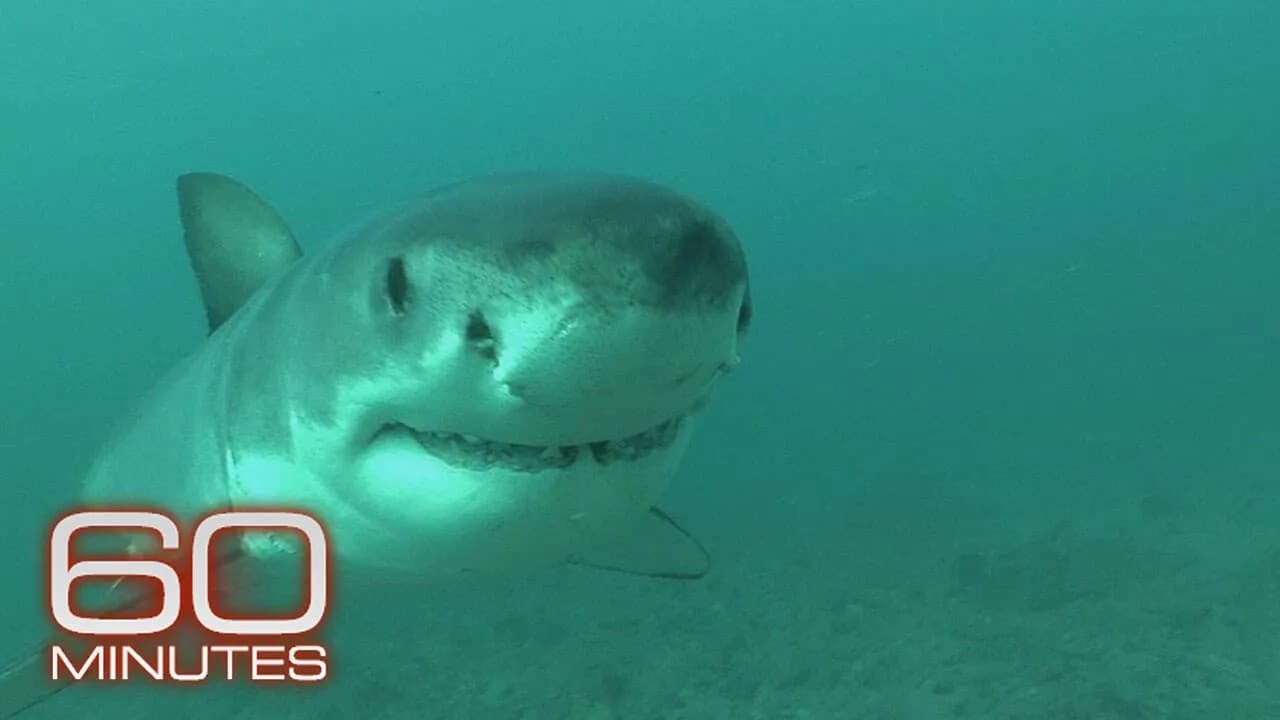
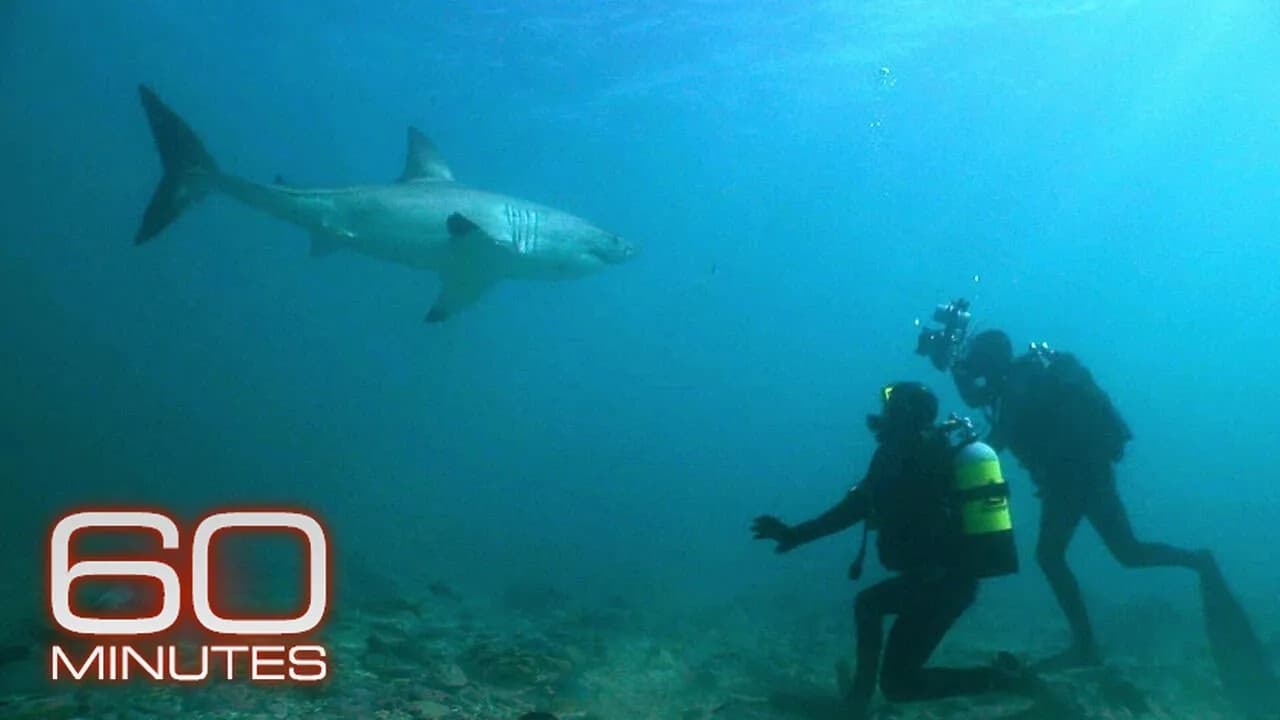
In 2010, reporters saw great whites and tens of thousands of visitors came yearly for cage dives. They dove without cage in chummed water. A 15-foot great white swam straight toward them.
That's a big one. This is amazing. It's coming right toward us.
Sharks are curious creatures.
Sharks circled constantly. Extraordinary to be close to massive predator.
How's it going? That's just unbelievable.
Wow. And I'm so happy I'm back up.
A few years after that dive, sightings dwindled, tourists stopped coming. Today, you would see nothing.
Why is that?
Because their numbers have simply plummeted. Tragically, we have all but lost the great white shark.
Disappearance mystified scientists. Alison Kock, marine biologist with South African National Parks, searched for clues. In 2015, divers sent photos of smaller shark carcasses on sea floor with mysterious incisions.
It looked so surgical from the photographs that I first assumed it must have been done by somebody with a knife, a fisherman or something.
She retrieved carcasses and found tooth marks on pectoral fins, suggesting non-human culprits. They dove for evidence and encountered orcas.
We just retrieved one of the carcasses and my research partner says orca and here comes two orcas under the boat in our study area. It was light bulb. They were feeding right in that area where we just found the carcass. Now what we have is that orcas are a real possibility for being the culprit for these carcasses.
Two years later, great whites washed ashore with livers missing. Shark liver is most calorie-dense organ, nearly a third of shark's body.
They're not trying to eat the entire shark. They're just targeting the liver.
Necropsies confirmed orcas. Orcas in these waters for years but no one saw them kill great white here, though known off California and Australia. Novel for South Africa where great whites seen as apex predators.
I feel like a detective, but for a long time, we didn't have all of the pieces of the puzzle.
David Hurwitz, whale watching tour operator, first saw two distinctive male orcas hunting sharks. Named them Port and Starboard for collapsed dorsal fins, one to left (Port), one to right (Starboard).
What was distinctive about them is that both of their dorsal fins were collapsed, which is very unusual. like collapsed over like that. The one had collapsed to the left, the other one to the right. And being a nautical man, immediately it came to my mind. Let's call them Port Starboard. And that caught on from there. And they've become world famous or infamous.
Port and Starboard hunt sharks for livers as a pair, unlike most orcas in pods. Hunting alone in new ways.
Are these like serial killers?
They are definitely not serial. They're eating the livers of it's like Hannibal Lecter with eating liver with fava beans.
I am so infatuated by Port Starboard. You'll never get me to say a bad word against them.
Scientists believe Port and Starboard teaching other orcas. In 2022, drone footage showed five orcas stunning and killing great white.
Here's an orca with this big white shark upside down biting into the area where the liver is.
National Geographic documentary: orca strikes great white like torpedo, stuns it, takes in mouth.
They're learning. They're learning all the time. I think it's hard for people to kind of understand how smart these animals are.
Alison Kock says orcas chased great whites further along coast; overall population in South African waters stable.
The presence of just two orcas that would drive away hundreds of them. The predator eats the prey and that has an impact on some of the numbers. But one of the biggest things with predation is the fear of predation or the risk of predation and what we call the landscape of fear.
But gazelle don't disappear because a lion is killing some gazelle.
They've evolved alongside of their predator. White sharks have not. White sharks have been the top dog. This was a novel predator for them. They were not used to being predated on by another species.
Enrico Gennari, Italian marine biologist researching great whites in South Africa for 20 years, disagrees population stable.
Orcas have been killing white shark for thousands of years. The question is not the orcas are pushing white shark away. Same thing happened in California. Same thing happened in Australia. The question here in Gansbaai why they are not coming back. In California, orcas have killed great white sharks, but then the great whites came back. Up to six, nine months, the white shark left, but they always come back.
Chris Fallows and Gennari say numbers plummeted before Port and Starboard. Never saw Port and Starboard at Seal Island when great whites disappeared.
You don't buy this argument that it's these two orcas that have made all the great whites here disappear.
I don't buy it one bit. How can you blame somebody that wasn't even on the crime scene?
They blame humans: commercial fishing boats with long lines and thousands of hooks catch smaller sharks, great white prey, exported to Australia for fish and chips.
Shark long lining is undoubtedly robbing the great white sharks of food. It's the primary prey source for the great whites when they're not feeding on seals. When you remove the prey, you have a significant impact on the predator.
Bigger impact: shark nets and baited hooks on buoys since 1950s to protect swimmers, kill over 20 great whites yearly plus other marine life.
The devices are designed to kill and lower the population number. The concept is one less shark, one less chance of an encounter with a human.
Gennari recommends alternatives: underwater magnetic fields interfering with shark hunting sense, smaller mesh nets as barriers without entangling life.
The problem that in South Africa we only using little method and that is outdated and unsustainable.
If you believe that it's these two orcas which have driven away the great white population, there's not much humans can do about that. What your argument is there's actually a lot humans can do with longline fishing and getting rid of these shark nets. That is something humans can impact.
Absolutely. Let's stop bickering about something we can't control. and let's start focusing on the things that we can control. And if we don't start addressing those factors that we can control, I don't believe there's any hope.
South Africa first country in 1991 to protect great white sharks. Gennari fears first to lose them.
If we lose the white shark in South Africa, we lose a battle for all nature. If we can't protect even the most charismatic, most protected species on paper in South Africa, what chance the little guys, the other sharks or the other animals have against unsustainable use? Nothing.
There's a lot of people watching who may not have a lot of sympathy with great white sharks. Why should somebody care?
I think somebody should care in the same way as we never used to have sympathy with whales. You know, we are wiping these animals out to the point of extinction. Great whites are no different. So even if we don't like the look of the animal, they're incredibly important for us going forward.
With no great whites, Fallows photographs humpback whales, which made comeback since 1980s moratorium on commercial whaling.
Unbelievable.
Does it have anything to do with the great whites leaving?
No. What it's got 100% to do with is enlightened governments, passionate individuals showcasing the whales for what they were. Incredibly sentient creatures having an important role to play in our ocean. Therefore, they became protected and then now their numbers are being allowed to expand naturally.
To you, that's an example that conservation efforts can work.
Undoubtedly, it can work. I believe, you know, if we take away pressures on animals, if there are enough of them, they will still rebound. It's called balance. A balanced ocean is a healthy ocean. A healthy ocean is a healthy environment for us.
Jaws book and movie introduced great whites 40+ years ago, filmed off Cape Cod, Massachusetts. In mid-1970s, few whites there due to decline; movie worsened it with fishermen hunting them. Protected federally in 1997, now comeback delights conservationists, frightens swimmers/surfers. This summer, shark sightings and beach closings common as lobster rolls.
With Dr. Greg Skomal, chief shark scientist for Massachusetts Department of Marine Fisheries, tracked 11 ft white shark feet off Truro beach on Cape Cod mid-September Tuesday.
And if you're standing there, you don't know that shark. No idea. She's like 10 ft offshore.
Whites close to shore for gray seals, thousands now on Cape Cod.
This is the restaurant right here. These sharks have found the restaurant and they're waiting for the doors to open. You know, and when those seals begin to leave the beach, you know, it's dinner time.
Skomal's Atlantic White Shark Conservancy team attaches electronic tracking tags to nearly 200 sharks. Pilot Wayne Davis spots from plane, guides boat captain John King.
Yeah, use a little gas, John. He's right on the shore. It's about as good as it's going to get.
Greg Skomal uses long pole with dart and tag from bow pulpit.
Wait, right there. Done. You got him. Tag. That was it. There he goes. Oh. Oh my god. Beautiful. Beautiful placement, Greg. Yeah. Thank you, John. Nice work. See, you can see where it was. Yeah. You could see it right at the base of the dorsal. See it?
Now, we're going to learn about that fish for the next 9 10 years.
Tags emit pings picked up by acoustic receivers on over 100 buoys along Massachusetts coast and others. Tracks movements when sharks leave.
Tags help Skomal and Megan Winton estimate population; Cape Cod now one of world's white shark hotspots. Download data from buoys to tablet showing detections.
Lots of white shark detections over the
Sharks are loners, return to same hunting ground yearly. Shark hunted Skomal last year, came up jaws open under pulpit.
OH, holy crap. Came right up and opened his mouth right at my feet.
Probability of bite incredibly low, but fear primal.
You know, all I can tell them is that the probability of them being bitten is incredibly low. But there's not much more I can say because that fear is primal. I think that fear is primal. I think it's innate. I think it's in them. It's in us. It's in all of us.
5 days later, 600 miles northeast off Hay Island, Nova Scotia, on 125 ft research ship OCEARCH tagging since 2012 from Florida to Canada. Chris Fischer invited to first day 2019 expedition.
And we come up here. We've been here 24 hours. We've seen two or three sharks and no one ever even knew to come look here before.
Small boat hooks sharks with long lines, bait, floats. OCEARCH has platform lowered into 49° water. Fishing master Brett McBride guides 10 ft male onto cradle.
Whoa. Whoa. Look at that.
Platform raised, shark beached, exhausted. McBride inserts hose for seawater over gills.
Keeping the clean sea water from flowing over its gills. I'm making sure it's getting good oxygen.
15-minute limit. Dr. Robert Hueter lets touch shark.
So, Bill, just go ahead. Go ahead and take your time because feel how beautiful that is. Oh my god, how smooth. Then go this way. Rub your hand the other way and you feel it's kind of bumpy.
Team draws blood/tissue, removes parasites, measures: 371 cm or 12 feet 2 in. Biggest Atlantic: 16 ft female, 3500 lb. Acoustic tag floats in body cavity. Roll onto belly.
Let's roll the shark. Everybody step back. there we are. We're at 11 minutes.
Chris Fischer drills dorsal fin for SPOT tag, tracks real-time up to 5 years via satellite when fin surfaces. Nearly 50 on Atlantic whites, tracks on website. Reveals mating, birthing, foraging, gestating areas.
The spot tag allows us to track this animal in real time for up to 5 years. The spot tag will send a signal to a satellite each time this shark's dorsal fin comes above the surface of the water.
And that's how you learn not only where they are, but what they're doing where they are, which is what you need to know to manage, right?
Some criticize invasive, but 17 projects benefit. No whites kept in captivity; never seen mating or birthing. Confirmed Long Island nursery for pups.
Did you get him? Yeah, got him.
Cape Cod tags show adults go to Florida, Gulf of Mexico overwinter, some to open Atlantic diving to 3000 ft daily, reason unknown.
So, what's the most interesting thing you have learned about them? We now know based on the tagging work we've done the last 10 years is that when they leave Cape Cod, they go down to Florida and they spend the time in the Gulf of Mexico and they overwinter in these southern climates. But then some of these sharks move out into the open Atlantic Ocean. And when they're out in the middle of the Atlantic, they dive down to depths as great as 3,000 ft every day. And there's not a scientist on Earth that can tell you why they do that.
Whites live over 70 years, start hunting seals late teens. Footage: seal leaps, shark pursues, catches, water explodes red, shark with half seal.
HAVE YOU EVER SEEN THAT BEFORE?
Seals protected since 1972, 25,000 near Cape Cod. More seals, more sharks. Worries swimmers/surfers. Photo from Cape week ago. First fatal attack since 1936: swimmer Arthur Medici last September.
Triggers fear: warning signs, stop bleed kits, Sharktivity app, news reports, packed meetings.
And no sharks or seals are worth a young man's life. They're just not.
You're the scientist, but you also live here. And you know, people are afraid.
We can't bury our heads in the sand when it comes to shark attacks. And so that's in my face every day now. And then it always falls back on, you know, the question of, well, what do you tell your kids to do?
You know, I tell my kids, don't go out past waist deep.
I mean, we basically got to undo everything Jaws did. I mean, we got half the people on the eastern seaboard terrified about something that almost never happens.
I saw the teeth on this character here. People who are swimming nearby should not be afraid of that.
No, they're clever. Like even though we dress up like their food and try to fool them, they very rarely get fooled.
What do you mean dress up like their food?
You ever seen what someone in a wet suit looks like compared to a seal?
15 minutes up, named Sydney, lowered back.
That was amazing.
And what you guys have done to this does not harm or hurt the shark at all.
No, because we're monitoring the stress of the animal throughout.
Sydney perked up, noticed photographer, released with tail steer.
There he goes. Do your thing. Good luck, old boy. Sydney. Sydney. Yeah.
No animal feared more, understood less than great white. Hard to get near. Mike Rutzen, South Africa shark man, spent life closest to great whites. Discovered they are smart, curious, not out to kill humans. Risks life to prove.
Rutzen looks for calm, curious great white player to swim with.
That's a player. What's a player?
Well, player is basically the shark that's so relaxed, has a nice personality. woke up on the right side of the reef and on the right side of the reef. Yeah. Um and the animals willing to interact with us. It's so curious.
Great whites have personalities, not man-eaters.
Now, how how can you tell that's a player? Look how she's moving. She's checking everything out. Checking how slowly she's going to do this. See how she looks at everything. Wow. Yeah. Yeah. It's moving very slowly around the boat. Very slowly check. He's going to come and watch the motor now. That's what we want.
So, this is a curious shark. You can work with this shark.
This is a player.
Shark and others attracted by chum (bait and fish blood). Great whites smell single drop of blood from 100 yards away.
Rudson and cameraman Moure Hardenberg suit up to plunge into bloody water with great white sharks. There's no universities to teach great white animal social dynamics and social behavior; the only way to find out is by getting into the water. Immediately, a curious great white comes straight at Rudson. His only protection is his camera, as great whites don't like the feel of metal. Good visibility is crucial; sharks constantly circle, so Rudson turns around to prevent sneak attacks.
They are extremely inquisitive creatures. I like to say they're like little kids in a toy store and you just tell them don't touch. Observe. They'll touch.
When curious, they sometimes bite. The animals are not trying to actively kill you; they're trying to outwit you. There's a mental battle or mental game between you and the shark.
I would like to think that it's the ultimate trust between the animal and myself.
Rutson is not a scientist. Born on a farm, he knew nothing about sharks until 20 years ago when he began working as a fisherman along the rugged coast near Cape Town. These waters have the world's highest concentration of great whites, a perfect hot spot as an ideal feeding ground. It's near the southern tip of Africa where the Atlantic and Indian Oceans meet. The water is rich in nutrients, attracting whales, huge shoals of fish, and 60,000 seals. Seals are a prime target for great whites due to their blubber layer, which is extremely energy rich.
Early one morning, Rutson takes the team to Shark Alley, where seals pass through searching for food. Great whites leap straight out of the water, stunning seals before devouring them. Seals are mammals—quick, agile, and smart—but no match for the power, speed, and intelligence of great whites.
They have to outsmart the seal. If they weren't as smart or smarter than the seal, they wouldn't have eaten it.
Watching great whites hunt is big business in South Africa. Tens of thousands of tourists flock yearly to Gansbaai for close encounters from underwater cages. Rutson started his dive operation 15 years ago as a business, but it became a mission to learn about great whites and dispel myths.
I think that humans like to fear these animals and not understand these animals.
Each year, as many as 70 million sharks are slaughtered for shark fin soup, a delicacy in Asia. Undercover footage shows fins cut off while sharks are alive, bodies thrown back into the sea.
If people can just see these animals for what they really are, I'll be happy because then they have a chance of survival.
By diving without a cage, Rutson shows great whites are more complex than thought. After dives, he reviews footage to understand shark interactions. Making the body smaller signals lesser threat, allowing closer approach; bigger body is more threatening. Great whites are extremely selective about what they eat; Rudson insists he's not on the menu if calm and shows no fear.
The most important thing is don't chase the animals. Don't run away from the animals. Stand your ground and keep eye contact with the animal.
Make eye contact—it's not like a primate; looking at it removes the element of surprise. Great white eyes are the color of the blue sea, beautiful.
Do you like blue-eyed blondes? There's a blue eye that you can't match.
Great whites have been around for millions of years but never seen mating or giving birth. Their senses are highly developed, but for touch, they rely on their mouths, which can result in deadly bites.
Touch is a very important sense for a living animal. So, why shouldn't they use that sense?
Rutson believes most attacks on humans result from curiosity, not aggression. Worldwide, only about five deadly shark attacks each year, tiny compared to millions swimming in the ocean. Many have had positive encounters without knowing: shark looks, sees not food, curious, then leaves.
It would tell people that these animals are not out to get us. They're not in our oceans to kill humans.
Rutson doesn't take tourists on no-cage dives but offers the reporter one. On a calm morning at Shark Alley, they anchor and chum. Four or five great whites soon circle. Reference to Jaws: "I think we're going to need a bigger boat." Paramdic on board, ambulance on shore. After 40 minutes chumming, dive begins. Key: remain calm, project confidence.
If I get eaten, just keep rolling. The only thing more stupid than being eaten would be to be eaten and not have it videotaped.
Sharks are curious, not too aggressive. Rudson goes first, then reporter. A 15-foot great white swims straight toward them. Size and power awesome; they circle constantly to inspect, don't attack. Up close: razor-sharp teeth, body strength. Terrifying but thrilling. Seeing them in their environment—not grabbing bait or lunging at seals—reveals complexity.
Current strengthens, visibility deteriorates; they surface. Exhilarating and unlike anything else.
Rutson hitches rides on dorsal fins. Interactions stunning, but not reckless.
The more we work with them, the more careful we are because of the knowledge. It's not that we're getting complacent... You're more careful with them now than when you started... We are learning small things of what makes them tick. So, we are so careful not to do the wrong thing.
Rutson expects to die young from smoking too much, drinking too much, driving fast—not from a great white.
Keep 60 Minutes in your library
Save the videos and channels worth coming back to, and find them again in one place.