Peptides: What I’m Not Seeing in My Patients | Dr. Mayoni
In a Nutshell
Dr. Mayoni sees little clinical evidence for peptides beyond GLP-1 agonists, with most other peptides producing placebo-level effects despite heavy online marketing. The biggest risks stem from unregulated gray-market sources sold online or in gyms, where contamination and improper handling have caused documented hospitalizations. She prioritizes proven lifestyle interventions—sleep, movement, relationships—over experimental compounds with limited human data and emphasizes slow, sustainable GLP-1 dosing for women during perimenopause to preserve muscle and metabolic flexibility.
These notes were generated by AI and may contain inaccuracies.
Dr. Mayoni states that she has not seen the miraculous results commonly reported online for peptides. Aside from GLP-1s, which have demonstrated actual significant effects, most other peptides feel more like placebo to her. She observes considerably more hype than substantive clinical outcomes.
FDA approval in the US does not equate to legality. A medication must be legal to receive FDA approval, but FDA approval is not required for legal use. This applies across all medications, not just peptides. Prior to the widespread adoption of newer GLP-1s like Mounjaro and Zepbound, earlier GLP-1s were used off-label for weight loss despite being FDA-approved primarily for diabetes management.
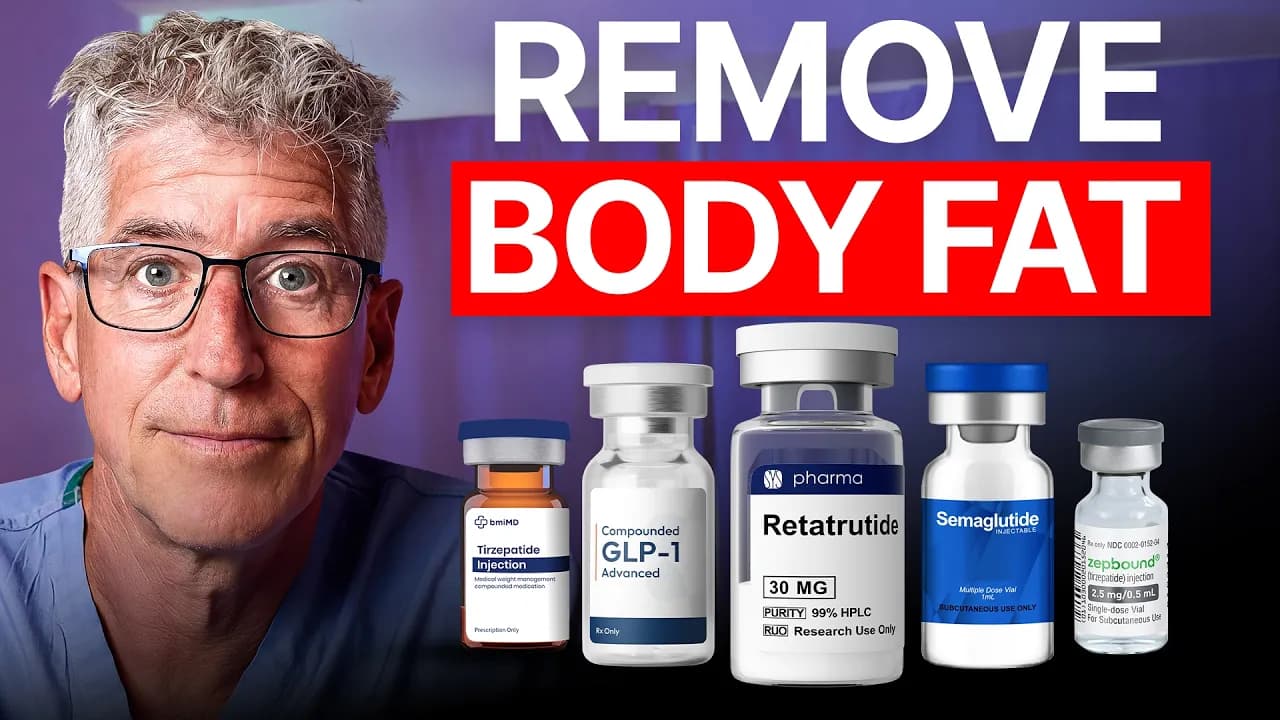
Compounding pharmacies originated to address individual patient needs, particularly allergies to fillers or dyes in commercially available medications. These pharmacies create specialized individualized drugs containing the active pharmaceutical ingredient (API). Tirzepatide serves as the API in medications like Zepbound and Mounjaro.
A clear distinction exists between FDA-regulated compounding pharmacies and non-regulated entities operating as research labs. Research labs label products as "research use only, not for human consumption" as a legal disclaimer. These gray market manufacturers sell directly to consumers through online channels including Reddit.
In the UK, the MHRA serves as the regulatory equivalent to the FDA and inspects compounding pharmacies. Two major compounding pharmacies in the UK operate under MHRA regulation, though unregulated research labs also dispense products online.
Patients report being approached in gyms with peptide products sold in vials with mixing instructions. Dr. Mayoni notes that patients inquire about BPC-157 after being offered products through unregulated channels, highlighting the disconnect between promising evidence and dangerous sourcing practices.
A critical distinction exists between belief in drug efficacy and the actual legitimacy of the product and its sourcing. Safety concerns are heightened with injectable medications due to reduced bodily protections compared to topical or oral administration.
Dr. Mayoni published research on harm reduction for patients purchasing from gray markets. Third-party testing for purity and contaminants must verify the specific batch number, as testing does not apply universally across all batches from a manufacturer.
BPC-157 shows promising evidence but all major research remains in animal models. Clinical use lacks standardized concentration, dosing protocols, and published studies due to regulatory gaps.
Primary safety concerns involve contamination or improper handling throughout the supply chain. At a longevity conference (Radfest), peptides were distributed and injected on-site, resulting in two women requiring ICU care, though specific details were never publicly reported.
Basic lifestyle interventions including walking, sunlight exposure, and sleep demonstrate greater evidence and multi-system impact than peptide interventions. These foundational practices are frequently overlooked despite their profound benefits.
Social relationships and having a sense of purpose provide broad health benefits that remain under-recognized despite their significance.
Women's health evidence base remains limited, though progress is occurring. Estrogen decline during perimenopause and menopause reduces natural GLP-1 production by affecting gut cells, contributing to gradual weight gain during this transition.
Dr. Mayoni employs low and slow GLP-1 dosing strategies. Not all women require GLP-1 prescriptions, but conversations about metabolic flexibility loss during perimenopause are essential. Lifestyle medicine cornerstones remain primary considerations.
Women experience higher rates of autoimmune conditions and undergo multiple physiological transitions including pregnancy, perimenopause, and menopause, creating cumulative stress and inflammatory responses.
Early prescribing involved monthly dose escalations until plateau, followed by attempts to increase dosing further. Current understanding emphasizes finding sustainable long-term doses rather than rapid weight loss.
Slower titration allows patients to build muscle simultaneously with fat loss, prevents excessive energy loss from water weight reduction, and supports long-term fat loss sustainability.
Gradual dosing reduces hair loss, extreme facial fat loss, and skin elasticity changes. The slower approach allows correction of nutrient imbalances through supplementation and enables formation of sustainable habits through neuroplasticity changes.
Patients on lower, slower dosing experience breakthrough hunger rather than artificial appetite suppression, supporting more sustainable long-term outcomes.
Safety and sourcing represent the foremost concerns, as even some physicians use suboptimal peptide sources leading to infections and sepsis. The substantial hype surrounding peptides exceeds the current evidence base beyond GLP-1s.
Despite widespread online interest and search volume for peptides, clinical experience indicates the actual substance does not match the marketing claims.
Keep Hillary Lin, MD in your library
Save the videos and channels worth coming back to, and find them again in one place.