Something Big Is Happening
These notes were generated by AI and may contain inaccuracies.
Today on the Joseph Carlson show, my portfolio is going down and it's going down a lot. The reason is something big is happening, also the title of a viral post on X outlining what investors are thinking. SAS companies are being destroyed—anything that feels like software is going down. Destruction of stock prices like Intuit, Salesforce, and old guards like Adobe is immense. They're going down multiple percentage points every single day with no end in sight. Even companies that don't feel like software but have some AI exposure are declining, like financial giants S&P Global and Moody's, rocked over the past couple of weeks. These are supposed to be stodgy, boring companies that compound routinely with low volatility.
Some super investors with massive portfolios (tens of billions) have huge allocations in Moody's and S&P Global: Chris Hohn has over 20% in these two; Dev Cantasaria has a staggering 35%. What will they do as a result of this attack on their biggest holdings? The episode covers AI risks (true and false), portfolio pivots for the new paradigm shift, and big news: Bill Ackman of Pershing Square Capital released his investor presentation with a new 10% allocation to Meta.
Past couple of weeks have been brutal for my portfolios, which have endured COVID, tariff sell-offs, 2022 drought. Passive income portfolio down $72,000 year-to-date. In financials, only Mastercard is okay; S&P Global, Moody's sold off for AI competition fears; Intuit aggressively sold. In tech, ASML and Google hanging in; Microsoft down big from highs; Meta down a little. Safe ones: Costco near all-time highs, up ~15% YTD; Texas Roadhouse near highs—AI can't make steaks yet.
Story Fund sees immense selling: Amazon down big; Netflix down over AI and acquisition concerns; Google doing great; Microsoft not well; Duolingo crushed to near $100/share; S&P Global intense pressure in both portfolios. Both portfolios down ~7% YTD while market up ~1%.
Things changing fast—every week like a year, dramatic daily moves due to narrative: something big is happening. Captured by Matt Schumer's (AI researcher/builder) hyper-viral blog post.
Let me make the pace of improvement concrete... In 2022, AI couldn't do basic arithmetic reliably (e.g., confidently 7*8=54). By 2023, passed bar exam. By 2024, wrote working software, explained graduate-level science. By late 2025, best engineers handed most coding to AI. By February 5th, 2026, new models made everything before feel like a different era.
AI went from no math to passing bar exams, writing most engineer code. Extending trend: AI working independently for days next year. Emodia says AI models substantially smarter than almost all humans at almost all tasks on track for 2026-2027—better than most PhDs at office jobs.
AI building itself: OpenAI's GPT 5.3 CodeX (Feb 5, 2026) first model instrumental in creating itself—used early versions to debug training, manage deployment, diagnose tests.
This 5.3 codeex is our first model that was instrumental in creating itself.
Every generation builds smarter next faster—intelligence explosion already started.
Contrast with software like Intuit, Salesforce, Adobe, S&P Global, Moody's. If AI > PhDs, concerns: AI does financial analysis free vs. selling reports; deep risk analysis > Moody's PhDs; AI images > Photoshop; AI coding > expensive Salesforce licenses; AI on tax docs > Intuit.
AI capabilities:
- Legal: reads contracts, summarizes case law, drafts briefs, rivals junior associates.
- Financial: builds models, analyzes data, writes memos/reports.
- Writing/content/marketing: indistinguishable from humans.
- Software engineering: from few error-prone lines to hundreds of thousands correctly; large job parts automated.
- Medical: reads scans, analyzes labs, suggests diagnoses, exceeds humans in areas.
- Customer service: capable agents handling complex multi-step problems.
The next 5 years are going to be disorienting in ways most people aren't prepared for.
Portfolios in AI/knowledge/software crushed by this narrative.
Adobe down 44% trailing 1Y; Salesforce 43%—half value despite revenue/earnings growth.
- Atlassian down 72%.
- HubSpot down 72%.
- Duolingo down 69.3%—AI language tools threaten.
- Intuit down 31% despite growth.
- ServiceNow down 49%.
- Monday.com down ~80% despite revenue growth.
Financials: S&P Global down 22%; Moody's 16%; Equifax 24%; FactSet 57%—AI commoditizes data/analysis.
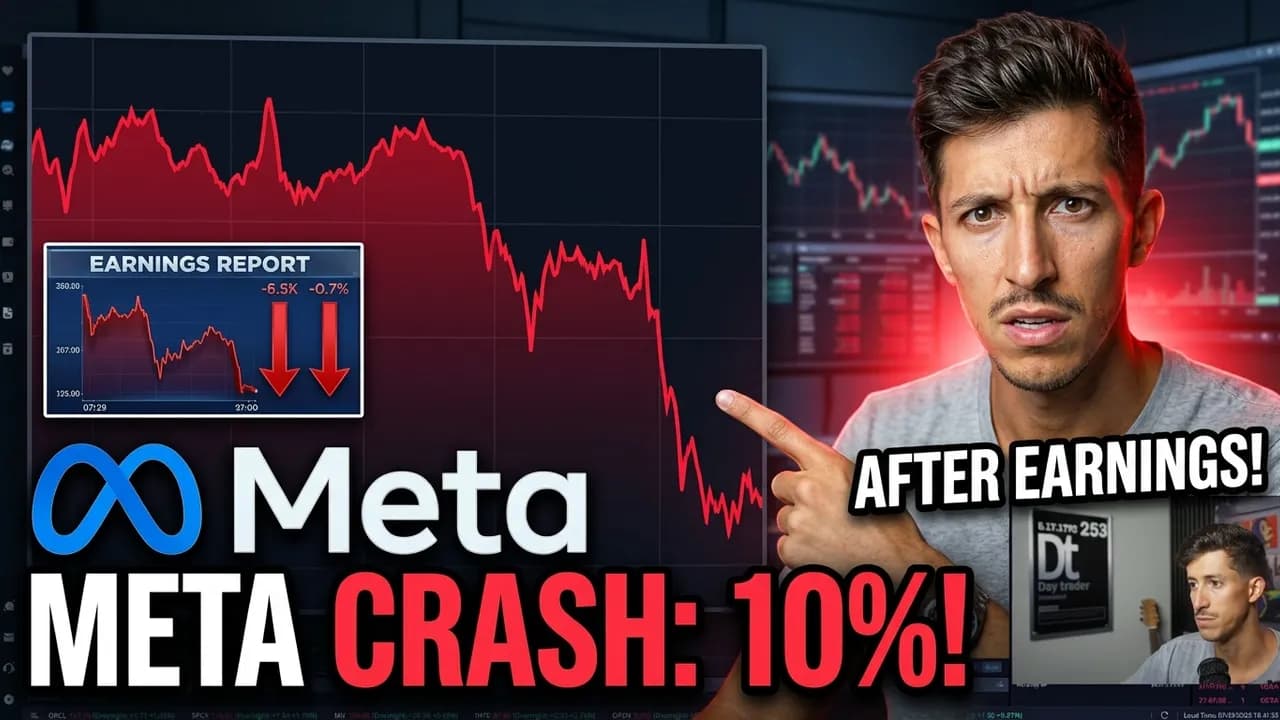
Capex vendors (Microsoft, Google, Amazon, Meta—$650B spend): Google up 71% YTD (from cheap post-OpenAI); Microsoft down YOY; Amazon down 10%; Meta down 7.8%—concerns over indefinite capex dragging margins/cash flows.
Money flowing to non-AI, low-capex: Costco huge recovery; Walmart up 24%; Delta Airlines up 10%; Texas Roadhouse up 8.7%.
Market categories:
- AI-exposed: liquidated rapidly.
- AI-powering capex spenders: cash flows out over margin drag.
- Everything else: inflows.
Not driven by earnings/cash flows/forward projections—pure narrative.
Narrative overwhelmingly accurate: AI powerful, good at most jobs/companies, improving daily. But overshot—panic selling broad. Some incorrectly sold, e.g., S&P Global/Moody's: more than data/reports—proprietary non-public data, company profiles, standardized data trusted by billion-dollar institutions > AI output.
S&P Global: platform-agnostic AI—partners Anthropic, Google Gemini Enterprise, OpenAI MCP connector, Microsoft Copilot on energy. LLMs can't train on S&P data (proprietary). AI enables: more licensing ways, value-based pricing, add-ons, new datasets, competitive wins (customers want all-in-one vs. new vendors). No pricing strategy change; expects stronger renewals, new sales.
Stock crushed 22.5% past couple weeks; management doing $1B buybacks this quarter—opposite of market pricing.
Evaluate each holding via AI threat lens. S&P Global/Moody's: fringe exposure, but core proprietary structured data hard to replace for billion-dollar clients—holding. Chris Hohn/Dev Cantasaria huge stakes—likely hold unless deterioration (Hohn cut Google on ChatGPT).
Safe: Costco, Texas Roadhouse. Tech: Meta largest conviction—low valuation, AI-insulated, capex returns proven.
Bill Ackman's Pershing Square new holding: Meta at 10% allocation. 22x next-12-months P/E, ~20% annual EPS growth—attractive for wide-moat, hard-to-disrupt company.
Changing narratives create opportunity: Google bought at 16x (40% discount) on AI fears. Amazon at all-time low valuation post-tariff announcement.
We believe concerns around Meta's AI related spending initiatives are underestimating the company's long-term upside and potential from AI.
Meta trades at S&P 500 multiple but grows revenue/EPS much faster: >3.5B daily active users; $200B 2025 revenue (22% growth, expected acceleration); Mark Zuckerberg leadership. Segments: Family of Apps (Instagram/Facebook/WhatsApp advertising); Reality Labs (wearables/metaverse/AR)—loss-making, 25% of overall profit.
Those profits should be returned to investors via buybacks or dividends. But that's the very same thing that many investors said about Google and their spend on Whimo. But now Whimo is a real product generating incredible value for Google. It has equity value now of hundred billion dollars, multiples over anything that Google's ever invested in it before. Before investors look at the wearables and metaverse and they may scoff at it, Meta is a smart company. They have lots of smart people working there and if they get any product to really take grasp to a large extent, it could more than make up for the profits that they're burning now to fund this operation.
Bill highlights that the company's currently trading at 22 times next 12 months PE due to concerns around the magnitude of spending plans on AI initiatives. When you exclude the Reality Lab losses which represent discretionary growth investment, Meta's core advertising business is valued at less than 18 times next 12 months PE. We believe that Meta's current share price underappreciates the company's long-term potential upside from AI and represents a deeply discounted valuation for one of the world's greatest businesses.
The Meta investment thesis is that it's a high-quality advertising business with increasing returns of scale. Scaling engagement across Meta's vast user base improves utility for both users and advertisers. Granular visibility into consumer behavior and investments enables high precision ad targeting. Making Meta an essential platform for businesses seeking to maximize the return on ad spend. Small businesses have to advertise using Meta. There's no other way they're going to sell their product than getting it on Meta's platforms.
Meta's business is one of the clearest beneficiaries of AI integration. AI-driven content recommendation systems materially enhance engagement, especially as content has increasingly broadened from social graphs to a wider range of interest-based content. AI leverages Meta's rich first-party data to deliver more relevant and personalized ads. Campaign automation and AI copy creation tools facilitate self-serving models for advertisers. There's potential to unlock new use cases and engagement modes: business, AI, digital assistance, and wearables.
Proven Returns from AI
This is one of the most evident parts of Meta's thesis. Meta is not a company where you have to wonder about whether or not AI is seeing returns. We can already see it. They're growing revenue 30 plus%. At their scale, that is showing what they're doing is working. It's already being proven.
Meta is well positioned for long-time earnings growth after planned spending ramp in 2026. There is significant upside potential for AI supporting front-loading infrastructure and talent investments. Historical cost disciplines 2023 year of efficiency and recently announced budget cuts in the Reality Lab segment highlight a focus on balancing AI investment with operational efficiencies. The overbuilding risk is mitigated by the core business's ability to grow into and absorb excess capacity. Even in the case that Meta spends a little too much money, they build too much server capacity, they have always and they will always grow into it. The worst case scenario is they waste some cash. That's not a bad case scenario for a company that gushes cash every single day.
Strong Balance Sheet
Their strong balance sheet and high margin core business provides significant financial flexibility. Meta is in a superior position to almost every other company on Earth. It can afford to waste a little money and still do incredibly well. But Meta is not intentionally doing that. They're trying to optimize to be incredibly efficient with their spend. So wasting money is not the goal. But even if that happens to some degree, Meta will still come out on top.
Meta is being sold off by the market and it's a mistake. I believed it's a mistake for some time. And as you've seen, I've put my money where my mouth is. There's never been a position in all my investment history where I've bought more aggressively than I have with Meta. And that was before knowing that Bill Ackman was going to buy it. I put $160,000 into this company and I'll continue to buy it if it continues to trade down. I believe that eventually I will make a lot of money with Meta.
Alignment with Bill Ackman
Now, when we look at Bill Ackman buying the stock, some people may ask, how did you buy in before him? How did you know he was going to buy the stock? Quite frankly, I didn't know Bill Ackman was going to buy this company. I just bought it because I believed it made sense. The fact that Bill Ackman and his team that pours over high quality companies and tries to find the best risk-adjusted returns, the fact that they landed on the same conclusion is not surprising at all. And I'm glad he bought the stock. I hope in this case he just hangs on even if there's some bad narrative with Meta.
In all, I'm positioning my portfolio towards these big tech capex spenders. I'm positioning it for insulation against AI threats and continued fast cash flow and earnings growth. Right now, the market does not like my portfolio. They don't like the big tech capex and they don't like that some companies have AI exposure. That part is going to cause trouble for my portfolio over the next year. But I believe over time, as narratives often shift and like they did with Google, earnings growth eventually overpowers narratives. And I believe that will happen again. So, even though this could be a tough couple of months for the portfolio, I'm going to continue to stay in the stocks that I believe are the best opportunities.
Keep Joseph Carlson in your library
Save the videos and channels worth coming back to, and find them again in one place.