6 Stocks To Buy In An Overvalued Market
These notes were generated by AI and may contain inaccuracies.
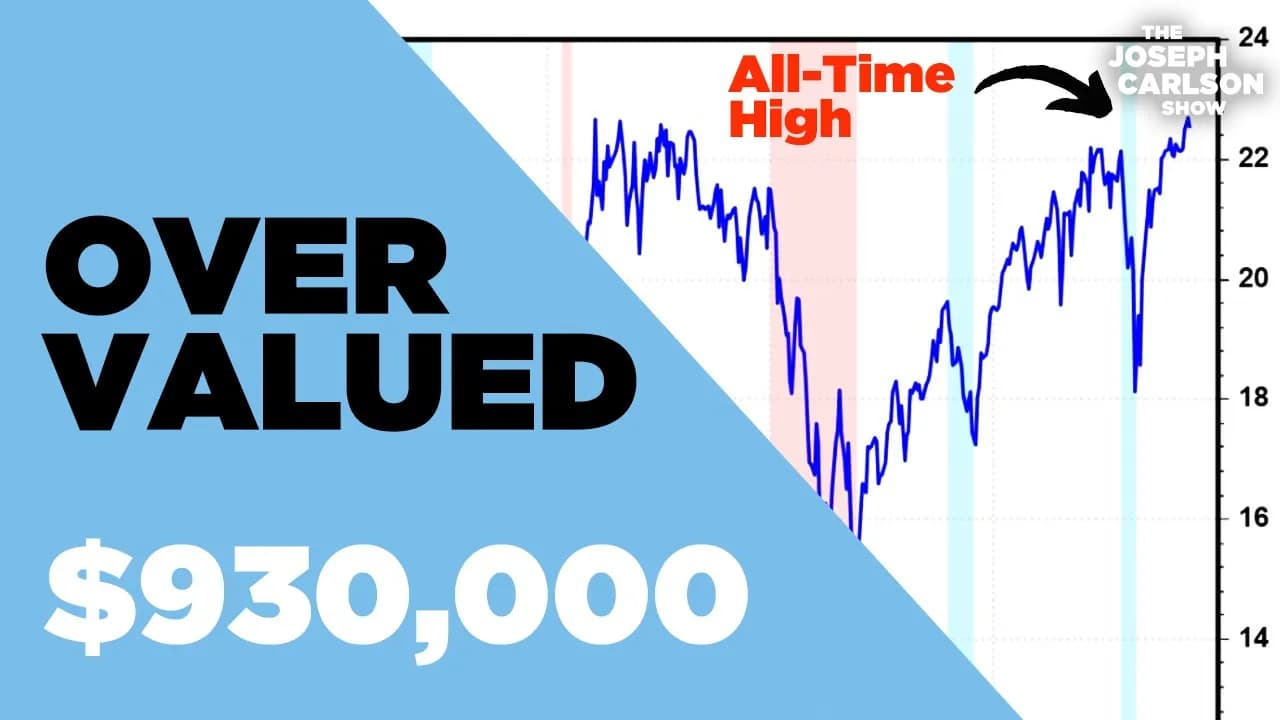
Market is getting bullish, evidenced by pricing of stocks. Forward P/E ratio of S&P 500 and QQQ near historic highs. Tom Lee on CNBC talks about market going higher every day. Bears are gone, fired, predictions wrong, nobody listening. Even Michael Burry, biggest bear, back to shorting top stocks. Palantir (PLTR), worth 100x price-to-sales, CEO responded to Burry saying shorting chips is bat shiz crazy. Shorting has been a mistake in this bull market.
Investors managing wealth should be good stewards, careful with gains. Avoid following crowd with exuberance. Look for best deals with ample downside protection. Episode covers six investment ideas: fantastic buys in expensive market. Also news: Uber CEO on CNBC post-earnings, investment thesis for Uber; Amazon sued Perplexity to stop using AI tool to buy stuff, Perplexity called Amazon a bully, bullying not innovation.
Qualcrum (qualcrum.com) platform for investment analysis, built for value investors focusing on 5-year fundamentals. Sign up directly: monthly with 7-day free trial, annual discounted, under $10/month. 11,000 active users. Includes Joseph Carlson Show Discord.
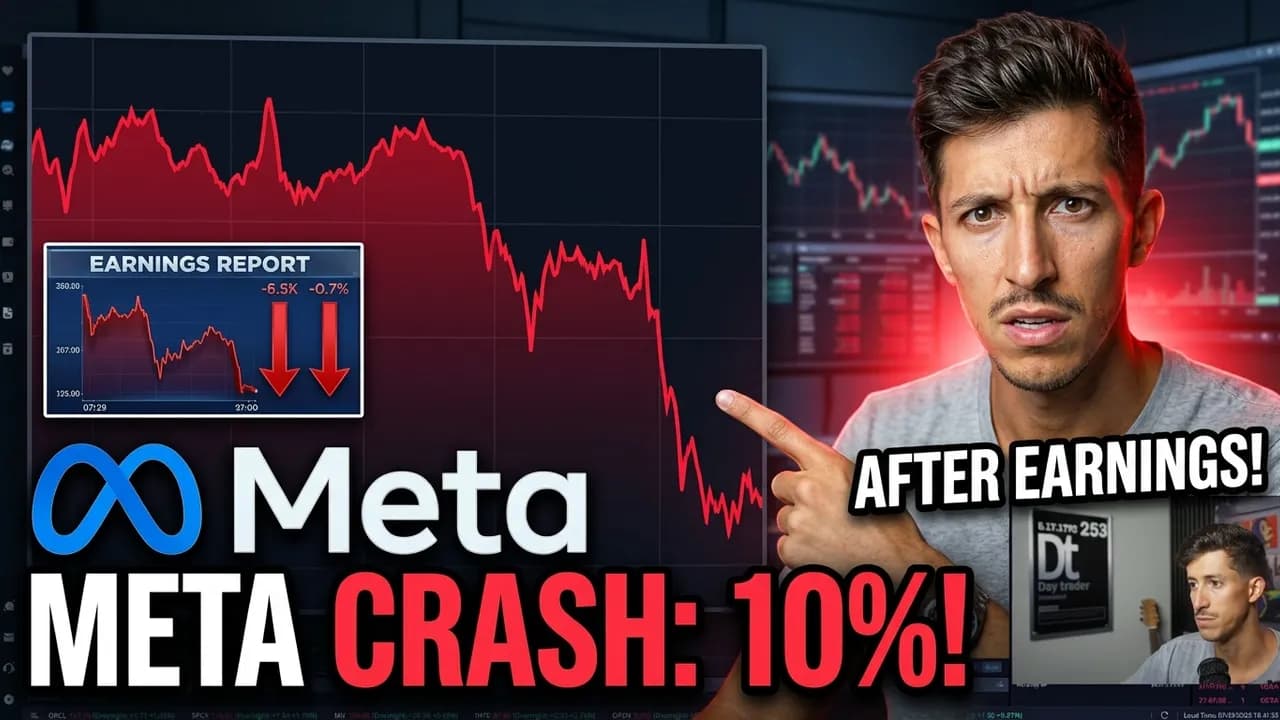
Meta reported earnings, stock fell unlike Google (up 50% YTD, 13% past month). Meta up 6% YTD, down 11% past month, underperforming S&P 500 and QQQ. High-quality company sell-off worth examining. Underperformance due to expected capex spending: up to $72B this year, notably larger in 2026. Zuckerberg: "It's the right strategy to aggressively frontload building capacity." Concerns echo 2022 metaverse obsession.
Portfolio managers: feels like return to overspending on frivolous items without return discipline. In 2022, Meta below $200/share, as low as $100/share; now $550-600/share, incredible outperformance. Situations similar but not identical: lower forward P/E in 2022, metaverse was biggest 4-day drop in history. Less reason for concern now: AI spending more relevant than metaverse headsets.
Zuckerberg correct to frontload capacity; otherwise can't fulfill demand, lose market share. Wall Street downgrading: "significant investment in super intelligence despite unknown revenue opportunity mirroring 2021-2022 metaverse." But even if super intelligence fails, other use cases: "if super intelligence arrives sooner, we'll be positioned for generational paradigm shift... if longer or no return, use extra compute to accelerate core business." Core business: 3.54B daily active users, half the world.
Trades at 21x forward P/E, 2.7% FCF yield, one-time tax hit dragging profitability. Good 5-year story as social media framework.
Salesforce and Adobe similar thesis, optically low valuations. Salesforce: 24x P/E, 5% FCF yield (adjusted for stock-based comp: 3.79%), like cyclical industrials but with growing margins, revenue, earnings, FCF. Adobe: 14.5x P/E, 6.9% FCF yield (adjusted: 5.5%). Incredibly cheap; assume dying companies, but both growing.
Salesforce revenue 8-10% (above inflation), all segments growing, contractual revenue up 12%. Adobe revenue 10-12% since 2014. Business-critical, long-term agreements beyond 1-year. Salesforce FCF $12-13B; stock-based comp steady 3 years while FCF up 2-3x. Adobe FCF at highs, $9.6B, up 12% past 2 years, 14% past 5 years.
Returning capital: Salesforce via dividend/buybacks; Adobe ramped buybacks, $11B past 12 months. P/E lows past 3 years, down as market races up. If continue moderate growth 5 years, exceptional returns.
Finance category undervalued: Equifax, S&P Global, also FICO, Moody's. Portfolio holdings like S&P Global up 28%, Mastercard 34%, Intuit 21%, Moody's 10% over year+, but gains mostly pre-2025. YTD: S&P Global flat, Mastercard +5.7%, Intuit +5.4%, Moody's +3.3%, Equifax -15%, all underperforming S&P 500.
Not concerning; market focused on AI momentum. Fundamentals strong: S&P Global revenue/net income/FCF beat expectations, raised guidance. Powerhouse, diversified, growing EPS.
Equifax down 17% YTD but beating expectations, raising guidance every quarter. Category tailwinds: lower interest rates (more debt issuance for SPGI/Moody's, loans/mortgages for EFX/FICO, economic activity for SPGI data/indices). Trump replacing Powell to lower rates. AI enables more with fewer employees, margin expansion. All buys.
In Story Fund portfolio, incredible winner, peaked $1,300/share, now below $1,100. Opportunity for new investors. Not overvalued; more to come. Catalysts: Stranger Things finale (massive shared experience), Squid Game (K-pop Demon Hunter movie? context implies major event). Owns big global shared experiences.
Financials: revenue growth 15%, upper tier. Cracked pricing/tiers: ad tier, premium, add-ons like Friends for $3/month. Immense value: content, movies, docs, live/sports events. Sustained 14-16% revenue growth through 2026. Operating leverage: content spend up marginally since 2019 while revenue doubled. Content spend 7% vs revenue 15%. Operating margins high, ~29% ex-Brazil tax hit, guiding higher.
Estimate 50% operating margins by 2031. EPS up 35% YoY (faster ex-tax). Expect >25% EPS growth next 3 years. FCF juggernaut: $9B 2025 (from $7B prior), growing 26% YoY, low dilution ($300M SBC vs $9B FCF). Estimate $14B FCF by end-2026. Positioned for massive buybacks. Premium priced but above-premium performance ahead.
No guarantees, but these stocks positioned well over 5 years.
Uber stock down a bit post-earnings but up dramatically YTD. CEO Dara:
Well, what drove it is strength across all sectors. Mobility business accelerated vs last quarter in topline growth. Delivery accelerated. Trips 3.5B this quarter, up 22%. Gross bookings just south of $50B, up 21%. Delivering profitability: EBITDA up 33% YoY. Business continues strong.
It's actually accelerating in terms of momentum and we're able to scale profits while we do so. At this point we see blue skies. We're watching the global economies, but the business continues to hit on all cylinders. Uber had another great quarter even though the stock is a little squabbly today. Executives are focused on the big picture while being realistic.
We're very lucky to be operating in the transportation services ecosystem that is over a trillion dollars, the online food delivery ecosystem that's over $2 trillion. And now we're extending into grocery and retail. We were at a $12 billion run rate as it relates to grocery and retail. People want on-demand transportation regardless of where they want. They want to push a button and get to a place, but sometimes when they want to stay home, they want to push a button and get their groceries and have someone else do their Thanksgiving shopping. It's a combination of both.
Uber is unique and different from all other players because it's global in scope, operates a mobility marketplace and a delivery marketplace that talk to each other, shares customers and merchants (e.g., on the ad front). It's a platform no one else can match. The category is super healthy, and Uber is gaining category position and growing faster than the overall category.
Uber highlights relative growth, taking market share in a growing category. This is the theme of many successful investments: a company winning in a growing area. People want to press a button for convenience, explaining success of Uber, DoorDash, Amazon, Netflix, Spotify. Technology and scaled technology make life easier, similar to how Amazon simplified online shopping 15-20 years ago—making products easy to buy, eventually with one click and 2-day delivery. People love convenience and simplicity, and Uber offers that at scale. It's going to continue to grow.
Amazon is one of the largest positions and one of the best companies in the market to own today—it should be in everyone's portfolio. News: Amazon sues to stop Perplexity from using AI tool to buy stuff. Amazon filed a lawsuit Tuesday demanding Perplexity stop allowing its AI browser agent Comet to make purchases online for users. Amazon accuses Perplexity of computer fraud by failing to disclose when Comet is shopping on a real person's behalf, violating Amazon's terms of service. This follows a cease-and-desist letter accusing Perplexity of degrading the Amazon shopping experience and introducing privacy vulnerabilities.
Perplexity (similar to OpenAI's Atlas browser, both would-be Chrome competitors) has an AI shopping tool in Comet that scrapes information and buys things on Amazon, bypassing Amazon's user interface via Perplexity's AI agents. Amazon claims Comet pretends to be a regular user through Chrome but acts in non-human ways, violating terms of service.
Perplexity portrays Amazon as a bully against innovation, writing a blog post claiming bigger companies stop innovation by bullying smaller ones. They frame it as user choice—users should access Amazon any way they want, loving the Comet experience as private, personal, and powerful. They're not intimidated.
Amazon responds:
We think it's fairly straightforward that third-party applications that offer to make purchases on behalf of customers from other businesses should operate openly and respect service providers' decisions whether or not to participate. This helps ensure a positive customer experience and it's how others operate, including food delivery apps and the restaurants they take orders from, delivery service apps and the stores they shop from, and online travel agencies and the airlines they book tickets with and for customers. Agentic third-party applications such as Perplexity's Comet have the same obligations, and we've repeatedly requested that Perplexity remove Amazon from the Comet experience.
This argument determines the future of AI agentic shopping. Perplexity claims Amazon cannot control user experience—they can create apps that log in on behalf of users, change interfaces, scan thousands of listings, do agentic searches, scrape, transform, and manipulate data, using products any way they want. Amazon says they don't have the right.
The lawsuit hinges on whether terms of service matter and should be respected—they're contracts between customer and service. Examples of reasonable protections: no scraping websites (e.g., can't bot-log into Bloomberg or Wall Street Journal to export all articles). That's not intended use, like not recording a movie in a theater with a camera—that's not normal human behavior or intended sharing.
Imagine DoorDash or Uber Eats forcing restaurants to partner, hitting margins—many restaurants choose not to. That's the business owner's choice. Amazon's example is similar: food delivery apps, delivery services, online travel agencies (e.g., Booking Holdings, Airbnb) respect providers' choices. Forcing every company to use agentic technology is like forcing every restaurant, airline, etc., to integrate—no choice.
Perplexity acts on moral high ground as innovative small company bullied by big one, but it's simply asked to respect reasonable terms of service like any business.
Even Perplexity highlights terms of service front and center on their legal hub with extensive rules. Their terms ban:
- Using automated software, bots, hacks, modifications, or unauthorized third-party software to modify services.
- Exploiting for commercial purposes (what Perplexity does by bypassing Amazon's ads, charging monthly fees).
- Using bots, spiders, crawlers, scrapers, or automated devices to process software or queries.
If scraping, bots, and AI agents are good, why does Perplexity ban them in their own terms? It might break their business model or not align with intended use. If Amazon is a bully for enforcing terms, Perplexity is a hypocrite for the exact same rules.
Keep Joseph Carlson in your library
Save the videos and channels worth coming back to, and find them again in one place.