Stories about the Secret Service | 60 Minutes Full Episodes
In a Nutshell
The Secret Service faces unprecedented threats—40% higher than last year—with 10,000 cases so far, driven by social media, mental health crises, and foreign adversaries like Iran. After the Butler assassination attempt, the agency is rapidly scaling training (942 agents in pipeline vs. 200 last year), adding counter-drone systems, armored vehicles, and medical response units while studying assassins' behavior patterns to identify warning signs early. Research shows both presidential assassins and school shooters follow predictable behavioral pathways—planning, communicating intent, and suicidal ideation—where others typically know in advance but fail to report, making intervention possible before attacks occur.
These notes were generated by AI and may contain inaccuracies.
The United States Secret Service was created 161 years ago when Abraham Lincoln signed it into law. That same day, he was fatally wounded by an assassin. Since then, the service's mission has evolved from catching counterfeiters to protecting the lives of presidents, their families, and other top officials. Today, in the age of AI, the threats are not just from a lone assassin's bullet, but autonomous attack drones.
The US is a country that feels on edge. The Secret Service told 60 Minutes the number of threats is way up against its protectees, especially President Trump. He has been the target of more assassination attempts than any other president.
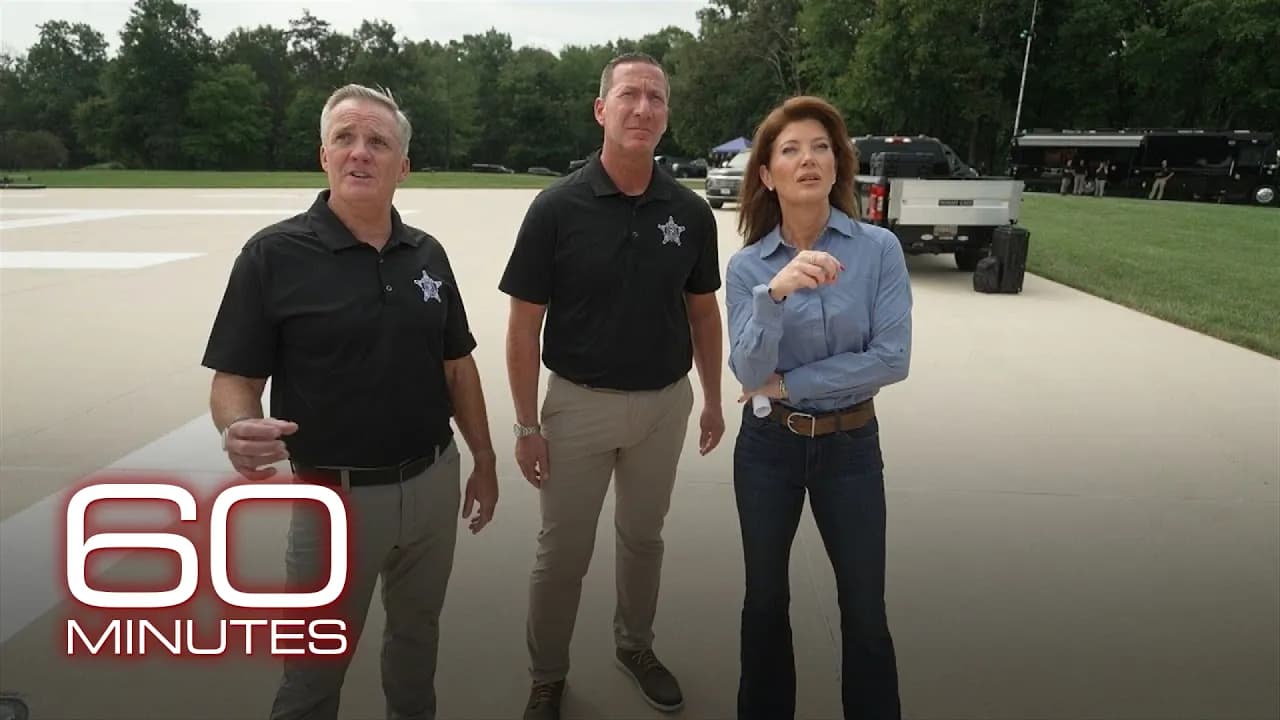
Sean Curran, the 28th director of the United States Secret Service, has been an agent for 25 years. He described the current threat environment as "like we've never seen before." The threats on full-time protectees are up just over 40% since last year. Since January, there have been 10,000 threat cases on the people they protect.
Deputy Director Matthew Quinn joined Curran in their first joint interview. Curran stated that a lot of the increase has to do with the internet, with people and information being more accessible. In the last two and a half years, there have been three known attempts on President Trump's life: at a campaign rally in Butler, Pennsylvania; his Florida golf course; and the White House correspondents dinner, where a shooter breached the security perimeter.
When asked if President Trump's polarizing nature was leading to the increase in threats, Curran emphasized that the Secret Service is an apolitical organization. He stated: "We are an apolitical organization. We're here to protect who we're sworn to protect." He noted that people on both sides of the aisle either love or hate any president, but identified mental health issues as the biggest factor, stating: "I think the biggest factor we're dealing with today is mental health issues for sure. And more people are being pushed over the edge in either direction. The world is different than what it was 20 years ago. You know, social media changes people."
The Secret Service does not weigh threats as coming from the left or right. Research by the Center for Strategic and International Studies showed a spike in incidents at the local and national level from the left in 2025, the first time left-wing attacks have been higher than right-wing attacks in 30 years. This year that trend has reversed with more attacks coming from the right so far.
Eight months into a war with Iran, threats from outside the country are growing. Iran has vowed revenge. Director Curran acknowledged the increased threat environment, noting: "Turn on the TV and you can see the funeral where there are massive banners saying kill president Trump." He stated they recognize the threat environment has increased, though they prefer to stay in the background regarding how they handle and change their operations.
Director Curran was the lead agent protecting President Trump on July 13th in Butler, Pennsylvania, when Thomas Krooks fired eight rounds at the stage from a rooftop 155 yards away. Curran was among the agents who shielded President Trump. He stated: "I mean, we were face to face and then I have to think about the next move. You don't have time to think about anything else. I am his vest. You know, I wear my vest for him. It's not for me."
Curran confirmed he had requested additional resources that were denied, though he preferred not to elaborate on the past. A congressional hearing led then-director Kimberly Cheetel to resign over the breakdown of security. The Inspector General report found the Secret Service "missed multiple opportunities to detect, prevent, and disrupt the assassination attempt."
When asked if he could assure the American people that something like this won't happen again, Curran replied: "Yes." When pressed if he was convinced, he stated: "I am convinced."
The agency has been dangerously understaffed for years. Since Butler, the Secret Service has 942 people in training today, compared to about 200 in training last year. With President Trump back on the campaign trail ahead of the midterm elections, Curran has added new training to avoid the mistakes of Butler.
The Secret Service has expanded the security footprint surrounding the president. The president's limousine, known as "the Beast," weighs up to 10 tons with bulletproof glass and defensive countermeasures. Director Curran added a medical response truck because of what he saw in Butler, housing a trauma unit and field surgeon ready to treat gunshot wounds.
An armored personnel carrier is new to the president's motorcade, providing the ability to move people and teams during significant civil disturbance events like January 6th. The Secret Service did not have this vehicle for January 6th.
The Secret Service is preparing for drone threats. Deputy Director Quinn is leading a new multi-million dollar program to develop offensive and defensive drone capabilities. The war in Ukraine has become a testing ground for the weaponization of drones. Secret Service teams recently returned from the front lines to learn from battlefield conditions. Quinn stated: "We know that technology is going to hit the homeland at some point. So, we're using lessons learned there to build our program and make sure we're ahead of it before it gets here."
When asked if drone attacks will happen in the United States, Quinn replied: "We have to plan for it. We have to assume that it's possible. The second we're not, we're going to get caught flatfooted."
The Secret Service demonstrated the "drone hunter," a weapon using AI and radar to disable enemy drones and capture them with a net. The concern is that small rudimentary drones could be weaponized with explosives and cause serious damage to large events. "Just this much of C4 is plenty enough to do a lot of damage. So, it doesn't have to be a big drone."
60 Minutes learned the Secret Service took down a drone using electronic jamming equipment at the Army Navy game in Baltimore last December, where the president and members of Congress were in attendance.
Director Curran acknowledged: "Swarms are a huge problem and a big threat. I'd love to tell you the swarm problem's solved. It's not." He stated: "I will tell you that at the White House, White House is the safest place on Earth." The Secret Service is deploying equipment to ensure the White House remains the safest place in the world, while maintaining that the goal is to provide maximum resources without the appearance of overwhelming, overt militaristic presence.
The new Air Force One, a 747 donated by Qatar, had security enhancements added costing the US nearly $400 million. When asked if the Secret Service fully trusts a plane given by a foreign government, Curran stated: "We trust that plane." The Secret Service would not let the president fly home on that plane from Turkey in July after intelligence reports of an Iranian plot to fire a missile at the presidential jet. Instead, they used a decoy plane scheme, sneaking President Trump into a catering truck while cabinet members, White House staff, the press, and Secret Service agents were left on the decoy plane.
Curran confirmed: "Look, that's not the first time we've done that. Certainly wasn't the first time we did something like that." When asked if he was okay with agents being left behind on the decoy plane, Curran stated: "When you're operating in any protective detail with the president of the United States for any president, the priority is the president. Everyone else, staff, agents, media, personnel involved are not the priority, including our own personnel. As hard as that may be for some to understand, the mission is to protect the president of the United States."
The Secret Service has sent psychologists into prisons and mental hospitals to interview those bent on assassination. Their interviews bring insight into the mind of an assassin, and they've discovered that many of the same characteristics found in assassins can also be found in school shooters.
In 1999, then-special agent Brian Voscule and psychologist Dr. Robert Fine were the primary authors of a groundbreaking Secret Service study called the Exceptional Case Study. They analyzed 83 attacks and interviewed gunmen including Arthur Brimmer who gunned down presidential candidate George Wallace and Mark Chapman who murdered John Lennon.
Key findings: There was no profile of an assassin. People came from a range of backgrounds. Some had criminal records, most did not. Some had histories of violence, most did not. The behavior included communication to others, planning, and target selection. These were not impulsive, out of the blue attacks.
Dr. Fine stated: "Assassination is the end result, we believe, of an understandable and often discernable process of behavior." Other people typically know what's going on, with enough knowledge that would cause a reasonable person to conclude there is basis for concern.
A desire for suicide is an important marker. "The line between suicide and homicide can be a very thin line."
After the Columbine attacks in 1999, the Secretary of Education asked whether the Department of Education could work with the Secret Service to do a similar study on school shooters. In 2000, Fine, Voscule, and psychologist Marissa Ready interviewed kids who attacked their schools.
George Anne Rooney, a threat assessment specialist at the Secret Service, stated: "With the school attackers that we studied, there's no profile there. There's no set of demographics that they share. But there are certain behaviors that they undertake." Two-thirds of school shooters were victims of bullies.
The Secret Service found that in 81% of school shootings studied, other kids knew in advance and said nothing. Psychologist Dr. William Pollock explained why students don't tell adults: they're afraid they'll get in trouble, afraid their name will get out and people will hurt them, and afraid the person won't get help but will be harmed or adjudicated.
Specific communications ranged from "I'm so angry I might kill someone" to "Tomorrow I'm coming with a gun, so be careful. Don't come" to one shooter saying "Bring your camera to take pictures."
Another common finding was that shooters felt there was no adult in their life they could talk to. Much of what the Secret Service learned is in a new interactive CD using actors to teach teachers the right questions to ask students, parents, and friends.
The research found 10 key characteristics of school shootings. Virginia Tech killer Sun-hi Joe met seven out of ten: he was suicidal, felt bullied, felt there was no one else he could talk to, and had access to weapons. Joe was referred to mental health counseling, but there's no evidence anyone followed up.
Among school shooters interviewed, they saw what they had done was awful and a tragedy for everybody. They talked with researchers hoping their stories might lead adults to intervene in a determined way to prevent young people from engaging in these acts of violence.
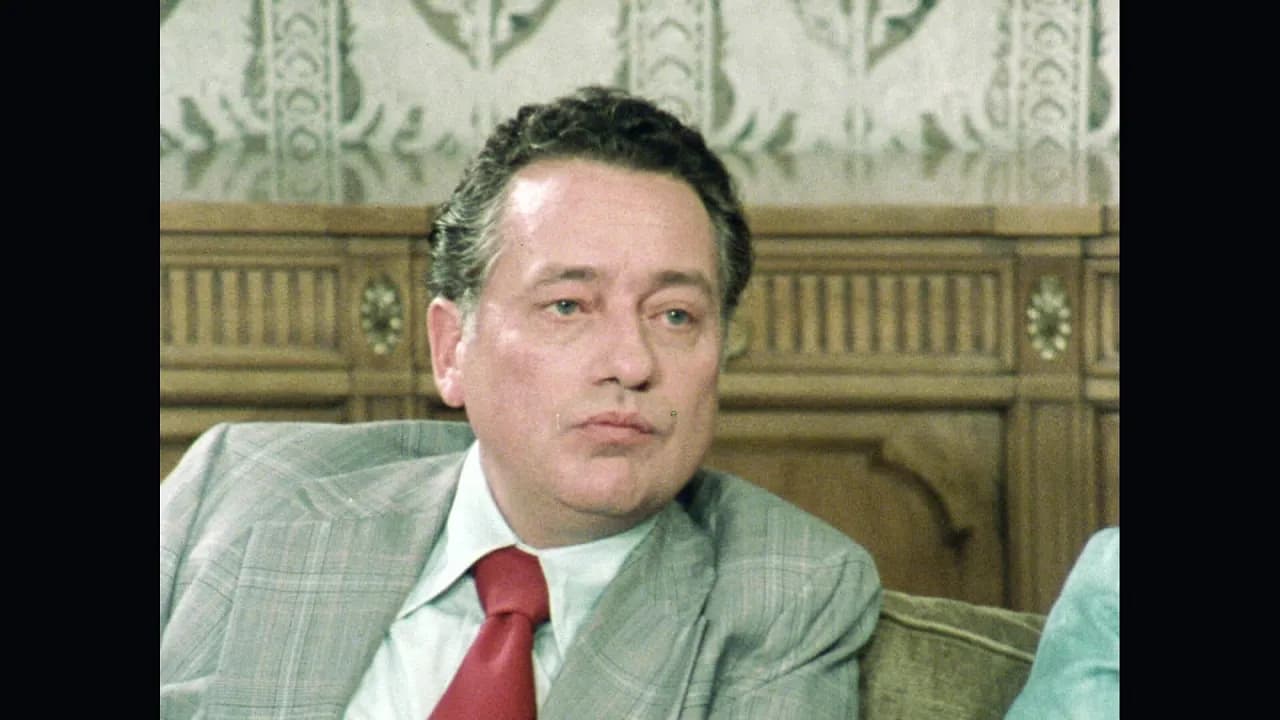
Clint Hill was a Secret Service agent for 17 years, chief of the White House detail, and later assistant director. He was the agent seen climbing into the presidential limousine in Dallas to protect Jacqueline Kennedy after the Kennedy assassination. Hill retired at age 43.
Hill stated that in 1968, after Bobby Kennedy was killed, agents were suffering from extreme fatigue, working 12 to 18 hours a day, seven days a week, gone from home for weeks or months at a time. Director Rally testified to Congress that doctors examining agents found they were suffering the same type of fatigue that military men suffer in battle.
The Secret Service maintains a list of potentially dangerous individuals containing 35,000 to 45,000 names that is updated daily. However, several notable assassins were not on this list including Sarah Jane Moore, Lynette "Squeaky" Fromme, Arthur Bremer, James Earl Ray, Lee Harvey Oswald, and Sirhan Sirhan. Former Secret Service agent Clint Hill acknowledged that predicting every person who would attempt an assassination is impossible, comparing it to being "the greatest thing since Jean Dixon."
If an individual on the threat list appears in a crowd, agents maintain surveillance, keeping an agent positioned to monitor any hand motions or unusual movements. Regarding Sarah Jane Moore's 1975 assassination attempt, Hill stated she "just never came to their attention," though San Francisco Police Inspector Jack O'Shea had warned both the FBI and Secret Service that Moore might be "another Squeaky Fromme."
Hill confirmed that the Secret Service does not always have the final say in protection decisions. He described a conflict with President Nixon's Chief of Staff Bob Halderman over the presidential limousine design, specifically requesting a certain type of top to protect the president from the rear. Halderman rejected this recommendation. Hill noted that had such protection existed in Dallas, President Kennedy would still be alive.
On November 22, 1963, Clint Hill was riding on the fender of the Secret Service car behind President Kennedy's vehicle. At the first shot, he ran forward and jumped onto the back of the presidential car in less than two seconds, pulling Mrs. Kennedy down into her seat. Hill clarified that Mrs. Kennedy was not trying to climb out of the car but was attempting to retrieve a portion of her husband's head that had been shot off.
Hill stated there were only three shots fired from one gun, and he remains satisfied that Lee Harvey Oswald acted alone. When asked if there was anything the Secret Service or he personally could have done to prevent the assassination, Hill replied that if he had reacted "5/10 of a second faster or maybe a second faster," he would have been able to take the third shot instead.
Hill expressed that he has "a great deal of guilt" about the assassination, stating it was his fault for not turning in a different direction. He received a citation for "extraordinary courage and heroic effort in the face of maximum danger," but stated he doesn't care about that recognition. Hill confirmed that his early retirement from the Secret Service was due to this incident, describing his condition as a "severe neurological problem" traceable to the events of 1963, for which doctors recommended psychiatric help.
Hill revealed that President Johnson expressed deep concern for his personal safety following Martin Luther King's assassination in 1968. Johnson called Hill multiple times, including at 2:00 a.m. and 4:00 a.m., requesting that Hill stay as close as possible - preferably not more than a foot and a half away - because he had a premonition that something was going to happen to him.
Hill estimated that more than half of the security expenditures at President Nixon's San Clemente and Key Biscayne properties were not required by the Secret Service. He attributed these unnecessary costs to the General Services Administration acting on orders from the White House staff, specifically mentioning Bob Halderman. The total expenditures exceeded a million dollars.
The cost of providing Secret Service protection to former presidents and their families, including Mamie Eisenhower, Bess Truman, and Lady Bird Johnson, totaled $472,000 annually. Hill stated these former first families do not need Secret Service protection, but receive it because of existing law. The protection primarily serves as a "service function" rather than a protective function, including activities like taking former first ladies to the beauty parlor.
Hill criticized the Secret Service's obligation to protect foreign dignitaries visiting the United States, noting that half of them don't need protection. He mentioned protecting finance ministers, divorced wives of kings, and deposed monarchs, describing it as "pretty damn ridiculous" and "extremely costly."
Hill confirmed that the Secret Service could provide better protection to the president, his family, and official Washington if agents weren't assigned to unnecessary protective duties. He stated there is "no question" that reallocating agents from unnecessary positions would result in a better protective effort.
Hill argued that not all presidential candidates should receive Secret Service protection. In 1972, the Secret Service was required to protect candidates including Dr. Benjamin Spock, Tom Anderson from Tennessee, and Julius Hobson, who was a terminal cancer patient. Only Hobson declined protection by signing a letter of declination. Hill stated the situation "gets completely out of control."
Hill acknowledged that it is possible to protect against mentally deranged or suicidal individuals willing to sacrifice themselves, but only by placing the president in a "glass cage" at 1600 Pennsylvania Avenue, which is not practical. He confirmed that in the final analysis, there is nothing the Secret Service can do to prevent such an attack, stating "it can happen any day."
Keep 60 Minutes in your library
Save the videos and channels worth coming back to, and find them again in one place.