The #1 Driver of Heart Attacks Your Doctor Isn't Testing For (And How to Find it)
In a Nutshell
Cholesterol isn't the primary cause of heart attacks—half occur in people with normal levels; instead, metabolic dysfunction like insulin resistance triggers artery inflammation, leading to plaque buildup despite statins. Standard tests (fasting glucose, A1C, LDL) miss this; use OGTT with insulin response (or fasting insulin >5, HOMA-IR >1, trig/HDL >2), NMR panel for insulin-resistant lipoproteins, and 9 inflammation markers (hsCRP, Lp-PLA2, IL-6, oxidized phospholipids, fibrinogen, F2-isoprostane/creatinine, ADMA/SDMA, homocysteine, microalbumin/creatinine) to detect risk early. Get the Heart Reveal Lab Panel for comprehensive testing and personalized advice to reverse damage before a heart attack or stroke.
These notes were generated by AI and may contain inaccuracies.
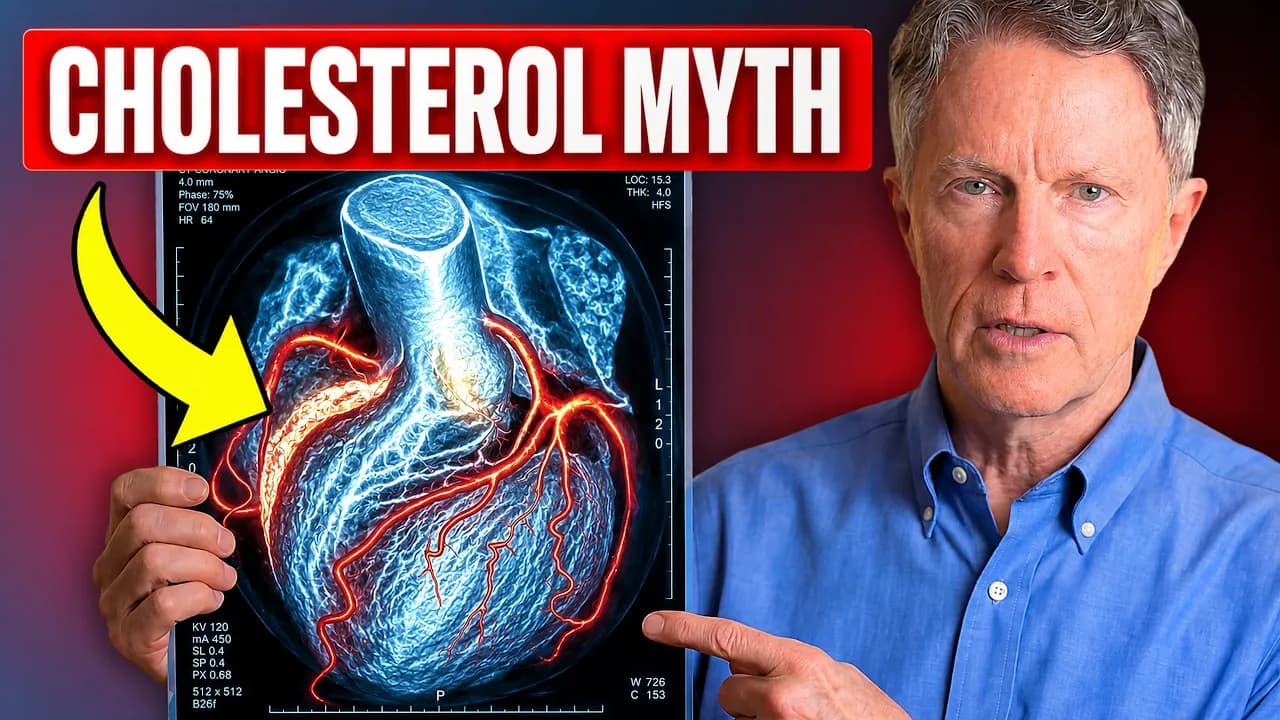
If your doctor keeps telling you your cholesterol is high and you need to take a statin, but you're not so sure about that, you might be on to something because half of all heart attacks happen in people with perfectly normal cholesterol. Half of the heart attacks. But if cholesterol is not the main thing to worry about, then what is? It's something we've known about for over a decade and it's the main reason arteries end up building plaque in the first place. But most doctors aren't testing for it.
I'm Dr. Ford Brewer, a preventive medicine physician with over 40 years of experience. In this video, I'm going to show you what's actually driving your arterial damage and the tests that can find it before it causes a heart attack or a stroke.
Let me tell you what the problem is with a short patient story you might relate to. I will call him Chris. Chris had his first heart attack in his early 50s. One blocked artery. He got a stent and got out lucky. His cardiologist explained it though. He said the LDL was too high. Your apoB was elevated and that's what caused the plaque and the heart attack. Therefore, he needed a high-dose statin. And watch your diet.
Chris did everything he was told. 6 months later, LDL was way down. ApoB looked textbook, and his doctor said, "You're in great shape now." Two years later, Chris was back in the ER with chest pain again. They sent him to the cath lab. New plaque, another artery was narrowed, another stent. He asked his doctor directly, "Are we missing something here?" He didn't get a clear answer. What he was told is keep taking that high-dose statin.
So Chris did what a lot of people have done. He started doing his own research and that's how he found our channel.
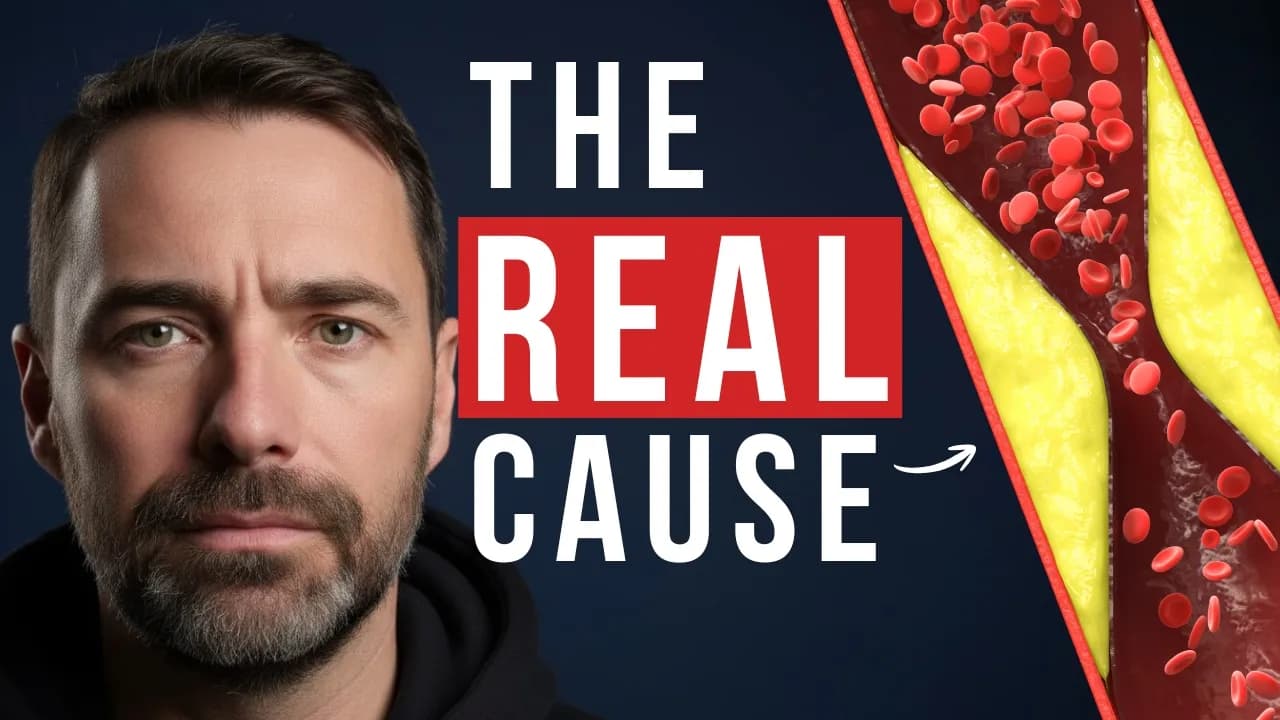
Here's what nobody told Chris and what nobody may have told you either. The cholesterol does not really start this process. The problem is inflammation. The arteries were already inflamed before LDL ever showed up. Many people would say LDL is actually just the patch and inflammation is the fire that drew the patch and created the plaque in the first place. If you don't put out the fire, the patching never stops like happened with Chris.
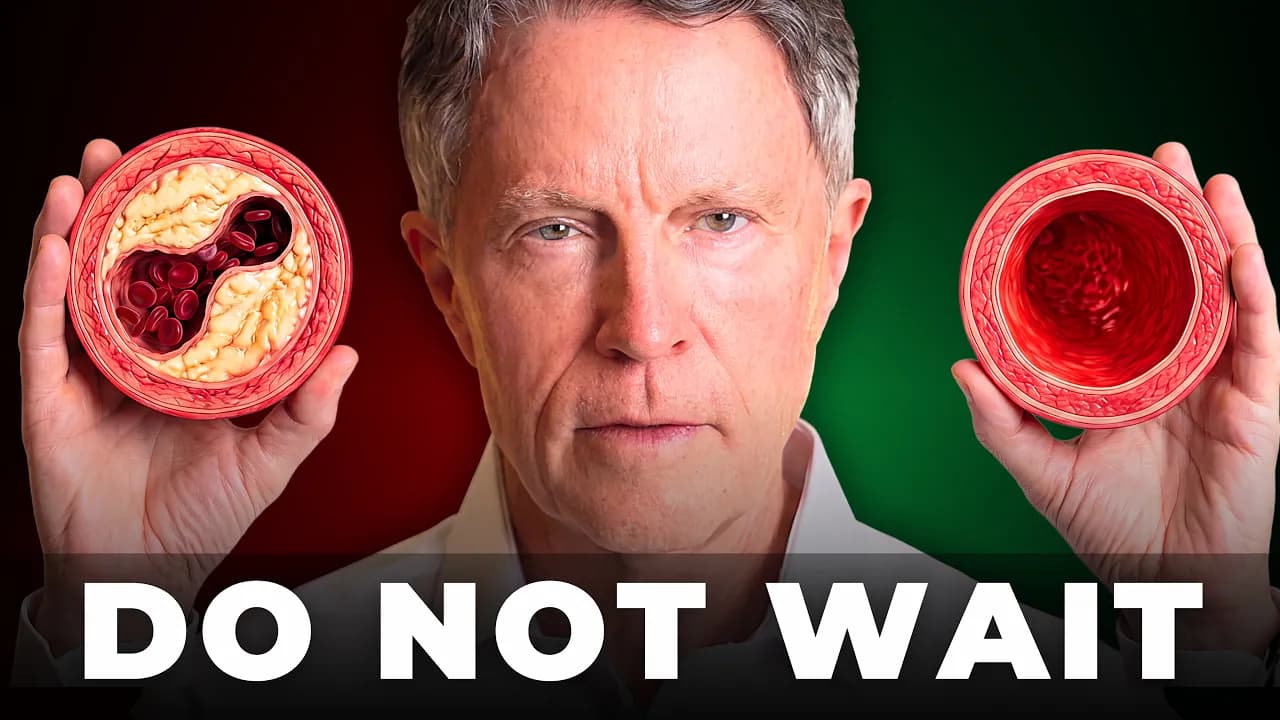
But what's making arteries get inflamed in the first place if it's not the cholesterol? The earliest damage comes from metabolic disease, insulin resistance, pre-diabetes, diabetes. But here's the scary part. At least 88% of American adults are metabolically not healthy. Even if their cholesterol looks perfectly fine because you can take somebody with bad metabolic disease, hit them with a high-dose statin, and their cholesterol is going to look great. Meanwhile, they'll keep building plaque because of their metabolic disease, just like Chris did.
And that's the key. Metabolic disease comes first, long before LDL becomes a problem. Insulin resistance is silently burning microscopic holes in the lining of your arteries.
When your cells stop responding properly to insulin, your body compensates by making more insulin. We call that hyperinsulinemia. Too much insulin in the blood. High insulin thickens artery walls. It triggers inflammation. It promotes plaque growth and it blocks nitric oxide, which normally helps your arteries relax and stay flexible.
At the same time, even modest glucose spikes, the kind that don't show up on your standard labs, are causing direct damage to artery walls every time they happen. That damage has a threshold. Every time your post-meal blood sugar climbs above 140 mg/dL (for people outside the US, a little bit over 7 mmol/L), it goes over these numbers and it triggers an inflammation response in the artery wall. And again, we're talking about twice a day, every day. When you eat that healthy oatmeal for breakfast and drink that orange juice or that healthy nut and honey cereal.
Once that damage builds up, your immune system is now trying to repair it. It's in catch-up mode. If the metabolic stress never stops, the immune system doesn't stop either. Your arteries start taking friendly fire from your immune system.
So, if you want to prevent a heart attack or stroke, your goal is not just lower the cholesterol, it's stopping the inflammation that helped trigger the cholesterol in the first place.
Now, why aren't doctors finding this? The problem is that's part of the way they test. And if you've ever had a standard checkup, your doctor probably ran fasting glucose, A1C, a cholesterol panel (total cholesterol, LDL, HDL, triglycerides). Most people think if those things look fine, the heart is fine. But that panel is not complete and it's dangerously outdated. Normal labs do not mean you're healthy. They mean no one has looked in the right place yet.
Research has shown multiple times that even in the US with one of the best medical manpower groups in the world, 3/4 of physicians cannot correctly identify early metabolic disease or pre-diabetes even in their own patients. And we're not talking about orthopedists and surgeons here. We're talking about family practitioners, internists, and even cardiologists. They don't know how to diagnose metabolic disease. So, millions of people walk around thinking they're protected while inflammation is quietly boiling them.
Some doctors have upgraded from LDL to ApoB. And it is a step in the right direction, but unfortunately way too small of a baby step. ApoB counts the number of cholesterol-carrying particles in your blood. How many are actually available to form plaque. But here's the problem with ApoB. It's still just a head count. It tells you how many particles walked into the room, but not what they are carrying. The ones that are actually carrying the quote bad cholesterol are not the bad ones anyway. It's the ones carrying triglycerides.
And why would they be carrying triglycerides? Because when you've got metabolic disease problems, you're not able to burn your triglycerides anymore. So, your liver is making more triglycerides. So, you're having to pump more and more particles carrying more and more triglycerides around in your body.
And it doesn't matter which side of the debate your doctor is on, whether he's an LDLer or an ApoBer or a metabolic disease guy, we all agree that the remnant cholesterol, the LDL, the VLDL, all of those particles with triglyceride in them, those are the ones that are causing damage. Those are the ones that are related to plaque.
There's a better test. It's called lipid fractionation or an NMR panel. Think of it this way. ApoB tells you how many people walked into the airport. The NMR is the scanner that tells you who's carrying something dangerous. The NMR version of this test can also show something called LP-IR. It's a direct measurement of how insulin resistant your those lipoproteins are. That is information you simply cannot get from a standard cholesterol panel.
Even the NMR is not enough by itself. To actually see the fire, you need inflammation markers. I use nine specific markers to assess cardiovascular inflammation. Let me walk you through them.
- First, hsCRP. This is your inflammation baseline. When it's elevated, something is irritating your system. It is not specific to arteries, but it is a powerful early warning sign.
- Second, Lp-PLA2 (sometimes called plaque 2). This one is specific to the arteries. hsCRP is not specific and it's got one of the most common false positive problems. Lp-PLA2 is specific to the arteries. It tells me whether your plaque is inflamed and unstable, the kind more likely to rupture and cause a heart attack. That's a different and more dangerous category than stable plaque.
- Third, IL-6 (interleukin 6), a molecule that works as a signal turning local inflammation into a more system-wide fire. When IL-6 is elevated, the damage is not staying in one place. It's creating more and more.
- Fourth, oxidized phospholipids. That tells me whether your lipids are damaged. You can have a normal ApoB number, but if those particles are oxidized, they are actively irritating the artery wall and promoting plaque. That is the distinction most labs completely miss.
- Fifth, fibrinogen. This is a clotting factor that rises with inflammation. When fibrinogen is elevated, the blood becomes stickier and that raises your risk of a clot after plaque rupture. Most doctors never order it.
- Six, F2-isoprostane to creatinine ratio. This is one of the more accurate ways to measure oxidative stress in the body. The stress of inflammation, the stress of burning your fuels poorly. When F2-isoprostane to creatinine ratio is high, your body's literally rusting from the inside out. It's being oxidized or rusting. It's on fire. That damage is showing up in your lipids, the triglycerides, the lipoproteins, the cholesterol. It's showing up in proteins. It's showing up in DNA. It's showing up everywhere.
- Number seven, ADMA and SDMA (asymmetric dimethylarginine and symmetric dimethylarginine). These markers measure whether your arteries have lost the ability to dilate and repair themselves. When these are elevated, nitric oxide is impaired. That's one of the earliest signs that plaque is about to take hold.
- Eighth, homocysteine. You may have heard of this one. Most doctors don't take it seriously, and that's another mistake. High homocysteine increases oxidative stress, damages the lining of the artery wall, and promotes clot formation. But the good news, it's modifiable with methylated B vitamins and trimethylglycine (betaine). But you have to know that it's high, so you have to be testing, not guessing.
- Ninth, microalbumin to creatinine ratio. This one surprises people because it looks like a kidney test and it surprises your doctors because they think it's a kidney test and it is sort of but here is why it matters for your heart. When albumin starts leaking into the urine, you think well that's kidney damage but what it means is the small vessels, the small blood vessels, the capillaries are already under stress. That's why the capillaries in the kidneys are leaking that protein into the urine in the kidneys. It's like a canary in the coal mine. It's the first to tell us there's a problem. So, if your kidney capillaries are breaking down, there's a good chance that your coronary and brain vessels are too. Even a mild elevation here is early warning of cardiovascular disease, especially in people with insulin resistance or metabolic disease.
So, we got nine markers. Most standard panels run zero of them. None of them.
But knowing if you have inflammation is just half the journey. If you really want to know if insulin resistance is driving your inflammation and therefore your plaque buildup, there is one test that will tell you for sure.
Here's what I've learned working with thousands of patients, including people like Chris with normal cholesterol who still ended up with plaque. If you do not look for the root cause, you will keep chasing symptoms. And in over 80% of cases, that root cause is metabolic dysfunction, pre-diabetes, diabetes.
Standard labs measure fasting glucose and A1C. If those are normal, most doctors will say you're fine. But that's not how insulin resistance works. You can have severe metabolic dysfunction for years before either of those numbers ever goes out of range.
That's why I use a different set of tests. The most revealing is the oral glucose tolerance test with insulin response (OGTT with IR). The idea is simple. Give the body a glucose load and watch exactly how your body responds to glucose. Not just the glucose level after you've been fasting and not just how your glucose responds, but also look to see how much insulin your body requires, what insulin levels it requires in order to manage that glucose and get it out of your bloodstream where it can cause damage and into your cells where it's going to be safe.
Here's what I often see. Glucose spikes modestly and comes back down within two hours. Looks fine on paper, but the insulin tells us a different story. It spikes five to 10 times above fasting and it stays elevated even at two hours. Sometimes it's still elevated the next morning. That pattern tells me the pancreas is working way too hard. It's going to wear out. It cannot keep glucose in range year after year at that level of resistance.
The OGTT with IR is over 95% effective at finding early metabolic dysfunction. So, why don't doctors do it? Well, it takes two hours, it takes time, and it takes a skilled lab technician.
A good alternative are these three simpler tests that give us a close assessment.
- Fasting insulin: Even with normal glucose, a fasting insulin consistently above 5 is a red flag that your body's overcompensating. This is often the earliest signal I see before plaque begins forming.
- HOMA-IR: It combines fasting insulin and fasting glucose into a single calculated score. A healthy HOMA-IR is under 1.0. Above that, your metabolism is inflamed and pushing you toward plaque. Unfortunately though, I see it too many times where people have great HOMA-IR, but once you challenge that system with glucose, the problems begin to show up.
- Triglyceride to HDL ratio: Very simple, very easy, and so many people have it. It's part of the standard quote cholesterol panel end quote. It's the simplest and most underrated ratio I use. If your triglyceride to HDL ratio is over 2, that's a direct signal of insulin resistance and poor fat metabolism. Unlike LDL, this ratio actually reflects metabolic stress directly. When someone comes to me with normal labs but still has plaque, I go there first because most of them have a triglyceride over HDL ratio sitting right there in front of you and it's elevated.
If you're frustrated with your current medical care, you're not alone. I've been there. Years ago, I had to take control of my own health to avoid a heart attack and a stroke because the tests I was getting just weren't catching my risk.
Traditional cholesterol and metabolic panels don't look at the root causes of heart attacks and strokes or blindness or kidney disease or erectile dysfunction. That's why we created the Heart Reveal Lab Panel. We measure inflammation inside the arteries, arterial or vascular inflammation, early insulin resistance, the subtle signs of metabolic breakdown. These things build up in your arteries years before diagnosis.
So what happens is you first get a metabolic problem that starts to damage your arteries and then you may have a few years to get warning before you have like a heart attack. That's how to watch for this.
Now these are the markers that reveal where your health is truly headed long before symptoms appear. Every set of results is reviewed by me and the clinical team. Then you'll meet with a trained adviser to walk through your report line by line. You'll understand what each result means and how to respond to it with practical steps that make a real difference.
This approach gives you a clear picture of what's happening inside your body and a path to protect yourself from what's ahead. So, if you're ready to stop guessing and start understanding your real risk test, don't guess. Click below or scan the QR code if you're on a TV screen to get your Heart Reveal Lab Panel today.
And if you're not quite ready for that, and that's okay. You can start by downloading my free Heart Reveal Labs ebook. You can start learning which tests actually help you to avoid a heart attack. Click that link below. Scan the QR code.
You may be thinking, "All of these tests are for what?" Let's say you have plaque and metabolic dysfunction. What should you do next? Watch this video where I further explain how to fix your lifestyle to reduce inflammation and clean arteries.
Remember, growing old isn't for sissies. I'm 68. You may be able to tell by the wrinkles in my face, but it's a heck of a lot easier with healthy arteries.
Keep Thomas Fordham Brewer MD MPH in your library
Save the videos and channels worth coming back to, and find them again in one place.