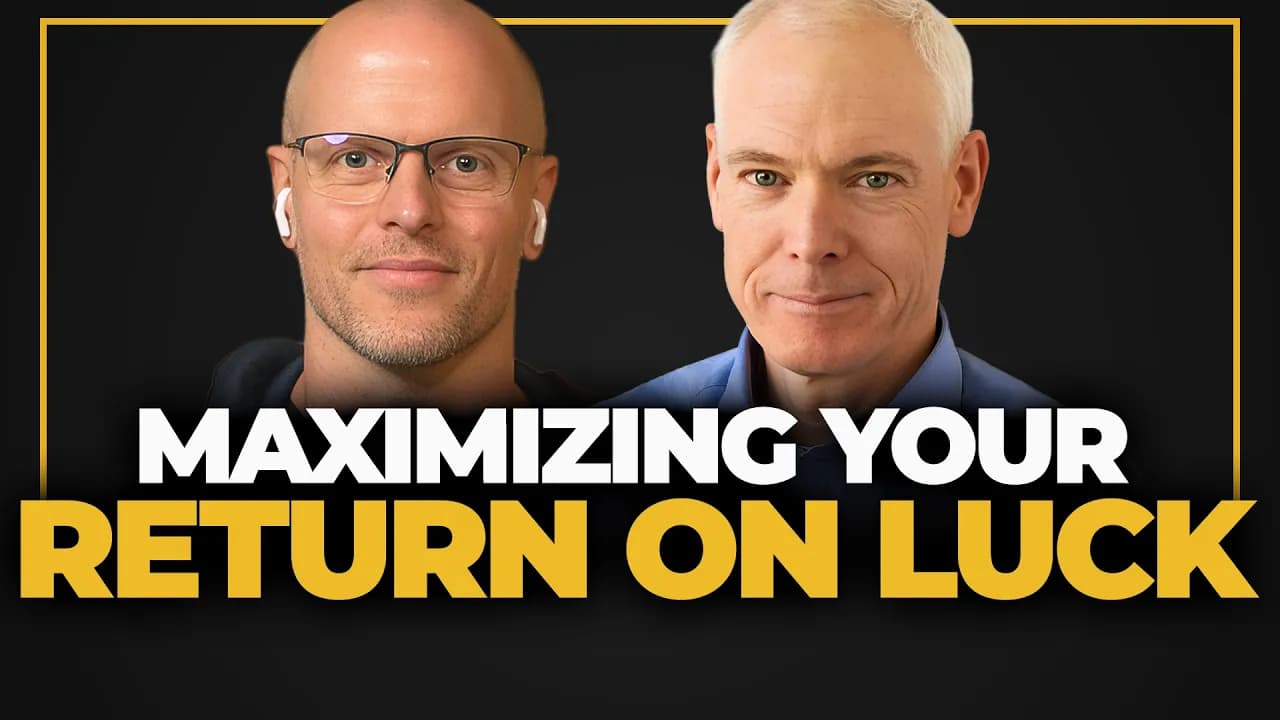
The 3 Types of Luck — What 10x Winners Do Differently
In a Nutshell
Luck is defined as a surprise event you didn't cause with significant consequences, occurring in three types: **what luck** (good/bad events), **who luck** (key people), and **zeit luck** (timely cultural fits). Big winners don't experience more or better luck than others but excel at **return on luck** by intensely capitalizing on rare **Natalie moments**—unequal opportunities requiring 10x effort. Maximize this by increasing your **surface area for luck** (e.g., moving to opportunity hubs) and applying outsized intensity to high-conviction timing, as in angel investing or emerging fields like psychedelics.
These notes were generated by AI and may contain inaccuracies.
Morton gets credit for collaborating to define luck systematically. Luck is not an aura; it's an event—a luck event. Parameters of a luck event:
- You didn't cause it. (Refutes "you make your own luck," since bad luck like a cancer diagnosis also qualifies.)
- It has a potentially significant consequence, good or bad.
- It came as a surprise—you didn't know it would happen, when, or in what form.
Any event meeting these three tests is a luck event. This lens reveals luck events happening all the time.
Studied companies with comparatives. Big winners (huge outsized returns relative to direct comparisons):
- Did not get more good luck.
- Did not get less bad luck.
- Did not get bigger spikes of luck.
- Did not get better timing of luck. Luck as a distributed variable was even between 10x winners and comparisons. Luck did not separate them.
Key differentiator: return on luck. When luck came, big winners had an amazing ability to make more of it compared to others.
Examined luck in subjects' lives, including permutations like the roulette wheel (unexpected encodings throwing you into situations). Example: Grace Hopper—pulled from Vassar professorship during World War II, assigned to Harvard's Mark I (first computer), setting her life's direction.
Three types of luck:
- What luck: Good event that goes your way or bad event (e.g., cancer diagnosis).
- Who luck: Often underappreciated; gigantic in life. Speaker's life: continuous who luck events starting with Joanne, plus bad who luck of his father.
- Zeit luck: What you're doing fits a particular zeitgeist you didn't cause. Examples:
- Benjamin Franklin: Would not be notable without the Revolution and founding of the country.
- Alice Paul: 19th Amendment and suffrage succeeded because of her timing; 20 years earlier/later, not that achievement.
- Jimmy Page: Born in England, coming of age in blues rock revolution amid great music.
- Led Zeppelin founding: Number of things that had to go right. Robert Plant quote: "What was that? The gods roared and lightning crackled and Blake wrote a poem from under the ground and all England was reunited." First jam in basement: played Train Kept A-Rolling, four came together.
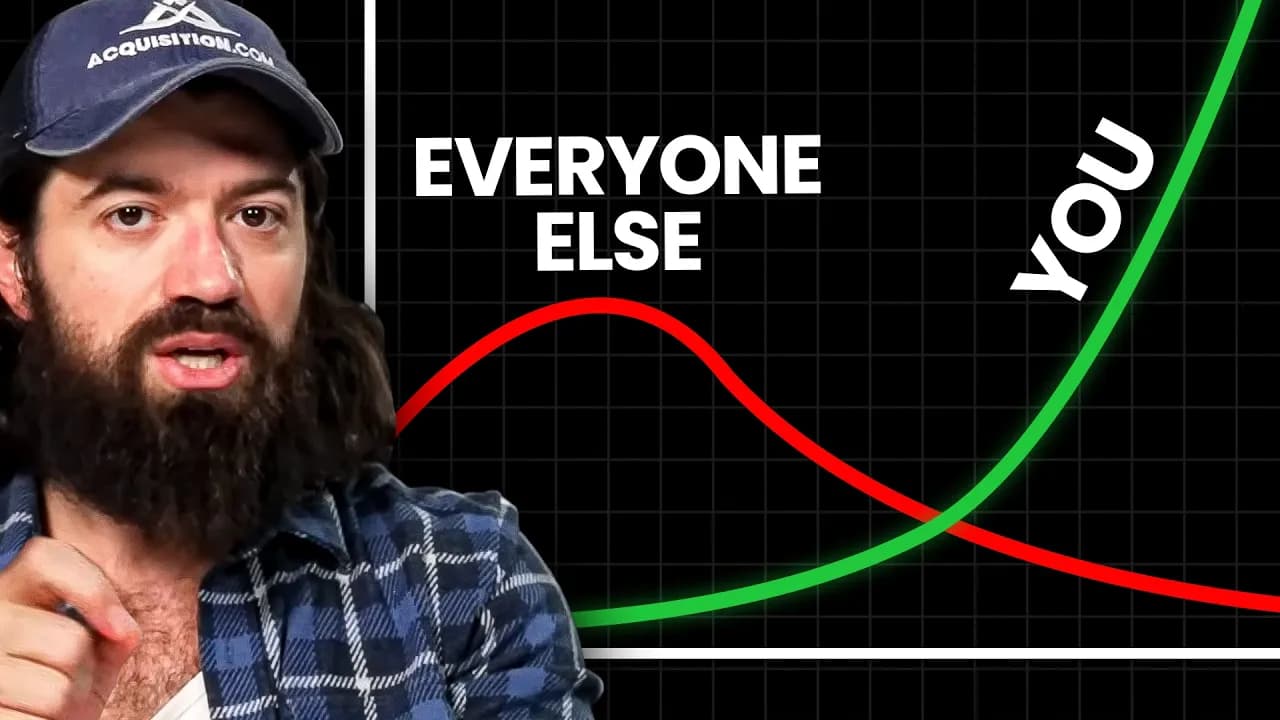
10x winners excel at return on luck due to Natalie moments: Not all time in life is equal—requires an unequal response to an unequal moment.
Analogy to Tim: 600 tennis balls coming at you; pick the one to hit with 10x intensity in a not all time in equal moment.
Tim's response: Overlap with his return on luck, ROI like angel investing—80% misses (Marco with no polo), rare huge wins (winning point in Wimbledon). Identifies with who and zeit luck:
- Started angel investing ~2008-2010: Beautiful time despite skill involved (rarely solely luck or skill; usually combination).
- Felt not all time in life is equal periods: Apply pressure to the vessel.
- First book.
- Early angel investing.
- ~2015: 10x-30x down on psychedelic-assisted therapies and bioelectric medicine (non-invasive brain stimulation, sometimes invasive). High conviction it's around the corner; peeking at unevenly distributed future.
Concept: Increase surface area for good luck to stick.
Tim's who luck (startups, first book success) depended on moving to Silicon Valley—middle of the switchbox; without it, no surface area for who luck to stick.
Speaker: Luck and return on luck operate anywhere, regardless of surface area size. Example from family: Rural northern Oklahoma grandmother (beautiful farm girl) at Wichita airport. Grandfather Jimmy Collins (dashing test pilot) lands for fuel on Memorial Day weekend; they meet, marry 4 days later—who luck moment both seize as not all time in life is equal.
Keep Tim Ferriss in your library
Save the videos and channels worth coming back to, and find them again in one place.