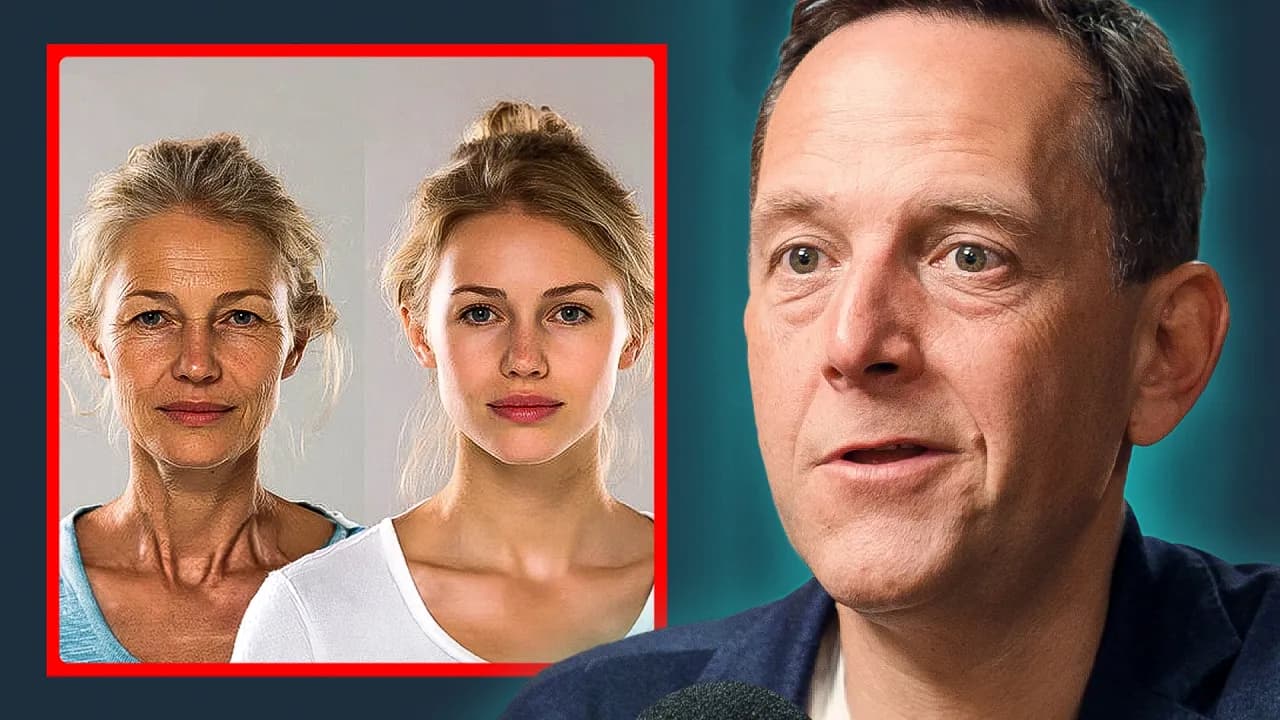
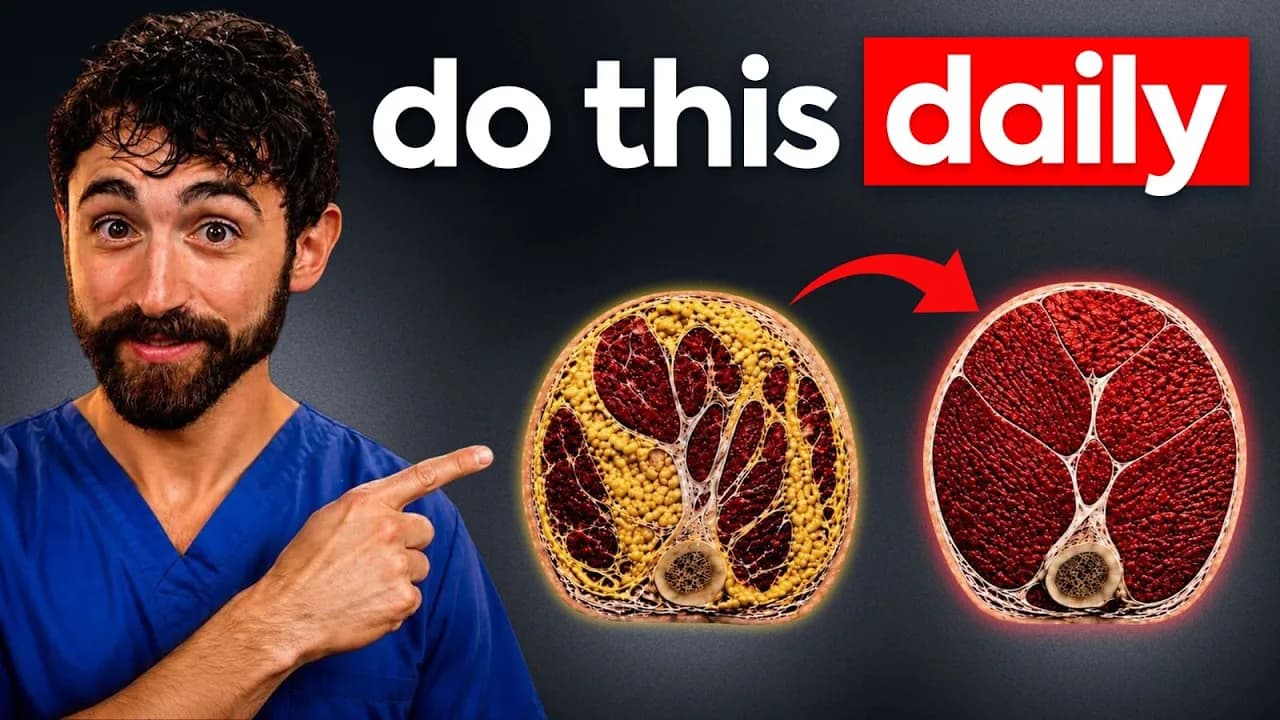
The Science Behind Why We Age | Lifespan with Dr. David Sinclair #1
In a Nutshell
Aging is a reversible epigenetic process of "ex-differentiation," where cells lose their identity due to disrupted DNA packaging, driving diseases like Alzheimer's, diabetes, and heart disease; it's controlled by conserved longevity genes (mTOR, AMPK, sirtuins) activated by hormesis from fasting, exercise, calorie restriction, and drugs like metformin and rapamycin. Long-lived species (naked mole-rats, bowhead whales, bristlecone pines) thrive in harsh environments by upregulating these genes, proving humans can engineer similar longevity—biological clocks now measure and reverse aging by years in humans via interventions like metformin + growth hormone + DHEA. Lifestyle (80% of control) trumps genetics; future episodes detail practical steps to slow/reverse aging for decades healthier life, treating aging as a treatable disease rather than whack-a-mole symptom management.
These notes were generated by AI and may contain inaccuracies.
Welcome to the Lifespan Podcast, where we discuss the science of aging, and how to be healthier at any stage of life. David Sinclair is a professor at Harvard Medical School running a research lab that studies aging, why we get old and why we may not have to. He's been there for 20 years, and they've made some breakthroughs to talk about on this podcast. Co-host is Matt LaPlante, a professor of journalism at Utah State University, the Harvard University of the Mountain West. They co-wrote a book called Lifespan together. The book has had great reception, but so much has changed in the last three years since publication.
Matt LaPlante was a reporter and war correspondent. They talk a lot every week while writing another book due out probably next year. Their conversations are funny, and people suggest they should be a podcast. Matt brings out the best in David by asking caveman-like questions that gave rise to Lifespan. Working with David feels like a graduate course for Matt, a lifelong learner.
Before meeting, Matt wrote a book about epigenetics and Superlative: The Biology of Extremes about animals that teach how to optimize biology. We're at a turning point in medical history where we understand how to control our biology, optimize our bodies during early life, mid-life, and late life to lead lives decades longer and healthier. David reads thousands of scientific papers with a team of researchers. They present trustworthy information beyond untrustworthy internet sources, citing original studies and specifying the organism (worm, yeast cell, mouse, or human). No supplements or products are being sold; discussions are fact-based.
Eight episodes total. This episode: Why We Age. Future episodes cover actionable information for living decades longer and better, as big as antibiotics and vaccines. Includes low/no cost implementations like when to eat, packing meals into shorter periods to save money. Not just for billionaires. Covers what/when to eat (meat, vegetables), exercise timing, stressing the body via hormesis (little stress puts body in defensive mode), specific studies on exercise/eating for longevity, cold/heat therapy, peptides, exosomes, cutting-edge science, age reversal.
Athletic Greens: All-in-one daily greens drink with 75 vitamins, minerals, whole foods-sourced ingredients, adaptogens, probiotics, prebiotics, digestive enzymes, vitamin C, zinc. David drinks it every morning, especially when traveling. Try at athleticgreens.com/sinclair for five free travel packs, year's supply of vitamin D3 and K2 (K2 directs calcium to bones, not arteries).
InsideTracker: Personalized nutrition platform analyzing blood and DNA. David has used it over a decade, chairs scientific advisory board. Easy blood draw (clinic or home, 15 minutes). Provides graphs, diet/lifestyle recommendations to improve biomarkers. InnerAge test compares biological to chronological age (David helped develop). Visit insidetracker.com/sinclair for 25% off with code Sinclair.
Levels: App with continuous glucose monitor to interpret glucose data. David joined as advisor. Shows food impacts (e.g., white rice and grapes spike blood sugar, potatoes don't). Stable blood glucose important for energy and long-term health. Join at levels.link/sinclair, skip 150,000 person waitlist.
Research moves fast; David reads papers before getting out of bed. Technology allows a million experiments that once took a year. Publications flourish weekly. Goal: keep public up to speed on discoveries, technology, daily applications. Primer on Lifespan book content provided even if unread; much has advanced light years since publication, including new daily life applications.
Misconception: preventing old age. Actually preventing aging throughout lifespan, even before birth. Recent studies measure infant's age in utero. When young, we age faster than when old (discuss clock later). Can improve health/long-term survival at any age to be healthy later, look good, function optimally now. Aging not conflated with years lived. Aging not inevitable; in lab, aging controlled precisely—speed up, slow down, reverse in animals. Technology exists to measure, slow, reverse aging, changing human history.
Animals age at different rates despite same root cause. First person to 150 already born; species live that long, no reason humans can't by learning how. Naked mole-rats: live over 30 years vs. mice (2+ years), rats (4+ years). Similar rodents but mole-rats have biological/molecular traits for longevity (Vera Gorbunova's work with David's child Alex). Low predation species (whales, mollusks, sharks, mole-rats) invest energy in long-lasting bodies, reproduce slowly. Can engineer humans similarly.
Bristlecone pine: live 5,000 years, old when Jesus born. All built from same stuff (DNA, proteins, RNA); can engineer longevity. Without predation for 10 million years, humans would live centuries; engineer now instead of waiting for evolution.
Long-lived species in extreme environments turn on anti-aging defenses via hormesis (adversity that doesn't hurt makes healthy/long-lived). Vast similarities across organisms; e.g., humans and whales separated by 40 million years (blink in geological time), could live as long as whales (bowhead whales >200 years, dated by 200-year-old harpoon). Genomes show multiple copies of longevity genes (some discovered by David in twenties), turned on by adversity; whales have higher levels.
Bristlecone pine has whopping amounts. Same genes in yeast, worms, flies, mice, humans (40% genome similarity to banana). Learn more about aging from yeast than Alzheimer's/cancer. Same genes control aging across species; conserved, so solving aging easier than cancer/heart disease.
Hundreds of longevity genes in three main buckets. First: mTOR (mammalian target of rapamycin), senses amino acids. Big steak activates mTOR to make muscle, burn energy. But low mTOR activity optimal for longest lifespan. Rapamycin (suppresses mTOR, used low-dose for immune suppression) extends life in yeast, flies, worms, mice—even old mice (20 months, like 75-year-old human) live longer. Low mTOR signals tough times: hunker down, build stronger body.
Matt Kaeberlein treats dogs with rapamycin, protects heart, testing lifespan. Works across species because aging conserved; rapid progress possible from yeast/worms to humans.
Aging is not complicated once you understand the genes that control it and fundamental causes. Genes like mTOR control aging; others will show similar patterns.
AMPK (AMP-activated kinase) is a longevity gene where more activation is beneficial. Activate it by eating less or fasting. It increases insulin sensitivity, removes sugar from bloodstream (toxic if high), and ramps up energy-producing mitochondria (ancient bacteria in cells).
Thousands of labs study AMPK. Nir Barzilai at Albert Einstein College of Medicine tests if AMPK-activating drug extends human lifespan and slows aging.
Metformin, a diabetes drug, is super safe, on WHO's List of Essential Medicines, costs pennies in much of world, available over-the-counter in most countries (prescription required in US, English-speaking countries, Europe). Frontline therapy for Type 2 diabetes (high blood sugar).
Ongoing human trial: Targeting Aging with Metformin (TAME study).
Sinclair's lab with Rafael de Cabo at National Institute on Aging showed metformin makes mice healthier and live longer.
Type 2 diabetics on metformin live longer on average than non-diabetics and are protected against cancer, heart disease, frailty (risks increase without metformin).
AMPK senses low energy (good for longevity; reason Sinclair fasts). Responds by protecting body (hormesis: what doesn't kill you makes you stronger). Down-regulates mTOR, activates other longevity genes.
Longevity genes (mTOR, AMPK, sirtuins) work in concert as a network. Scientists realized ~10 years ago they interact (previously fought over importance).
Genes activated by stress: mTOR (inhibited), AMPK (activated), sirtuins (Sinclair's focus).
Family of 7 sirtuin genes linked to aging (discovered by Sinclair as MIT postdoc in 1990s). Studied what makes yeast live longer; mutation in SIR2 (silent information regulator 2).
Sirtuins are central regulators of longevity in yeast, worms, flies, mice, humans. Fasting (2005) and exercise activate sirtuins, working with mTOR/AMPK.
Doctors recommend diet/exercise, which activate sirtuins.
Longevity genes need down- or up-regulation via lifestyle, diet timing, exercise. Trick body into thinking under survival threat (adversity, hormesis)—not too much to avoid damage, but enough for long-term benefits.
Sirtuins involved in information theory of aging and ex-differentiation (cellular confusion).
Cell: microscopic fluid bag packed with proteins encoded by DNA in nucleus. DNA: 6-foot strand packed by wrapping around histones into chromosomes. Some genes unspooled for reading.
Analogy: cassette tape—magnetic tape with info, only small bit readable at a time (a gene). Packaging specific to cell type (brain cell stays brain cell, skin cell stays skin).
Epigenetics: controls tight packaging/unspooling of genes. With aging, packaging lost (like tangled cassette tape), wrong genes activate → ex-differentiation (cells lose specific identity, become generalized/confused). Root cause of aging.
Ex-differentiation root cause of aging and most diseases (90% of Alzheimer's caused by aging process starting from birth).
In Alzheimer's: neurons lose identity (gene expression shows part kidney/liver); visible in brains. Normal aging too—even at 50, some brain cells confused (part skin/kidney), explaining reduced function vs. age 20.
Type 2 diabetes: cells lose ability to uptake glucose via GLUT4 transporter (worsens with obesity, no exercise). High blood sugar toxic (HbA1c test: >5.7% pre-diabetic, >6.5% diabetic; predisposes to heart disease, frailty, dementia). Metformin activates AMPK, partially resets aging, helps cells remember identity (sirtuins bundle DNA).
Heart disease: same process. Lab accelerates aging in mice by disrupting sirtuins/epigenome → heart disease. Clinical trials in humans now.
Diseases not separate; same aging process (modern medicine treats separately: different drugs for diabetes, Alzheimer's, cancer, frailty, muscle wasting, bone loss). Slow/reverse aging → diseases slow/go away.
Accelerated aging in mice: more gray hair, weaker, confused, less active.
Biological clocks: 2013 papers by Steve Horvath and Greg Hannam. Measure DNA methylation patterns (chemical tags on DNA for cell identity). Predictable linear changes → biological age from skin/blood (not chronological). Predicts death.
Liberating: can slow/reverse (DNA repackaged, cells work like young).
Cost dropping: first genome $2B; now ~$100/day. DNA methylation sequencing few hundred dollars now; student Patrick Griffin pre-publication shows pooling thousands of samples < $1 each. Future: cheek swab for weekly biological age.
Biological age > chronological age more important for health/disease risk.
People with poor diet/exercise have older biological age, die sooner.
Greg Fahy (company in California) with UCLA/Steve Horvath: triple treatment (DHEA, metformin, growth hormone) rebuilt thymus, reversed blood epigenetic clock by 2.5 years (one month). Repeatable (up to 5 years); some reversed 20 years in a year (measured pre/post, similar treatments).
Aging malleable in yeast, mice, humans. There are a number of ways now
Interventions reverse biological age by 2.5 years according to biological clocks. Next steps: determine if subjects are healthier and look younger. Anecdotally, yes. To be immortal, go back one year every birthday.
There's no law that says we have to age. And we now are learning, not just what causes aging, but how to reset the body so that it's young again. And we don't know how many times you can reset the body, but I'm betting that it's more than once.
In a world where age can be reset multiple times, perhaps hundreds, humanity changes fundamentally. This podcast will be seen in 100 years as the turning point.
Aging is a fundamental process: ticking clock, unspooling of genes in trees, yeast, worms, mice, humans. Leads to hallmarks of aging and diseases. Doctors treat end-stage too late, like putting a band-aid.
Above diseases and aging cause: regulators - mTOR (responds to amino acids), AMPK (blood sugar, energy), sirtuins (both plus heat, cold). They slow bad processes. Main driver: epigenetic differentiation process (X differentiation).
Activate middle protective survival layer to slow/reverse aging.
Top layer: environment. Genetics from parents: 20% control of aging (Christensen et al., 2003 Danish twins study - genetically identical twins, different lifestyles/environments; some smoked, some exercised). 80% in your hands: how you live.
Top layer controls longevity genes, epigenetic differentiation, disease.
Understand how to live to maximize longevity, slow epigenetic aging. Sirtuins: third group of longevity genes. Three of seven in nucleus control spooling. Epigenetic process due to sirtuin malfunctions. Maintain via exercise, dieting, hunger. Chemical ways later.
Sirtuins package genome. SIR = silent information regulator: silent (bundling DNA, silencing wrong genes e.g. liver in brain), information (DNA), regulate it.
1990s origin of work on information theory of aging, now leading theory (popularized by book).
Metaphor: cassette tapes to CDs. CDs hold 10 songs, digital 1s/0s like DNA (A-C-T-G). Laser reads for music. Cells play combinations of 20,000 genes.
Aging = scratches on CD: laser skips, wrong songs, cacophony. Lab work: slow scratches, polish CD for symphonies.
Diseases of aging disappear with polishing. Turning point: understand fundamental cause, not fix problems late.
We've been far too often working on trying to understand why we're falling off a cliff at the end of life, without even asking the question, "What brings us to the edge of that cliff in the first place."
Now understand path to cliff, how to prevent.
Stay so young healthy, diseases don't push off cliff. Young survive diseases (e.g. COVID-19). Harness middle layer (mTOR, AMPK, sirtuins, others) with lifestyle (easy today), nutrients, drugs, supplements.
Future episodes: what's true (supplements, manufacturers), untrustworthy world.
Society: treat aging as a disease, treatable condition. Current whack-a-mole medicine: wait till sick, treat specific disease late (e.g. cancer, heart disease), ignore cause. Good heart drugs, but brain ages → dementia rise.
All aging diseases from same process. Halt/slow/reverse in all tissues/organs for true longevity: decades healthier life.
Not difficult to slow aging, measure it. Primer here; details later on daily actions for health, performance, looks, longevity.
Once understood, imperative. Obligation to family/society: don't abuse/neglect body, avoid nursing home burden. Stay productive.
Extra 30 years: new career, travel, educate great-grandkids.
Next 7 episodes fun. Research on what works/doesn't. Challenge quick fixes, assumptions.
Myths: telomeres, antioxidants. Many do little. Some work now, some coming.
Next episode: dieting, fasting.
Subscribe Apple, Spotify, YouTube (5-star Apple). Support sponsors, Patreon: patreon.com/davidsinclair.
Keep David Sinclair in your library
Save the videos and channels worth coming back to, and find them again in one place.