The U.S. Is Now Buying Yen
In a Nutshell
The US is buying yen to quietly weaken the dollar, helping both America reshore manufacturing and Japan avoid a treasury selloff that would spike US borrowing costs. With $40 trillion in debt, the US faces an impossible trillemma: it can only achieve two of three goals—reshoring, price stability, and economic stability—so it must sacrifice the dollar through deniable intervention rather than explicit devaluation. Treasury Secretary Scott Bessent's leaked note signals US commitment to yen strength, which aligns with Trump's preference for a weaker dollar and sets up future monetary expansion as the solution to rising debt service costs.
These notes were generated by AI and may contain inaccuracies.
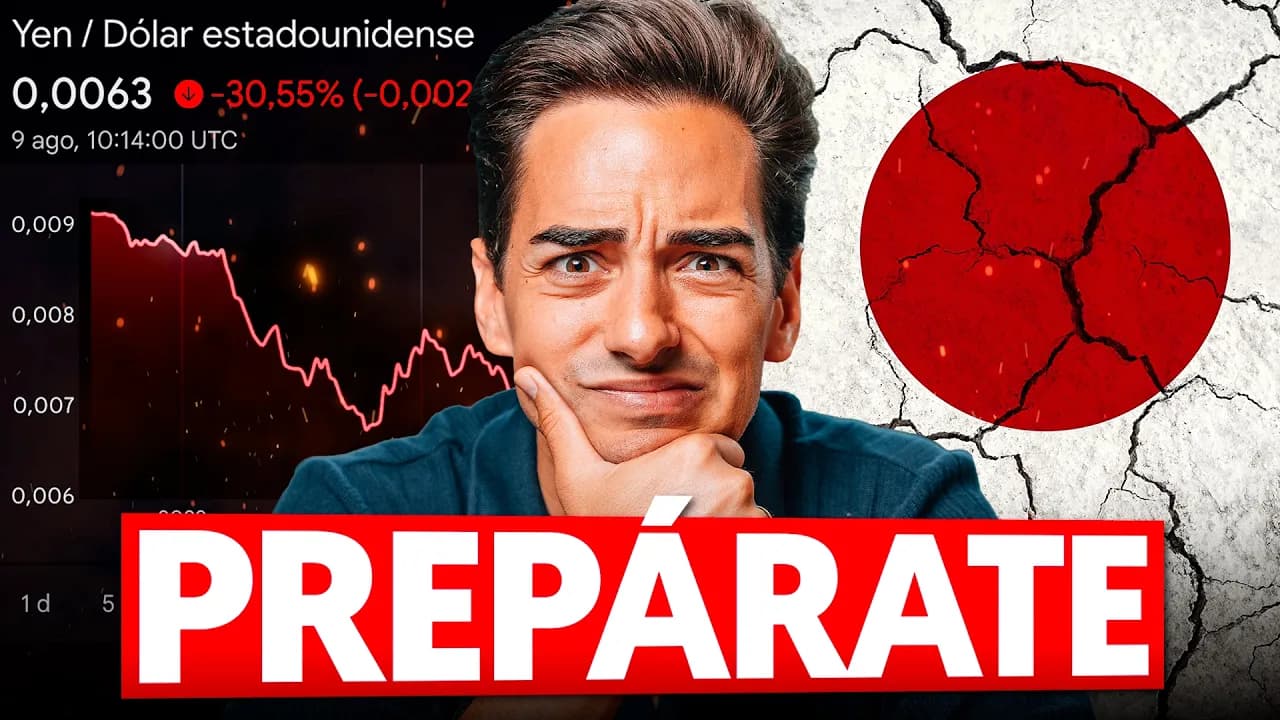
The United States government is spending money to save another country's currency for the first time in 28 years. Japan and the US warned of further coordinated action in FX markets following the first joint intervention in 15 years to lift the Japanese currency from a near four-decade low. President Trump stated the joint intervention signals Washington's friendship with Tokyo, noting "We have a good relationship with Japan. We're very strong, very, very strong financially and they are, you know, they have a weakening yen and they wanted a little bit of help and we're always there for Japan. Japan's been very good to us with the exception, of course, of Pearl Harbor."
The world learned about this intervention through a photo of a note belonging to Scott Bessent, the US Treasury Secretary. The note stated: "To do by Japanese yen 5 to 10 billion." A Reuters photographer captured and published the image, revealing that the United States Treasury is intervening in the Japanese currency market.
This is a rare occurrence, prompting questions about why the US is doing this and whether the photo was an accident or leaked on purpose. Two theories exist: Theory one suggests it's a genuine to-do list showing the US is actually buying yen. Theory two proposes the picture was planted deliberately to manipulate investor behavior, as someone of Bessent's expertise wouldn't need to write down such specific instructions including the ticker symbol JPY.
The $5-10 billion figure is insufficient to affect currency markets, which trade over a trillion dollars daily. However, if traders worldwide see the note and believe the US government is buying yen, this could change market psychology. Traders betting against the yen might reconsider their positions knowing the US government is taking the opposite stance.
US Treasury Secretary Scott Bessent stated: "We understand that they are making serious efforts to stem the substantial undervaluation in their currency and Joe this is more than just a market intervention that through our conversations with them we believe that they are going to continue to put the right policies in place that will lead the yen to get back to more of a normal equilibrium price."
The same week the note was published, US national debt crossed $40 trillion for the first time. In March 2024, the debt was $34.5 trillion, representing a $5.5 trillion increase in just two years without recession, pandemic, stimulus package, or world war.
The US faces a trillemma requiring three simultaneous objectives that cannot all be achieved:
- Reshoring manufacturing to produce chips and weapons domestically for national security reasons
- Maintaining price stability by keeping inflation down
- Preserving economic stability including strong stock markets, low unemployment, and continued growth to service the $40 trillion debt
The constraint is that only two of these three goals can be pursued simultaneously.
Reshoring requires American factories to compete with Chinese manufacturers, which necessitates a weaker dollar since a strong dollar makes US products more expensive. However, a weaker dollar increases import costs and drives inflation higher, conflicting with price stability goals.
When Fed Chair Kevin Worsh prioritized price stability (implying a strong dollar), stocks, gold, and Bitcoin all declined. The AI trade weakened, and 30-year Treasury yields reached 5.27%, the highest level since June 2007.
The US must prioritize reshoring for national security and maintaining jobs and bond market stability given the $40 trillion debt. This leaves price stability as the sacrifice. The bond market reflects this by demanding higher interest rates, with 30-year yields rising as investors anticipate future currency printing.
Higher yields make carrying the $40 trillion debt more expensive, requiring more borrowing and more bonds to sell, which pushes yields even higher - creating a cycle of borrowing to service existing debt.
The US needs to weaken the dollar without announcing it officially, as explicit devaluation would trigger treasury sales and crash the dollar's value. The weakening must be deniable. When the US bought yen, it sold euros rather than dollars, allowing the yen to rise and dollar to fall while maintaining that no dollars were sold on paper.
Among the trillemma options, sacrificing the dollar is the only choice that avoids immediate economic crisis, though it creates slower, less noticeable problems.
Alpha Pix uses quantitative screening across value, growth, profitability, momentum, and analyst earnings revisions, followed by human analysis to select two stocks monthly. Example: Micron was held during 2025 tariff-driven semiconductor selloff because data showed rising earnings revisions and expanding margins, resulting in 239% gains by year-end. Four separate recommendations each gained over 20% within five-day windows. The model portfolio is up 371% since 2022 inception versus 101% for the S&P, and over 60% in the past year versus 22% for the S&P.
Japan is America's largest foreign holder of government debt with over a trillion dollars in treasuries. For 40 years, Japan sold cars, chips, machines, and goods to the US, then lent dollars back by purchasing US government bonds. This arrangement worked because Japan's zero interest rates made US bonds attractive.
When the yen strengthens rapidly, the yen carry trade unwinds as investors sell US assets to repay yen loans. This caused global market corrections, including the August 2024 preview when worldwide stock markets declined sharply.
If Japan raises interest rates or sells US treasuries to strengthen the yen, America's largest creditor would be selling US debt precisely when the US needs to borrow more, especially amid Middle East conflicts.
US needs a weaker dollar to reshore manufacturing. Japan needs a stronger yen to prevent pension funds from panic-selling US treasury bonds. Both countries share the same objectives: dollar down, yen up. The US intervention protects America's borrowing capacity at reasonable rates rather than acting out of generosity toward Japan.
Scott Bessent previously made billions through currency trades. In 1992, while working for George Soros in London, he identified that British homeowners had floating-rate mortgages tied to Bank of England rates. Britain had pegged the pound to the German currency but couldn't raise rates to defend it without bankrupting homeowners. Soros bet $10 billion against the pound. Britain raised rates from 10% to 12% then announced 15%, but surrendered the same day. The pound crashed, and Soros made $1 billion in a single day on what became known as Black Wednesday.
In 2012, Scott Bessent bet against the yen after Japan's new Prime Minister Shinzo Abe promised to print money to weaken the currency. As predicted, the yen collapsed from the high 70s to over 100 per dollar, generating approximately $1 billion for George Soros in one of the decade's greatest macro trades.
Bessent left Soros's fund to start his own hedge fund with $2 billion of Soros's capital before becoming US Treasury Secretary under Donald Trump. His expertise suggests the leaked note was likely intentional psychological manipulation rather than an accident, designed to discourage traders from betting against the yen by making the US government's commitment appear credible.
Buying yen or creating the illusion of buying strengthens the yen, which as measured in dollars, weakens the dollar - aligning with Donald Trump's long-stated preference.
An open AI researcher named Leopold Ashenbrenner lost billions when his hedge fund collapsed. Two historical parallels exist: 1998 LTCM collapse where Wall Street and Fed provided bailout, lowered rates, added liquidity, and stocks rose 55% over 18 months; versus April 2007 when New Century's bankruptcy preceded 50% stock market decline.
After both the 1998 LTCM bailout and 2007 New Century crisis, gold never traded lower again. Government responses consistently involve printing money, benefiting assets that cannot be printed.
Assets fall into two categories: things governments can print more of (dollars, bonds) versus things they cannot (gold, Bitcoin, land, energy, physical assets, commodities, factories). Before returning to large-scale printing, markets may continue declining until an event justifies monetary expansion.
A theory suggests US policies - discussing strong dollar while implementing contradictory policies, plus Middle East conflicts - appear designed to trigger rather than avoid crisis. This would allow Fed Chair Kevin Worsh to justify printing trillions without destroying his inflation-hawk reputation, as it would appear as rescue rather than policy reversal.
The sequence might involve everything declining first (including gold and Bitcoin as seen in recent six weeks), followed by long-term treasury rates spiking due to Middle East events or other triggers, then monetary printing beginning. No one knows when this occurs - could be this year, next year, or five years from now.
Monitor 10-year and 30-year Treasury bonds, yen strength, oil prices, and gold prices. If 30-year Treasury rates continue rising while stocks decline, pressure is building toward monetary expansion. If gold rises while the dollar falls, the debasement trade is resuming.
Keep Andrei Jikh in your library
Save the videos and channels worth coming back to, and find them again in one place.