This Herb Works Like One of the Newest Cholesterol Drugs
In a Nutshell
Bergamot and berberine are natural compounds that lower LDL cholesterol by targeting the same liver pathways as statins, ezetimibe, and PCSK9 inhibitors, achieving LDL reductions of 15–40% depending on dose and formulation. Both compounds have limited bioavailability—less than 1% of berberine reaches the bloodstream—yet still produce measurable effects, though their evidence for preventing actual heart attacks or strokes remains far weaker than prescription drugs. The key takeaway is to discuss adding either compound with a physician rather than replacing prescribed medications.
These notes were generated by AI and may contain inaccuracies.
There's a natural compound that barely makes it into your bloodstream. Less than 1% of what you swallow actually circulates, and it still lowers your cholesterol. There's also a common herb that works on your liver through a path that looks remarkably similar to one of the most prescribed drugs in medicine for about a dollar a day instead of $500 a month.
Today's comparison covers both of these directly against the prescription drugs they resemble. Mechanism for mechanism, number for number. This is educational information only, not personal medical advice. Always talk with your doctor before changing or adding anything to your regimen.
Cholesterol comes from two places. The liver makes it. Roughly 80% of the cholesterol in your body comes from your liver, not your food. The gut absorbs it from what you eat. The standard advice, 'eat less saturated fat, cut back on red meat,' is aimed at the food side of the equation. The two natural compounds covered here don't work through diet at all. They work directly on the biological machinery. The same machinery that prescription drugs target.
Bergamot is a citrus fruit. The prescription drug it most closely resembles is a statin. Bergamot appears to work two ways at once. First, it activates a specific enzyme in your liver called AMP Kinase. One that acts like a dimmer switch on your liver's cholesterol making machinery. A statin flips a different switch, but the end result is similar. Your liver produces less cholesterol.
Second, it blocks a doorway in your gut called NPC-1L1 that lets cholesterol from food pass into your bloodstream. That part isn't statin-like at all. It's the exact target of a different prescription medicine called ezetimibe. Usually added on top of a statin when the statin alone isn't enough. The honest comparison isn't Bergamot equals the statin. It's closer to a statin and ezetimibe rolled into one plant extract.
In a 30-day trial, patients taking 500 mg of a specific concentrated Bergamot supplement - not tea, not flavoring, a pharmaceutical grade extract - saw their LDL drop by 23%. At 1,000 milligrams a day, LDL dropped by 38.6%. A separate 30-day trial using the same 1,000 mg found a drop of 40.8%. Those are headline numbers.
Other trials using lower doses over longer stretches, closer to 3 to 6 months, found smaller but still real drops that generally range in the 11 to 20% range. The takeaway: dose and formulation matter enormously. It's not just take Bergamot. Drinking Earl Grey tea won't let you hit those numbers that were seen in the trials. The amount of tea you would need to drink would leave you in the bathroom all day, not give you a cholesterol benefit.
Berberine works in a genuinely different way from anything most people expect from a supplement. Think of LDL receptors as trucks that drive through your bloodstream, load up LDL cholesterol, and haul it back to the liver to be cleared out. PCSK9, a protein your liver makes and attaches to LDL receptors, is the order to scrap those trucks. The newer prescription drugs, PCSK9 inhibitors like Repatha and Praluent block that protein directly. So more trucks survive to stay on the road and remove LDL out of circulation.
Berberine appears to work upstream of that. It increases the number of LDL receptors your liver makes in the first place and it blocks the PCSK9 protein from attaching to LDL receptors. More trucks are being made and fewer trucks are being destroyed and scrapped. All of which leads to more LDL getting hauled out of your blood.
Pooling the randomized trials together, Berberine lowers LDL by about 15 points on average with individual studies landing anywhere from roughly 8 to 20 points. More modest than the higher dose Bergamot trials, but consistent across studies.
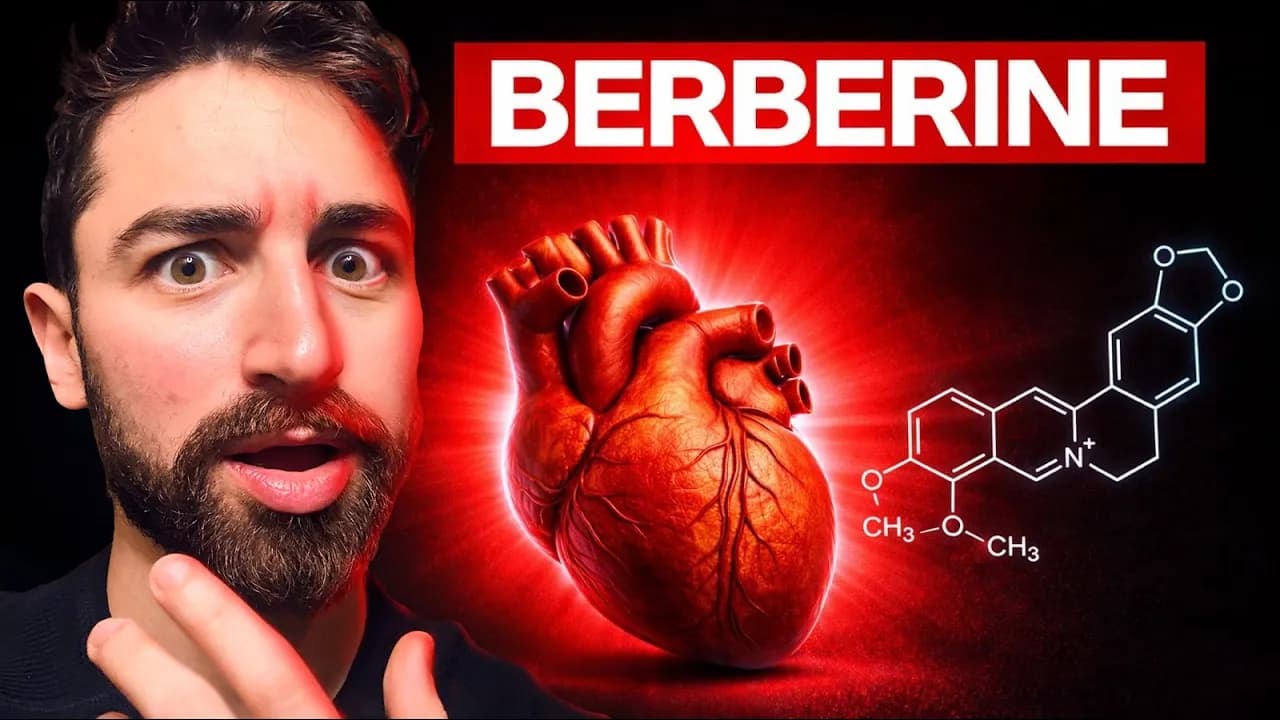
Less than 1% of Berberine you swallow actually makes it into your bloodstream. Some studies put it under half a percent. Nearly all of it never even reaches your circulation and it still works. Researchers think a meaningful piece of the effect is happening right there in the gut and at the liver before Berberine even needs to circulate widely. It's doing its job locally almost like a bouncer working the door rather than chasing people down the street.
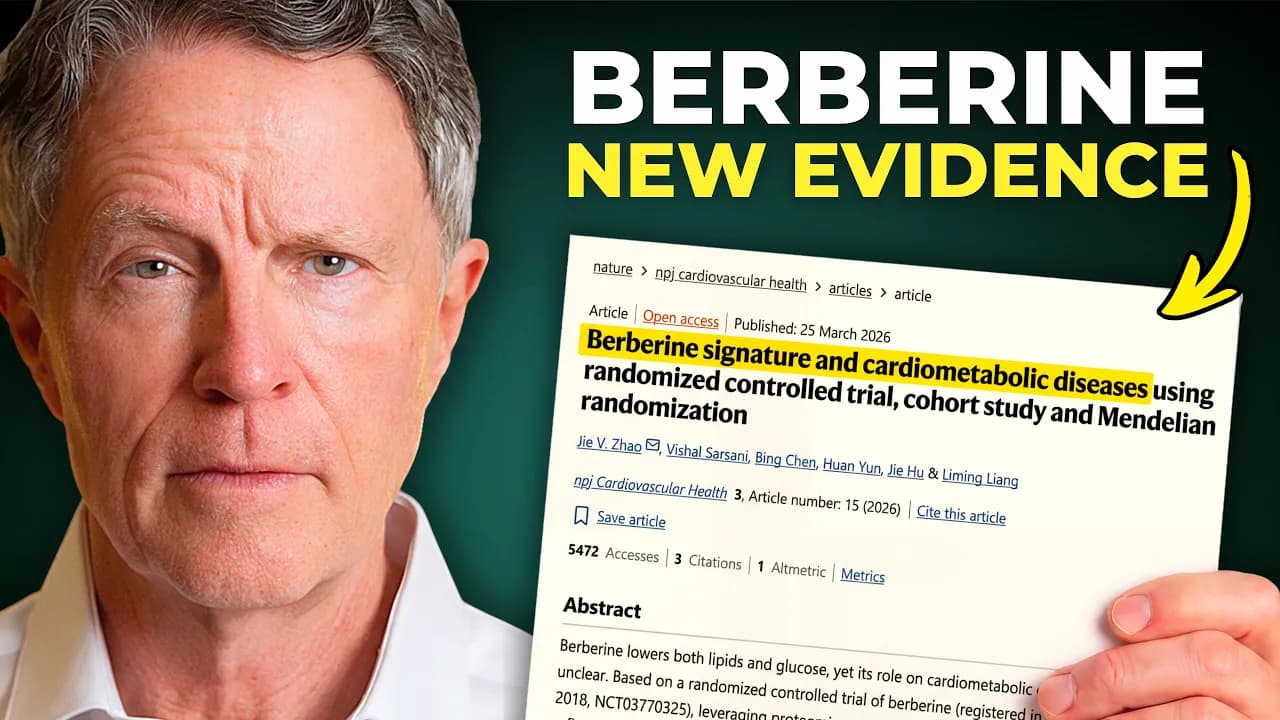
A study published in early 2026 found that Berberine improved not just total LDL, but the specific subtypes of LDL that are most likely to clog arteries. And a related particle called VLDL, which is essentially your body's way of carrying fat through your bloodstream. That's a meaningful mechanism level finding, but it's not the same as proof that Berberine prevents heart attacks. So, I'd call that a promising signal, not a guarantee.
Your body uses the same processing system to handle Berberine as it does to handle a long list of prescription medications, including certain statins and blood thinners. When two things are competing for the same processing system, the levels of one or both can end up higher than expected. That can mean stronger effects than intended or in some cases unpredictable ones. If you're on any of those, this is why it's important to talk to your doctor or pharmacist before adding it.
The prescription drugs discussed went through large trials that prove they reduce actual heart attacks and strokes, not just cholesterol numbers on a lab report. Bergamot and Berberine have real repeated evidence that they move the numbers, but far less evidence so far that moving those numbers translates into fewer real world heart events. That gap matters and it's the reason this is a comparison, not a recommendation to swap one for the other.
Managing cholesterol is a real ongoing burden. Think of Bergamot and Berberine as potential additions to the foundation you're already building, not replacements for a medication that's already working, and not something to layer on top of without letting your doctor know first.
Write down two names, Bergamot and Berberine. Bring them to your next appointment and ask your doctor whether either one makes sense to add alongside what you're already doing given your specific medications and labs. What I don't want you to do is stop or swap a prescribed medication for a supplement on your own. The evidence for these compounds is real, but it's not the same level of evidence that exists for drugs they resemble. That distinction is important for your health.
If the real issue is that your current medication side effects or cost are wearing you down, mention that to your doctor, too. There are often other prescription options that you may not have been offered yet.
Keep Kabir Harricharan Singh, MD in your library
Save the videos and channels worth coming back to, and find them again in one place.