Want to Help More People? Make More Money | Carnegie Mellon University Po-Shen Loh
In a Nutshell
Po-Shen Loh built a profitable social entrepreneurship model where live math classes generate revenue to fund social impact initiatives. High school students teach 30-person online classes to younger kids, yielding over 50% profit margins at $23/hour that fund free classes for underserved students. The key insight is maintaining company control through early cash flow positivity rather than seeking investors, then using that control to balance profit with social goals.
These notes were generated by AI and may contain inaccuracies.
Po-Shen Loh is a mathematician and social entrepreneur focused on solving real problems for real people. The core approach involves using entrepreneurship to generate sufficient money to address social causes. The strategy avoids traditional nonprofit models that lose value on every person helped and become dependent on philanthropy. Instead, the goal is to create an engine where money is made on each person helped, enabling more help to be provided.
The approach differs from grand visions like building new foundation AI models. The mindset starts simpler by identifying what people are already paying for to get help, then providing that help. Over approximately 10 years running three different ventures, Loh developed an appreciation for social entrepreneurship as creating value by solving other people's problems where everyone involved gains in the system.
The fundamental principle is that when actions genuinely make the world a better place on average, value is created out of nothing. This manifests as situations where "2 plus 2 equals 5" - the whole becomes bigger than the sum of parts. The approach requires ensuring everyone involved, including employees, partners, and customers, receives a net gain of value. Customers can experience net gain even when paying because they receive more value than what they paid.
What distinguishes social entrepreneurship from standard entrepreneurship is maintaining control of the company. When control rests with people solely focused on maximizing profit, decisions prioritize profit above all else. Through reaching profitability early, Loh retained control, enabling decisions that are not purely profit-driven but balance social impact with financial sustainability.
Rather than using technology like recorded videos, the network theorist perspective focuses on constructing networks that generate value. The fundamental mechanism involves connecting people with complementary needs and wants. A simple example: one person has excess of one resource and shortage of another, while a second person has the opposite situation. Introducing these people creates value as they exchange, potentially paying for the introduction because both benefit.
The live product creates win-win situations through a specific structure. High school students who are kind, clever, and excellent at math teach 11, 12, and 13 year olds. Professional actors supervise these high school teachers and provide real-time feedback during live-streamed math lessons. This arrangement benefits the older students by developing communication skills valuable throughout their lives.
Professional actors receive part-time paid remote work. Teaching assistants, typically from Malaysia and the Philippines due to time zone advantages (daylight hours during US evenings), ensure class quality. The result is classes that are fun, taught by slightly older peers, coached by actors for humor, and delivered by exceptionally smart individuals.
XP serves as the organizing for-profit company containing multiple ventures including XP.com website, Novid app, and live classes. The live classes generate sufficient revenue to support XP operations and fund Novid. The pricing strategy sets approximately $23 per hour per student, determined by market research on extracurricular math class pricing. Despite delivering extraordinary teaching quality (30 teachers went to MIT, 6 went to Harvard), the price remains intentionally low.
The breakthrough innovation made 30-person classes more fun and effective than one-person classes, contradicting conventional assumptions. Traditional thinking held that online math classes cannot exceed five students because math is boring and attention cannot be maintained. The standard model assumed teachers must walk students through steps while monitoring attention.
The new philosophy teaches students to generate their own ideas when encountering unfamiliar problems, rather than following standard methods. Research revealed that five students make brainstorming difficult due to silence, while 30 students create the dynamic chat environment familiar from live streams. A custom moderation system filters inappropriate messages while allowing wrong answers and bold attempts, creating productive chat flow.
At $23 per hour with 30 students, revenue reaches $690 per hour. After expenses of approximately half that amount, profit margins exceed 50%. This surplus funds other social ventures. The teaching staff renewal cycle every two years creates significant training costs, but this is accepted because the social value of developing kind, clever, well-spoken high school graduates who will change the world justifies the expense.
Initial assumptions that large user bases automatically generate revenue proved incorrect. XP.com reached 500,000 monthly users but generated no revenue. The company initially received investor funding expecting Silicon Valley-style growth, then shifted to philanthropy when growth proved slower than anticipated. When philanthropy funding ended, the company faced crisis.
A Chinese startup approached in December 2018 requesting video recordings of math classes for sale. Despite skepticism about selling recorded math classes, three days of filming in Shanghai generated revenue sufficient to eliminate need for additional investment. This bootstrapped approach used earnings from Chinese math class sales rather than original investor money.
A pivotal conversation with a philanthropist revealed that making money and using it for good is preferable to seeking donations. This insight prompted focus on creating better versions using earned revenue. The discipline involved remaining extremely tight on money and reinvesting earnings to generate more revenue.
In January 2020, significant team reductions occurred when the original venture stopped growing and philanthropy interest waned. The lesson emphasizes ensuring any venture has visible revenue generation from the start, rather than growing first and monetizing later.
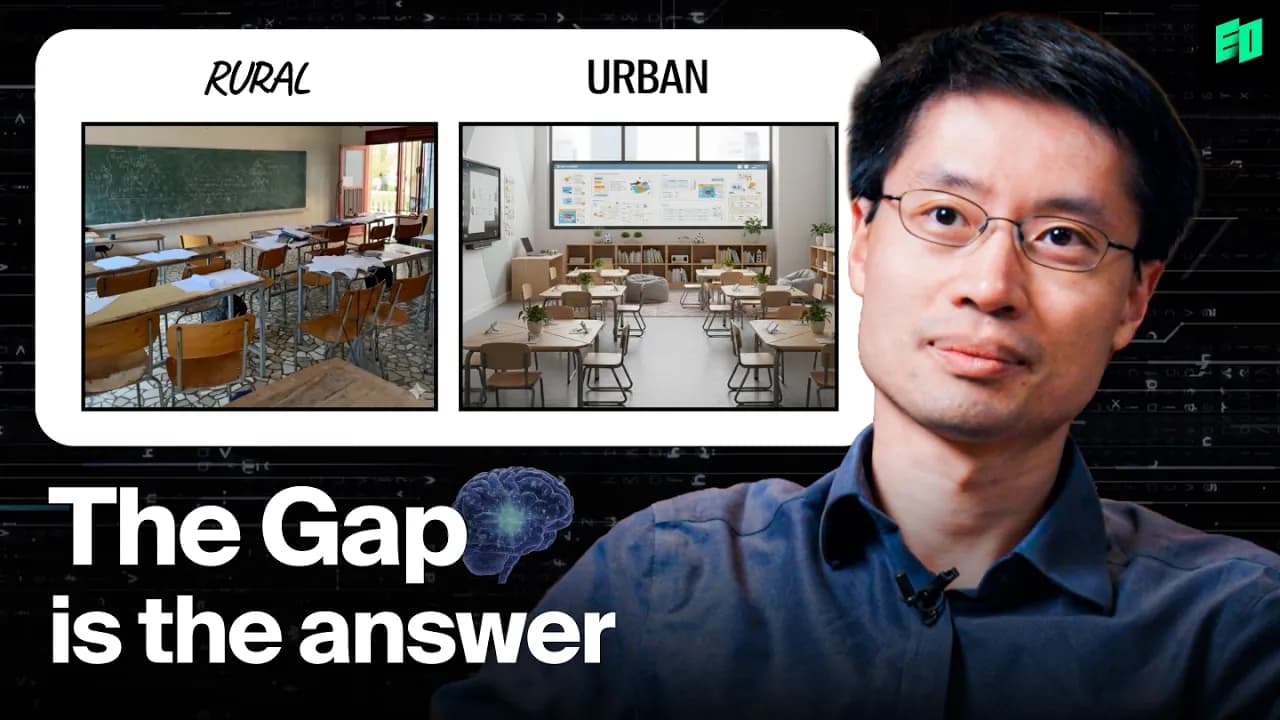
The structure maintains live classes with two payment streams: paying students generate revenue, while free classes serve rural kids and upcoming African programs. A separate 501c3 nonprofit entity acts as fiscal sponsor for donations. Donors contribute to the charity, which contracts XP to deliver free classes. This mirrors how nonprofits purchase laptops from for-profit companies like Apple or Google when those vendors provide optimal cost-quality combinations.
Initial skepticism about ambitious plans proved unfounded. The approach of using revenue from one product to bootstrap social impact initiatives enabled small-scale testing before seeking philanthropic support. Demonstrating that programs work at small scale proved most compelling to donors. Current operations teach over 100 underprivileged kids who demonstrate high engagement and potential.
Current operations require no investor funding. Existing investors remain only because of past support obligations. The recommendation is to carefully evaluate whether investor backing is necessary, noting that venture capital funds focus on growing other people's money rather than social objectives. Individual investors who have achieved success and want positive social impact may provide more aligned support. The network being built may eventually include wealthy graduates willing to invest in similar social entrepreneurship efforts.
Cash flow positivity means having a unit in your business that can generate enough money to power itself. The earlier you can get revenue and become cash flow positive, the better because then the only thing that might happen is you go slower. If you're cash flow negative, you can just run out of money. You can become cash flow negative by hiring more people. If you lost everything except that profitable piece, you would still be profitable, and then you can grow bigger and bigger from there.
If you're a social entrepreneur and you care about certain things, having a profitable core gives you the power to not give up. You can always find a way to make things work because you don't need to quit - you can just slow down to that core and rebuild again if needed.
When organizing a conference and needing to invite nine speakers, the instruction was given to make a list of 90 people, aiming for a 10% statistical success rate when reaching out to speakers. If your success rate is too high like 80%, that means you asked for people who are not famous enough and aimed too low. If your success rate is 1%, you aimed too high. The 10% rate is good, though it takes 10 times as long.
Things worth working on are often like 1% success or 0.1% success. If you get it, it's going to be huge. The expectation is that trying something won't work, and the goal is to feel like what you tried was too hard because that's how you know you're trying hard enough things. If things work too fast, you're not going to make a breakthrough - you're aiming too low.
The current project involves getting an explosion of science and technology across rural America. This is hard because no one's ever done that before. When first starting to think about this project one year ago, there was nothing at that time - just the decision to try because there might be something there.
The first video interview that got to 3 million views came after doing many more video interviews with many more people. Some of those earlier interviews only got 1,000 views, which was expected because it should be hard. One success doesn't mean stopping - the goal is to try even harder things after that.
In the age of AI, social entrepreneurship becomes even more important because very successful companies might be able to operate with very few people by using AI for the rest. In the old days, a very successful company would translate into wealth for normal people because it had to hire lots of people. Now, a very successful economically successful company might not trickle down wealth to the rest of the people because capital doesn't have a soul - capital is just money and the money makes more money. Investors often are controlling other people's capital, just making money into more money.
The approach is to teach entrepreneurial skills to people who really care about the world and help more of these people create their own ventures where they still maintain control. This particular time in history is one of the best times for young people to get involved in business and social entrepreneurship because you can use AI to get started without needing much investment.
Previously, you needed to get a lot of money invested and hire a whole team of software engineers. Now you can use AI tools like Anthropic's Claude to do software engineering, write slogans, help with marketing, and soon AI agents will help with communications. The real question becomes whether you can come up with something people would actually pay for and become profitable without losing control of your venture.
Don't think first about making a big complicated thing where you need to spend a lot of money. Many people hear about the glorious startups in Silicon Valley, but there are actually very mundane ways to do things where you don't start by having something huge. This way you can maintain control of your company.
What makes the speaker happy is making other people happy - that's what is done for fun. Enjoying seeing a whole room of smiling faces is why teaching, performing, and giving talks are enjoyable. The goal is to introduce the idea that making other people's lives really bright is fun, and hopefully more people will discover this and decide they like doing it too.
A realistic thing to do right away is to think about things that people are paying for that you can do better. Start thinking about making a much better version or something that really answers their pain point, and consider how much it would cost to make that. Don't start by thinking of something super grand like making a new foundation AI model, though if you do that you might become a billionaire. You can start much simpler.
There are lots of products in the world that people are paying for. From a social perspective, there are people who need help - what are they paying for to get that help? You might find it doesn't cost a huge amount of money to create, and if it does, keep shopping around for different ideas. Once you find something that can generate some cash, that gives you more freedom, and you can start making that core bigger and bigger.
Find people who really care about doing something bigger than themselves. The network is not meant to be exclusive, and you can tell by looking at people's eyes whether some people really care about these things. Become friends with them, and since you are also this kind of person, someday you might work together or they might introduce you to someone else, giving you more and more ideas. The network is perhaps the most important part of your net worth these days.
Keep EO in your library
Save the videos and channels worth coming back to, and find them again in one place.