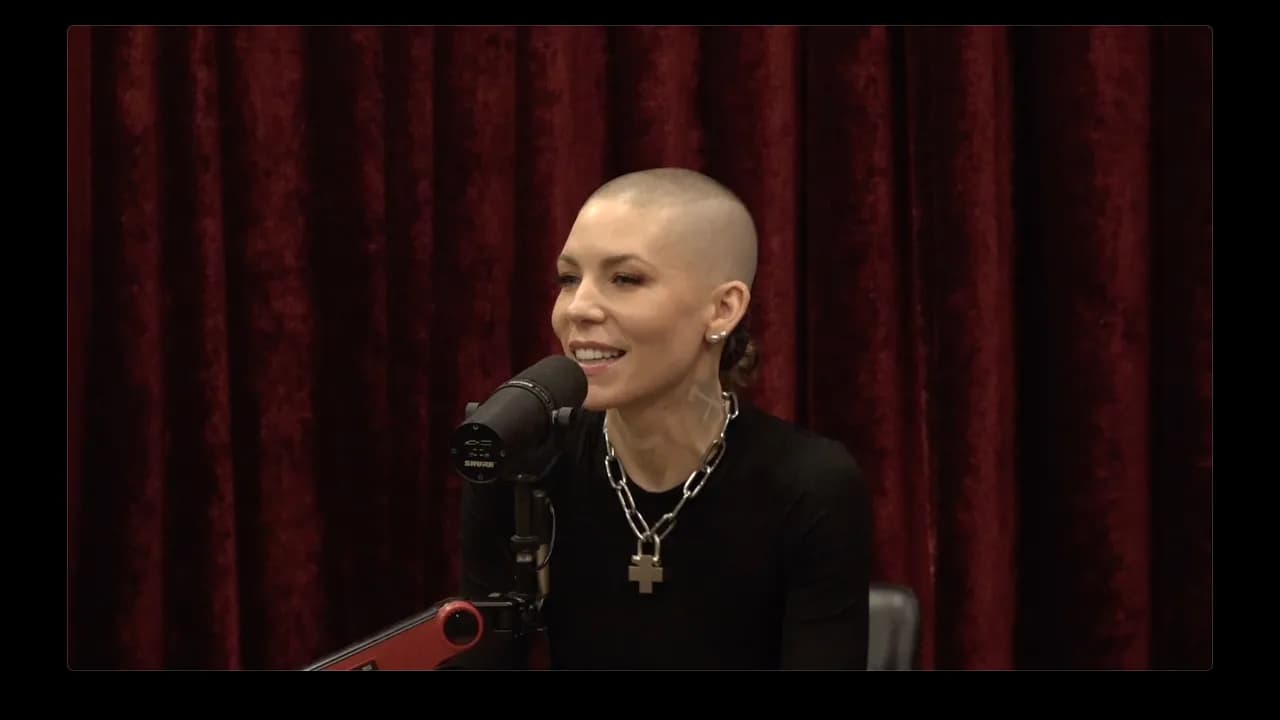
“We Won 3 Grammys and Still Felt Like Failures” - Dan + Shay (Live Performance)
In a Nutshell
Dan + Shay reveal that winning three Grammys failed to bring fulfillment because they immediately chased the next achievement instead of appreciating what they'd accomplished. Success creates a "have to" mentality that erodes gratitude, making them reframe their mindset to "we get to do this" while learning to value the creative process over outcomes. Their most meaningful work now comes from writing authentically about real grief, aging, mental health struggles, and personal relationships rather than manufactured heartbreak stories.
These notes were generated by AI and may contain inaccuracies.
The next Modern Wisdom merch shop is now live for 6 days only. Designs include death metal design, High Country Ranch with horseshoe on front, snake design, and Wisdom Nation World Tour. All available at mwmerch.com and never to be printed again.
The hosts reference an inside joke with country artist Megan Moroney about "Dominos" - originally misheard as an Italian pizzeria rather than music demos. The joke originated from a house party in Florida where Moroney asked "What the hell is doinos?" The misunderstanding persisted for 3-4 years before being clarified.
Dan previously worked as a pizza taste tester and participated in various research groups for money. One notable experience involved a hard cider tasting where participants needed a designated driver. Dan and a friend took turns being each other's DD, then drank all samples and got paid $40. Their Nashville rent was $150 per month in a house with no heat, no AC, and no locks on doors.
Shay had to perform breaking and entering when first meeting Dan at 507 Morton Avenue. The house had sheets draped over the living room to keep heat in. An early magazine article about them was headlined "Dan and Shay: A Chance Encounter Under the Sheets."
The duo discusses how creative partnerships change when moving from shared living situations to separate tour buses. They note that early career experiences provide more material to draw from, while success brings fewer life experiences to write about. The music business volatility keeps them driven - they experienced going from arena tours with Justin Bieber to having "the rug pulled from under us" and needing to start over.
The key to sustainability is reframing work from "we have to go do this" to "we get to do this." They emphasize that saying this out loud and leading with gratitude helps internalize the perspective. The duo keeps each other accountable like having a "lifting partner."
Chris recounts how the song "Tequila" convinced him to move to America. During a 2019 road trip, he visited Whiskey Row in Nashville on July 4th where the band performed "Tequila." Everyone was buying shots waiting for the melody shift when the singer would take his hat off. This moment made Chris decide to move to America.
The duo performs "Tequila" live - their first performance in the presence of Domino's Pizza. The performance receives applause and cheering.
"Tequila" was released January 10th, 2018, coinciding with a popularity surge for tequila. Despite writing the song, they received no brand deals or free tequila, unlike other country artists with tequila companies. They joke about being "equal opportunity revenue generators" for everyone except themselves.
Dan's drink of choice is tequila soda with no lime, following the principle of "no bad fruit." He notes that bar limes often sit for days and may have been handled by drunk patrons.
Following up hits like "Tequila" or "Speechless" is harder because the bar is set high. They emphasize controlling the process rather than results, finding joy in the creative process rather than chasing specific outcomes. The competitive nature that drives success can also create ungratefulness if not balanced properly.
Success doesn't fill internal voids as expected. The duo discusses how winning feels great but creates unrealistic expectations. They emphasize focusing on the process and enjoying the fact that "our job is to go write a song." They view life in seasons - tough periods followed by better ones.
The duo describes the difficulty of award shows where the camera captures reactions to losses. At one CMA Awards, they were nominated for 8-9 awards and lost all of them. They note the awkwardness of having to appear gracious in defeat while genuinely being disappointed. They've lost to Brooks and Dunn, who they grew up listening to.
Dan + Shay lost every single award at one particular awards ceremony. They joked about potentially receiving a plaque for losing the most awards in a single ceremony. They noted the importance of being careful about what things to place weight on versus not put weight into, acknowledging that there were times they didn't celebrate things they should have, and other times when they put all their eggs in one basket thinking winning a particular award would mean success.
Even after winning three Grammys, they were so busy chasing the next achievement that they never sat down to appreciate what they had accomplished. Dan reflected that if someone had told his 10-year-old self about this career, he would have thought they were kidding.
The concept that you have already achieved the goals that you said would make you happy was discussed. Since you're already on the opposite side of your last set of goals, there's no reason to assume happiness lives on the opposite side of the next set of goals. Learning to say no to opportunities you would have begged to have two years ago, while taking for granted things that didn't exist ten years ago, reflects how habituation affects perception of success.
These challenges that come with success are described as character-building, incredibly painful, and incredibly beautiful simultaneously. The touring experience of being 26 dates into a 40-date tour without knowing what city or time zone you're in creates a sense that it hurts and you miss your family, but it will end, and the reflection will be that you weren't even present for it.
Looking back on university degrees that felt like obstacles to get through at the time, they now see as valuable experiences they wouldn't trade. During a cinema shoot with 10 episodes in 4 days in freezing cold conditions in London's West End, the experience seemed miserable in the moment but is now viewed as really great.
The lesson is to try to enjoy experiences in the moment rather than just pushing through them. Radio tour experiences that seemed burdensome at the time—with 4 station visits per day starting at 7 AM, dinners with radio personnel, and the sales aspect of the work—are now recognized as incredible opportunities that someone gave them when they had no money, no AC, and no locks on their doors.
Memories are described as never wasted currency. The duo now enjoys their current experiences more because they've learned to appreciate the journey rather than just enduring it. They reminisce about past experiences that seemed exhausting at the time but now represent their favorite periods.
Their first UK tour stands out as one of the darkest periods, with Dan not seeing the sun for two weeks due to inability to adjust to the time change. He was going to bed at 8 AM and watching Peaky Blinders for approximately 38 hours during the two-week trip. The tour occurred during winter in Manchester, making it particularly miserable at the time. Ten years later, they now refer to it as the greatest time they ever had.
Performing the national anthem at the US World Cup opening was described as one of the most significant moments, with more weight felt than even the Grammys. Dan's heart was beating so hard it could be heard through the microphone, creating a panic attack sensation. The preparation involved a yellow paper wristband that needed to be removed before performing, and the experience felt like going to war when marching out.
The most resonant moment afterward was seeing videos of people in bars and houses across the country singing along, realizing they had led the anthem for the entire nation rather than it being about them personally.
Dan + Shay had previously told their managers they would never say yes to performing the national anthem or Super Bowl. When presented with the World Cup opportunity during a Zoom call, they had to interrupt an interview to take the call. Their initial reaction was measured rather than enthusiastic, asking practical questions about timing and details because they understood the high-pressure nature with minimal upside.
The initial arrangement presented was described as atrocious—an uptempo version with horns that moved too fast for them to sing along with. They insisted on performing it traditionally, just the two of them without any embellishments or runs, emphasizing the sacred nature of the anthem.
The magnitude wasn't fully realized until they marched out for the performance. Dan leaned over afterward saying "it's hard" and mentioned seeing Tom Cruise and David Beckham in the audience via the LED screens at SoFi Stadium. After the performance, people at the Nashville airport treated them like war heroes, with one person saying "God bless you" and thanking them for their service. They had to hide in the bathroom because they were getting mobbed by well-wishers.
For their most recent album, they had an entire album's worth of songs finished when management changes and other circumstances created what felt like an existential crisis. They questioned whether their work mattered in a world with AI, and felt something was missing from the DNA of what they needed to create at that moment.
After writing the first song that would become the album's opening track, they experienced a creative spark that led to writing the entire album in approximately two months. The key question they asked about each song was why it had to come out into the world at this particular time.
The song "Say So" emerged from a deeply personal place after losing their friend Benvon to suicide a little over a year ago. Benvon had been one of the first people to believe in them as songwriters, signed them to a publishing deal, and introduced them to their current record label. During a writing session with Jimmy and David, they began sharing stories about Benvon, and the song emerged organically from the conversation rather than through their typical structured approach.
The song addresses mental health themes including anxiety and impostor syndrome that Dan has personally struggled with and sought therapy for. Initially, there was hesitation about whether the subject matter was too heavy for their typical "wedding song guys" image.
Dan + Shay wrote a song that initially felt like it might not be right for them as artists. The track emerged organically during a writing session and they considered pitching it to another artist, but it needed to be written for Ben, a friend who had passed. They created a demo without knowing the timing significance. When Dan played it for his wife, she pointed out it would have been Ben's 50th birthday that day. This coincidence confirmed the song needed to exist and needed to be a Dan + Shay song.
The duo decided that even if the song died at number 70 on the radio charts and didn't achieve commercial success, if it helped one person or saved one life, it would be worth it. They equate this kind of impact to winning a Grammy. The song has generated deeply personal messages in their DMs, with listeners sharing stories of how the track talked them off a ledge during dark moments.
A woman approached them in New York recently, crying, to share how the song saved her life. These face-to-face encounters remind them that their platform can make a genuine difference, silencing online criticism about whether they're "real country" or whether their music matters.
Social media comments suggesting "Dan and Shay sucks" or that they're "not country" can create self-doubt when existing only in digital spaces. However, real-world interactions with fans who share personal stories provide perspective and purpose. The duo values in-person community more than ever, noting that technology and AI have increased the importance of genuine human connection.
While acknowledging AI will advance society in medical and other practical applications, they argue that as long as humans consume art, there will always be a need for real humans making real human music. They observe an anti-AI movement among younger generations who want authentic experiences. Shay's voice is particularly studied and replicated by AI models, but they note it will never truly capture what makes his performances unique.
Writing from actual grief differs from imagining scenarios. For this album, Dan + Shay prioritized telling real stories they were currently experiencing rather than fabricated narratives. This allows them to perform with genuine conviction on stage, looking audiences in the eye while singing songs that actually move them.
Writing honest love songs while happily married presents challenges. The tension and release found in songs about tumultuous relationships or heartbreak are harder to access when life is stable. They joke about wanting artists like Luke Holmes to "do some coke and make some mistakes" to recapture that dramatic tension in his writing.
The pain explored on this album differs from traditional heartbreak songs about romantic breakups. Instead, the "heartbreak songs" address aging as men, the possibility of a spouse passing away first, parents getting older, and loved ones getting sick or dying. The song "Young" explores aging as a man, noting that men don't traditionally discuss aging as openly as women, despite higher male suicide rates and lower rates of emotional vulnerability.
Heartbreak songs outlive happy songs because there's healing in shared pain. When sad, people gravitate toward songs like "He Stopped Loving Her Today," "Whiskey Lullaby," or "These Days" by Rascal Flatts rather than upbeat tracks. Music allows listeners to feel their pain validated through someone else's words, reducing feelings of isolation and defectiveness. Sad songs connect people through empathy, whereas happy songs like "Sweet Caroline" don't create the same interpersonal connection.
Music allows listeners to slot themselves into stories more effectively than explicit podcast discussions or writing, where single lines can create "can't unsee" insights. The duo performed their song "Young" acoustically for the first time during this conversation.
Dan cried the first time he played "Young" for his dad, recognizing how the song captures the realization that parents don't have everything figured out. Watching his nine-year-old son look at him with the assumption that he has life solved mirrors how he once viewed his own father. The insight that aging hits men differently because society judges women more harshly around youth and beauty, yet men rarely discuss aging openly.
At 36, Dan began feeling age as a tangible reality rather than just a number. Recovery from late nights and workouts slowed, injuries lingered longer, and the effects of poor diet became noticeable compared to earlier years when his body seemed made of "rubber and magic." At 38, he reflects on how strange it feels to be his father's age when his father had older children.
Dan reflected on how seeing young artists achieve Billboard Hot 100 success at half his age creates pressure, noting that in sports, a player who has been in the league for a decade can still be younger than him. Shay mentioned feeling devastated watching 31-year-old athletes barely making it out of games. They discussed Conor McGregor blowing his knee out, noting he is four months younger than Dan. Shay expressed being blown away that athletes at 38 can still compete, while Dan stated he is glad he chose a pursuit that doesn't require his ACL to work correctly.
The conversation shifted to how their settled lives with families and kids make writing more difficult compared to when they were younger. They made a conscious decision to be very autobiographical on their latest album, telling literal snapshots of their lives including their kids and faith. Dan emphasized the importance of authenticity in music, stating that people can tell when artists are lying to them, especially in an era where everyone is hungry for authenticity because technology has made it easy to manufacture it.
They discussed how the internet is desperate for authenticity but kind of allergic to sincerity. The concept of an "emotional Overton window" was introduced, where audiences want to hear about challenges but only up to a limit on both sides of emotional expression. Pushing this emotional limit slightly is often a good indication that the creative work is moving in the right direction.
Dan praised the growth in popularity of long-form conversations, noting that two-minute radio interviews are fluffy and nothing meaningful gets accomplished. In contrast, two-to-three-hour conversations make it impossible to hide behind a wall, and anyone can hide being a psychopath for about 10 minutes but it's pretty hard to do for two hours.
Shay shared that most bands don't break up because they stop making good music but because they stop liking each other. They went through a difficult period around 2021 where time got in between them. They weren't fostering their relationship as much as they should have, leading to a place where neither was happy. They discussed how duos are particularly vulnerable to breaking up because it's a 50/50 split, with no tiebreaker like in a trio, and they cited examples like Hall & Oates, Brooks & Dunn, and Florida Georgia Line.
The reconciliation happened when Dan reached out saying he wanted to talk. Shay's wife knew it was going to be significant and left the house. They met on Dan's back porch and had an emotional conversation that lasted until 3:00 in the morning. Dan went on the offensive first, apologizing for the stress he put on Shay, acknowledging their different temperaments where Dan is a pessimist and workaholic while Shay is an optimist.
Shay described the conversation as a beautiful moment that cemented ideals about conflict resolution. They emphasized the importance of respect and empathy for each other's perspectives, giving grace to grow and learn. Shay mentioned that he had tied up his identity in their early career and felt he had to maintain that persona, but the conversation freed them from those constraints.
They stressed that as long as they have a common goal of wanting Dan + Shay to be a successful band, that's all they need. The key is making sure they're on the same team rather than feeling like they're in competing businesses under the same roof. They noted that ego can get in the way of partnerships, but they did a good job from the beginning of focusing on making amazing songs rather than caring who contributed specific words or titles.
When asked about the most important traits to look for in a co-founder or bandmate, Dan emphasized finding someone who challenges you. He mentioned that he was one of the first people to challenge Shay's singing, pushing for additional takes even when something sounded perfect. Shay added that you should find someone who challenges you and makes you better while also being able to reciprocate that for them.
Dan acknowledged that he used to be so pessimistic that they could win a Grammy and he'd think someone else won two that night, making them suck. He recognized that he probably ruined a lot of good years and good moments by being that guy. They discussed how their different attitudes and perspectives on life have helped them come to more of a middle ground.
They discussed the importance of not listening to opinions from people who have lives you don't want. Dan mentioned that even with their success, he still looks at comments and saw one saying "No one cares about these guys anymore." He checked the profile and discovered it was a bot account with zero followers. They noted that the algorithm feeds into negativity, and people are more likely to leave negative reviews than positive ones.
They contrasted their situation with podcasting, noting that if they only recorded songs without playing them live, they would only ever see written responses. The ability to see audience reactions in person provides immediate feedback that podcasters don't get unless they do live shows.
The comment sections on platforms tend to attract extreme reactions, either from super fans or super haters. The middle ground is rarely represented. Some artists sell their work online and build followings digitally, while others stage live exhibits where people can experience the work in person and provide immediate reactions. The difference is stark when comparing that immediate energy to reading comments from nameless, faceless accounts online.
Validation can come from different sources. Some look to online comments, while others find it meaningful when someone stops them on the street to express appreciation. The key indicator of quality work is personal excitement on the morning of creating something and the satisfaction felt once it's completed. When waking up genuinely fired up for a conversation or project, it tends to result in better outcomes. Optimizing for that internal motivation makes external opinions less relevant.
Looking back at comments on social media posts can be misleading. One might encounter extreme negativity, such as comments suggesting the creators should harm themselves, alongside positive feedback. This creates confusion about reception. If validation depends on these comments, it's impossible to determine true reception since some people will always hate the work while others love it.
Non-offensive songs in country music haven't necessarily led to the biggest success. The most successful periods occurred when people were somewhat offended by their existence. The biggest artists in history tend to be polarizing figures. Generating drama captures attention, though it creates challenges for those in the center of it.
Logan Paul demonstrates exceptional media ability, understanding how to play multiple steps ahead and predict reactions to actions. This tolerance for dealing with negative feedback while continuing forward represents a genuine skill. The ability to accumulate attention regardless of whether it's positive or negative allows for significantly more visibility. Donald Trump exemplifies this approach, maintaining roughly a 10-to-1 ratio of negative to positive attention while remaining immune to criticism.
No handbook exists for managing attention, criticism, or imposter syndrome. People must develop these skills along the way using the same tools they had before fame. The internet often claims people signed up for criticism, but many entered the industry simply wanting to make music or have conversations, not anticipating the level of personal attacks that would follow.
The old music industry system involved more curation through radio stations, playlists, and institutional gatekeepers. While not always correct, this created clearer pathways to stardom. Current viral fame can emerge suddenly without traditional validation, but these moments often fade quickly. The question remains whether traditional media appearances like Good Morning America or Jimmy Fallon will maintain their importance, or if independent media platforms will become more significant.
JD Vance's recent appearance on the Joe Rogan show caused street closures due to Secret Service presence, suggesting independent media's increasing importance. Trump's campaign was significantly driven by podcast appearances. Darius Rucker, during a dinner conversation, initially claimed not to care about Rock and Roll Hall of Fame induction, but when discussing his achievements like having the biggest debut album, it became clear he does care about the recognition. The demographic that listens to podcasts will ultimately influence such decisions.
Dan + Shay have a new album releasing August 21st and begin their tour on September 11th. The "Young" album and tour represent their major upcoming projects. They expressed interest in potentially adding Austin as a tour date during the conversation.
Keep Chris Williamson in your library
Save the videos and channels worth coming back to, and find them again in one place.