We’re Wrong About Aging - Here’s Why
In a Nutshell
Aging stems from extracellular matrix (ECM) breakdown releasing matricines like elastin fragments (especially the E motif VGVAPG), which act as inflammatory "shrapnel" triggering immune responses, fat gain, muscle/bone loss, and accelerated aging via NEU1 enzyme activation—a vicious cycle proven in humans, mice, and pigs. Blocking NEU1 with genetic knockout or the small molecule Dana reversed these effects, improving body composition, reducing inflammation, enhancing metabolic health, and extending mouse lifespan by 12-17%. Today, track inflammation via CRP, cytokines, or omega-3 index; future therapies like Dana target this root cause to slow aging fundamentally.
These notes were generated by AI and may contain inaccuracies.
Imagine this paper as your skin or the structural matrix holding your body together. As we age, the matrix weakens, causing sagging, wrinkling, and breakdown. New science shows it's not a gentle passive decay generating harmless debris, but like a grenade exploding, sending inflammatory fragments across the body. This molecular shrapnel triggers the immune system, causing inflammation. By understanding this, we could stop it, block the blast, shield tissues and organs, or hire a hero to jump on the molecular grenade. This is brand new science, and the key to slowing or halting aging lies ahead.
Most people don't realize this paper proves the assumption of passive decay wrong, with massive consequences like early death. Using a small molecule that blocked a key enzyme massively improved healthspan and lifespan. Intervening isn't just aesthetic; it could slow aging fundamentally.
okay. So, to be dead honest with you, I'm in an Uber doing the V2 edit with the editor and I got carried away on the nerdiness level with this one. 23 dihydro 2 deoxy acetalamic acid. We go deep. We get super nerdy. So, consider this a challenge to your intellect. And if you want the written breakdown, cuz this is hard to follow verbally, you can always check it at the Stay Curious Metabolism newsletter.
Roadmap:
- Foundational knowledge: Define extracellular matrix (ECM) and matricines, bioactive fragments from matrix breakdown.
- Human evidence: Association between ECM breakdown products, blood markers, and aging.
- Causal mechanisms: Groundbreaking animal studies in mice and pigs revealing conserved biological cascade of aging.
- What you can do: Potential interventions in development and practical strategies today.
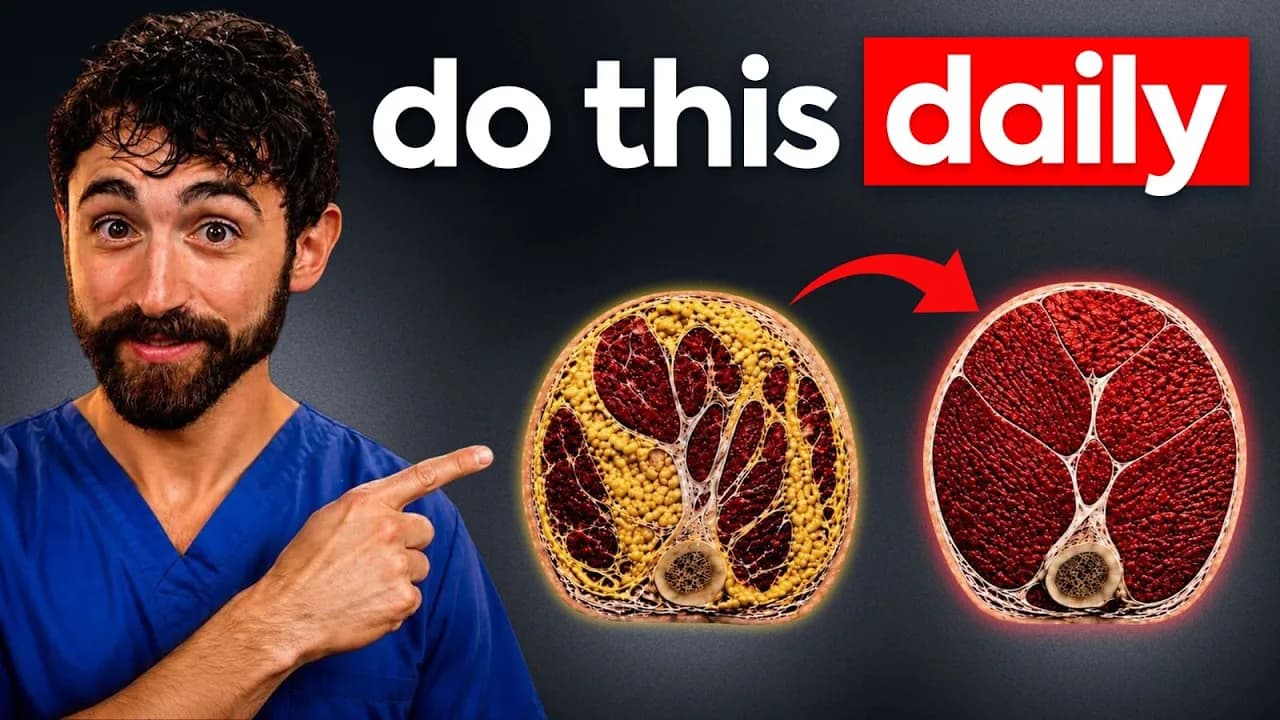
Extracellular matrix (ECM) is the scaffolding giving tissues and organs structure, like rebar in concrete, keeping the body from becoming soup. Made of proteins like collagen, elastin, and others, keeping cells connected, communicating, and stable. Previously thought largely inert, but the paper proves it wrong. When ECM breaks down due to aging, injury, stress, it leaves matricines—bioactive signaling molecules, not passive debris. Matricines are fragments of ECM proteins acting like molecular shrapnel, triggering immune system, promoting inflammation, accelerating aging. Particularly, elastin fragments (ELN) stand out.
Researchers measured matricines in 1,168 diverse individuals across the life spectrum. Elastin fragments in blood associated with older age and poor metabolic health at any age: elevated BMI, inflammation markers, abnormal liver tests, higher triglycerides, etc. Correlation, but strong for hypothesis generation. Question: Can elastin fragments cause biological aging?
Injected mice tails with elastin fragments: increased body weight, fat mass, decreased lean mass, loss of muscle and bone, elevated inflammatory markers, upregulation of aging genes (p16, p21, p53), early death. Elastin fragment caused biological aging.
Identified short protein sequence in elastin fragment called E motif: VGVAPG (valine, glycine, valine, alanine, proline, glycine)—six amino acids enough to cause fat gain, lean tissue loss, inflammation, early death.
E motif activated specific immune receptor complexes involving enzyme neuraminidase 1 (NEU1).
Tested blocking: genetically knocked out NEU1 in mice and immune cells, or administered small molecule inhibitor Dana (2,3-dihydro-2-deoxy-N-acetylneuraminic acid). Both worked. Dana improved body composition (decreased fat, increased lean mass), decreased inflammation, improved liver fat and biomarkers, healthier skin, increased lifespan by 17.4% in male mice and 12.2% in female mice.
Administered Dana to Yorkshire pigs: improvements in metabolic health, completely offset negative effects of elastin fragment and E motif. Associational data in humans and results in mice and pigs suggest conservation across species. Breakdown of structural proteins drives aging, but process is interruptible, slowing aging fundamentally.
Tomorrow: therapies targeting pathway, e.g., specific antibodies, Dana. Not on Amazon yet. Key paper line: "Dana did not immediately decrease levels of elastin fragments. Although long-term treatment led to a gradual decline."
Interrupting downstream (Dana inhibits NEU1) affects upstream (elastin fragments), because biology is cyclical: inflammation leads to matrix breakdown, which leads to inflammation and aging—a vicious cycle. Controlling inflammation slows ECM breakdown and aging.
Actionable biomarkers:
- C-reactive protein (CRP) or high-sensitivity CRP (general inflammation).
- Advanced: cytokine panels (TNF-alpha, IL-1 beta), oxidative stress (myeloperoxidase, MDA).
- Omega-6 to omega-3 ratio, omega-3 index (EPA + DHA; lower ratio generally better).
Personally, high omega-3 index (closer to dolphin than human, broke scale on OmegaQuant test), contributes to low biological age (PhenoAge at 15.4 years).
Getting aging and biomarker testing through 100 Health app (affiliated as senior scientific adviser). Draws on >400 electronic medical records, hundreds of biomarkers, interprets millions of papers, framed by bio-individuality. Discovered personalized protocol tripling LDL receptor mRNA transcripts, dropping ApoB without inhibiting cholesterol synthesis, improving liver and glucose vs. statins. Details in newsletter.
Aging is an active inflammatory cascade triggered by molecular shrapnel from tissues—a feedback loop that can be broken. Levers: reduce inflammation, track biomarkers, intervene early. Disrupting aging at roots via Stay Curious community.
Keep Nick Norwitz in your library
Save the videos and channels worth coming back to, and find them again in one place.