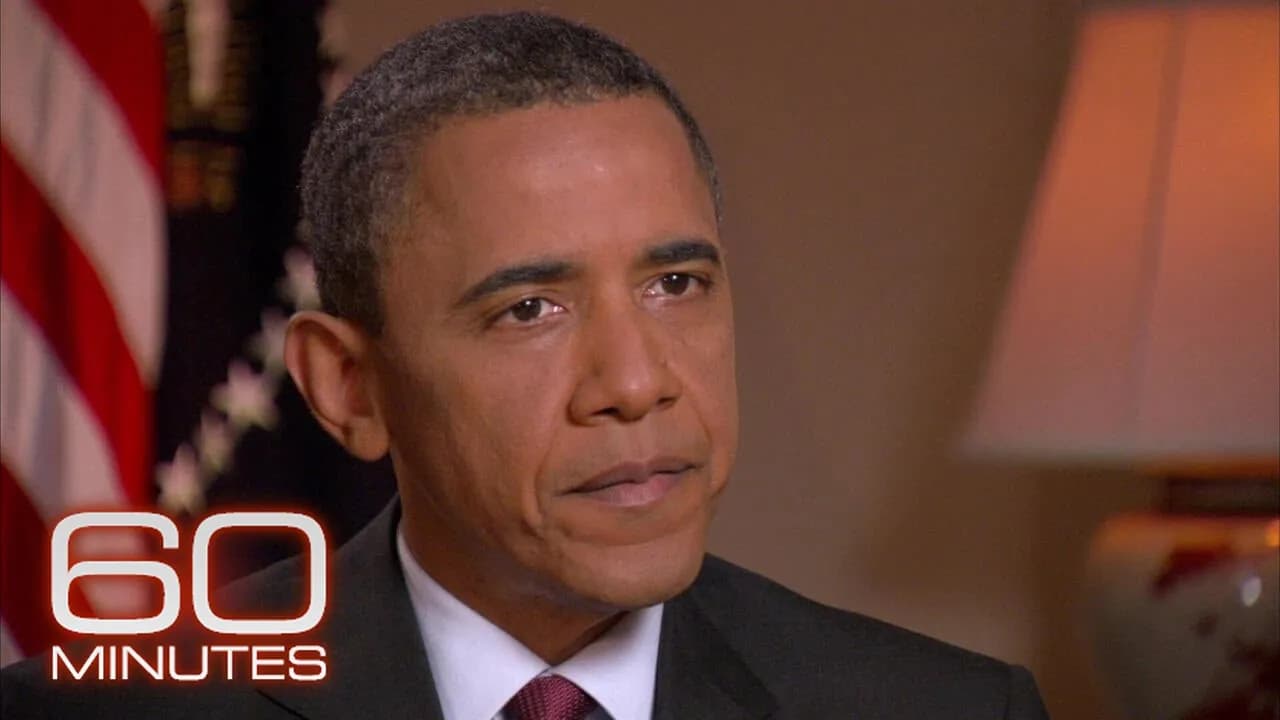
What bin Laden documents reveal about al Qaeda | 60 Minutes Archive
In a Nutshell
Osama bin Laden was actively micromanaging al-Qaeda from hiding, with seized documents revealing his personal directives on operations, finances, and branding. His son Hamza bin Laden, now 28, has emerged as the organization's new figurehead, recording messages vowing revenge against America and positioned by founding al-Qaeda members as the heir apparent. Despite bin Laden's death, al-Qaeda has expanded to thousands of members across a dozen countries, using strategic rebranding to avoid detection while maintaining the same threat level.
These notes were generated by AI and may contain inaccuracies.
Six years after Navy Seals killed Osama bin Laden, new concerns emerged that al-Qaeda had continued to grow despite US leadership strikes. Ali Sufan, the FBI's lead investigator of al-Qaeda after the 9/11 attacks, spent two years analyzing documents seized from Bin Laden's compound. These documents included personal correspondence of Osama bin Laden, al-Qaeda's dangerous new strategy, and evidence of a new bin Laden waiting in the wings.
Osama bin Laden was actively micromanaging al-Qaeda and its affiliates from his hideout. His correspondence revealed instructions about crop planting, directives to stop beheading people to protect his brand reputation, and operational guidance for the organization.
The declassified documents include:
- Osama bin Laden's handwritten will directing approximately $29 million in holdings to be spent on fighting in the cause of Allah
- Orders to militants to travel on cloudy days to avoid drone strikes
- Directives that future attacks should concentrate on America rather than Britain
- Instructions that attacks should not be limited to blowing up airplanes
These documents provide insight into the internal dynamics of the organization rather than specific attack locations.
Hamza bin Laden, Osama's son, emerged as a significant new figure in al-Qaeda. After 9/11, Hamza was separated from his father for eight years. A letter written when Hamza was approximately 22 years old reveals his deep emotional connection to his father, stating he remembers every look, smile, and word from his father.
The letter also shows Hamza's eagerness to follow in his father's footsteps, writing that he considers himself "forged in steel" and that "the path of jihad for the sake of God is what we live."
Before these documents were obtained, almost nothing was known about Hamza bin Laden. The few existing photographs and videos show him as a child featured in al-Qaeda propaganda. He exhibited leadership skills early and became a "poster kid" for al-Qaeda, featured in numerous propaganda videos that indoctrinated members.
Hamza is now believed to be approximately 28 years old. In January, he was classified by the US as a specially designated global terrorist, the same label once given to his father.
A forensic artist created an age progression illustration of Hamza bin Laden to show what he might look like as an adult. Hamza has recorded four audio messages in the last two years, delivering speeches using sentences and terminology similar to his father's style.
His recent messages state that "America and American people, we're coming and you're going to feel it and we're going to take revenge for what you did to my father. We're going to revenge what you did in Iraq. We're going to revenge what you did in Afghanistan." Hamza seeks vengeance for his father's death and actions in Iraq and Afghanistan.
After 9/11, Hamza fled to Iran with his mother and three of Bin Laden's top lieutenants. These men were responsible for educating Hamza in extremist Islam and military tactics. He was educated by founding members of al-Qaeda who masterminded the East Africa embassy bombing and the USS Cole attack. These individuals secured al-Qaeda from its founding until 9/11 and were consciously preparing Hamza to be a future leader.
Hamza himself told his father he was "ready" and "forged of steel," indicating his readiness to assume leadership.
Osama bin Laden was killed before being reunited with his son, who is believed to be hiding somewhere in Pakistan. Ali Sufan feels a sense of responsibility that 9/11 could have been stopped. He acknowledges that the FBI had information on their fingertips during the investigation, and despite being close to preventing the attacks, "3,000 people died. The world is very different today."
Sufan expresses the same dread about the current al-Qaeda threat that he felt before 9/11. He notes that while al-Qaeda had only about 400 members based in Afghanistan at the time of 9/11, today they have thousands of members throughout the Middle East.
Al-Qaeda now has footholds in approximately a dozen countries throughout the Middle East, Africa, and into South Asia. In Syria alone, it's estimated to have up to 20,000 followers. Al-Qaeda in the Islamic Maghreb operates across the Sahara Desert, taking foreigners hostage and attacking hotels used by Westerners.
These regional groups, known as affiliates, have local leaders who have publicly sworn allegiance to al-Qaeda's central command. Ali Sufan states that "Al-Qaeda is stronger than ever" and that Osama bin Laden likely never imagined his followers would command armies, control lands, and become powerful geopolitical players.
Al-Qaeda owes much of its growth to the Arab Spring uprisings starting in 2010. From his hideout in Pakistan, Osama bin Laden anticipated the power vacuum that would result and ordered his commanders to support the people and encourage their rebellion.
In Syria's civil war, al-Qaeda's affiliate has seized control of entire towns and villages, though it now calls itself Hayat Tahrir al-Sham.
Osama bin Laden instructed local affiliates not to call themselves al-Qaeda because he believed the moment they used the name, the United States, the West, and local regimes would use it against them. Instead, affiliates began calling themselves different names that don't include "al-Qaeda" in the sentence, effectively rebranding themselves.
John Miller, head of counterterrorism and intelligence for the New York City Police Department, acknowledges that while the US is exponentially safer than at the time of 9/11 due to improved intelligence collection, the adversary has also grown and learned.
Miller warns against viewing 9/11 as a singular event, stating that al-Qaeda has sustained itself in the shadows while getting bigger and remaining patient. The fear regarding Hamza bin Laden is that as he creates more recordings and messages, he will become more effective at targeting a younger audience. A young figure with the Bin Laden brand name who becomes an effective communicator represents a significant threat.
The assessment concludes that while Osama bin Laden was killed, his message lives on through his young, charismatic son, indicating the conflict with the Bin Laden family is not over.
Keep 60 Minutes in your library
Save the videos and channels worth coming back to, and find them again in one place.