What Every Body Type ACTUALLY Looks Like (And The Fix)
In a Nutshell
Four body types—skinny (low muscle/fat, high activity burns 4k+ cals/day), skinny fat (normal weight but soft, low muscle from poor training), bulky (high muscle but 20-30%+ fat, burns more via muscle), high fat (30-50%+ fat, highest metabolisms at 3k+ cals/day)—were tested via DEXA, strength, and doubly labeled water for exact metabolism and intake, revealing no "slow" metabolisms but underestimation of calories eaten. Skinny: eat surplus + 3x/week full-body lifts for 10-15lbs muscle gain. Skinny fat: recomposition with hard weights, 0.5-1lb/week deficit, 0.8g/lb protein. Bulky: track food precisely for 400-700cal deficit to 15% fat. High fat: aggressive 2-4lb/week deficits with easy swaps, leveraging high burns for fast results without muscle loss.
These notes were generated by AI and may contain inaccuracies.
You probably fall into one of these four body types. Men and women of completely different body types were brought in, their exact muscle and fat levels measured, and the world's most accurate metabolism test used to find out calories burned and eaten. Subjects eat specific calories per day. By the end, you'll know your body type, why your body works the way it does, and the simple training and diet approach it needs.
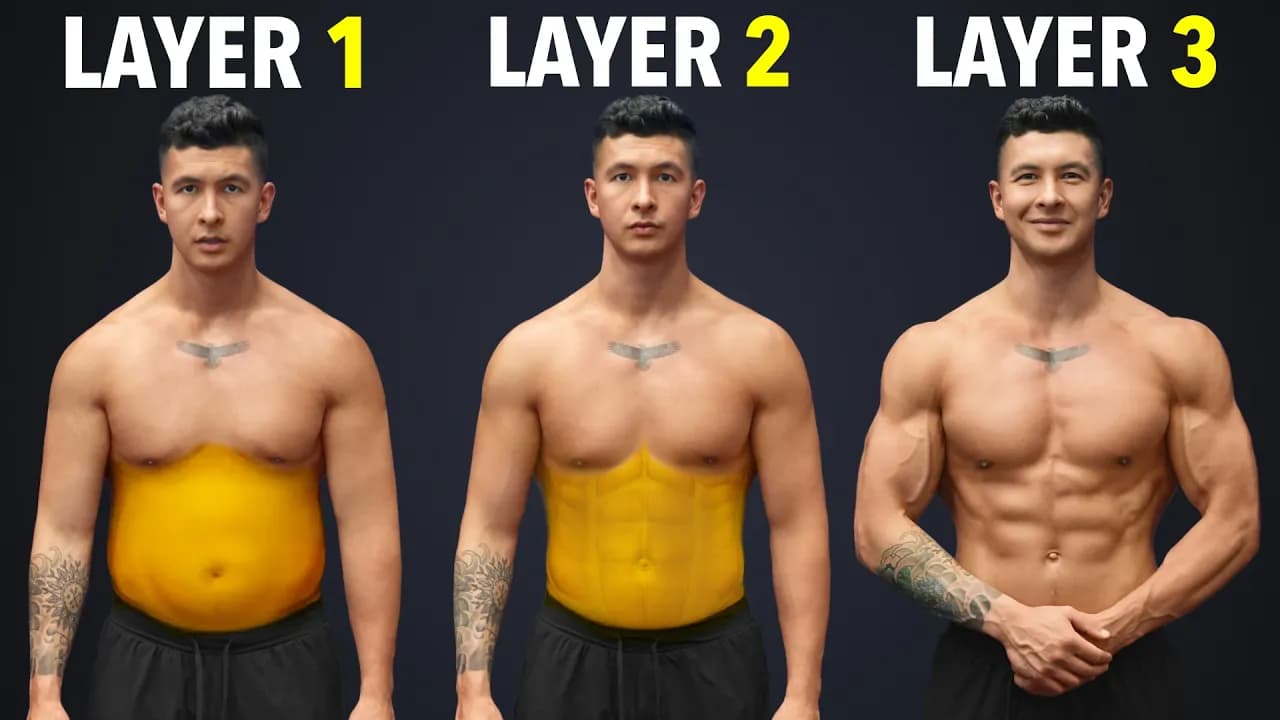
Aaron is very lean at 13% body fat, but total muscle mass below average. He has a hard time sitting still. Skinny physique is naturally lean, slender look with smaller frame, low muscle mass, less fullness in shoulders, arms, and legs. Speaker started with this body type, played sports as a kid, ate whatever without gaining weight, but lifting was slow to change body. Maria weighs 97 lbs, goal to build strength, mainly upper body arms, feel stronger. Low muscle mass means both struggled in strength tests. Maria's number 5.09, below 5.45 risks sarcopenia (age-related muscle loss). Her DEXA shows bone density lower than 72% of others her age, greater fracture risk as she ages. Health risks differ by body type, even if looking fit and healthy. Prevention plans for each at end.
In clothes, looks similar to skinny, but softer physique with excess fat around belly and love handles. David's experience: moved to California, started gaining weight. Average person gains 1-2 lbs yearly; without lifting properly, stored as fat, common especially younger. Can be leaner end like Dennis and Grace, or more body fat. All have below average muscle mass via fat-free mass index (FFMI): lean mass (body weight minus fat) divided by height squared. Average FFMI men 18, women below 16.
Twins genetically identical, slight body fat discrepancy. Paola: depressed, gained weight eating lots of takeout, boneless wings, fried sushi. Everyone has theories: slow metabolism, Uber Eats, restaurants, retail work on feet.
One month before, nine subjects did test revealing actual metabolism and calories eaten past 2 weeks, without knowing purpose. Subjects guess their habits.
Most common for gym bros. Sahil bulky, above average muscle. Sahil topped strength test, beaten by Eric (FFMI two points shy of natural ceiling, pro bodybuilder high). Both high 20s% body fat, hides definition. More common in men due to testosterone, but women too. Melody after 5 years training, 33.7% body fat, FFMI 18.5 (above average, advanced gym user), goal slim down.
Over 30% body fat men, 40% women. AJ 323 lbs, 51% body fat. Despite no workout, both have more muscle than most others. AJ has more muscle than every girl and most guys. Michelle carries body weight around.
Extra weight makes staying active harder. Michelle had plantar fasciitis from culinary work on feet.
Use table: body fat % and BMI (weight / height squared). Goal: build muscle, lose excess fat for athletic physique - above average muscle, low body fat (<18% men, <28% women). Wide range: Max and Bailey aspiring bodybuilders; Ethan and Nicole lean but not much muscle.
Some happy: another 5 lbs muscle nice; lean bad for heavy labor (hard on joints, mass moves mass, e.g., 80 lb paddle better at 200 lbs than 150 lbs). Balanced diet and active ok without specific look. Most wanted improvement. Year-long experiment with one subject.
Sisters did everything same: sports, meals. Family: mom's side farmers (bigger), other sides thinner.
Used on astronauts, Tanzania tribesmen. Drink isotope water, urine sample predicts resting burn, activity burn, calories eaten.
Subjects organize by guessed calories eaten (most to least) for $100 each if correct. Discussion: sports/fighter, mass, height. Final guess adjusted.
Aaron (skinny) eats 4,230 calories/day, 1,000 more than AJ despite half weight. More than speaker's aggressive bulk.
Retail 3-4 days/week, 10-12k steps, active off days: pickleball, longboarding. Resting metabolism 1,500 calories (normal for size). All resting metabolisms scale with body weight. No abnormally fast/slow. Aaron burns ~3,000 from exercise, total >4,000. Family super metabolism?
2,800 calories (close guess), mindful: balanced meals, cook home, weekends out, no snacks/sweets. Aaron and Maria eat/burn same weekly, consistent habits prevent gain.
Paola 2,720 calories. Paula 1,438 calories (lower than burned). David predicted 2,000, actual 3,300 (gain 1 lb fat/week).
David loves snacks, chips, sweet tooth. Twins avoided snacks, calories lower than Maria's, recently watching intake, losing weight, more active. Without strength training, lose muscle not fat, stay skinny fat.
Tried gym no results, stop; mostly running. David gaining fat yearly, softer. Dennis avoids heavy weights, fears puffy/bulky (probably not).
Burn more calories. Sahil predicted 2,600, actual 3,334. Eric 3,274 (very high). Active: strength training, cardio/steps (10k/day), martial arts. Muscle 3x energy vs fat, 10 calories/lb/day. Melody loses fat on 2,500 calories, Paola needs 1,500 same loss.
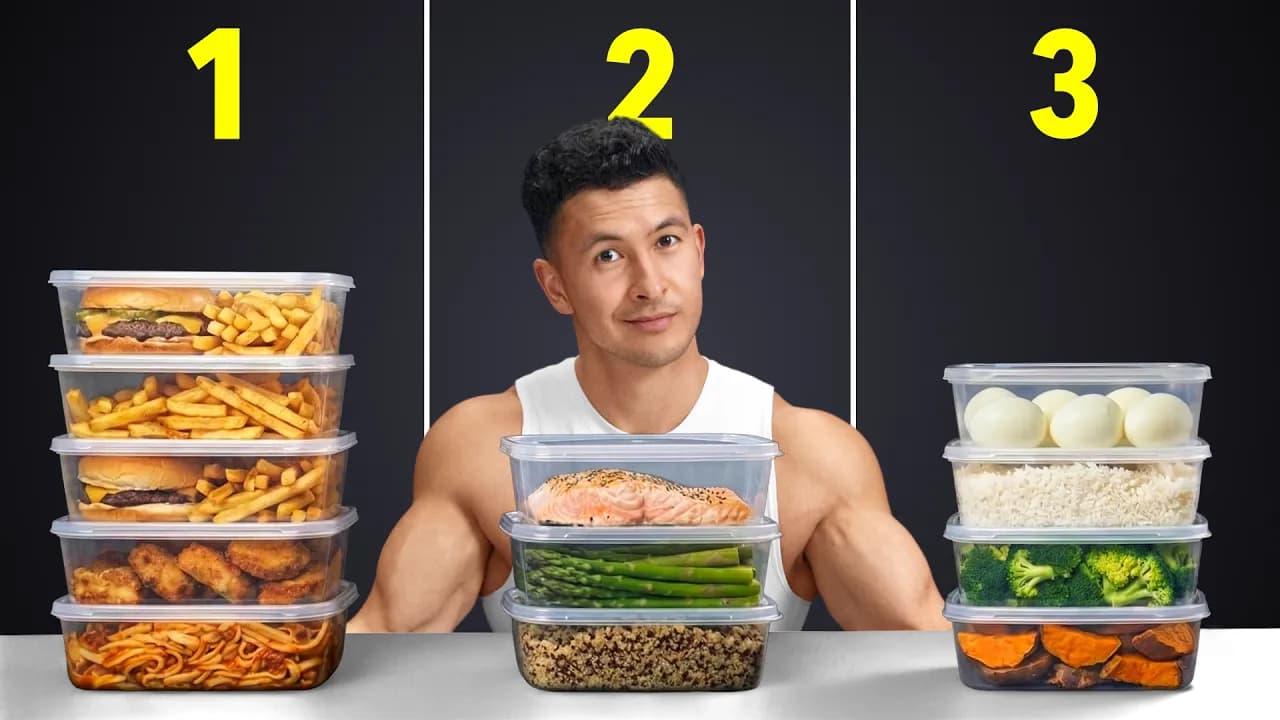
Love food hard. Trend: underestimate intake by body fat level. Grace 3,000 vs 1,800-2,200. Lives downtown, restaurants/Uber Eats 2-3x/week. Another 2,837 vs lower guess (500 more).
Sahil >1,000g visceral fat (moderate-high risk), deep in abdomen/organs from diet. Day: chocolate milk, tuna/pizza, bar burger, pizza/steak eggs. Fatty/sugary builds visceral fat (alive, harmful chemicals, disease, early death, bigger gut). Fastest to burn.
AJ 3,900 calories. Loves double cheeseburger, snacks, chocolates, caramel. Eats out, not conscious of nutrition. Michelle 800 calories above guess.
Not slow metabolism. Low fidgeting (Michelle still vs Bailey moving). Genetic, adds hundreds calories/day. Strong dopamine to food, predicts overweight kids.
Struggled with hard drugs, replaced with food.
Allow weight gain for muscle. Lean: 5 lbs muscle huge difference (Brandon 5 lbs lean mass 100 days). 10-15 lbs transforms (speaker). 3 short full-body workouts/week around 6 key movements enough.
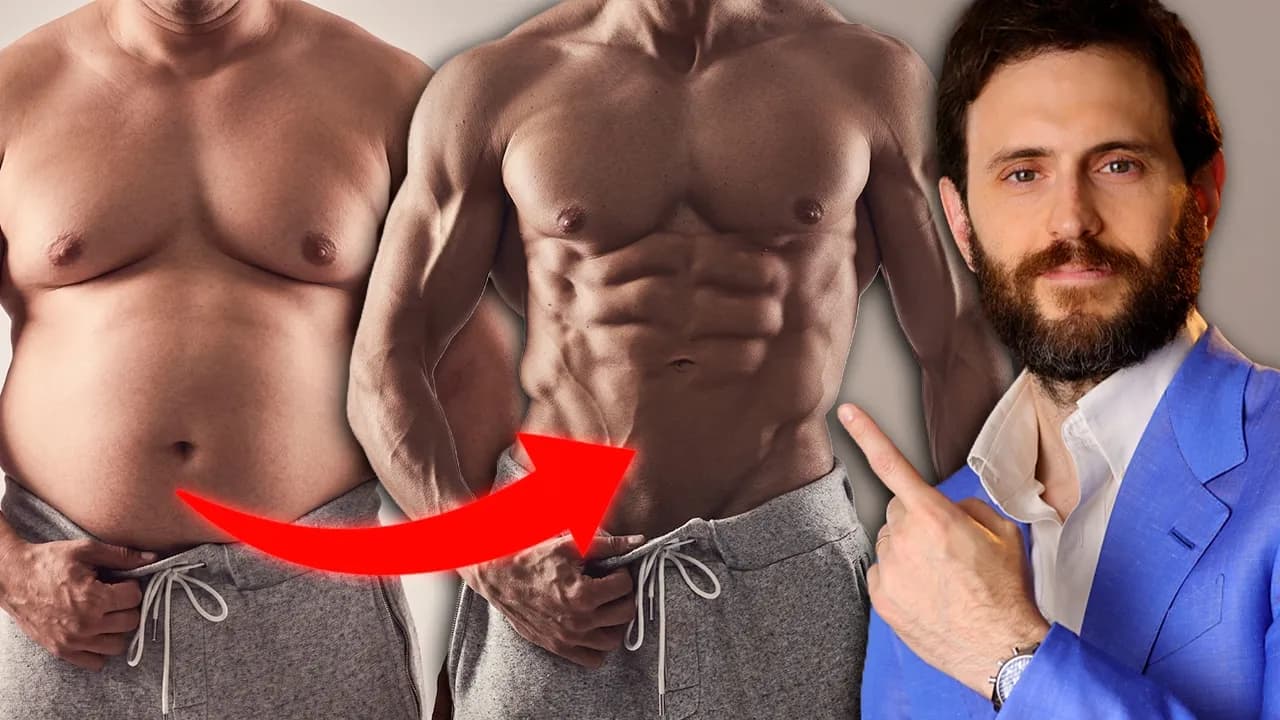
If you're training hard and eating a fist-sized portion of protein at every meal, most weight gain should be muscle. Even with some fat gain, your body leans down easier later. For skinny fat individuals, eating more calories for muscle growth isn't necessary. Instead, pursue body recomposition: lose fat and build muscle simultaneously. Skinny fat people are usually the best candidates, but it requires three conditions:
- Hard resistance training: Most get or stay skinny fat from focusing on cardio over weights or not pushing hard enough. Recommend three hard full-body training sessions per week, plus Pilates or other activities. This signals the body to keep and grow muscle.
- Small calorie deficit: Feed the body slightly fewer calories than it burns daily, using fat for energy to build muscle—a two-for-one deal. Aim to lose 0.5 to 1 lb per week.
- High protein intake: Multiply body weight in pounds by 0.8 for a daily minimum target. Evidence shows it increases odds of building muscle while losing fat.
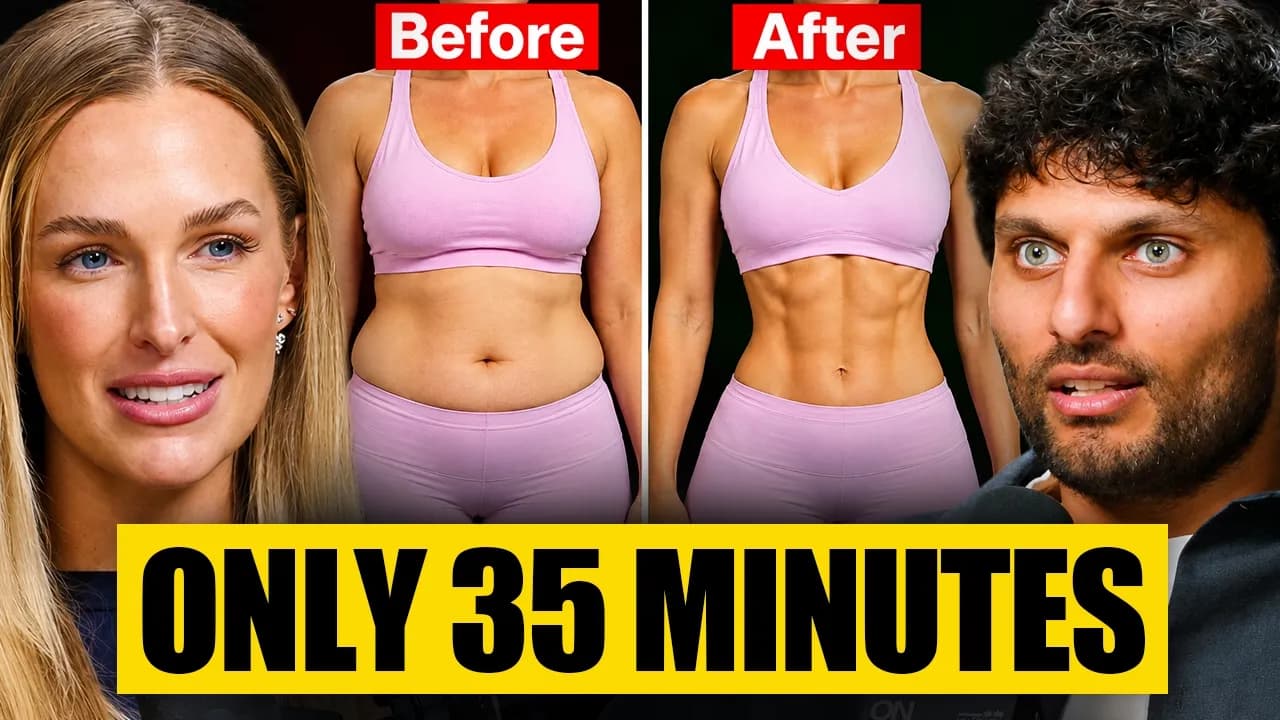
Example: Dayton (brother-in-law) and Nicole each dropped over 20 lbs of fat while building several pounds of muscle in months.
For experienced bulky body types, body recomposition is harder due to training experience and existing muscle, but focus on chiseling away covering fat. Training and activity are fine; dial in diet to reach 15% body fat in 3-4 months. The key habit separating bulky from athletic subjects is properly tracking food—weighing it is essential. Bailey was accurate with calorie predictions, unlike Melody. Track to eat 400-700 calories less than needed daily, leading to 1-2 lbs loss per week. Use the app with AI meal scanner for international foods like Vietnamese.
High body fat group has unique advantages: high metabolisms (e.g., Michelle and AJ burn 3,379 calories/day, more than professional athletes). They can lose fat eating more than others, use aggressive deficits (2-4 lbs/week without muscle loss), and make easy diet swaps:
- Cut Kit Kats for protein bars.
- Use spray instead of oil (massive change).
Crucial: Have a clear why bigger than looks.
I want to prep my body for kids and be the healthiest version. My sister and I want to time pregnancies for cousins to grow up together.
I had an inflamed heart—they thought heart attack. It woke me up.
Thanks to subjects and Regen Recovery for DEXA scans. Table summarizes training and diet recommendations by body type. Built with Science Plus app guides weekly with exact approach for your body—try two weeks free at builtwithscience.com or QR code.
After speaking with 18 participants, personally working with Rose for 365 days.
I would love to personally work with you one-on-one. If you're down, this is my rose.
I will absolutely. Thank you. Let's go.
Keep Jeremy Ethier in your library
Save the videos and channels worth coming back to, and find them again in one place.