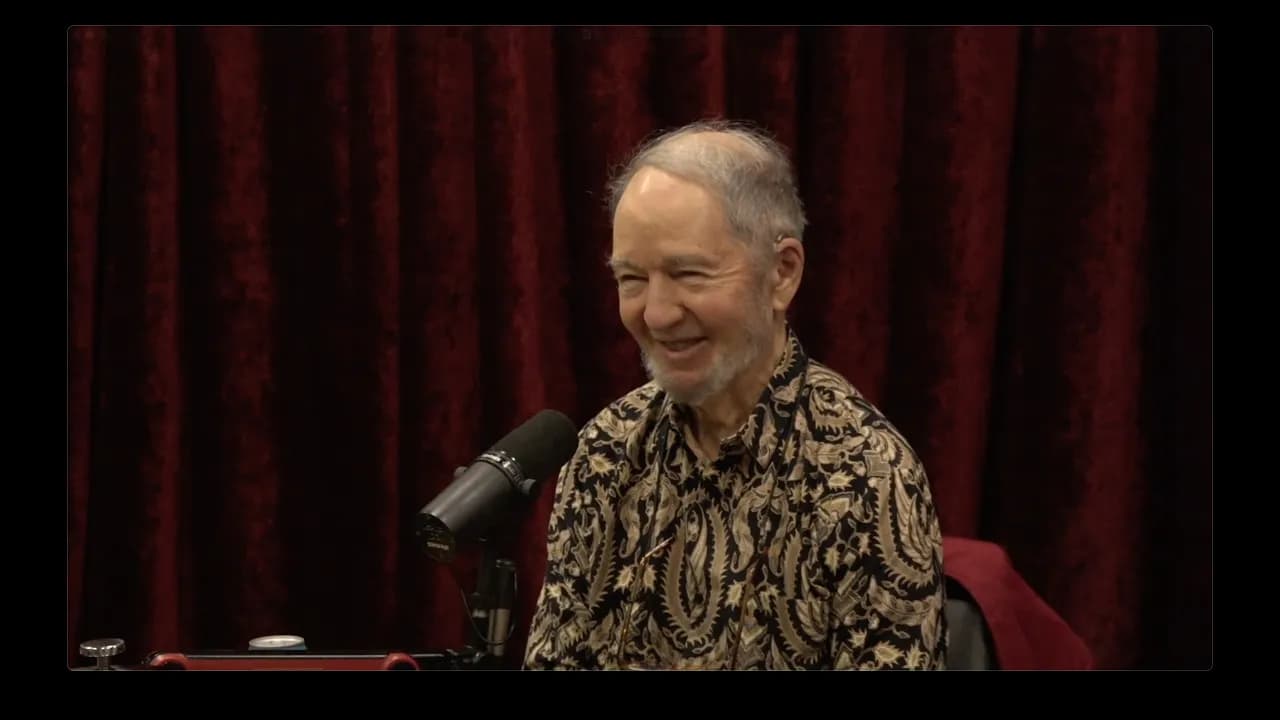
What Makes Great Leaders & How to Live an Extraordinary Life | Dr. Jared Diamond
In a Nutshell
Leaders succeed through 37 different approaches, not one personality type; charisma is just one path among many, and context often matters more than individual traits. History's outcomes frequently hinge on accidents and timing—Hitler's survival of two near-death events shaped WWII and the Holocaust, while Jesus succeeded as a global religious founder partly because he was in the right place at the right time with an organizer (Paul) to carry forward his message. Success in any domain requires pairing vision with organization, recognizing that followers are as selective as leaders, and the most effective leaders eventually learn to step down voluntarily rather than cling to power.
These notes were generated by AI and may contain inaccuracies.
People are constantly searching for personal generalizations about the personality of leaders. The most common generalization is that leaders must be charismatic. This is nonsense. Some leaders possess charisma, like Stalin and Augusto Pinochet, dictator of Chile, who lack it completely. There are about 37 ways to be an effective leader. Charisma is one of them. There are some generalizations about leaders, but not personal generalizations, because there are different ways to be an effective leader.
Dr. Jared Diamond is Honorary Professor at the University of California in Los Angeles. He has conducted research in biology and human sciences across many fields. He is the author of "Guns, Germs and Steel," which received a Pulitzer Prize. He also won the National Medal of Science and the MacArthur Prize. The discussion focuses on his latest book, "Prophets, Profits, Coaches, and Kings," which addresses leaders and leadership in political, religious, business, and sports areas.
For Dr. Diamond, the word "prophet" means religious leaders. The book addresses leadership in four areas: political, business, sports, and religion. The word "prophets" is used to refer to religious leaders because it adds appeal to the words like "the prophets," "the coaches," and "the kings." The discussion does not concern whether they are predicting the future or not.
Dr. Diamond was born in 1937 and grew up during World War II. His family was from Eastern Europe, Jewish. The last of his family members disappeared in the crematorium. His wife's mother survived from Auschwitz concentration camp. His life was shaped under the weight of Hitler. The book begins with a car accident that occurred in 1930, three years before Hitler assumed the position of Chancellor. Hitler's limousine was driven by a chauffeur and entered a crossroads in Germany. Hitler was sitting in the front passenger seat on the right when a large truck entered the intersection at a perpendicular angle with his car. Both drivers pressed on the brakes or acceleration, so the truck collided with Hitler's car head-on, pushing it toward the sidewalk. Hitler would have been crushed if the truck had not stopped just before that. Hitler was injured but not killed. If Hitler had died in 1930, would World War II have broken out? Would the Holocaust have occurred?
The second famous incident that almost led to Hitler's death was in 1944, before the war ended. Count Klaus von Stauffenberg, a German army officer, tried to assassinate Hitler. He brought a small bag containing a bomb to the meeting room in the Wolf's Den. He sat next to Hitler and placed the suitcase he had prepared to explode under Hitler's feet. Immediately, the bomb exploded, but moments before the explosion, Hitler leaned forward. As a result, four other people in the room were killed. Hitler's eardrum ruptured. Hitler was seriously injured but not killed. If Hitler had not leaned forward in 1944, would he have survived? Would many of his wife's family members have survived?
Historians disagree about whether anyone else could have achieved what Hitler achieved. This shows the difficulty in determining whether leaders had a real influence. The traditional way for historians and biographers is writing an autobiography. Most of Hitler's biographers say that he was unique in several aspects. He was, unfortunately, the most eloquent speaker of the twentieth century. He was anti-Semitic. Anti-Semitism was widespread in Europe, not only in Germany but in Poland as well. However, Hitler was the only one who thought of implementing this on a large scale. If it weren't for Hitler, the Holocaust most likely would not have occurred. He was also adept at deceiving people. He deceived the famous Neville Chamberlain in Munich, as he deceived German politicians, businessmen, and generals, even his Nazi comrades. In short, he was brilliant in deceiving people. Most historians tend to believe that leaders make no difference, but in Hitler's case, most argue that he had a significant impact.
The traditional biographical approach has a weakness. The researcher is bound by facts, but people come to different conclusions even with the same facts. Dr. Diamond's book presents a different approach: the natural experimental method. Who do you think is the least likely leader to achieve remarkable success, whether for achieving positive goals or destructive ones? There are many candidates for this title.
One candidate is Harry Truman. Dr. Diamond was eight years old when Truman became president. Truman was the least American president in terms of prioritizing importance. He was selected as the third or fourth vice president to Roosevelt for trivial political reasons. He was a senator from Missouri, not prominent. He received the position of senator through dishonest tricks. He was so unimportant that Roosevelt never met him once. Truman became vice president, and when Roosevelt died, Truman was completely unknown. Truman was not aware of the atomic bomb, however, the first decision he had to make was whether he would drop atomic bombs or not. At that time, Truman was widely hated. Later, it was realized that he was brave. He didn't care if people hated him or not. He took courageous decisions: the Berlin Airlift, the development of the hydrogen bomb, the Korean War, and the dismissal of General MacArthur. When Truman stepped down from his position, he was widely disliked. But looking back, he gradually became more appreciated, not on equal footing with Roosevelt and Lincoln, but as the second brave American president who made decisions without caring about people's hatred.
In recent days, at least in the technology sector and entrepreneurship, there is extensive discussion about the negative effects that may be caused by self-referential meditation of people who seek to build great projects, or to become leaders or entrepreneurs. There must be caution from overgeneralization. When searching in the experiences of different leaders, whether they had negative or positive impact, is there a common trait among the strong leaders who can take decisions without thinking much about the past or how they are evaluated? This is one form of self-referential meditation. There are other forms, but is there a connection between them? The answer is no.
This illustrates a general point. People are constantly searching for generalizations about personality, generalizations about the personality of leaders. Perhaps the most common generalization across generations is that leaders must be charismatic. This is nonsense. Some leaders possess charisma, like Stalin and Augusto Pinochet, dictator of Chile, who lacked it completely. There are about 37 ways to be an effective leader. Charisma is one of them. Any question that anyone might ask a person on how to generalize the characteristics of leaders shows there are some generalizations about leaders, but not personal generalizations, because there are different ways to be an effective leader.
Dr. Diamond's understanding of leaders and leadership is a strange mix of circumstances. Without available for driving better, perhaps charisma or the absence of it, a group of strange things that history is shaped by what we experience here now. Regarding the book "Guns, Germs and Steel," it deals with patterns of history on the continents over the course of the last ten thousand years. Over the course of ten thousand years in the past, individual differences cannot be remembered. There was no individual responsible for the launch of civilization in the Fertile Crescent. The Fertile Crescent is what started civilization. The reason is that the Fertile Crescent was home to more productive wild plants, like peas, wheat, and barley, and most productive wildlife animals like cows, sheep, goats, pigs, and horses. Therefore, there is nothing in the book "Guns, Germs and Steel" about individuals. While the book about leadership deals with what people achieved throughout life, usually on a local scale. It deals with individuals.
The book "Prophets, Profits, and Kings" is, in some respects, a subjective biography regarding the events that influenced Dr. Diamond's life. In terms of motivation, yes. From where the content is, no. From where the motive, yes, the role of Hitler in his family's life and his wife's life. But the book's content is separate. Absolutely not about him. In the introduction, Sir Brian Matthews is mentioned, as a leader of the Physiology Department at Cambridge University, who saved his career in this field. But once politics, the business world, the sports world, and religion are addressed, no contribution was made in any of these four areas.
At the end of the book, Dr. Diamond wonders what other areas await exploration during natural experiments. Namely, science - he is a scientist. Art and music - he is a musician. Military history - he is very interested in it. Social disturbances. He hopes that people will apply these questions of leadership in the future to matters that belong to him personally, especially music and science.
The story of the sinking of the lab is mentioned. Radioactive water was involved. The head of the science department for organ functions, Sir Brian Matthews, summoned Dr. Diamond the following morning. He thought he would be expelled. Instead, he said: "As you know, that was negligence. Don't do that again." And that was it. The reason was that there was a leader who could have ended his career, but he didn't. Dr. Diamond was never the type who blames others for their mistakes. He committed a lot of mistakes and almost got exposed to dangerous situations. He did things that were possible to end his career immediately. Therefore, he is not inclined to throw blame on others for their mistakes. He remembers that the biography of J. Robert Oppenheimer stated that he committed theft, and it was possible to separate him easily and end his career. But a blind eye was turned to the theft, and so he continued to develop his career.
When people are in low ranks in the hierarchy, as is the case in academic circles in their traditional heyday, these people in authority possess enormous power to influence us and whether we progress or not. But it is always reassuring to hear something like forgiveness. For 36 years, Dr. Diamond was Professor of Physiology at the Faculty of Medicine at the University of California in Los Angeles. He conducted laboratory experiments and had graduate students and postdoctoral researchers. He made a considerable number of mistakes with graduate students and postdoctoral researchers. He remembers the second upper student who wanted to divide his section because he did not perform well in one of the exams. He convinced him to allow him to stay, and he became a distinguished researcher. Some of his other students were exposed to dangerous situations, but near the end of his career, people forgave him and his career evolved well. Since he obtained forgiveness, it is his duty to forgive his students.
Religious leaders emerged as an important figure. Two chapters in the book are dedicated to religious leaders. The first chapter covers three religious leaders in the United States in the nineteenth century, due to the availability of many details about them: Joseph Smith, founder of Mormonism; Ann Lee, founder of the Shakers; Jim Jones, founder of Jonestown. Ample information is available about them. The second chapter covers Jesus. Very little information is available about him, and there is no contemporary information about him at all. The first available information is messages about him from Saint Paul and the Gospel of Saint Mark, both written approximately twenty years after his death. Therefore, there is no contemporary information about him. Did Jesus make a difference? If the New Testament is read, it will be found that he talks about six other Christians. Jesus Christ was not the only one. There were many people at that time who claimed to be the Messiah.
At the time of Jesus, six individuals claimed to be the Messiah, with two of them mentioned in the New Testament: John the Baptist, whose head was cut off, and Jesus himself, who was killed by the Romans. The Western Roman Empire was the most powerful political entity in Western Eurasia, making it the ideal place for a religion to establish itself. Jesus could not have expected that 1467 years after his death, Columbus would sail across the Atlantic Ocean, beginning the European invasion and spreading European religion, which was Christianity, throughout the world.
Christianity became the dominant world religion because it was the religion of the Western Roman Empire, the strongest entity at that time. If Jesus had possessed the same attributes in Sudan, or if a religious leader in Western Europe in the year 100 BC had the same qualities, the outcome would likely have been different. Jesus was in the right place at the right time, which explains why Christianity today is the world religion with the largest number of followers.
There were other people in the appropriate place at the appropriate time, including six other prophets mentioned in the New Testament and the Essenes mentioned in the Dead Sea Scrolls. The question arises: why did Jesus establish a global religion while the leader of the Essenes did not?
Two key factors explain this. First, Jesus's message and personal qualities were universal, directed at all people rather than exclusively at the Essenes or Jews. Although Jesus was a Jew, his message was not directed at Jews alone but was a global message. Among religious leaders in the Roman Empire at that time, this was an important factor.
Second, religion requires not only a founder with charisma but also an organizer. In some cases, the organizer and founder are the same charismatic person, as with Muhammad, who was both a skilled organizer and charismatic. The Mahdi in Sudan was also an organizer, a brilliant military leader, and a remarkable religious leader. However, Jesus died too early to serve as the organizer, and that role fell to Saint Paul, who was a skilled organizer.
Saint Paul was fortunate to follow Jesus as a great organizer. Similarly, in the Mormon religion, Joseph Smith was the charismatic founder but was murdered, and Brigham Young became the skilled organizer. The pattern of needing both a leader and an organizer appears frequently, with the leader sometimes being the organizer but often requiring another person or people to assist in organizing the message.
This pattern is evident in science, particularly in biology. Advisor Hodgkin and Huxley won the Nobel Prize for their description of the biophysics of the action potential. David Hubel and Torsten Wiesel also won the Nobel Prize, and Torsten Wiesel is still alive. These duos often show integration in their characters, with one tending to be more frank and the other more daring, similar to Watson and Crick.
When establishing a new religion, it is often not just about dualities but frequently involves a triad: a founder with charisma and organization, plus the need to defend against violent reactions from existing religions. New religions often require leaders who are military figures in addition to being organized and charismatic.
The Sudanese Mahdi, who founded an empire in East Africa in the late 19th century, was a great military leader who led hundreds or thousands of Sudanese tribesmen using only sticks to eliminate a British-Egyptian army of 7,000 equipped soldiers with rifles. He was a great leader, skilled organizer, and charismatic personality.
In science, there are distinguished scientists with the ability to organize on a wide scale. Supervisor Alan Hodgkin was a great scientist but did not organize fifty people in a research group. His strategy was to supervise one PhD student at a time. After serving as president of Trinity College, he became an effective leader, but there are scientists with superlative organizational capabilities.
Gerald Edelman, Nobel Prize winner for his research on understanding how antibodies work, had approximately 50 postdoctoral researchers. A friend discovered something called Bence Jones proteins in the kidneys, which was crucial for understanding how antibodies work. However, this friend worked alone and did not have 50 researchers. When the friend made a tactical error by presenting a lecture about the discovery before publishing the research, Gerald Edelman ordered his laboratory to immediately change direction. His fifty researchers entered the laboratory and concluded how antibodies work. Gerald Edelman received the Nobel Prize while the friend did not. Gerald Edelman was an effective organizer and fundraiser and a prominent figure who later turned to neuroscience after immunology.
Jim Jones is most known for the Jonestown massacre, where a group of people followed a cult leader and drank poison in a collective suicide. When hearing about cults and their leaders, the tendency is to think about how easily followers were influenced rather than just the persuasiveness of the leader. David Koresh and his group burned the building and killed everyone in it. Lectures by Koresh reveal no influence except that he was crazy.
When thinking about an effective cult leader, most people tend to believe he exploits the weak. The question arises whether cult leaders who succeed do something else in normal societal context and become leaders as actors, or whether it relates to pairing the disturbed person who is prone to being a follower with the cult leader.
An effective leader needs personal traits that enable leadership, which may be charisma, the ability to intimidate people, or the ability to persuade them. On one side is the leader, on the other are followers. Not everyone follows. Some people tend to follow people with charisma, while many people will not follow even the most charismatic people.
Hitler convinced some Germans to follow him, but the Nazis never achieved a majority in elections. The majority of Germans were not convinced by Hitler. Jim Jones, founder of Jonestown in Guyana, established the largest mass suicide colony in American history, with 900-931 people drinking cyanide-laced Kool-Aid. However, Jim Jones cannot be considered simply insane. He led the process of ending apartheid in Indianapolis and attracted people according to the noble church principles he founded there. His followers were not a random selection of people but were mostly poor and elderly, many of them African Americans who were not highly educated.
The People's Temple required a charismatic leader, but it also required people who were ready to be followers. If Jim Jones had died before moving from Indianapolis to San Francisco, he would have been appointed as a San Francisco Housing Commissioner. He attracted many idealists in San Francisco but became increasingly insane gradually.
The question should not be just about leaders but also about followers—who are the people who tend to follow others? In the case of the Nazis, there were clearly Germans inclined to follow Hitler. Winston Churchill and Franklin Delano Roosevelt's supporters were neither lunatics nor mentally ill. Parents voted three times for Roosevelt and once against him, yet they were not people with mental illnesses or strange qualities.
Leaders, people, animals, or anything else can be classified into different categories according to the criteria followed. It is possible to extract useful information about leaders and influencers who declare that they are not at the top of the pyramid and that they obey a particular god, in contrast to those who declare that they are at the top of the pyramid.
Jim Jones did not acknowledge a god nor claim to be superior to God. There are different ways to be an effective leader, including charisma. In the third chapter of the book, a table included 22 prominent political leaders from World War II onwards. The question was what generalizations could be reached about these 22 leaders. The 22 candidates are clear, though arguments can be made around them, including Stalin, Anwar Sadat, Mussolini, and Hitler.
Among these 22 leaders, only two stepped down from power voluntarily: Nelson Mandela, the founding leader of South Africa after the apartheid regime, who was eighty years old and retired voluntarily from the position of Prime Minister, and Lee Kuan Yew, founder of independent Singapore, who held the position of Prime Minister for 30 or 40 years but stepped down voluntarily.
Among the other twenty, these two were the only ones who stepped down voluntarily. All other prominent leaders were either assassinated (Anwar Sadat), committed suicide (Hitler), were removed from their positions in elections (Winston Churchill), or were overthrown by coup. This means that in the world of politics, once you become a strong leader and are convinced that you are an effective and strong leader, it is unlikely that you will step down voluntarily.
Learning Italian relates to lifestyle as well. No one wants a decline in terms of their standard of living. Italian was the last of thirteen languages learned, acquired at age sixty. Italian is read every day, with all recreational reading done in Italian rather than English. Once a week, there is a two-hour Italian conversation with a professor at the University of Southern California.
The mother was a talented linguist, and learning languages has always been enjoyable. In school, Latin was studied for five years and was loved. There was an option to study either Greek or biology as elective material. Greek was studied for three years, and the beginning of the main section from the play Achilles can still be repeated.
At university, German was learned before entering university with mother's help. This coincided with the launch of Sputnik, leading to learning Russian. Spanish was learned, and the first summer after graduation was spent in Finland. Finnish is not from Indo-European languages and is an extremely difficult language.
In summer 1959, very few Finnish people spoke English. To travel by occasional hitchhiking, Finnish had to be learned, and the journey ended at a national park in northern Finland. Sneaking on foot to a hut cared for by four Finnish soldiers who spoke no language other than Finnish, several days were spent with them learning Finnish through demonstrating different things like a cup. The Finnish word for cup is "kuppi." Finnish has no prepositions but uses subsequent letters and grammatical cases. When saying the cup is on the table, it is "kuppi pöydällä." When putting the cup on the table, it is "pöydälle." When taking it off the table, it is "pöydältä." The four Finnish soldiers demonstrated this practically.
After the visit to Finland, parents were met in Paris. There was serious consideration of leaving science to work as an interpreter and planning to go to Switzerland to become a translator. The father gently suggested that it might be a bit early to conclude that science was frustrating after only one year of study, and to give science six more months before deciding to become a translator.
When going to New Guinea, which includes thousands of languages, the first people worked with were the Fore tribe, famous for kuru disease, or laughing sickness, the first prion disease. At that time, the business language in New Guinea was called Tok Pisin, which was good for communication, but there was passion for learning a local language immediately. The word for "we" was asked about, having already learned "I," which is "Naga." The informant gave the word for "we," but it turned out to be "Naga, Kasiga," revealing that the Fore language has a dual pronoun.
English has singular and plural pronouns, "I" and "we," but among European languages, Slovenian and Ancient Greek both have dual pronouns, meaning separate pronouns for two and three. If speaking about two people, a different pronoun is used, but if there is a third person, the pronoun is different.
The approach to classification differs from Richard Feynman's view on how to look at the world. If seeing a bird in the forest and someone says it resembles a thrush, Feynman would say knowing the name does not help in understanding it. However, based on thinking deeply about names and links to different brain structures, often there is a way to name things in a specific field that tells much about their function. In neuroscience, the first name in "retinal detachment" tells about the structure of the building and the future structure. Names really matter and tell more than just that this is different from that.
From age three, lists were being made. The mother, who was a teacher who loved teaching, taught reading at age three. Notes began being taken in a notebook that is still kept from age three. Lists were made of river names, animal names, Rocky Mountain animal names, and European bird names. Tram car numbers in Boston were recorded. This method of making lists has been beneficial in biology.
After receiving a PhD, work was done as a researcher in membrane biology. Among contributions to this field, the largest study was conducted on membrane permeability to biological molecules that are uncharged, meaning non-electrolytes. With the first student after the PhD, rabbit bile permeability was measured for 210 non-electrolyte materials, all organic chemicals. There were many details in this study, including branched and unbranched compounds, those containing oxygen groups, and those containing sulfur groups.
When going to New Guinea to study birds starting in 1964, New Guinea has about 600 species of birds, most of which were encountered and known very well. When falling asleep at night, lists of New Guinea bird names are often repeated, sometimes by their foreign names such as Mabi Saina, Baski Yama, fig Mami Toto, and Swanathapa, and sometimes by their Latin names such as Cyricornis Papouinsis, Siricornis Perspesillatus, and Siricornis nua.
One influential teacher, Ernst Mayr, the great evolutionary biologist, was passionate about preparing lists. Thirty years were spent preparing a joint book about northern birds of Melanesia, the islands located east of New Guinea. They were very compatible, both loving to prepare lists. Whenever a question was raised, Ernst would say, "Let's make a list." A list would be prepared, another list would be prepared, then those lists would be reviewed—a list of all mountain birds in northern Melanesia, asking what generalizations could be extracted about mountain birds.
Preparing lists has been beneficial in scientific research since age three. This is the exact opposite of what Richard Feynman spoke about regarding how to look at the world. While preparing these lists and repeating them while falling asleep, functional differences among them can also be summoned. Lists and names have their unique value independent of that. The form of names is an essential reference for much of the information that should be seen when outside at night. Saracornis noisy is the large bush bird. It is the two largest birds in sequence height. It is the biggest two coexisting species, so similar that it is difficult to distinguish between them and the opossum.
The two largest bird species are so similar that they are difficult to distinguish visually. The people of Guinea explained the differences in their behavior. Scientific names contain significant accompanying information beyond the name itself. The name Saracornis indicates the bird belongs to the genus Saracornis, which also includes Saracornis Vergatus, the low-elevation equivalent of Saracornis Noisy, and Saracornis Perspesillatus, a small bush bird that shares the same elevation range with Nuwaisi.
In science, some researchers dedicate themselves to one field throughout their professional lives for five or ten continuous years, while others attempt to understand enormous quantities of information. Diamond belongs to the latter category. He has always been interested in many ways and was lucky to study in a high school that gave him study options in many fields.
In high school, Diamond expected to study science, but had an amazing history teacher who was the best of all history teachers he studied with at Harvard University, as well as an excellent Latin and Greek teacher. He obtained his PhD in Physiology at Cambridge, England, returning to the United States after obtaining his PhD in salt and water transfer via the gallbladder.
Looking back, Diamond was unaware of what he was doing then, but now realizes with horror that he was expected to dedicate his life to the gallbladder. This was absolutely contradictory to everything he did from the age of three, so he looked for another job. He seriously considered working in the field of pre-ceramics Colombian, but also seriously considered becoming an orchestra conductor.
Diamond had no knowledge of pre-porcelain Colombian studies. To be an orchestra conductor, one has to ignore the differences in time, which he couldn't do. He began bird monitoring at age seven, and when he returned to Boston after obtaining his doctorate, in his first summer he spent time in Peru with a colleague who is a clever bird observer, climbing mountains and watching birds.
The following summer, they went together to New Guinea. New Guinea is one of the wildest places in the world, but also home to the most magnificent birds. Diamond began his second professional field in birds, then began his third career path in history and geography, going through three career paths total.
Diamond's career in physiology of laboratory organs stopped finally in 2002. When his wife and he were blessed with twins in 1987, he realized that Max and Joshua's future would not depend on the gallbladder, but on history and geography. He began gradually dedicating more of his time to history and geography, and his interest in the gallbladder diminished.
After much great effort, Diamond managed to convince the University of California Los Angeles to change his position from Professor of Physiology Gallbladder in medical school to geography professor at the university. He still combines his two professions in history and geography simultaneously with writing his book about leaders, while at the same time writing research on New Guinea birds.
Diamond finished last Friday a lengthy discussion about mountain birds of Wandamine in New Guinea Indonesian. He intends next year to write a research paper about the birds of the Wague Mountains in New Guinea Indonesian. Being 89 years old, he has to think about how to make the most of his remaining limited time.
One of the things Diamond would like to do is the integration of his research results about New Guinea birds during a study of their distribution in the ten mountain ranges isolated in New Guinea. He wants to extract generalizations about birds that excel in settlement during the remaining ten years of his life.
Despite having colleagues with many interests, it is very rare to come across someone who achieved success in several different fields of serious scientific research, not to mention writing books about it. It is not common in scientific circles to change fields. When some do it, they often do it in a mysterious and gradual way.
There was a wife to consider, with concerns about having a permanent job and paying the bills. Diamond imagines there was support, or perhaps a stubborn personality that follows curiosity. Professional problems related to interests were represented in the fact that since he was three years old, he was interested in many things.
Diamond later realized one of his life crises, among other crises that followed after obtaining his doctorate, when he realized with horror that he was expected to do one thing for the rest of his life, but this wasn't him. It may require some effort to split a second career path in the field of birds.
Diamond got a post-fellowship PhD. Most post-fellowships require doing one thing. He was in the Physics Laboratory Vitality at the College of Medicine at Harvard University, but was lucky because the post-fellowship was with the Harvard Society called the association of colleagues. As a junior colleague, he was free and could tell the president of the Physics Laboratory Vitality that he would travel to New Guinea for three months this summer to study its birds.
When Diamond moved to the University of California in Los Angeles, the crucial part of his negotiation was an offer of a position as Associate Professor in the Department of Physiology. The dean of the university California in Los Angeles at the time, Sherman Melnikov, the longest-serving brigadier general medical college serving in the US, showed him a job in the science department of organ functions.
Diamond told Melnikov that he was interested in birds of New Guinea and intended to spend three months each summer working on New Guinea birds, wanting to continue this work. Melnikov responded that the Faculty of Medicine at the University of California in Los Angeles is interested in birds of New Guinea and would give him $5000 annually to spend on the study of New Guinea birds.
Diamond was lucky because his dean gave permission to him and his wife Mary, and Mary had no problem with the launch. When he met Mary, he was already working in New Guinea. The development of their relationship was a crucial aspect in that Jared was going to New Guinea for three months, and Mary was aware of what happens there.
Diamond was almost killed in New Guinea repeatedly, and Mary had to put up with that. By the time their children were born, he had gotten a prestigious job at the medical school. When the children were born, Mary didn't tell him not to go there for three months, so he realized he wouldn't go there for three months after that point. When the children were born, he reduced the duration of his stay in New Guinea to one month each time.
Diamond's last trip to New Guinea was in 2019. This highlights one aspect of life adventure, not to mention research and living, as learning immersed in a different culture, a different system, a different environment, which is going to unfamiliar places and eating unusual food, which may be difficult for the body.
Most people would think that you can get a cheeseburger sandwich from McDonald's anywhere in the world now. But Diamond was always ready to sacrifice physical comfort in order to learn. Learning languages is difficult, and to imagine putting yourself in an environment of a forest full of disease species, where political unrest and social issues prevail, there are many variables when you go out there.
Being an explorer intellectually in the wilderness truly was the experience. It wasn't until he left for New Guinea that Diamond experienced this. When he was in Peru the year before leaving for New Guinea, he and his friend spent the summer there, climbing mountains. They achieved their first summit climb at 17,000 feet. Being at high altitudes soaring, and the ascent directly from sea level to a height of 10,000 feet, then after three days of descent to 6-16 feet, becomes the situation dire.
Diamond has suffered from physical suffering in Peru. In New Guinea, activity there causes severe physical suffering. The food is sweet potatoes and rice, three meals daily. In the forest, he was getting mite bites from the jungle. In his first year in New Guinea, he was injured with dysentery, which the university doctors at Harvard were not able to prescribe treatment for, and it stayed with him for a year.
In his third year in New Guinea, Diamond was injured with malaria. Hiking mountains in New Guinea, being present in New Guinea is miserable physically most times. Sometimes, maybe once every three months, he can sit in camp and look at another view and say, "Oh my God, how beautiful this is! The view!" But the rest of the time, he feels miserable physically.
Diamond was forced to deal with the population of New Guinea who have their own ideas about what must be done in life. Presence in New Guinea is uncomfortable, but it's wonderful. The charm of birds and trying to know the difference between a Mobisadi bird and a Basjikhaby bird makes it worthwhile.
The only other two bird experts Diamond knows from the field of science are Jim Watson, who started as a bird scientist of a certain type and decided to solve the structure puzzle of DNA, therefore taking a different route, and the late Murray Gell-Mann, the discoverer of the quark and winner of two Nobel Prizes, or perhaps one at least, who was a smart man obsessed with birds and classifying and monitoring them.
It's interesting that all these scientists have apparently a kind of obsessive pursuit of big questions, such as entire societies, leadership, acid structure of nuclear, and Gell-Mann's work on primary particles. Birds, which Diamond knows some of, certainly not as far as he knows, are distinguished with enormous diversity.
If one is not truly interested in observing birds, then it is easy from the outside to say that there is a black tit on the head, and this bird, and that, and what information is that, and what is the benefit that can be extracted from monitoring it. Diamond doesn't mean to downplay its importance, as he personally adores birds.
Diamond was given a unique opportunity to talk about birds with Murray before many years in a meeting physically. His knowledge of birds is very superficial compared to Diamond's knowledge. Birds are easier than all animals for observation and understanding. Birds work with the same senses which humans use, working with sight and hearing, while mammals in particular work by smell.
Mice cannot be monitored effectively, though gazelles can be watched. If you want to understand mice, you have to use traps. Birds have a strong sense of smell. You can catch them in traps, but you can also bird-watch. Therefore, most of what we know about ecology, science, evolutionary biology, biogeography, and behavior is something we have learned first about birds, and we learned it in detail.
This knowledge about birds can then be applied to other animals. The things Diamond wrote about birds include a lot about ecology, and much about how birds divide for citizens of environmental, and much more about evolution, and how bird species evolve in New Guinea, and how new types arise in the series of connected mountains, biogeography, plant distribution and animals around the world, especially distributing the birds then mammals.
Mammals and others are easiest animals for observation when they are birds. When asked what we can learn regarding birds, the honest answer is we can learn everything about birds, and everything in the world of biology is easier in learning from birds than others.
Birds, many of them sing, and some of them speak. Peter Marler was in Davis when Diamond was a graduate student. Among the most frequent observations interesting, in Diamond's opinion, which Marler presented, is that the same type of bird will have a different song if he grew up in Marin Headlands comparison by its natural development with his parents in Marin Headlands comparison elsewhere.
There is an innate relationship between types, such that you can swap the children and they can learn a song from the other location, but they will always learn their website's song in a better way. Diamond feels that if there was a group of scientific results that a number of interests in language, location and migration, it is Peter Marler's studies.
Bird songs are a means of communication. Birds sing to deliver information. Birds singing has been assumed to express behavior of males in defense of their regions, but in recent years, we discovered that there is highly accurate information in the sounds of birds.
For example, birds which gather in flocks, like tits and starlings, if they see a falcon, emit a call. When you see the birds and the falcon issues this call, and you hear it, birds that stay away from it at a distance of 200 feet know with the presence of the falcon before it is capable of flying. So bird songs are rich in information.
This inspired studies similar, especially on monkeys. There was a couple, Sevarth and Cheney, who work at the University of California in Los Angeles, who moved to Pennsylvania. They ran fascinating studies on monkeys of the vermouth. Monkeys emit sounds that resembled moaning. Seifart noted that Cheney said that some of these voices sound different a little while, then they began by recording and playing it.
They noticed that some voices of the monkeys looked at the highest, and some of them were issued with strange noises, so they looked downwards, and issued some of them strange sounds another, so the monkeys raised itself. Then they realized that these different voices function as words. There is a strange sound that means an eagle. When a monkey makes a sound the fart made a sound similar to the sound of the eagle, the monkeys look upwards.
There is a sound another strange thing that means snake. When a monkey hears the rattle that is the sound of a snake, he looks down at grass. There is a strange sound another that means cheetah. When he hears Fahd's voice, he climbs a tree quickly. This is an example of information which are transmitted by sounds, first in birds, then among monkeys.
When researchers after PhD and students in graduate studies work with Diamond, he was negotiating with them to make sure they will undertake a project that interests him and their interest. It was necessary to be a project that provokes his interest. It was necessary that it is a project that raises his interest because he worked hard to find funding, and he could only accept two or three students at just once.
The student stays with Diamond for a period of three or four years. This is a large investment on his side. He wouldn't have made this investment unless it makes sense to him. On one occasion only, a student told him he wants to have his own project private.
There was a student, a fantastic Argentinian, who came to Diamond one day and said that he asked in the physiology department the members, and if they have knowledge, for he had been told that the rule followed in the section for students post-doctoral studies, as the claim is that a student should spend post-doctoral half his time working on the project of the supervisor and half the other working on his own project.
This is different but correct. The student found another post-PhD student to whom this applies. He was an exciting person for information. Diamond was surprised. The student said, "No problem, you can do your own project." He undertook a private project in addition to the project Diamond participated in. But this time was the only one Diamond saw that includes a student who has a project that does not provoke his interest.
Otherwise, the projects were always interesting to Diamond and the students together. This is good for the student, because he can have Diamond's attention the perfect one, and learn from him if the topic is within his specialty. The student cannot learn from Diamond if the subject was unknown to him.
From clearly, as Diamond told about his career, he has always had many interests, deep interests, and great curiosity, almost a strong motive to follow up on it and resolve some things related to it by himself. Before beginning recording today, they had a quick chat about preference or lack thereof for some animals as pets, or some things in the world, and there is no need to delve into the details.
It was not controversial, but what impressed Diamond is truly the clarity. He believes we met before about twenty seconds around the fact that some pets, and some things, and some topics are considered for him, it's just a distraction. As if you simply are not interested in it. Diamond thinks that this fits perfectly with his interest in many other things.
As someone who has just reached 51 years old, Diamond has been thinking about time more and more. But the beautiful thing about an academic career is that you kind of know, okay, you have four to six years for this thesis, then you finish, then there is an opportunity for change the path slightly or a lot. But life is a little different.
It's clear Diamond knows this is all good for others, but he doesn't want to get lost with his energy focused on these matters. This is very refreshing in reality, because it contradicts with the idea that he is interested in everything. He is not interested in everything. He is interested very much in things, and this provides him a precise standard for separation from all the things that will not let it occupy his mind.
Diamond was asked if this was always a characteristic of his. Absolutely not. He will give a glimpse of what awaits. When he reached eighty, reaching eighty was not a shock to him, but rather turning eleven and eighty is an even bigger shock. Because the eleventh and eighty meant he has entered a stage of the 1980s.
On although Diamond knows the numbers very well for average age expected, the average American man's age at birth approximately 78 years. As for average age the American man who is 70 years old, this is not known on a wide scale. When you are 70 years old, your average age is not expected to be 78 years, but he lives up to 93 years, because many risks may be gone. Diamond was aware of that completely.
When Diamond was at eighty-one in his lifetime, he had never been thinking about what he can do. But in the two years past, since he reached at 89 years old, he has come to realize the exact time remaining and what he wants to do with it. Among the specific matters which he would like to do with it in the remaining time is consolidating his understanding of New Guinea, which includes 10 major mountain ranges. He performed the first operations of ascent and exploration morphological number from it, and more explorations in detail.
The speaker is conducting detailed explorations of ten mountain ranges to understand bird residency patterns. Some bird species appear across all ten mountain ranges while others are found in only one. This represents a unique dataset that the speaker wants to analyze comprehensively before the end of their life, as accessing these mountain ranges is extremely difficult.
The speaker is a musician who sang with the Boston Handel and Haydn Society and performed in the Cambridge Music Society in England. Benjamin Britten attended a performance of his own Cantata Academica when the speaker was part of the Cambridge choir. The speaker particularly loves Johann Sebastian Bach's music and has sung approximately 20 of Bach's 210 church cantatas.
In August of last year, the speaker began systematically learning all of Bach's cantatas at a pace of approximately one per week. They listened to Cantatas 61 and 62 recently, with Cantata 63 coming next. At this pace, it will take three to four years to become familiar with all of Bach's cantatas.
The speaker has become increasingly aware of limited remaining time in recent years. They've stopped doing things that were done out of obligation rather than genuine interest, which frees up more time for important people and meaningful activities. The speaker generally did things they enjoyed doing throughout life.
The speaker spends approximately one to two months per year preparing income tax returns, which they find complicated but manageable due to their comfort with numbers. They handle most insurance arrangements and travel planning. The speaker washes dishes with their wife, while Mary handles the gardening and shopping.
Paul Ehrlich, author of "The Population Bomb," was a colleague at Stanford University. Paul and his wife Sandra also wrote "Jaws," which the speaker introduced. The speaker describes Ehrlich as a wonderful person with keen insight into many topics, though some argue he was wrong about certain predictions in "The Population Bomb."
The speaker identifies three major risks facing humanity: nuclear annihilation, consequences of inequality in a globalized world, and depletion of resources. The world's population has grown from one million people ten thousand years ago to nine billion today. However, the speaker emphasizes that per capita consumption rates have also increased dramatically in the developed world, leading to depletion of fisheries, forests, and topsoil.
Approximately four billion people depend on fish and marine food as their primary protein source. The speaker notes that while Paul Ehrlich's predictions of widespread famine didn't materialize as stated, he was right about broader problems related to population growth and environmental impact.
The speaker argues that Wikipedia's focus on Ehrlich's "Population Bomb" being "not proven true" misses the broader validity of his concerns. While people aren't dying of hunger in large numbers, their lifespans are shorter and more miserable because only a tiny fraction of the world's population lives the lifestyle of the developed world. Even within the United States, polarization is increasing between those who have enough and those who don't.
The speaker has always been physically active, beginning weightlifting in college and running for years. They exercise several days a week and derive satisfaction from physical activity. They believe physical exercise is important for maintaining both mental and physical health.
When the speaker was in university, physical exercise wasn't discussed much, and the separation between intellectual and athletic pursuits was more pronounced. Sports were associated with military personnel and bodybuilders, with running being less common.
All successful scientists the speaker knows who have achieved long careers and remain active are physically active. Conversely, those who are not physically active have mostly passed away. R.B. Woodward, the great organic chemist at Harvard who won two Nobel Prizes, never exercised and died at a relatively young age.
The speaker has explored sports leadership for the same reason business school professors conduct research on sports outcomes: sports provide accessible data. Business results are difficult to measure and companies tend to keep results private or publish them infrequently. In sports, matches occur weekly or twice weekly with publicly announced results, coaches are visible, players are well-known, and games are broadcast on television.
Using variance analysis (ANOVA), approximately 15-30% of variation in athletic success is attributable to the coach, about 30% to the players, and another 30% to institutional factors. The same pattern applies in business, where CEOs contribute approximately 30% to variance in company performance.
The speaker questions whether CEOs should receive billions in compensation for company success when 70% of variation in outcomes may be due to random factors. When coaches are fired after losing seasons, the new coach typically achieves better results the following year due to statistical regression toward the mean, similar to how someone who rolls a one on dice is statistically likely to perform better on subsequent rolls.
John Wooden, considered the greatest coach in American sports history, led UCLA to nine national basketball titles, seven consecutively. No other university has won more than two consecutive national titles. Wooden's success came partly from his attention to fine details, including the type of socks his players wore, and putting players in groups of seven rather than five for substitution purposes.
Wooden's most distinctive feature was that basketball wasn't merely a sport for him but a philosophy of life. Both Bill Walton and Kareem Abdul-Jabbar stated they learned more from Coach Wooden about life than about basketball. This philosophical approach cannot be faked, unlike technical skills such as training players to jump higher.
Among technology leaders, the speaker has met and spoken with Bill Gates multiple times and had positive experiences. They met Elon Musk once and Jeff Bezos once. Among business leaders, the speaker admires John Schoenard from Patagonia, who treated the company as a model for life, emphasizing employee vacations and sustainability.
Schoenard chose not to buy more cotton and increase production because he didn't want to overdevelop cotton cultivation. He was also a world-class mountaineer who made the first ascent of the hardest wall in Yosemite.
Steve Jobs had a clear philosophy about business, particularly regarding product design. When he returned to Apple after being fired, he reduced the company's product line from 100 products to just four. His philosophy emphasized that products should be stylish, attractive, and easy to use, avoiding the complexity of devices with 47 buttons like some television remote controls.
Business school professors have applied their analytical methods to politics as well. Research shows that prime ministers have more influence than state governors, who have more influence than mayors, because they have more power. Dictators have greater impact than democratic leaders, and democratic leaders have more impact during wartime than during peacetime.
The speaker's advice for people of all ages is to do what you enjoy, but with broader considerations. Tom Lovejoy's father advised doing something you're good at, something you enjoy, and something that makes a difference in the world.
The most important advice is to make sure you do something you enjoy. The speaker suggests rejecting others' prescriptions about how to live life, such as spending time ironing shirts when there are other priorities.
The speaker spent considerable time designing national park systems in Indonesia and New Guinea and establishing principles for national parks generally. They wrote many books about major risks facing the world and dedicated much of their life to convincing people to live better lives without corrupting the world.
The speaker attempted to become an orchestra conductor but discovered they couldn't reliably give the starting signal due to the speed of sound. They tried conducting once at UCLA but gave up this aspiration, choosing instead to do things they were good at, loved doing, and that were important for the world.
Partly because you are the kind of person who, for me and millions of others, became a translator for ideas we didn't have, or wouldn't have come across or thought about were it not for your books. Many inspired me, and curiosity and learning today is an extension of this, and I'm sure that your next book will continue this approach. So, thank you.
You have the right to disobey his request and at the same time obey him. I can truly say the time you spent here today, and I hope that we repeat that. Thank you. I enjoyed it. I talk to you a lot, know yourself well.
To write a book well, I conduct interviews and the oldest podcast episodes. The interlocutors disagree. They are not all similar. Some are more dialogue in preparation for others, and some of them are more knowledgeable about the subject than others. From it is truly my pleasure to have a conversation with you. From it is my pleasure to conduct an interview. Thank you. It was due to my pleasure, and we will repeat it.
Thank you for joining me in today's discussion with Dr. Jared Diamond. To find out more about his works and his latest book "Prophets, Coaches, and Kings," please see links in the episode description. If you benefit from this podcast or enjoy it, please subscribe to our channel on YouTube. That is a great and free method to support us. In addition, please continue the podcast is available by clicking on the follow button on both Spotify and Apple. You can also leave a rating up to five stars on both Spotify and Apple. And now you can leave your comments available on both Spotify and Apple.
Please also see the aforementioned shepherds at the beginning of today's episode and throughout it. These are the best way to support this podcast. If you have any questions or comments about the podcast, or guests or topics you would like to discuss in a podcast of the Huberman Laboratory, please write it in the section comments on YouTube. I read all the comments. And if you are not already following me on social media, I am Huberman Lab on all platforms: Instagram, X, Threads, Facebook, and LinkedIn. And on all these platforms I discuss science and related tools, some of them overlap with the Huberman Lab podcast content, but a lot differs from information received in it. I repeat, my name is Huberman Lab on all platforms.
If you haven't subscribed yet to the newsletter, it's a publication free monthly payment included with podcast summaries. In addition, we offer protocols in the form of PDF files ranging between one and three pages, covering everything starting with how to improve your sleep, and how to improve dopamine levels, reaching exposure to deliberate cold. We have fitness protocol, basic exercises, cardiovascular, blood and exercise resistance. All of this is available completely free. What you just need to do is visit the website hubermanlab.com, then go to the tab menu in the top corner right, and passing back to the newsletter news, and entry your email address.
I would like to emphasize that we do not share your email address with any party. Thank you again for joining me in discussion today with Dr. Jared Diamond. Last but not least, thank you for your interest in science.
Keep Andrew Huberman in your library
Save the videos and channels worth coming back to, and find them again in one place.