What to Do If You're Having a Heart Attack
In a Nutshell
Call 911 immediately at the first sign of chest pressure, shortness of breath, cold sweats, nausea, or a sense of doom—do not wait, drive yourself, or try to “tough it out.” Stop all activity, sit or lie down, chew 162–325 mg aspirin (if not allergic), and unlock the door so paramedics can reach you even if you lose consciousness. Heart muscle dies by the minute; acting within minutes, not hours, is the only way to limit permanent damage.
These notes were generated by AI and may contain inaccuracies.
The classic symptom is pressure, not sharp pain or stabbing. It feels like an elephant sitting on the chest, squeezing, or heaviness right in the center. This pressure can last a few minutes, ease up, then come back. It can radiate down one arm, classically the left arm, into the jaw, back, or upper stomach. People sometimes mistake jaw pain for a toothache and take antacids or go to bed.
Symptoms that have nothing to do with the chest include shortness of breath, cold sweats, nausea, sudden dizziness or weakness, and a sense of impending doom. Patients describe it as "I just knew I was going to die." This feeling is a symptom itself.
People with diabetes, older adults, and women often have none of the classic chest pressure. For these groups, it might present as unusual fatigue, nausea, or jaw pain with no chest pain at all. This is one of the main reasons women's and diabetic heart attacks get missed.
Half of people instantly die and go unconscious. If you're feeling symptoms, you're in the luckier half. The movie version of heart attacks gets people killed because they wait, thinking it doesn't match what they saw on TV. Patients have waited 4, 5, 6, or 24 hours.
Waiting is the first mistake. The instinct to sit and see if it passes is dangerous. Heart muscle is dying, not just being damaged. Once dead, that heart muscle cannot be recovered. The window to save heart muscle is narrow, and every minute of delay shrinks it.
Continuing to move is the second mistake. Getting up, walking around, or climbing stairs makes the heart work harder when it's already starving for oxygen, which can trigger dangerous arrhythmias. Stop and sit down.
Driving yourself to the hospital is the third mistake. Symptoms can escalate fast, and you can lose consciousness behind the wheel. An ambulance can begin treating you on the way. Response times are typically 5 to 10 minutes, not 20.
Taking NSAIDs like ibuprofen or naproxen is the fourth mistake. These drugs push blood toward forming more clots. Studies showed patients who took NSAIDs during cardiac events had measurably larger areas of dead heart muscle. NSAIDs also raise blood pressure when the heart is already struggling. Ibuprofen and aspirin compete for the same binding site, and if ibuprofen gets there first, aspirin cannot do its job of slowing the clot.
Convincing yourself it's indigestion is the fifth mistake. Heart attacks can feel exactly like bad heartburn. If the discomfort is new, comes with sweating or shortness of breath, or feels off, do not negotiate with your brain into the comfortable explanation.
Taking random pills from others is the sixth mistake. No one in that moment can assess your medications, allergies, or blood pressure.
A heart attack can cause a cardiac arrest, but not all cardiac arrests are caused by heart attacks. In athletes and competitive athletes, cardiac arrest is most often a heart rhythm issue rather than a blocked artery. A heart rhythm issue can cause the heart to stop without blocking the artery.
Three items differentiate heart attack from other conditions: symptoms with suspicion of heart attack, lab testing including high-sensitivity troponin, and EKG. When two of these three are present, it's very likely a heart attack. Heart attacks can also present with raised heart rate, abnormal heart rhythm, or lower heart rhythm when the blockage damages the conduction system.
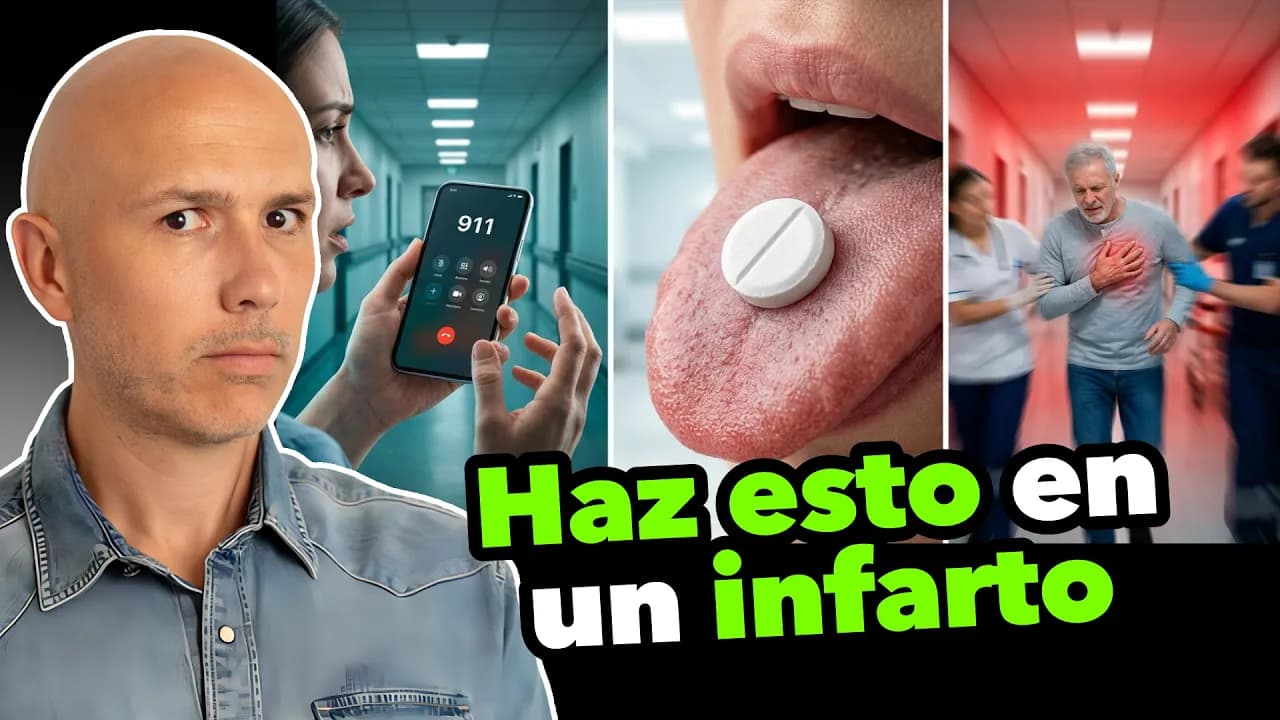
Step one: Call 911 immediately. Tell them you have chest pain and think it might be a heart attack. Do not text first or wait 5 more minutes.
Step two: Stop what you're doing. Sit down or lie down. Loosen anything tight like your collar or belt. Breathe slowly to reduce demand on the heart.
Step three: If prescribed nitroglycerin, use it exactly as directed. One tablet or spray under the tongue while seated. Do not use someone else's.
Step four: Chew an aspirin, 162 to 325 mg. Do not swallow it whole. Chewing breaks it up for faster absorption. Aspirin slows the clot blocking the artery. Only take it if not allergic and no major bleeding problem. The 911 dispatcher can help decide.
Step five: Prepare for paramedics. Unlock the front door if possible without exertion. Make your medication list visible. Stay seated or lying down. Do not walk around, pace, or go upstairs.
"Time is heart muscle."
The first step is most important because everything after that only helps if help is already on the way. If you have a chance to share this information with whoever is checking up on you or whoever you live with, any relatives, friends, neighbors, share this and explain them, "Hey, if a heart attack ever happens, this is an emergency plan we should be thinking about, all of us." Everyone needs to be on the same page and know what to do and what not to do.
If you are taking aspirin or nitroglycerin, you are already prescribed it. If you are allergic to aspirin or you have stomach ulcers, you are not taking that. There are some contraindications. Do not take any other kind of a natural pill or remedy. This is life or death. This is no time to experiment with all that other stuff.
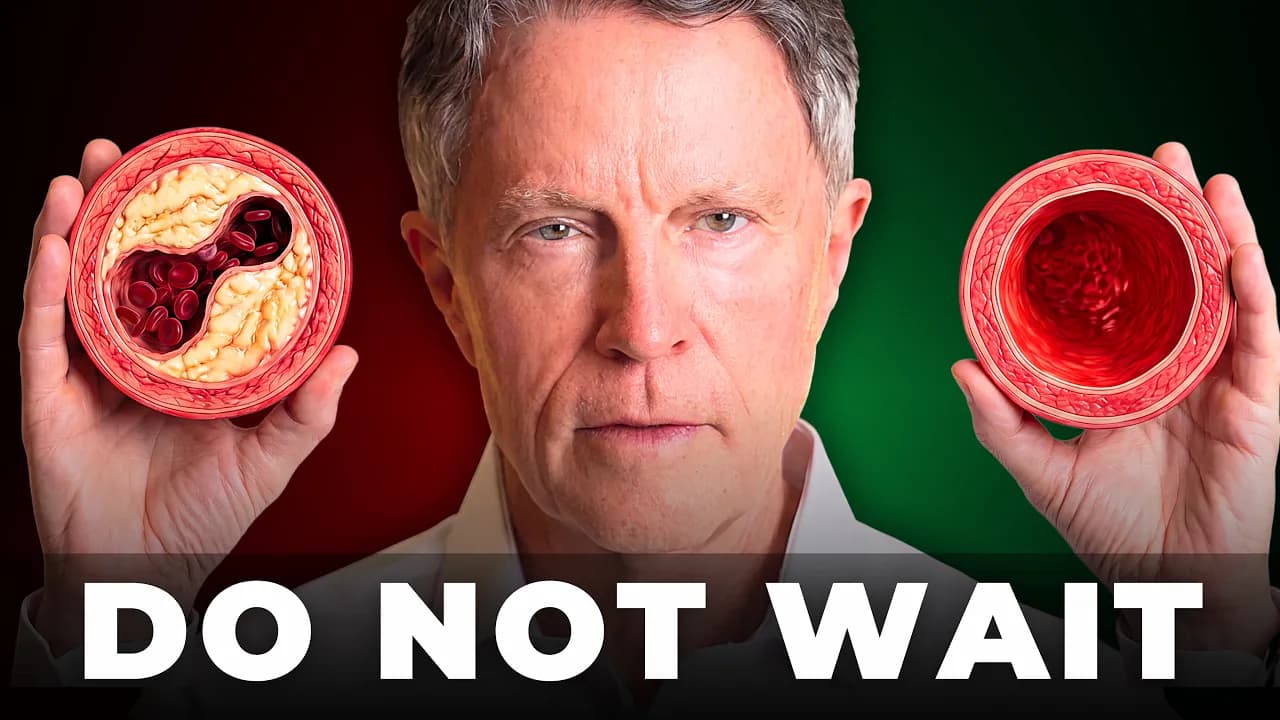
A heart attack occurs when there may be a clot stopping the blood flow to the muscle of your heart. If the heart muscle is not getting oxygen, it can have a dysrhythmia, meaning V-tach or V-fib, which is usually the mechanism for sudden cardiac death. At minimum, you can survive but lose cardiac muscle, which results in disability for the rest of your life. This is a critical few moments while you are waiting on that ambulance. The priorities are exactly the same as if there are other people around, but when you are alone, there is less margin because there is a real chance your condition gets worse before help arrives.
Call 911 first. Put it on speaker, stay on the line. The dispatcher will talk you through what you need to do. If you can do it without effort, unlock or open your front door so they do not have trouble getting in once they get there. You want paramedics to reach you even if you are no longer able to let them in. Position yourself near the entrance, near that door if at all possible. Somewhere where you will not fall hard if you do lose consciousness. The floor next to a wall is totally fine. It is actually very good. You are not trying to be comfortable here. You are trying to be findable.
After the call, take the aspirin if you have it. Use nitroglycerin if you have had it prescribed. Driving yourself if there is not any other option is not recommended. A neighbor, a building security, anybody nearby. Driving while you are having a heart attack is a last resort. It is not a plan. The difference between doing this alone and doing it with someone is not the steps, it is the speed. Act before you cannot act.
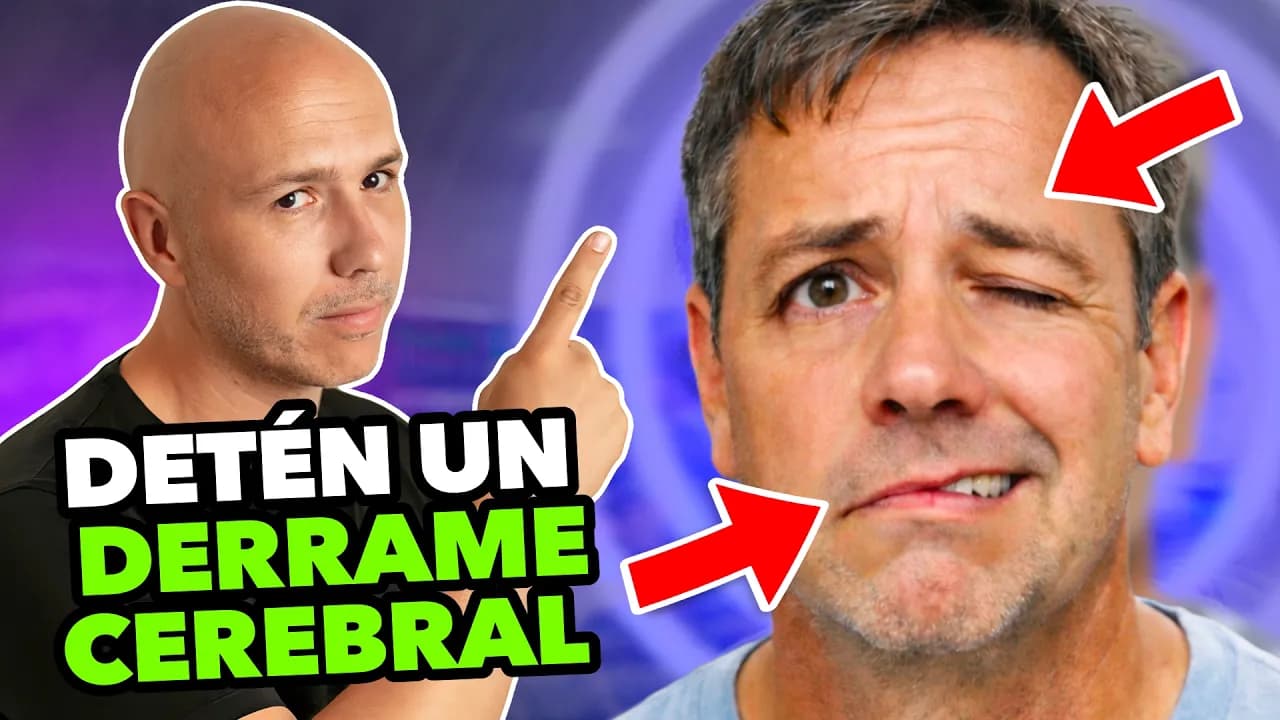
A heart attack is not the same as a stroke. Even though they might share kind of the same way they happened in some cases, the way you treat a heart attack in the first minutes and the stroke is very different. On a heart attack, you do take the aspirin. It is going to thin your blood, stop platelets from forming, helping the clot not to get stuck, and having some blood flowing to your artery wall and your arteries that might be blocked.
On a stroke, you do not want to take the aspirin because a stroke can be caused by two mechanisms. You can have a blood clot, or you can have an artery that broke and have a bleeding in it. If you take aspirin while your brain is having bleeding, you are just speeding up the process of dying. A doctor prescribed an aspirin without having a CT scan to see if there was a bleeding or not. The worker had a brain bleed, and the aspirin very likely made it worse.
Technology has changed a lot in recent years since Jim Fix died. Technology on the ER and the way doctors are able to treat emergencies has changed tremendously in the last 20 years, 30 years. Papers show that a lot of the heart attack survival rate that is increasing is not because we are doing a better job on preventing heart attacks. It is because ER doctors are getting better and better helping people get out of the problem and fixing their hearts on the ER, cleaning the clot, putting a stent during an active heart attack which saves lives or doing bypass surgery for emergency situations. That is when stents and bypasses save lives if you are having the event.
Heart attacks are still the number one cause of death worldwide and in every single country but Japan. Japan is cancer and then heart attacks. Jim Fix would not have been saved today because he did not make it to the ER. It is still the number one cause of death and in fact it is starting to happen in younger and younger people now.
An EKG said septal infarction, which is a heart attack impacting the middle part of the heart. The left ventricle has the thick wall and is the one that pumps blood to the body. The right ventricle is not as much muscle. The septum is the wall between the two ventricles. A heart attack right there means the middle part.
When you are having a heart attack, you can either have a heart attack that is blocking blood flow for prolonged time and it is going to leave a scar on your muscle. That part of the muscle does not really recover. When you do an EKG, if there is a part of the muscle that died, the EKG is able to pick it up. Some people are more lucky where they have some kind of a heart attack and there is a blockage of the blood flow, but then it gets opened quickly and you recover some of that and you do not leave such a big scar on your heart. The stress test did not pick it up because there was no significant scarring of the heart.
In Mexico, people have the tendency to call those pre-infarctions or pre-heart attacks. It was going to be a heart attack, but it was not. It was a heart attack. The blockage got fixed quickly and you did not have any kind of additional strain or damage to your heart. A heart attack is a heart attack. There are different severities on the types of heart attacks that you can have. It depends on the location of the artery. If you have a blockage right here, all of this is going to get damaged. If you have the heart attack on an artery that is more like on the backside, only this section might have the damage and it might not be as bad as the one that is blocking the artery right from when it is coming out from the aorta. It depends on where the plaque is. It depends on where it ruptures.
The difference between angina and the symptoms described is critical. An ER doc will look for several things. Number one, is it coming and going? Number two, with angina, you usually get more of a history of it for weeks, months, years. It is predictable. You know once you get to this when you go out for a walk and you get to this part of your driveway or the hill next to you, it is going to start. You also know that when you stop, it will take about 30 seconds and it will end. All of that is a description of what we call stable angina.
If the patient does not know anything about it, this just started, it does not usually start when I am sitting in the house, that is at minimum unstable angina. Unstable angina is to be treated as a heart attack. There is no way to differentiate an unstable angina from a heart attack. Even a stable angina where the pain kind of goes away if you are sitting down does not necessarily rule out a heart attack, especially if this is the first time you are feeling that.
CIMT results show the largest intima media thickness. Right CCA 1.1, bulb 1.8, 1.6 H, which means atherogenous. IC 6 left CCA 0.9, bulb 1.2, IC internal carotid 0.6. Anytime your marker goes above 1.3, which is millimeters, that means plaque. They put a letter next to it. S is for soft, H is for atherogenous or mixed, and E is for echogenic, which means calcified.
The interpretation report looks at whether you have plaque and whether that plaque is unstable soft plaque that can rupture. Mixed plaque usually does not fall into that category. The same plaque that is heterogeneous or mixed could be a higher risk for somebody who is not doing lifestyle changes compared to someone who does the lifestyle changes.
Rocky P. Feffer became a member. The pronunciation of Feffer has a silent P, though Spanish pronunciation rules are more straightforward than English. The conversation referenced Jim Fixx, noting that before he started running, he was overweight and a smoker, which contributed to plaque buildup in his arteries. President Eisenhower had a similar situation where his heart attack was attributed to fat consumption, but he was also a heavy smoker.
The hosts expressed appreciation for viewers joining the show and hoped the content was helpful. They encouraged comments suggesting future discussion topics. Saturday's episode will cover what sugar does to arteries, including the effects of eating a bowl of cereal daily for 30 days.
The hosts mentioned their laboratory services are now available, similar to Function Health but focused on labs that provide actionable insights. The service addresses the growing trend of people getting extensive lab work and inputting results into AI systems like ChatGPT or Claude for analysis. The key is obtaining the right tests and proper interpretation.
The consensus on the internet is very LDL-centric and does not recognize or understand how prevalent metabolic disease is, so it really doesn't look for metabolic disease or inflammation.
Users were cautioned against getting LDL levels and relying on regular ChatGPT for interpretation, as this approach misses metabolic disease and inflammation markers.
The hosts emphasized their career focus on helping people avoid needing emergency heart attack intervention, while acknowledging some viewers will face this situation.
Call first. Stop moving. Chew the aspirin. Unlock the door.
The critical sequence is:
- Make the call immediately without waiting to see if symptoms improve
- Avoid denial mode and overcome it
- Stop moving once the call is made
- Chew aspirin
- Unlock the door for emergency responders
The call is the only step that cannot wait, with everything else being secondary details.
For chronic total occlusion procedures that reopen permanently blocked vessels, success rates can reach 80-90% in facilities that perform them. The procedure involves threading a needle or thin piece of metal through the permanent blockage, then progressively widening the artery.
The most common complication is puncturing through the artery wall during the procedure. The recommendation is to always get at least a second opinion before any procedure.
Several major trials were referenced including the ORBITAL trial, JUPITER trial, COURAGE trial, and ISCHEMIA trial. For people dealing with chest pain, angina, or chronic chest pain, procedures like chronic total occlusion intervention can provide relief in approximately 50% or slightly more cases, allowing increased exercise capacity.
The critical mistake is believing that opening a vessel eliminates future heart attack risk. Lifestyle interventions must remain the foundation, with procedural decisions being secondary to addressing the underlying metabolic issues.
It's not a plumbing issue, it's a metabolic issue. Plumbing is not going to fix a metabolic problem.
Growing old is not for sissies, but it's a lot better with healthy arteries.
Keep Thomas Fordham Brewer MD MPH in your library
Save the videos and channels worth coming back to, and find them again in one place.