These 3 Things Will Keep You Sick
In a Nutshell
Chronic diseases like heart disease and diabetes develop silently over decades from three core habits: repeated blood sugar spikes above 140 from eating carbs at every meal, lack of proper exercise (especially HIIT and resistance training) that fails to preserve muscle and insulin sensitivity after age 40, and poor sleep driven by underlying metabolic inflammation. These create insulin resistance, metabolic syndrome, arterial damage, and plaque that leads to heart attacks and strokes—often with no warning until it's too late. The key fixes are aggressive carb control, intense muscle-building exercise, comprehensive metabolic testing beyond standard labs, and addressing sleep before relying on meds.
These notes were generated by AI and may contain inaccuracies.
Most people over 40 don't get sick overnight. The chronic diseases that show up in middle age—heart disease, type 2 diabetes, stroke, blindness, kidney disease, erectile dysfunction—take years, sometimes decades, usually decades to build. The body hides that damage while it's happening by compensating and adjusting while keeping you functioning and feeling fine. This is the trap. By the time symptoms show up, tissue damage has already occurred. The damage has been accumulating for decades. Almost all of it traces back to three habits. Almost all of it is preventable. These are everyday, repeatable habits that create the conditions for disease quietly and consistently over years without being noticed.
The show uses a call-in format instead of type-in questions. The call-in number is 888-632-6163. Limited spots are available. The goal is to be more succinct without slipping into lecture mode.
The first habit is eating carbohydrates every time one eats. When eating glycemic carbohydrates, blood sugar rises. This is normal and expected. The problem occurs when spikes become higher and sharper, happen multiple times a day every day for years, and when blood sugar spikes up but does not come back down well, staying elevated for hours. The pancreas keeps pumping out insulin to bring blood sugar back down. Eventually, insulin receptors on cells stop listening. Age is the major driver for this, which is called insulin resistance. Insulin resistance is where metabolic disease and diabetes begin.
Insulin resistance does not stay contained. It impacts everything in the body. The liver starts producing more fat. Triglycerides rise not because fat is being eaten, but because insulin resistance is developing. Males develop a middle-aged abdominal roll. HDL, the good cholesterol, begins to drop. An HDL in the low forties or lower is a flashing red warning sign. Blood pressure climbs. Fat accumulates around the waist and inside organs, wrapping around them. This cluster—high blood sugar, high triglycerides, low HDL, high blood pressure, abdominal fat—is called metabolic syndrome. Metabolic syndrome dramatically raises the risk of heart attack, stroke, and type 2 diabetes.
High blood sugar directly damages the arteries, specifically the inner lining of blood vessels called the endothelium or intima. This lining is extremely sensitive to glucose and is referred to as the glycocalyx, a hairy substance where oxygen is dropped off for cells and carbon dioxide and waste products are picked up. Every time blood sugar goes over 140, arteries start taking damage. When blood sugar stays elevated hour after hour, day after day, inflammation occurs in the artery lining. The longer time spent above 140, the worse the damage gets. This happens after every high-carb meal. Insulin goes way up even if blood sugar appears okay. Inflammation is the starting point for plaque.
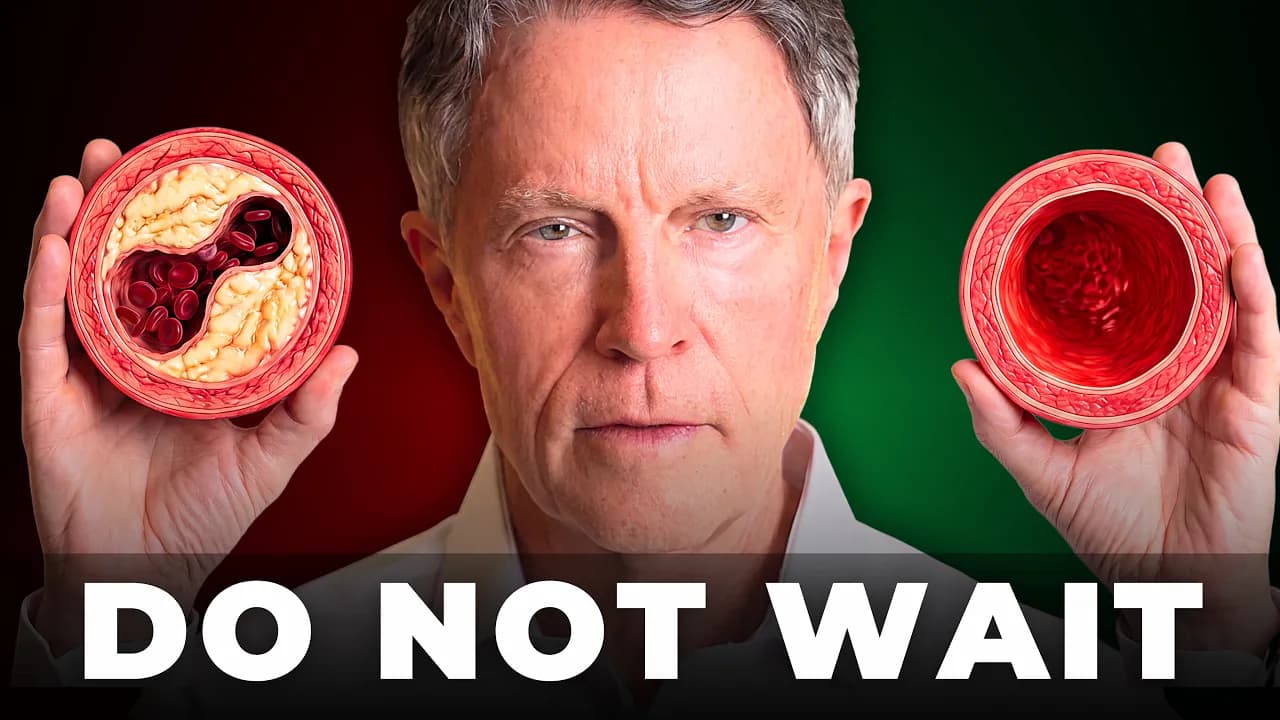
Plaque is a complex mix of cholesterol, immune cells, scar tissue, and calcium building up inside the artery wall over years silently. As plaque grows, it narrows the artery. Heart attack and stroke occur when plaque becomes vulnerable and ruptures, triggering a clot—not from slowly closing off the artery. If a big enough clot goes to the heart, it is a heart attack. If it goes to the brain, it is a stroke. Fifty percent of people who have a heart attack find out by dying immediately from sudden death. Many people who have a first heart attack had no symptoms beforehand. The disease was silent the whole time.
After age 40, these habits become more dangerous because insulin sensitivity naturally decreases with age. Aging is the number one driver. Obesity and genetics are two of the top three causes, but aging remains number one.
Richard had a non-STEMI LAD heart attack six years ago. He defines secondary prevention as having any plaque whatsoever. He has made lifestyle changes including improved diet, weight loss, and increased exercise. His triglyceride over HDL ratio is 1.2. He does not have access to CIMT or CCTA with AI, but has a recent normal nuclear stress test with MPI and low cardiovascular inflammatory biomarkers. He asks if this reassures low risk for MACE.
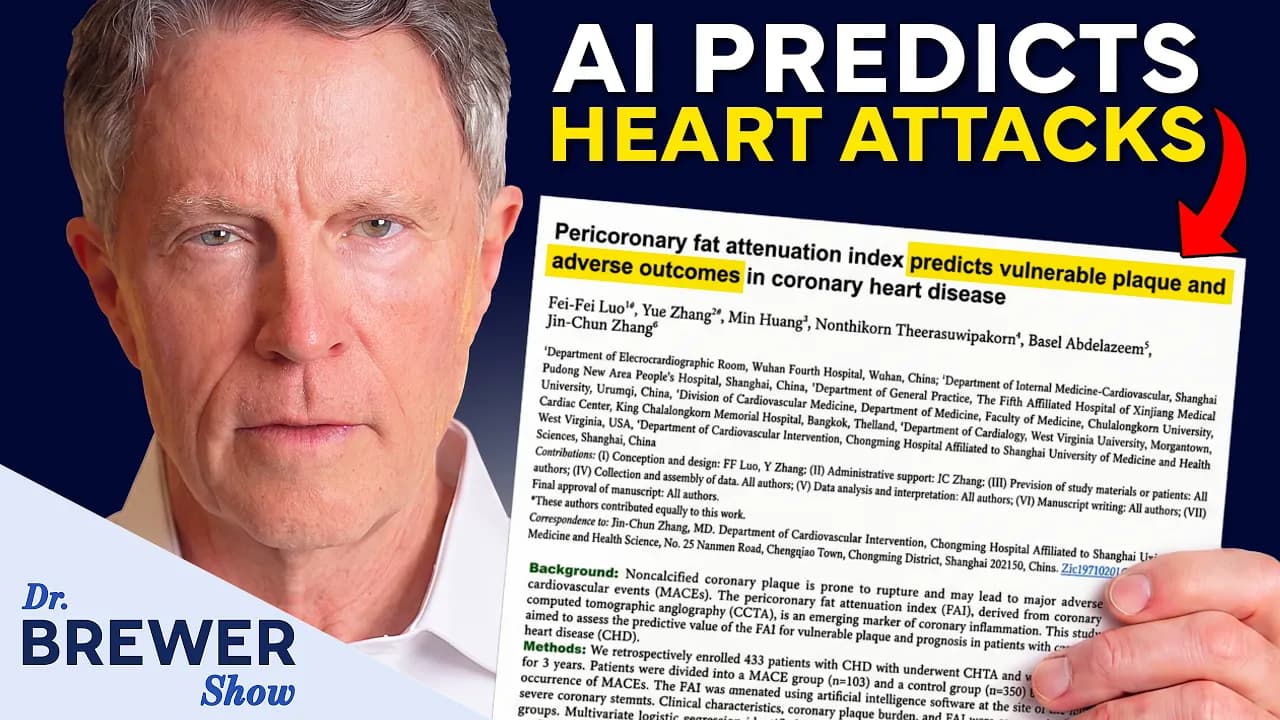
A stress test will not predict a heart attack. Tests that can assess risk include CIMT, calcium score, and CTA with AI. A doctor's order is not needed for a calcium score or CIMT. The advice given is to make personal choices rather than delegate life decisions to a doctor. CardioRisk provides CIMT services in many places in the US without a prescription.
The American Diabetes Association and American Heart Association recently released new guidelines changing the name from metabolic syndrome to cardiovascular kidney metabolic syndrome (CKM). Blood sugar over 100 is now flagged as not normal.
Bob's doctor noted blood glucose over 100 twice and mentioned considering pre-diabetes. Bob can control glucose overall but experiences spikes from potatoes or rice that stay elevated for days. He is 5'8", 150 pounds, very low body fat. His fasting insulin was 6. He questions whether he has exhausted beta cells or is insulin resistant. He ate a potato and saw blood sugar spike and stay elevated.
Insulin sensitivity naturally declines with age, and muscle mass decline makes it worse. Muscle is the biggest safety valve against this problem. There is a difference between being active and exercising in a way that changes trajectory. Walking is good and helps pull blood sugar into muscles after a carb-laden meal, but may not be enough to protect against insulin resistance or maintain muscle past age 40, 50, 60, and 90.
Muscles contract during exercise and pull glucose out of the bloodstream directly. Metabolically healthy muscles that have been worked with HIIT or resistance training provide a larger glucose sink. A person with more muscle mass has larger capacity for handling glucose, resulting in smaller spikes that clear faster. After 40, the body naturally loses muscle through sarcopenia. If exercise does not actively challenge and build muscle, lack of exercise accelerates muscle loss. The result is a body progressively worse at handling glucose. Insulin resistance causes muscle loss, which causes more insulin resistance—a vicious spiral.
HIIT training improves microvasculature. Even with diet dialed in, without HIIT, real estate where insulin receptors live continues to be lost. The microvasculature consists of capillaries that support big muscles. These are lost with normal aging and more rapidly with insulin resistance.
Resistance training three times a week using weights, squats, and isometric exercises forces muscle to work hard enough to adapt and grow stronger. Discomfort or burn in the muscle must be felt. Growing old is not for sissies. This maintains muscle mass after 40 and keeps the metabolic engine running. HIIT training is also required alongside resistance training.
Michael is 67 years old with diabetes classified by A1C of 6.2-6.4. He has high blood pressure on four medications. His calcium score was in the 200s, mostly in the LAD. He noticed that supplements he is taking all have anticoagulant properties.
A caller shares their current supplement regimen: vitamin K2 at 600 micrograms, vitamin D3 at 5,000 international units daily, nattokinase, CoQ10, berberine, ginger, magnesium, fish oil, turmeric, and garlic. They report prolonged bleeding after a finger stick and ask whether they are taking too many supplements.
Dr. Brewer identifies the stack as very common and similar to his own regimen, which includes daily baby aspirin. He notes that nattokinase is the supplement most likely to contribute to bleeding risk among the listed items, followed by fish oil. He states that the combination is generally acceptable unless the person is also taking a prescription-level blood thinner.
Dr. Brewer asks for the caller's nattokinase dosage in fibrinolytic units (FU). He advises that when taking aspirin, particularly with a positive calcium score, the typical high dose of 10,000 to 16,000 FU should be reduced to approximately 2,000 to 4,000 FU to manage bleeding risk appropriately.
The caller reports new-onset insomnia beginning approximately one month prior, with sleep onset delayed until 3:00 to 5:00 a.m. despite previously sleeping well. Dr. Brewer recommends the book "Why We Sleep" by Matthew Walker. He explains that vascular inflammation, most commonly caused by insulin resistance and prediabetes, can disrupt the deeper, more restorative stages of sleep. He notes that metabolic disease is a frequent underlying contributor to sleep problems.
Dr. Brewer explains that half of heart attacks occur in people with normal cholesterol levels, so standard lipid panels are insufficient for early detection. The Heart Reveal Panel is presented as a comprehensive set of labs designed to identify hidden markers that predict cardiovascular disease years before symptoms appear. Instructions are given to visit PrevMedCare.com/HR to purchase the panel, after which the clinical team reviews results and helps build a personalized plan.
High-intensity interval training (HIIT) and its shorter variant, REHIT, are defined as methods that push the body beyond its comfort zone to stimulate adaptation. Research comparing HIIT, jogging, and resistance training across age groups (20s, 50s, and 80s) found that HIIT produced the greatest improvement in mitochondrial function. During HIIT, participants should reach a level of breathlessness where talking becomes difficult, unlike zone 2 cardio where conversation remains possible.
Lissa, a 68-year-old female with two copies of the APOE4 gene (APOE4/4), reports extensive family history of cardiovascular events and sudden deaths. She shares recent test results including CIMT showing 98th percentile plaque bilaterally with hard plaque only and zero soft plaque, calcium score of 8, ApoB of 144 mg/dL, LDL-P of 2,582 nmol/L, small LDL-P of 10.8, Lp(a) of 11.1, triglycerides in the 93–96 range, HDL between 56 and 59, recent LDL of 206 with total cholesterol of 279, fasting insulin of 0.3, hemoglobin of 14.1, and elevated fibrinogen. She is statin-intolerant after trying simvastatin 5 mg for four months and has a CCTA with ischemic score scheduled.
Dr. Brewer notes that her Lp(a) of 11.1 is not a major concern. He identifies the combination of high LDL (206–209) and statin intolerance as the primary reason for the Repatha recommendation. He suggests exploring lower-dose statins such as rosuvastatin 5 mg or pitavastatin before moving to PCSK9 inhibitors.
It is emphasized that medication decisions come after completing foundational steps. Recommended actions include assessing for inflammation using markers such as MPO, Lp-PLA2, fibrinogen, and homocysteine, implementing low-carbohydrate eating, exercise including high-intensity training, removing inflammatory roadblocks, addressing stress and sleep, and using targeted supplements. Lissa reports taking fish oil, vitamin D3 5,000 IU, CoQ10, berberine, amino acids, and pomegranate juice.
Even at the medication step, options beyond high-dose statins include ezetimibe, bempedoic acid, and Repatha. The CCTA is noted as useful for quantifying soft plaque burden.
The typical evaluation process is described as requiring hours to weeks. The live call format is acknowledged as unable to provide complete diagnoses or full treatment plans; instead, it illustrates clinical reasoning and next-step thinking.
Dr. Brewer reiterates that metabolic disease and prediabetes commonly disrupt sleep architecture. The first caller is cited as an example of someone whose recent insomnia may be linked to these metabolic factors.
John reports a positive calcium score, strong family history of heart disease, and adoption of a very low-carbohydrate, near-keto or carnivore diet. He asks whether his rising LDL on this diet increases risk given his genetics, or whether he should switch to a low-fat approach. He discontinued statins after three months due to side effects and reports a normal A1C with lifelong leanness and normal blood pressure.
Dr. Brewer explains that he personally follows a low-carbohydrate approach after decades on a low-fat diet failed to prevent plaque development and after observing rising blood sugar on carbohydrate intake. He states that many low-fat recommendations, including versions of the DASH diet, remain prevalent despite limited effectiveness for some patients.
John is advised that he has not completed proper metabolic testing. An A1C of 5.5 is noted as still within ranges considered normal by some standards, yet the American Association of Clinical Endocrinologists and American Diabetes Association acknowledge that both A1C and fasting glucose miss over half of diabetes and prediabetes cases. Dr. Brewer recommends obtaining a continuous glucose monitor (Freestyle Libre, with prescription assistance available) and performing a home oral glucose tolerance test to observe real-time blood sugar responses to carbohydrates versus fats.
Step one is identified as the critical foundation that changes all subsequent decisions. Many callers are noted to have performed only the tests their physicians ordered, typically limited to cholesterol panels, rather than the broader metabolic and inflammatory assessments required to identify root causes.
Standard fasting glucose tests often miss how the body actually responds to glucose. An OGTT (oral glucose tolerance test) and insulin response testing provide far more insight than fasting glucose alone. Most people starting at age 18 already show an inappropriate response to glucose, and this problem becomes significantly worse in the 40s, 50s, and 60s. Over half of people at age 18 have this issue.
Because most people have problems with glucose and carbohydrate metabolism, the recommendation is to begin by cutting bad carbs—those that raise blood sugar—rather than waiting for test results. This pairs with exercise intensity, addressing roadblocks, supplements, and medication.
Randy, age 63, described a February episode where his heart rate increased with brief chest pain that resolved within minutes. He attributed it to stress. Since then his average and resting heart rates have risen 6–7 points. He had been physically fit and eating well but had no regular doctor. After intermittent chest pain, he underwent a stress test. On level four the monitor pattern changed, the test was stopped, and he was advised to see his physician. His doctor then ordered a cardiac catheterization via the groin to visualize the heart with dye.
Randy also has a family history of high blood pressure (his readings were around 140) and recently lowered his blood pressure to 121/80 through diet and Cardio for Life supplementation. His heart rate now sits in the 70s–80s instead of the previous high 60s.
A stress test does not predict heart attacks. Better predictive tests include CIMT, calcium score, and CTA with AI analysis. None of these had been discussed with Randy. Standard steps—OGTT, glucose tolerance testing, insulin response, Kraft insulin survey, cutting glycemic carbs, exercise intensity, and addressing roadblocks—had also not been covered.
The typical path of stress test followed directly by catheterization is very common but skips essential metabolic information. The recommendation is to obtain this information first unless the physician explicitly states it is an emergency.
Randy was offered the seven-step protocol e-book and a HeartReveal test (normally several hundred dollars) to begin evaluating insulin resistance, inflammation, and relevant cholesterol biomarkers. The test includes an hour with a coach to interpret results.
Preventive care can begin with the e-book and HeartReveal test. A full book detailing the seven steps is also available for deeper self-evaluation of metabolism. Metabolism precedes, predicts, and creates tissue problems; waiting for symptoms means tissue damage has already occurred.
Another route is becoming a patient. The practice is licensed in all 50 states. The contact number is 859-721-1414. Patients can work with staff coaches or directly with the physician. Multiple treatment levels exist, from lifestyle-focused coaching to prescription-level interventions and additional testing.
The show title refers to three factors: blood sugar rising over 140, improper exercise, and poor sleep. Blood sugar above 140 and inadequate exercise intensity have already been covered.
Inflammation from prediabetes is the most common source of inflammation and disrupts restorative deep sleep and REM sleep. Blood sugar fluctuations can mimic sleep apnea by triggering epinephrine and fight-or-flight responses. People sleeping fewer than six hours per night show higher rates of insulin resistance, obesity, high blood sugar, high blood pressure, and cardiovascular disease. Poor sleep also raises inflammatory markers; chronic low-grade inflammation drives plaque formation and instability.
Lifestyle changes (especially lowering glycemic carbs) remain more important than any medication, including statins.
Tony, diabetic since 2000, had a stent placed one week prior. He is taking atorvastatin calcium 80 mg daily and clopidogrel 75 mg daily. For the past three to four days his right arm has felt nearly closed off, especially at night, with coldness and pain beyond normal soreness. He was advised to contact his cardiologist immediately (he already scheduled an appointment for 1:20 that day).
Atorvastatin at 80 mg is described as the worst dose of the worst statin for inflammation management. Rosuvastatin or pitavastatin at lower doses are preferred when a statin is used. Lifestyle steps two through six of the program (primarily dropping glycemic carbs) are far more important than any statin.
Joe has had HDL below 40 (recently 36) for several years with no comment from his doctor. An HDL below 40 is considered a flashing warning sign. Low HDL is a biomarker of metabolic disease; rising metabolic disease correlates with falling HDL.
The triglyceride-to-HDL ratio is a useful marker—ideally 1 or less (some sources accept up to 2). A low HDL prompts the same testing sequence: oral glucose tolerance test, insulin response, and blood sugar evaluation. A CGM (such as Stelo) can be used without a prescription for home glucose tolerance testing.
The most important initial intervention remains a low-glycemic-carb diet. Supplements and medications come later.
The show emphasizes delivering information not typically provided in standard medical offices. Growing old is not for sissies, but it is significantly better with healthy arteries.
Keep Thomas Fordham Brewer MD MPH in your library
Save the videos and channels worth coming back to, and find them again in one place.