What Women Choose When They Can’t Have Everything
In a Nutshell
Men allocate limited mate budgets to physical attractiveness while women prioritize resources and status; these preferences reverse when women have independent wealth, prompting men to increase parenting, grooming, and muscularity to compete. Luxury handbags and male self-beautification both serve as costly signals—handbags deter mate poachers by advertising spousal investment, while male grooming and weightlifting respond to women’s new emphasis on helpful partners rather than providers. These behavioral shifts are concentrated among college-educated men and reflect broader convergence in mate strategies following women’s financial emancipation.
These notes were generated by AI and may contain inaccuracies.
Norman Li conducted a study where participants were given an $8 budget to create their ideal mate. When given a large budget, both men and women wanted everything including good looks, good job, high status, and all other desirable traits. However, when given a smaller budget that more closely resembles real-life constraints, sex differences became pronounced. Men allocated more of their budget toward an attractive partner, while women allocated more toward a partner with resources and status.
A related study had participants allocate traits for themselves, and this mirrored the mate budget findings. Men tried to make themselves richer relative to women, while women tried to make themselves prettier relative to men. This explains why women are not typically seen arriving at nightclubs in supercars with expensive Rolexes, and why men are not typically spending excessive time on beautification.
Research by David Buss shows that throughout the 1900s, particularly after women's financial emancipation, mate preferences between men and women converged significantly. This period saw behavioral convergence as well, with women displaying their resources through items like handbags and shoes rather than supercars and watches.
Men have tripled their parenting effort since the 1970s. Male beautification has increased decade on decade since the 1990s, a trend documented by historian Lin Luciano. The average man's daily grooming routine today would be unrecognizable to his grandfather from previous generations.
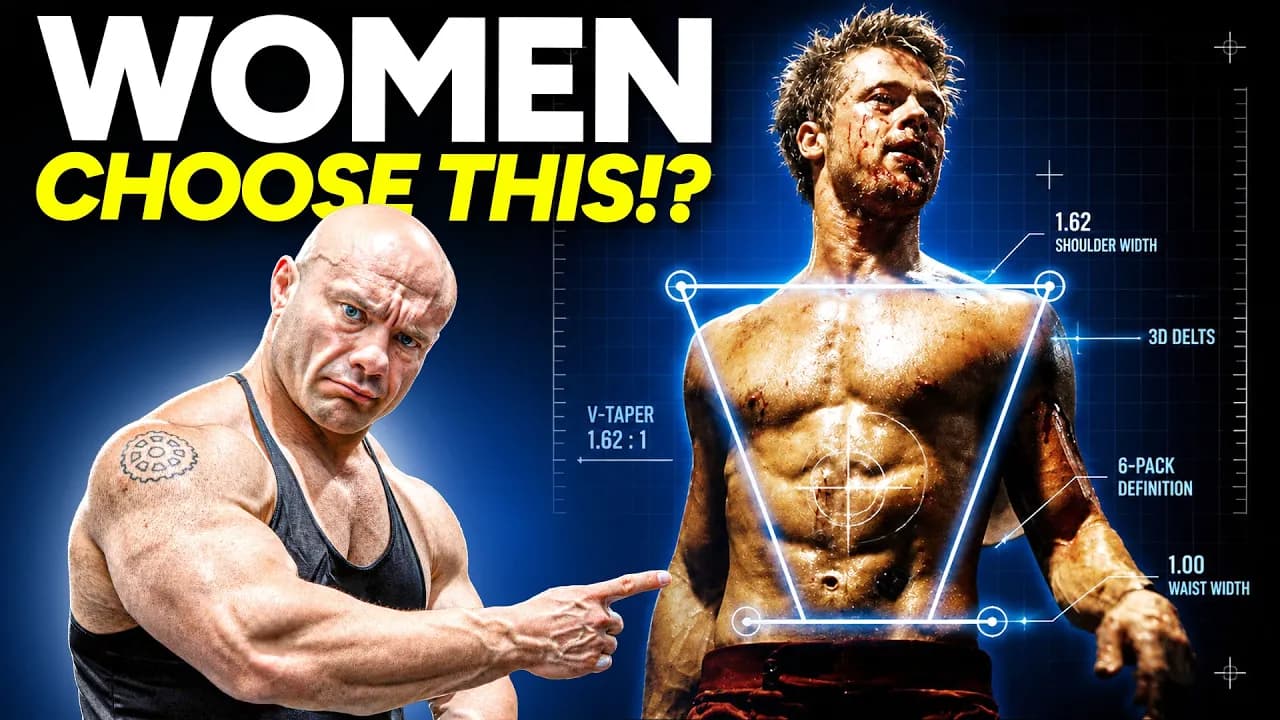
Analysis of health data shows weightlifting has gone from virtually nonexistent behavior to where every other member of Gen Z is essentially a recreational bodybuilder. Women find muscularity, good grooming, and parenting attractive in men.
Women are not necessarily signaling their resources to attract men, but they are signaling resources more during the same time period that male beautification has increased. Male beautification is specifically to attract women, and this shift occurred because women now have their own money.
Because the socioeconomic imbalance between men and women has been reduced or reversed, men have needed to compete on different domains of attractiveness, specifically through self-beautification. Parenting represents a quieter but better-evidenced change, where men have shifted their behavior to provide more assistance at home.
Lee's 2015 study found that when women have their own money, they recognize they have the financial aspect sorted and prioritize finding a helper at the nest. Men have responded to this preference shift. In the US context, educated upper middle class men are spending far more time with their children than fathers in the past, while non-college educated men are spending the same amount or slightly less. The average increase is primarily driven by college-educated men.
Tanya Reynolds suggested that women buying luxury handbags may serve to deter other women rather than attract men. The message is that the husband is significantly invested, demonstrated by spending $20,000 on a handbag that other men would not understand or value. This functions as mate poaching deterrence, signaling that the partner is heavily invested and not worth attempting to poach.
Handbags function similarly to how a muscular man walking into a room creates an atmosphere. Both represent investments of time, money, and discipline. Expensive handbags, long nails, well-done hair, and good beauty regimens indicate lifestyle factors beyond just resources, signaling spare time, spare money, and discipline.
Marco Wall's study found that in all except seven countries, women beautified more than men. The seven countries where men beautified more were only slightly so. Weightlifting was identified as the behavior where men engaged more than women. The study included a question specifically about beautification versus other motivations like health or status competition.
Among people who wear makeup, men who wear makeup spend significantly more time on it than women. This is attributed to male beauty influencers who may spend 16 hours a day on makeup application, creating the statistical difference. The biggest difference in beautification behaviors was makeup usage due to this effect, with weightlifting being the second biggest difference.
Keep Chris Williamson in your library
Save the videos and channels worth coming back to, and find them again in one place.