Why Are Privileged Women The Most Pessimistic?
In a Nutshell
Privileged young women exhibit high financial cynicism and pessimism—despite advantages like lower unemployment and the "women are wonderful effect"—due to leveling strategies (per Joyce Benenson), inward rumination amplified by higher education and social media, and unacknowledged pretty privilege that clashes with motherhood's beauty toll. Cognitive biases favor seeing women as victims (not agents), repackage protectiveness as oppression, and reward introspection over action, while social media turns women into self-optimizing "products" prioritizing mate attraction over reproduction. This creates a mismatch: evolutionary drives for high mate value now fuel reluctance to have kids, with relationships as online accessories rather than paths to family.
These notes were generated by AI and may contain inaccuracies.
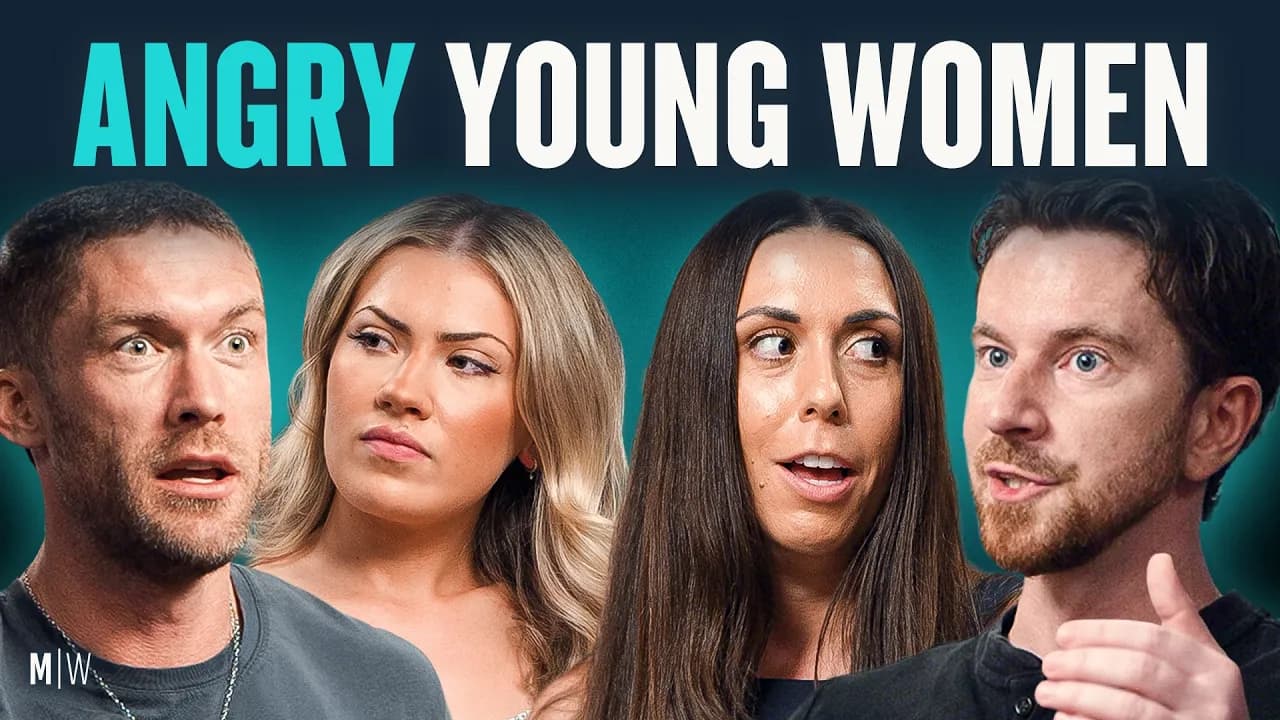
Young men are now more likely to be unemployed than young women. Yet, young women are far more financially cynical, 21 points less likely than young men to believe they will ever out-earn their parents. White women are more likely to feel the country is racist than their non-white middle-class partners.
You white women are awful.
Wonder if this relates to finding where the only way women could be agentic was on behalf of someone else. More successful you are or more you have going in your favor, the only way to be agentic is to be deeply caring. Ethnographies on adolescent girls show only ones allowed to be popular were super nice, overd delivering on kindness to be allowed to be popular. Same pattern: women do this so envy or resentment of other women won't bring them down.
Joyce Benenson has paper on leveling showing women more likely to use leveling strategy where they say we should all be equal when someone is surpassing them. Once you have all these things operating in your favor, you have to be like a martyr to continue on. Otherwise, people might resent you.
Where do you get your victimhood points from?
Someone replied to Rob Henderson: middle class hay fever, Rob. When no high load of parasites, people’s immune system gets bored and starts looking for things to react to, get allergies to dust and pollen. When middle class has no threats, their threat system gets bored and starts looking for trivial things to blow out of proportion. White privilege, gender identity, ultra-processed foods—it’s all pollen. You don’t have oat milk, you’re traumatizing me. No explicit segregation and blatant racism, sensitivity to microaggressions increases.
More time to introspect and ruminate because girls and young women not just picking up on icks in their partner, scrutinizing and looking for flaws, but doing that to themselves—constantly pathologizing, diagnosing, wondering what’s wrong with them, overanalyzing personality traits. More time and less bigger problems like having children where you funnel neuroticism into something productive; instead it turns inwards or against partner. Status afforded to women doing that in higher education ecosystem where women dominate. Rewarded for espousing views like that, showing they know ideology of leading status people in their world.
This is me showing fealty to the cause. I understand this thing.
Studies show cognitive heuristic of victim and perpetrator: when men and women involved in harm, more likely to see women in victim role and men in perpetrator role. More likely to blame men, have sympathy for women. Cognitively harder to see men as victims, easier to see women as victims, so feel sympathy. Sucks for both sexes: in harm domain, men disadvantaged and not seen as victims; for women in other domains like CEO or president, not seen as agentic and capable.
One doesn’t get sympathy and one doesn’t get belief.
Women face challenge in workplace: if assertive and dominant, temper it for fear of being bitch or diva. Agency-warmth continuum: women expected to be high warmth, if go farther along agency seen as low warmth. Men higher on agency, if show warmth by crying not seen as competent. Both encouraged to stay in lanes. If women show too much warmth, seen as pliable and not competent; brusque seen as higher competence. Warmth negatively associated with competence.
Protectiveness about women gets repackaged as oppression. Paternalistic abuse occurs under guise of for their own good, but astounding extent we’re more protective of women than men. Have to contort to see women are wonderful effect as oppression toward women.
Stats on women are wonderful effect: all ways people prefer women to men. Study on job hiring discrimination: gone down against women, but people overestimate its presence, assume it’s still there even though data shows it’s not. Sensitized to detect it even if not there. When learn discrepancy against women, people up in arms; against men, no biggie.
Attractiveness underacknowledged as privilege. On both ends: pretty privilege has costs (other women see you as more promiscuous), but enormous benefits across board for male or female. Enormous cost to being unattractive. New research: not readily able to recognize this privilege. Acknowledge other privileges, but attractiveness reluctant to acknowledge exists. Evidence women far more attractive than men—not one study, loads of data, unpublished from lab finds attractiveness discrepancy. Feminine advantage in attractiveness, translates to resources. Studies show beauty is status for women: women defer to more beautiful women like men defer to more formidable men.
Could be less acknowledged point putting women off having children: hear horror stories, have to take massive beauty hit. Less than ever had to take, but still there.
It’s so funny that having kids would impact your beauty, but the effect of pretty privilege is denied and hidden.
If that is playing into it, you have to admit the fact that it’s there.
Women sometimes say, I’m not sacrificing my body for that. New data: relationships, being parent similar levels of happiness to not being parent, greater levels of meaning for parents especially women, but lower relationship satisfaction for parents. Toll on relationship and woman’s mate value thereafter, toll on her beauty. See why women reluctant to sacrifice if benefits from translating beauty (status) into resources.
Social media incentivizes women to see themselves less as human, more as products: life about marketing and optimizing themselves. Having child disrupts perfect pristine product. Weird: don’t you want to look good to reproduce, but Instagram gives dopamine and status as higher priority.
Misconception about evolutionary psychology: not fitness optimizing mechanisms, we’re adaptation executors. Not behaviors over evolutionary time resulting in more offspring passed on. Women desire sex, want to be seen as high mate value, have sexual urges—over time resulted in reproductive success. Now mismatch.
Joyce Benenson cross-cultural study: among young people, primary goals finding romantic partner, lowest goals having kids. Evolved desire to attract mate, didn’t need to evolve desire to have kids because so long as having sex, having kids. No reliable contraception—huge evolutionary novel technology thrown it up.
In young women, relationship becomes accessory to display online.
Relationships are just brand partnerships now.
Characteristics selected for before social media different now: presenting to other women, how they react. Soft launch, hard launch of partner online.
Keep Chris Williamson in your library
Save the videos and channels worth coming back to, and find them again in one place.