World's Most Interesting Places Vol. 13 | 60 Minutes Full Episodes
In a Nutshell
Australia's saltwater crocodiles, recovered from near-extinction to over 150,000 due to hunting bans, spark human-wildlife conflicts in Darwin and beyond, balanced by tourism, indigenous coexistence, and debates over legal hunting. Guinness World Records highlights extreme human feats like New Haven's record-breaking pizza party for 4,525 participants, emphasizing strict verification amid quirky global achievements. The Everest Base Camp trek spotlights young Sherpa Nema Renji Sherpa's record as the youngest to summit all 14 highest peaks, amid commercialization, deadly risks for porters, and Sherpa innovations like drones in the Khumbu Icefall.
These notes were generated by AI and may contain inaccuracies.
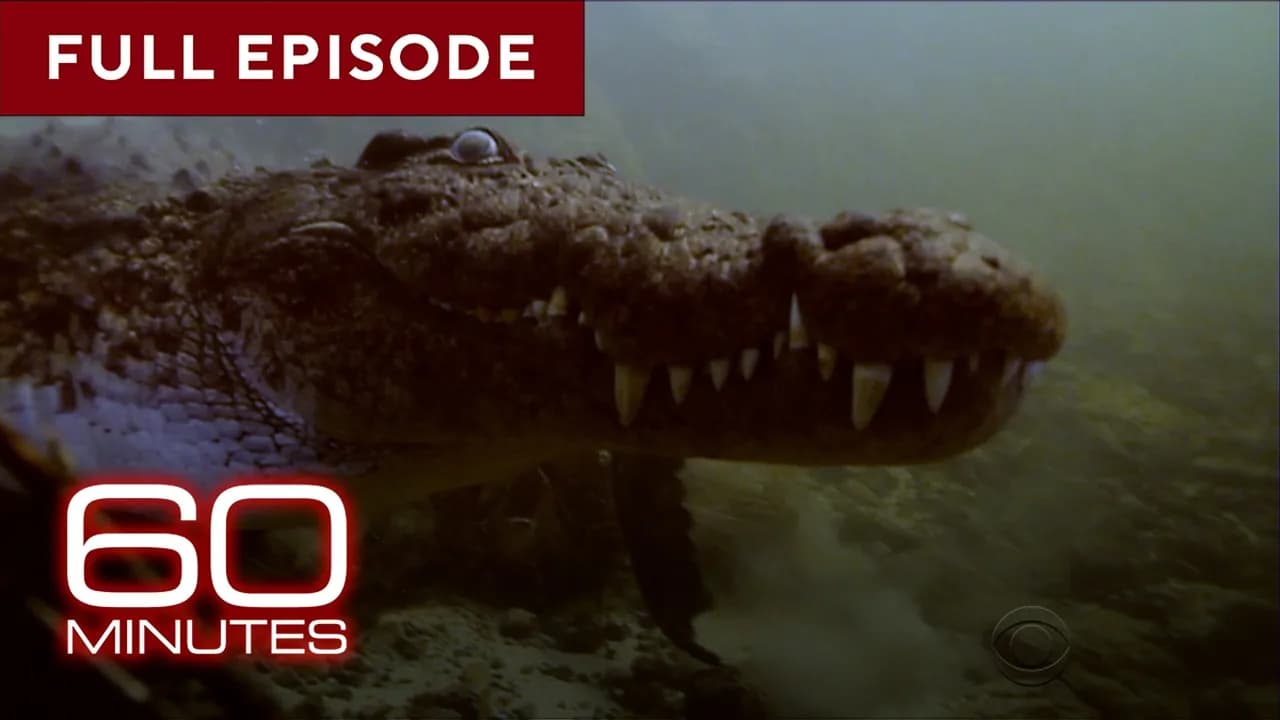
Australia's wildlife includes deadly snakes, spiders, and jellyfish, but saltwater crocodiles inspire the most fear. They grow to more than 20 ft, weigh over a ton, and have a bite force strong enough to crush a human skull. Called salties, these apex predators live across northern Australia. Protected by law, their numbers have surged, creating friction with humans.
In tropical Darwin, spectacular beach sunsets draw people away from the water due to surrounding crocodile habitat. Salties are territorial; a swim could end fatally.
So, it's just luck. >> Yeah, luck. >> You could go for a swim here and be fine. I wouldn't go for a swim. No.
Crocodiles appear in Darwin Harbor backyards. Tom Nichols and government rangers remove problem crocodiles using cages baited with wild boar meat. Extracting an angry salty from a floating trap requires rope and zip tie.
A 6-ft crocodile could kill a human by drowning via the death roll: grabbing, dragging underwater, surfacing, and spinning. Nichols lost half his left hand to a crocodile's death roll here 20 years ago.
With the crocodile, if he didn't spin, I would have been all right. But trouble is, he's spinning. Just spun all my hand around. >> You operate just fine with three fingers on your left hand. Is there anything you can't do? >> Yeah. Pick my nose with my left.
Salties are the largest reptiles on the planet, bigger than alligators, and among the world's most aggressive per some scientists.
By the 1970s, salties neared extinction with a few thousand left, leading to a hunting ban. Populations recovered to over 150,000. One of 33 captured on this trip.
Crocodiles are way misunderstood. They've survived the times of the dinosaurs and that is a question of respect. >> They're also pretty scary. >> Not really. Humans are far more scary. Um, we kill each other for a lot less for money and crocodiles only kill for food.
Trevor Sullivan, of indigenous ancestry, keeps 10 saltwater crocodiles in his backyard behind chain link fencing. He hand-feeds them whole chickens. Rescued most from farms and facilities, including Sha, over 120 years old and missing part of his jaw.
Can I stand up on the back here? >> Oh my god. Trevor, what would happen if this fence wasn't here? >> Nothing. >> What do you mean nothing? >> I've fed him in there. I've gone in and fed him. >> You go over the fence. >> Yeah. >> With a 16T crocodile. >> He's not a problem.
Sullivan proves safe coexistence:
They enter to their name. They come with you teach them. You can train them, get them into a routine. They're not just pet. They're family. >> I'm sorry. They're family. >> Okay. So, just for the sake of clarity, they don't see you as food. >> No, I bring food. You're also a big chunk of protein. >> Yes. Um, dogs eat meat. They don't generally see you as food.
Around 50 deaths reported since hunting ban 50 years ago, aided by education campaigns. Victims often misjudged safe swimming or fishing spots. Some anger that law protects crocs over people.
Bob Katter, combative parliament member, wants hunting ban repealed. His electorate, 1,000 miles southeast of Darwin, has farmland where salties eat cattle.
You're going to get a big bath. >> You're going to get a big bath. >> Order. Order.
You're a very popular man in these parts.
Childhood swimming in rivers now impossible:
You know, every Saturday, Sunday, you'd be down the river. >> Can the children do that now? Can they go swimming in the river? >> No way. No way you would risk your life if you went near any of these waterways.
Katter considers shooting crocs despite arrest risk:
You think the law is evil? >> Ah, yes, absolutely. A law that puts the value of crocodile over a human being, that is a definition of evil.
Legal hunting would safe waterways and attract big game hunters. Others argue salties worth more alive for tourism.
Darwin's tourism relies on crocodiles. Close encounters outside city:
Wow, look at that. Nice. Great time to see crocodiles now. Beautiful. Oh yeah. >> And he'll be waiting for you to look away. He'll move real quick. >> Oh my god. >> Believe me, if he grabbed hold of you, that's it. You're gone.
Humans and crocs shared land 50,000 years. Kakadu National Park, bigger than Connecticut, homes few hundred people and 10,000 crocs.
Gleon Nabulad, indigenous river guide, hunts crocs for food with spear:
It look like something in there. >> How do you hunt it? >> Um, spear. >> With a spear. Is it good eating? >> Yeah, they that taste like fish. like fish.
Nibulad and Robert Namarielk: Indigenous disagree like others; some favor commercial hunting, others prize as totem.
It's like a crocodile and us. We've been together a very long time. >> You have a special connection. >> Yes.
Sullivan: Coexisting is privilege; croc attacks almost non-existing.
It's the best fun being able to coexist with saltwater crocodiles. The most dangerous predator on earth and we your croc attacks are almost non-existing. >> But isn't one fatal attack of a human being too many attacks? >> Well, what are we supposed to die from?
Australia was croc country millions of years before humans.
Guinness World Records sold over 150 million copies in 40 languages. Features shortest, tallest, fastest, human feats. Cecilia Vega reported in November on over-the-top achievements verified by strict British auditing. 95% of 50,000 annual applications rejected, most from US.
Colin Kaplan, New Haven historian and food tour guide, attempts world's largest pizza party to beat record. Obsessed with pizza; chartered jet to Washington for congresswoman to declare New Haven pizza capital of America.
New pizza capital, baby. >> Is this a serious endeavor? >> Yeah. >> Yeah, I think it is. I'll tell you what, it seems light and fun, but it's serious in a sense of what's on the line. What's on the line is the glory of a Guinness World Record.
Craig Glenday, editor-in-chief 21 years, on human record-breaking:
Humans are such a interesting bunch, aren't we? And record-breaking is an innately human thing. And if that means you do strange things like swallowing sausages hole or climbing Everest or running a marathon with a milk bottle on your head, then that's fine. That's great.
Rejects absurd like fastest banjo around garden with snake on head, cutest babies/dogs. Requires multi-angle film, eyewitnesses, precision measurement.
Example: Spotted skateboarding dog Tilman at X Games, measured 100 meters in Staple Center car park.
Do you just walk through the world with a tape measure in your pocket? >> Well, I do usually. >> Do you? Yeah, I have a tape measure and a stopwatch cuz you never know.
Holders: Usain Bolt fastest 200m, Beyonce most Grammys. David Rush broke 350+ records, e.g., most bites from three apples while juggling in a minute, most t-shirts in half marathon.
Michel Lotito (Mr. Eats Everything) ate Cessna plane over 2 years, metal/glass but not chains; used hotel metal toilet.
This is the craziest interview I've ever done. I'm just saying.
Reasons vary: fame, validation of weird feats.
London HQ cabinet: smallest playing cards, size 29 shoe, world's oldest vomit (doesn't smell).
Tallest/shortest often genetic; woman with 43-ft fingernails since daughter died 1997.
Began 1955 from Ireland hunting trip argument over fastest game bird. First sales meeting expected 6 copies, sold 10,000 by week's end.
Now viral stunts; Glenday measured Sultan Kosen at 8'3", shortest person in Nepal via woodcutter video.
Strict rules: debates over Smurf costumes (blue skin?). Experts from archaeologists to myrmecologists (ant experts).
Thomas Bradford, Disney performer and adjudicator (one of 81 across 6 continents), enforces rules in blue jacket. Favorite: largest dinosaur gathering (rejected Godzilla as not dinosaur).
How do you break it to a dinosaur in a bad costume that they don't qualify? >> You kind of just have to play the role. I think my accent helps and there is a level of, you know, authority that comes from a British accent.
Needs 3,358 to beat Tulsa, Oklahoma. 15 minutes to eat 2 slices pizza + water bottle, stay until end, eat entire including crusts. 4,525 succeeded; only 2 didn't finish, 1 left. 10,000 slices = 625 pizzas in 3.5 hours. Kaplan paid nearly $30,000 fees, fundraised six figures for ovens/cheese. 100 volunteers tallied.
The Largest Pizza Party is probably the most competitive record that I've ever been a part of. >> Is that true? >> I didn't think it would be. is it's it's a lot. Yes. >> Stressing you out. >> It's this is probably one of the most stressful record attempts I've had.
This official Guinness World Records attempt HAS BEGUN.
Congratulations, New Haven. You are all officially amazing.
Human beings are innately the same everywhere. They are really because they're trying to get through from birth to death and have as much fun and enjoy life and and get all the experiences that you can. And we see this every day. The world is full of these amazing fun things if you just look in the right place.
Everest: 29,032 ft. 40,000 trek to base camp yearly. 10-day hike to 17,598 ft.
Sherpas: indigenous ethnic group, porters/guides risking lives with little recognition. Nema Renji Sherpa, 19, youngest to summit world's 14 highest mountains.
Lukla Airport: dangerous, short runway on cliff. Porters carry 800 lb camera gear. 50-mile trek, 8,261 ft climb. Prayer wheels, warning bells for overloaded porters (nearly twice body weight).
Suspension bridges 45 stories above gorges.
You can't be scared of anything if you do what you do. >> Of course, you are scared, but you have to balance it in a way that you can be confident, you know, when you do things. >> What do you tell yourself when you get scared? >> Uh, just trying to calm myself down and just just realize who I am.
150,000 Sherpas in Nepal (<1% population), thrive in low oxygen.
Tenzing Norgay (1953) guided Sir Edmund Hillary first Everest summit, made Sherpa brand but overlooked.
Did you grow up learning about Tenzig Nor? >> Yes, we had to learn about him. >> What does he mean to the Sherpa people? >> I think it was because of him like who made the Sherpa brand today. >> and for me he was always a very big motivation just to understand that okay maybe we can also be someone like him.
Nema from mountaineering family: dad youngest Everest summit no oxygen; uncles first brothers 14 highest.
Namche (11,300 ft): Meet Mingma Sherpa, ex-yak farmer, porter ($1/day, 30-90 kg/ 66-200 lb), now top guide.
every step is do and die every step is maybe we are alive or not live you know >> every step is that dangerous >> it's dangerous sometimes Sometime is nighttime work, sometime is avalanche, but our goal is summit.
Seven Summit Treks (2009, Mingma/brothers): 1/3 Everest expeditions. Prove Sherpas as climbing stars.
At 16, while most teenagers were in a classroom, Nema was climbing into the death zone above 26,000 ft where the body's organs begin to shut down minute by minute. For his first summit in 2022, Nema climbed and recorded his way up Nepal's Mount Manaslu.
So that first climb, how hard was it? >> It was hard, but every second I was excited because I never knew what I was going to see after 10 m. The main problem was muscle cramps because I was too young. I had pain in my lungs and heart at night. But I kept wanting to go up and never felt like I wouldn't summit.
Even in the face of avalanches and serious injuries, it took Nema just 2 years to scale all of the world's 14 tallest mountains. The previous record holder did it in nine years.
What does it take to do this? >> There has to be a lot of meaning why you want to do it because mountains question you why you are here. On Everest, you feel so small. You need an iron heart to know why you are here. You cannot say you're just here for fun.
To why are you there? >> I was on a mission to finish all and knew I belonged in this industry. Everyone has their own reason and it has to be really big so you don't give up.
Despite the achievement, big brands never offered endorsements like they have for western mountaineers.
Do you think the fact that you haven't received endorsements has to do with where you're from? >> Maybe yes, but I know my time is going to come. I don't want to rush.
By day five at 13,500 ft elevation, it is a battle between lungs and gravity. After 8 hours of trekking, they arrive in Phortse, the remote village where Nema trained. Welcomed with ceremonial scarves symbolizing honor and respect, greeted by Nema's mentor Conrad Anker, one of America's top mountaineers who returns yearly.
Anker opened the Khumbu Climbing Center in Phortse in 2003 to provide Sherpas with specialized technical training for safety on high-altitude expeditions. Nema graduated top of his class.
We would show up in fancy gear and see our staff with worn-out or improper gear and lacking technical knowledge. That was eye-opening.
Is there inequity between western and Nepalese climbers? >> Yes. It's not just sponsors. It's the value of what they do. A western climber dies and the community rallies with fundraising, but Nepali climbers are not recognized the same way.
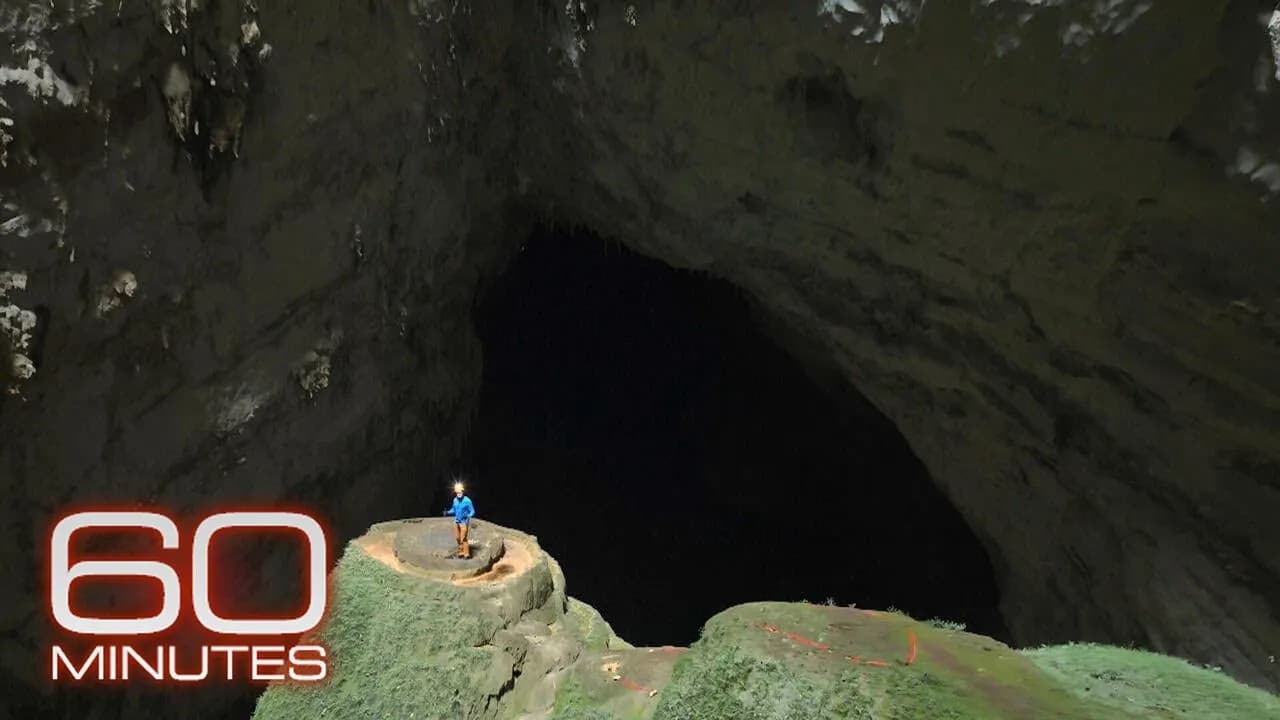
After a night in a teahouse, they leave Phortse with porters lined up, pushing toward 14,500 ft, taller than most US mountains. Just 10 miles from Everest base camp, they stop at a 600-year-old Buddhist monastery for a blessing. Monks tie a thin cord around necks for protection on the mountain.
Climbing Mount Everest has shifted from near-impossible feat to something mortals can accomplish with a summit selfie. Now a booming multi-million dollar high-altitude industry with guided climbs at six-figure sums. Base camp is a tourist destination.
Commercialization brought wealth to Nepal's Sherpas but also pressure as they carry the weight of the climbing season. Peak season is the narrow May window.
After eight days walking, crossing critical threshold where body falters. Every breath delivers less oxygen; severe altitude sickness with brain swelling and fluid-filled lungs can be fatal. Slow ascent needed to acclimatize.
Hillside covered in memorials, including from 2014 avalanche. One in three Everest deaths is a Sherpa. In 2023, 18 people died, the most in one year. Bodies high up are nearly impossible to recover.
Nema knows this well.
It seems death is inevitable. >> I've seen many pass away. It's always there, but you believe you're not going to die.
You use death as a motivator. >> You have to be more careful. Every time you go, you're energized and feel nothing will happen, then seeing someone pass makes it real.
Final day of trek to 5,000 m (16,404 ft). Nema is a celebrity even in glacial valley with tourists and yaks. Hours from base camp at 17,600 ft, breathing like through a straw with half the oxygen. Lips turn blue from low oxygen.
Porters who carried gear reach base camp and run back down to next job.
After 10 days, first glimpse of Everest base camp on Khumbu Glacier, world's highest glacier. Freezing conditions.
From few dozen summits in early 1980s to nearly 500 permits this season. Climbers use extremes like British team summiting in under a week with xenon gas to boost blood oxygen.
Has tourism changed Everest for better or worse? >> For Nepal, Everest is a blessing for Sherpas and biggest revenue source. It's not just us; taxi drivers, heli pilots, lodges, porters, whole economy sustains.
Commercial expeditions offer luxury: up to $180,000 for packages with private chefs, movie theater, espresso machines.
Nema's father, Tashi Lakpa Sherpa, helped build base camp since 2013, turning isolated mountainside into economy. Wait for summit window now like summer camp on glacier.
Two nights test resilience: breathing, eating, sleeping struggles. Bathroom is rocks in flapping tent. Wind brutal, cold piercing.
Sherpas shoulder burden, navigating Khumbu icefall, maze of shifting ice towers and bottomless crevasses. Icefall doctors go first, building route with lashed ladders over drops.
Sherpas cross far more than climbers. Seven Summit Treks uses drones for first time to ferry loads, take ladders/ropes to icefall doctors, bring down trash. Makes jobs easier, safer, faster: drone from base camp to Camp 1 in 3-3.5 minutes vs. hours for porter.
Inexperience deadly in death zone; stalled climber traps dozens in traffic jam.
Rescues by Simone Moro, Italian helicopter pilot for Nema's family. In April, rescued high up where air barely spins rotors.
You can't imagine how many come up without acclimatization or preparation. If I don't pick them quickly, they die from pulmonary/cerebral edema. Happens often, even overnight in lodges.
Avalanche from 5.5 magnitude earthquake stopped short of tents.
Moro and Nema train to conquer peaks without fixed ropes, supplemental oxygen, or support: survival as sport.
There's a difference between you and me. >> We are better at suffering. People like Simone, me, my dad, uncle come from zero, created something ourselves.
This is your legacy, but the mountain is also your legacy. >> Usually don't talk to 19-year-olds about legacies. Maybe in 20-30 years.
Keep 60 Minutes in your library
Save the videos and channels worth coming back to, and find them again in one place.